Château de Lustrac: A Castle Built to Control a Dam and Mill
Site at a Glance
- Popularity
- Medium
- Country
- France
- Primary era
- Early Modern
- Eras represented
- Medieval, Early Modern, Modern
- Civilizations
- French
- Site type
- Military
- Remains
- Castle
On this page7 sections
History
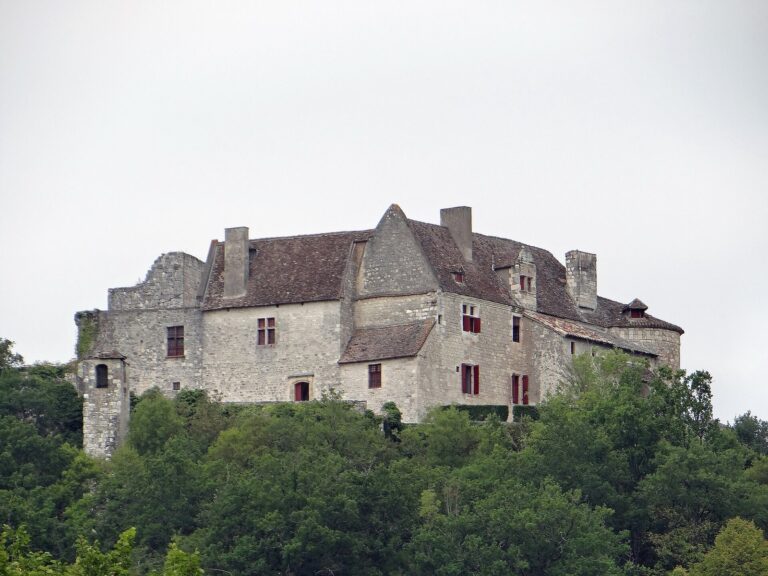
Château de Lustrac is a medieval castle beside the Lot in Trentels, France. Its construction dates to the early 14th century, and it developed around river works that supported the Lustrac family’s control of passage, milling, and fishing.
River engineering and the castle’s foundation
After England’s Edward I regained control of Agenais, the historic region around Agen, in 1279, he planned to make the Lot navigable. Around 1289, the project was intended to carry goods from Quercy, another historic region of southwestern France, toward Bordeaux. It called for eleven dams along 22 kilometres in the district of Penne. The Lustrac family undertook one of these works. Construction on the wider project began in 1291, but stopped in 1294 when Philip IV of France seized Agenais. English control returned in 1303.
In 1296, Foulques de Lustrac built a dam and a mill on the Lot’s right bank, naming the mill after himself. The castle was built to control the dam and protect the mill. A fortified settlement mentioned in 1259 may have occupied the same site, though its identification is uncertain.
Fortification and Lustrac influence
At the English king’s request, Judge Guillaume Cazes of Agen investigated the dams in 1311. His inquiry found that local lords had built fortified structures nearby to secure toll rights. At Lustrac, rights connected with river passage, milling, and fishing provided the family with resources that helped it rise among the leading lords of Agenais. In 1372, the Duke of Anjou granted Bernard de Lustrac 300 gold francs to fortify the castle and mill. The castle was besieged several times.
Building work continued after the castle’s early 14th-century beginnings and extended into the 17th century. These successive phases shaped the property as the Lustrac family maintained its hold over the mill and lordship.
Changes of ownership
After Marguerite de Lustrac died in 1597, her daughter Anne de Caumont sold the mill and lordship to the Masparrault family. In the 17th century, the property passed first to the Lespinette-Le-Mairat family and then to the Garrisson family. Jonathan de Garrisson bought the lordship from Jean-Louis de Lespinette-Le-Mairat on 22 December 1649. After Jonathan died in Montauban in 1695, his daughters, the ladies of Caussade and Scorbiac, inherited jointly. The castle remained with the Scorbiac family until the French Revolution, a period of political upheaval in France. The upper portions of its towers were probably removed during this time.
Abandonment, restoration, and protection
The castle remained abandoned until Joseph Meynot, a former mayor of Agen, bought it in 1891. It changed hands again in 1963, and the mill was bought in 1973. The castle was subsequently fully restored. A protection measure in 1982 covered the castle, mill, lock, village, and opposite bank of the Lot. In 1988, the castle was listed as a French historic monument, a form of statutory heritage protection. It is privately owned and used as a residence.
Remains
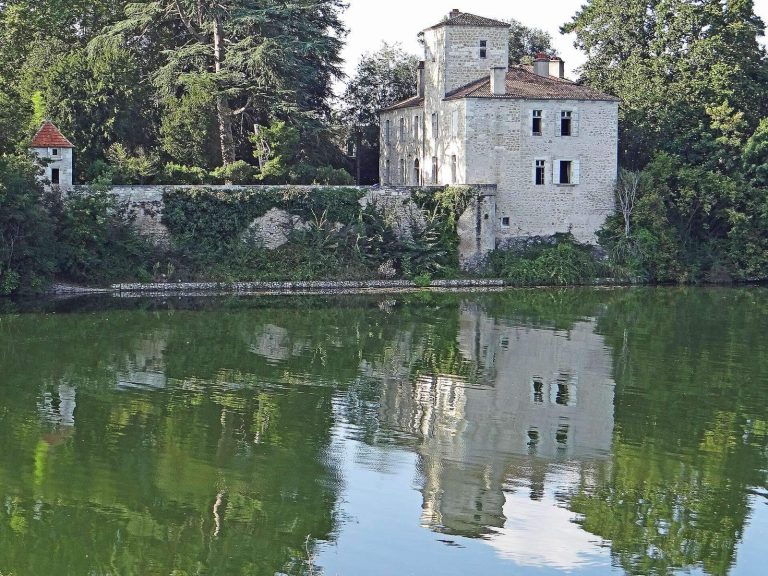
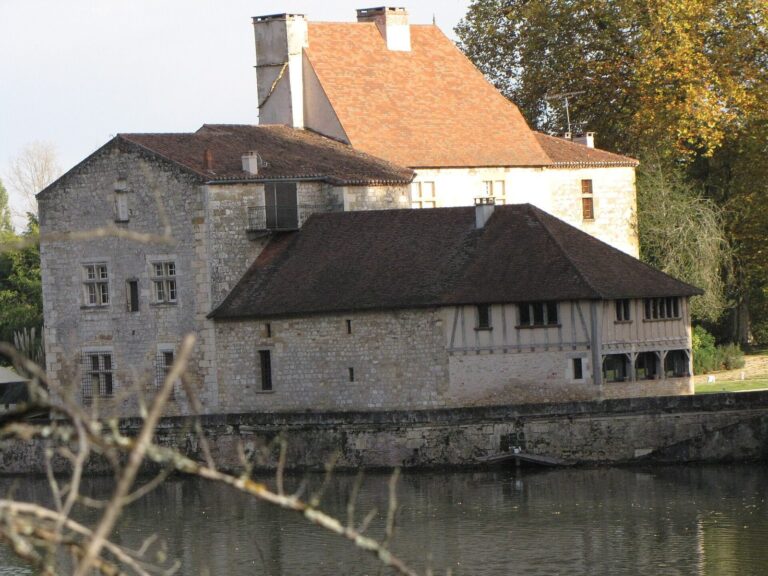
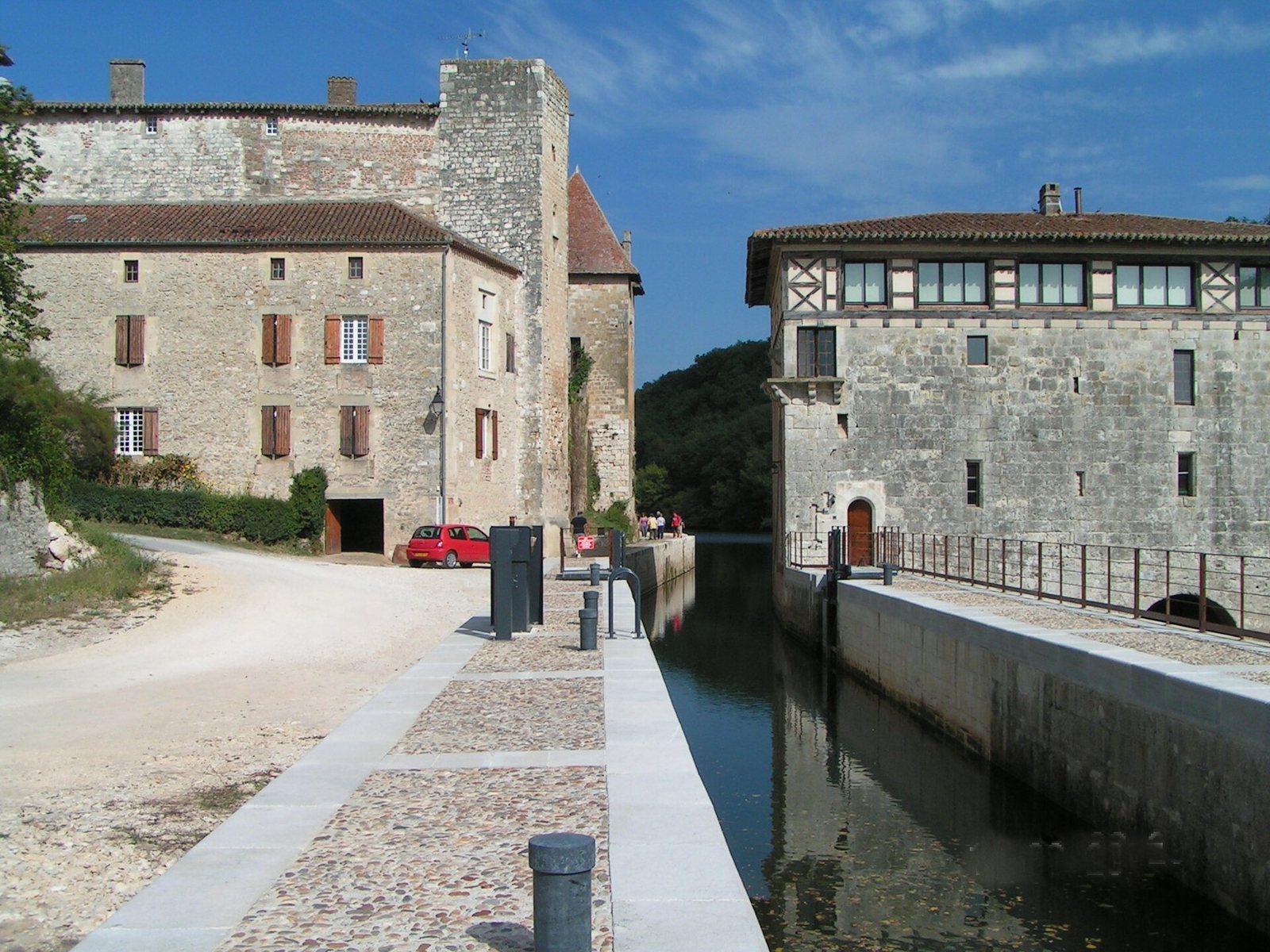
The surviving complex comprises the castle, a mill, and a lock. The mill stands on the Lot’s right bank. The associated dam was referred to in the 1311 inquiry as Mont-Navès or Lamothe-Motriac.
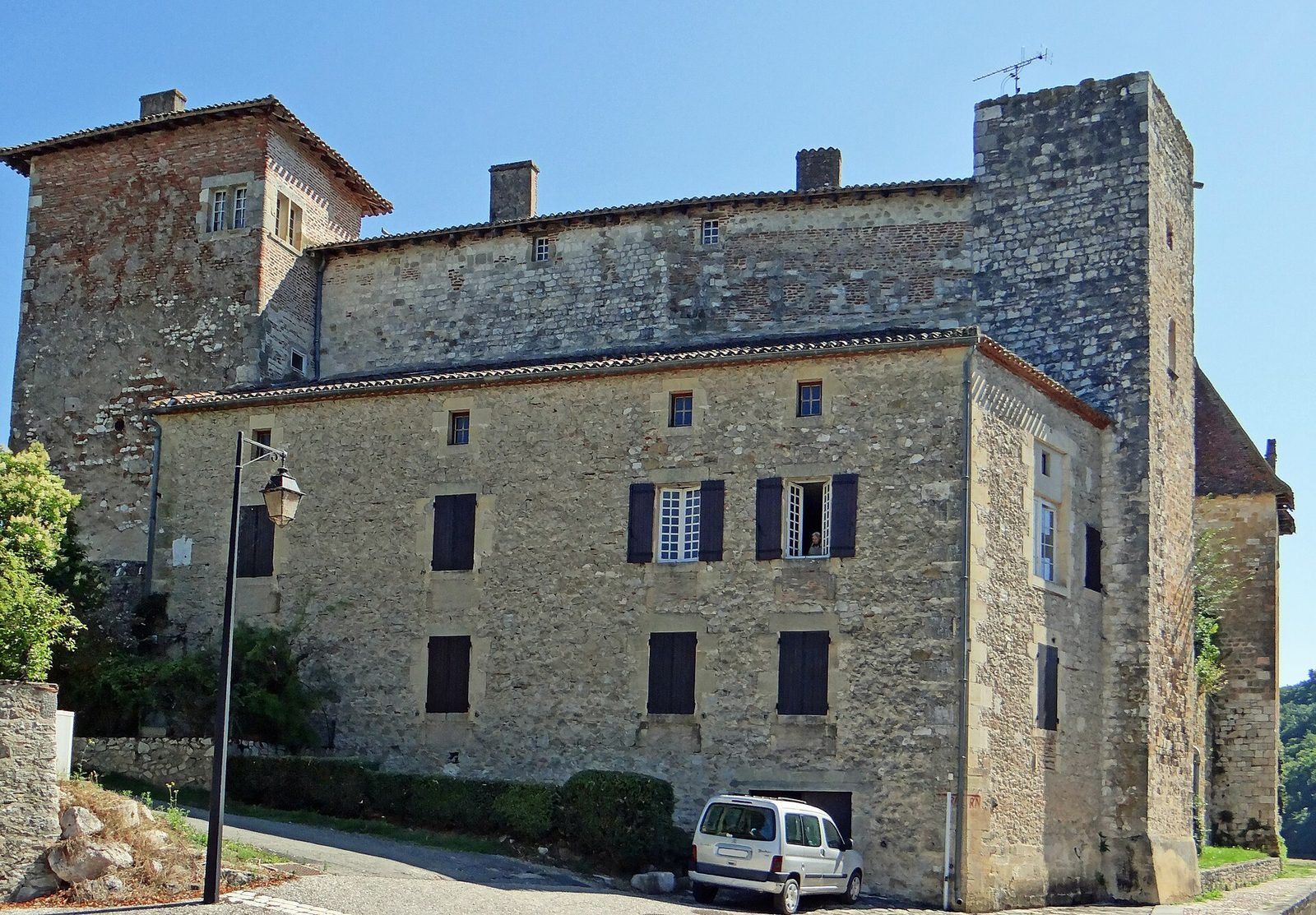
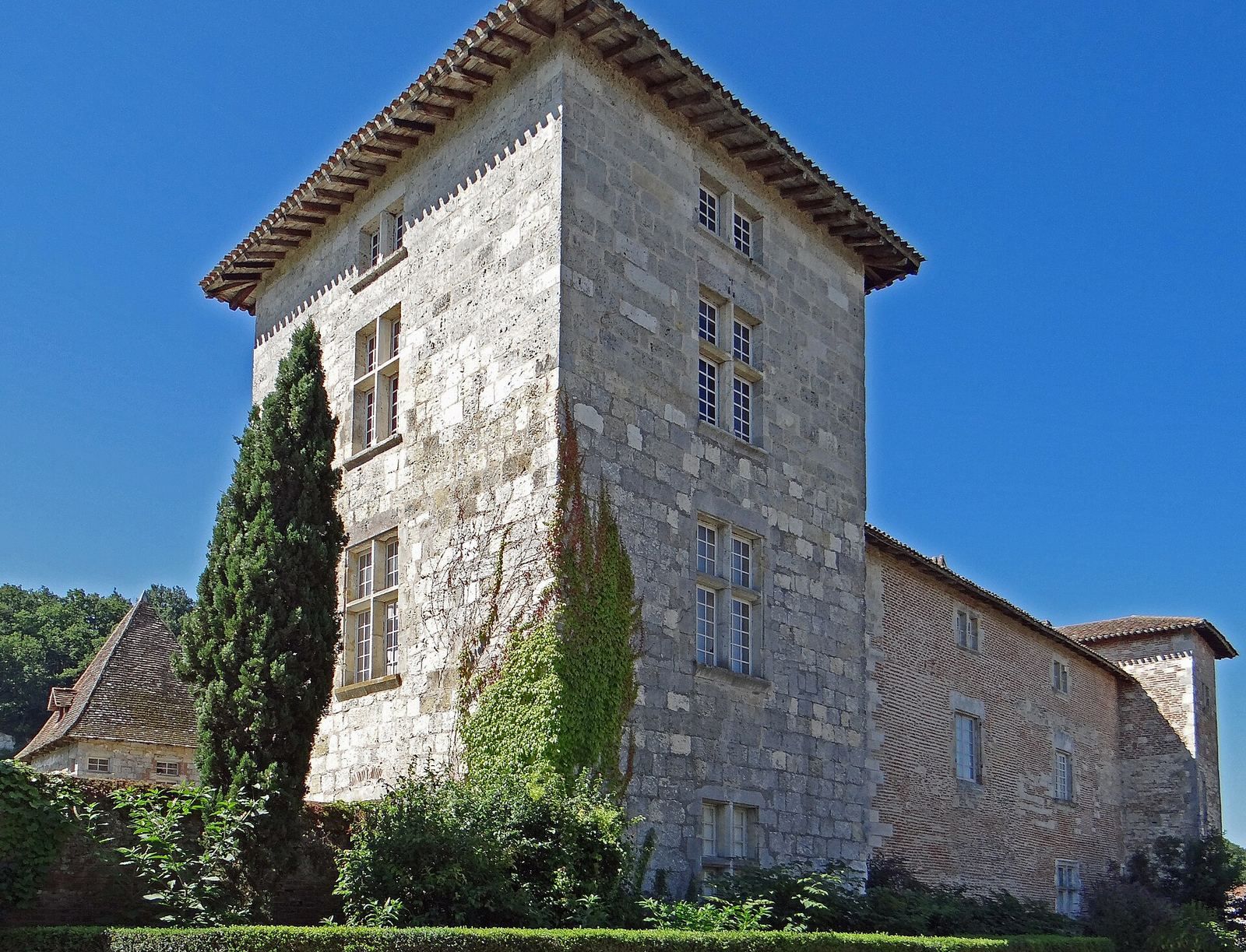
The castle
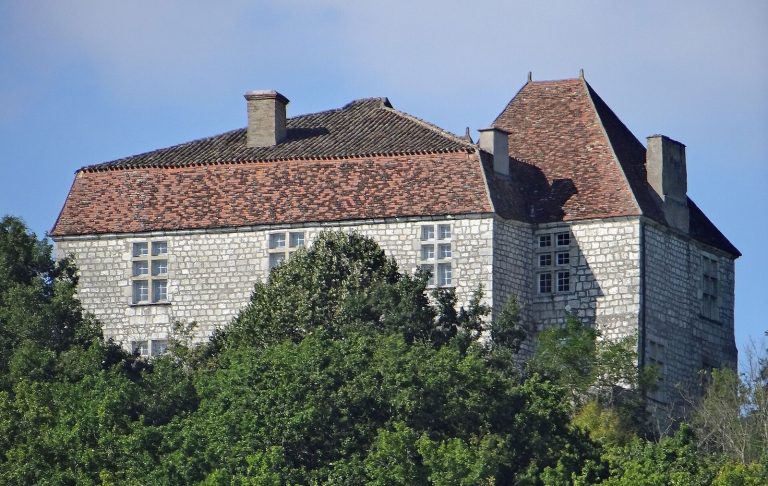
The earliest castle is thought to have been a single tower, associated with a three-lobed window opening and a paired window, formed by two adjoining openings. Its present architectural form took shape through work by Antoine I de Lustrac between the late 15th and mid-16th centuries. A stone at the entrance to the inner courtyard bears the date 1651. After the castle was bought in 1891, another structure was built against the outer face of the west wing, and a sawmill was installed in the courtyard. Later restoration raised the towers.