Villa royale Marie-Henriette: A Royal Residence and Museum in Spa
Site at a Glance
- Popularity
- Medium
- Country
- Belgium
- Primary era
- Modern
- Eras represented
- Modern
- Civilizations
- Belgian
- Site type
- Domestic
- Remains
- Elite Residence
On this page4 sections
History
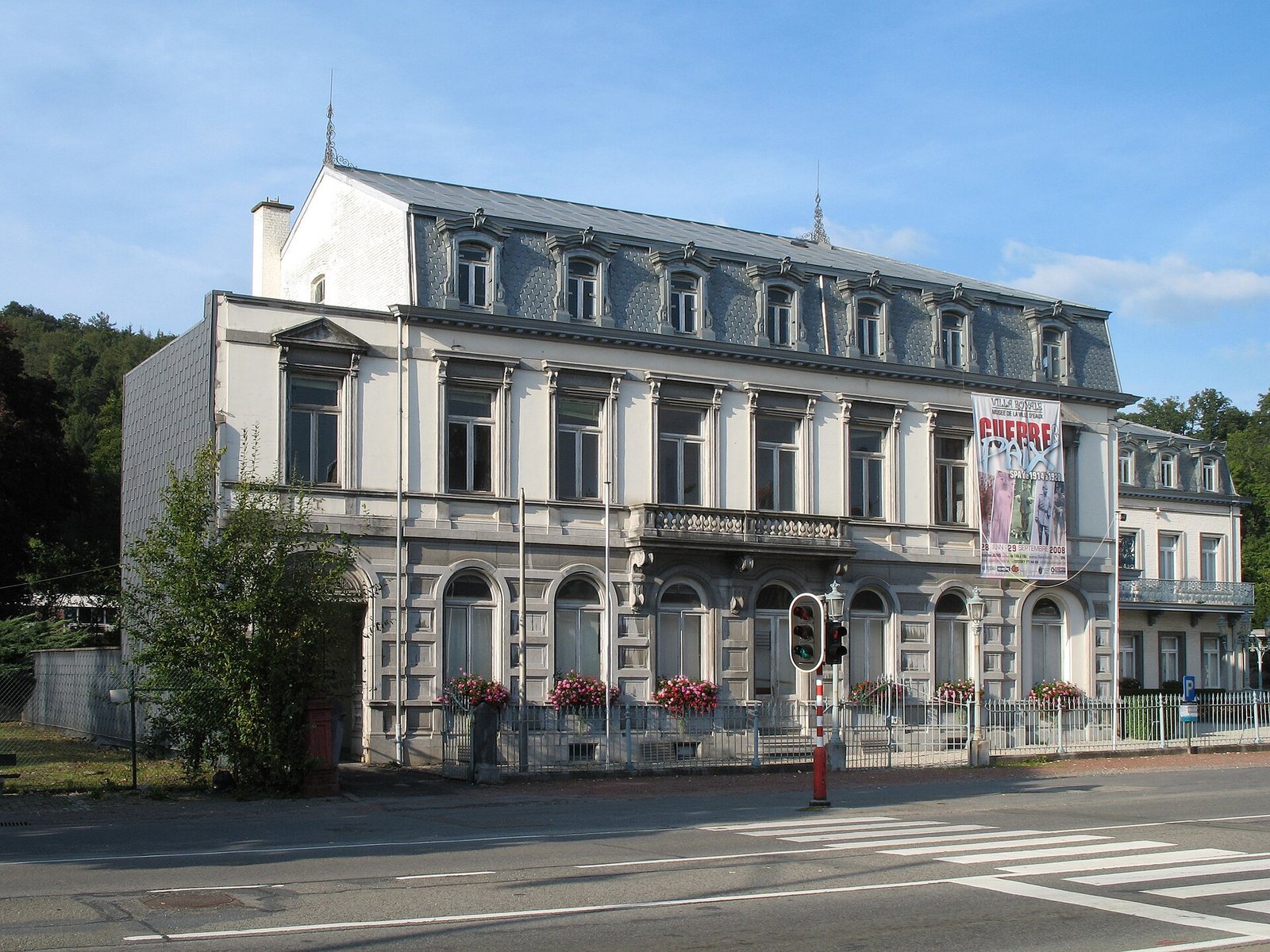
Villa royale Marie-Henriette is a former royal residence in Spa, Belgium. It began as a hotel in 1863 and later became the home of Marie-Henriette, the second Queen of the Belgians and wife of King Leopold II. Since 1965, it has housed Spa’s Museum of the City of Waters.
From hotel to royal residence
Hotelier Pierre-Louis Nagant-Courtinat built the Hôtel du Midi in 1863 on land acquired from Mathieu Lambert Wilkin fils. The building was enlarged in 1871. In 1886, Pierre Sury-Henrard, Alphonse Sury-Leloup, and Alfred Sury-Schaltin acquired the property and renamed it the Hôtel de l’Avenue et du Midi. Further enlargement followed in 1887–1888.
Marie-Henriette first visited Spa in 1856 and decided to acquire a property there in 1894. The Civil List, the financial provision for a monarch’s household and official duties, purchased the former hotel for her. After extensive alterations, she moved in officially on 15 July 1895; the buildings were also fitted out by the queen in 1896. The residence became known as the Queen’s chalet. It was modest compared with the Royal Palace in Brussels and Laeken Castle, and Marie-Henriette could decorate it as she wished. She lived there during the last seven years of her life and died at the villa on 19 September 1902.
Wartime, charitable, and municipal uses
Marie-Henriette bequeathed the villa to Baron Constant Auguste Jules Goffinet, her close friend and a secretary responsible for the king and queen’s official commands. He inherited it in 1903 but never lived there. During the German occupation of Spa, the German Red Cross requisitioned the property in January 1915 to care for convalescents. In August 1924, Goffinet made it available to a foundation that opened a cure and rest home for colonists, including people fatigued or affected by Africa’s climate. The home closed in 1963.
Ownership passed by inheritance in 1931 to Baron Jacques de Fierlant-Dormer, Marie-Louise de Fierlant-Dormer, and Count Liedekerke de Pailhe de Fierlant Dormer. In 1936, they transferred the property to the Villa Royale Marie-Henriette nonprofit association. On 20 November 1963, the municipality of Spa acquired the buildings and grounds for municipal services. The west wing housed the municipal police and public works service, the east wing the Justice of the Peace court, and the central wing the municipal collections. The villa has housed the Museum of the City of Waters since 1965. The villa and its immediate surroundings received protected immovable-heritage status in 1972, and selected elements were entered separately in an inventory in 1994.
Remains
The villa is arranged in three parts, with a central section and two lateral wings linked by covered galleries. Its appearance in the early twenty-first century differed somewhat from the building erected in 1863. The front façades and roofs of all three buildings, along with the courtyard-facing façades of both wings, form part of the property’s architectural features. A cast-iron lamp stands in the rectangular courtyard.
The museum’s permanent exhibition includes more than 300 decorated wooden objects known as Jolités de Spa, part of Spa’s tradition of decorative woodwork. They represent the work of local cabinetmakers and decorators active in workshops and manufactories over the preceding four centuries.