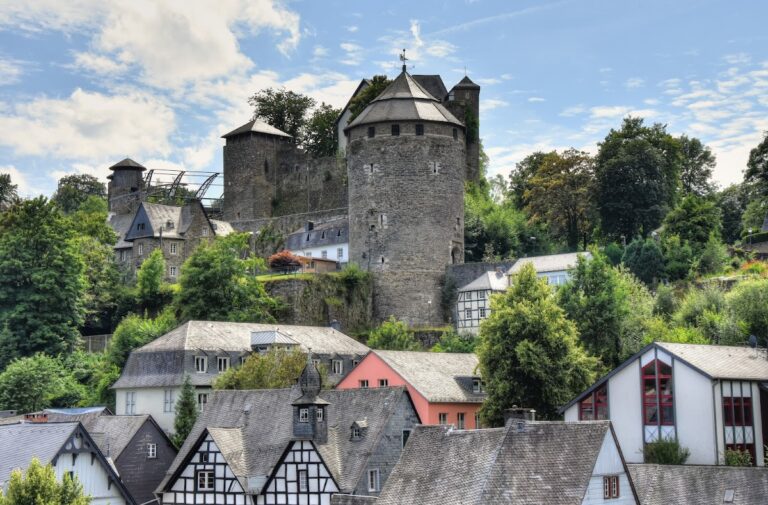
Abbaye de Malmedy: A Former Benedictine Abbey in Belgium
Site at a Glance
- Rating
- 4.4
- Popularity
- Medium
- Country
- Belgium
- Primary era
- Early Modern
- External website
- Open
- Eras represented
- Early Modern
- Civilizations
- Holy Roman Empire
- Site type
- Religious
- Remains
- Monastery
On this page9 sections
History
The Abbaye de Malmedy is a former Christian monastery in Malmedy, Belgium, founded between 647 and 650, or around 648, by Saint Remacle with the support of Sigebert III, the Merovingian king of Austrasia. Established in an uninhabited area of the Ardennes, it was created together with the Abbey of Stavelot as a twin monastery and became the origin of Malmedy. The surviving former abbey complex is largely the result of rebuilding carried out between 1701 and 1708 after repeated destruction.
Foundation and Early Development
Saint Remacle, a monk and abbot from Aquitaine associated with the evangelization of the Ardennes, founded Malmedy and Stavelot as a single religious institution. The two communities shared one abbot and remained linked until the French Revolution, although rivalry often emerged, particularly during elections of the prince-abbot. Their combined territories gradually formed the principality of Stavelot-Malmedy, an ecclesiastical state within the Holy Roman Empire. The principality expanded during the Middle Ages, but by the late eighteenth century it had contracted to 38 villages and approximately 27,000 inhabitants.
The earliest monks probably followed customs influenced by Saint Columban, an Irish missionary whose monastic practices shaped communities in western Europe. During the tenth century, the monasteries adopted the Rule of Saint Benedict, which emphasized communal religious life, prayer, and discipline, and became Benedictine abbeys. In the eleventh century, Emperor Henry IV definitively united the jurisdictions of Malmedy and Stavelot. Malmedy was then associated with the archdiocese of Cologne, while Stavelot depended on the diocese of Liège.
Monastic and Political Authority
The prince-abbot governed both monasteries and also ruled the principality. As an abbot who exercised territorial sovereignty, he received ecclesiastical investiture from the pope and secular investiture from the German emperor. His full title described him as, by the grace of God, abbot of Stavelot and Malmedy, prince of the Holy Roman Empire, and count of Logne. He also sat in imperial assemblies, giving the abbey a political role beyond its religious functions.
The two abbeys flourished especially from the tenth through the twelfth centuries. Their monastic schools became renowned, and intellectual activity remained strong at least into the thirteenth century. The Stavelot Bible, produced at one of the two abbeys between 1093 and 1097, belongs to this period of cultural activity. Christian of Stavelot, an exegete who interpreted religious texts and a historian, was another representative of the communities’ intellectual life.
Malmedy became a pilgrimage center through the veneration of Saint Quirin’s relics. Pilgrims were particularly drawn to the shrine during periods of calamity and war, while the cult of Saint Remacle served a similar function at Stavelot. In 1190, Abbot Erlebald founded a leprosarium at Malmedy, an institution established to isolate and care for people with leprosy. After the disease disappeared from the region, the institution was converted into a hospital.
Decline, Reform, and Destruction
The number of monks at Malmedy changed considerably over the centuries. There were 27 monks in 1147, about ten in 1334, and only six in 1499, before the community grew to 25 by the middle of the seventeenth century. Declining discipline and poor administration by some abbots weakened the abbey during the fourteenth and fifteenth centuries. Earlier reformers included Abbot Poppo, who died in 1045, while Wibald, abbot from 1130 to 1158, exercised considerable political influence within the Empire. Discipline was restored at the end of the fifteenth century under Willem van Manderscheidt.
The abbeys suffered destruction in 1244, 1491, 1521, 1587, and 1689. On 4 October 1689, during the Nine Years’ War, French troops completely destroyed both monasteries. At Malmedy, 600 of the town’s 660 houses were also destroyed. Reconstruction of the abbey followed between 1701 and 1708, producing most of the surviving former complex.
Early Modern Rule and Suppression
From 1576 to 1650, the principality formed a personal union with the prince-bishopric of Liège. This arrangement left the territories institutionally separate while placing them under the same rulers. The three Liège prince-bishops who also became prince-abbots of Stavelot-Malmedy were Gerard van Groesbeeck, Ernst of Bavaria, and Ferdinand of Bavaria.
The monastery faced further crisis in 1598, when the monk Jean Delvaux was accused of witchcraft, condemned, and hanged. The shock contributed to a severe reform of the monastery at the beginning of the seventeenth century. In 1784, Austrian authorities unsuccessfully tried to impose the bishop of Tournai as supervising authority over the abbeys and principality.
When French revolutionary forces arrived, the monks took refuge in Germany. France incorporated the principality in 1795, and the two abbeys were sacked and looted in 1796. The abbey was officially suppressed on 1 September 1796, ending its religious and jurisdictional functions. Malmedy later belonged to Prussia from 1815 until 1920, when it became part of Belgium.
Later Institutional Use
The former abbey church became Malmedy’s parish church in 1819. Between 1920 and 1925, it served as the cathedral of the short-lived diocese of Eupen-Malmedy and retained the cathedral title afterward. Other former abbey premises housed a secondary school and the justice of the peace during the mid-twentieth century. Since 2011, the complex has also accommodated a library and the Malmundarium museum. The Church of Saints Peter, Paul, and Quirin received classified heritage protection in 1965 under designation number 63049-CLT-0006-01.
Remains
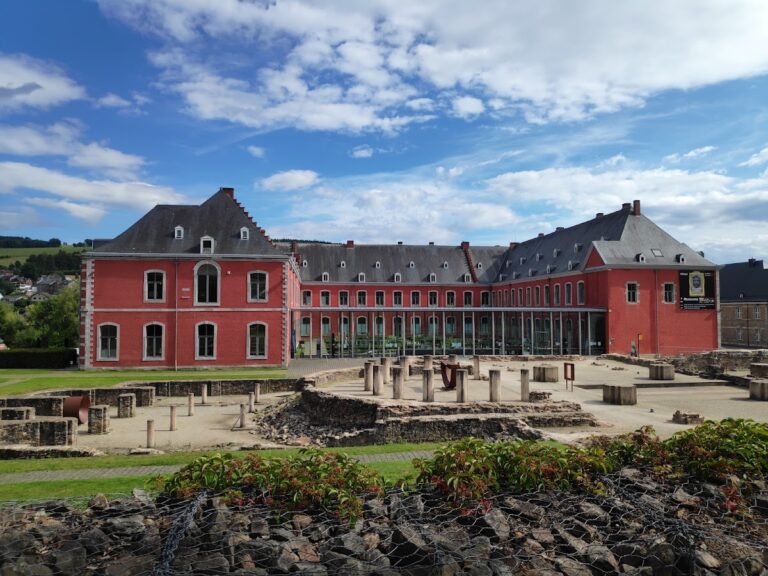
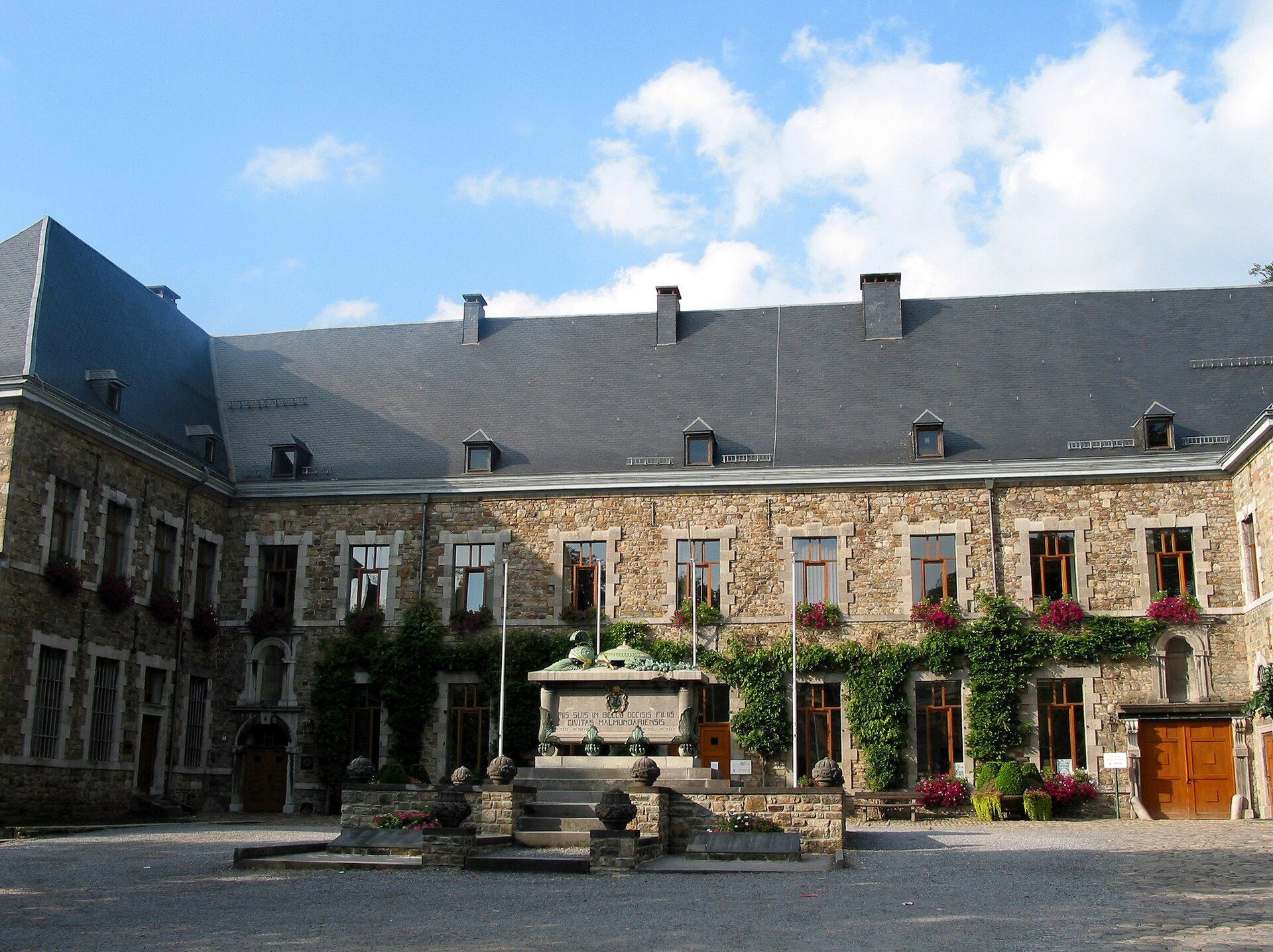
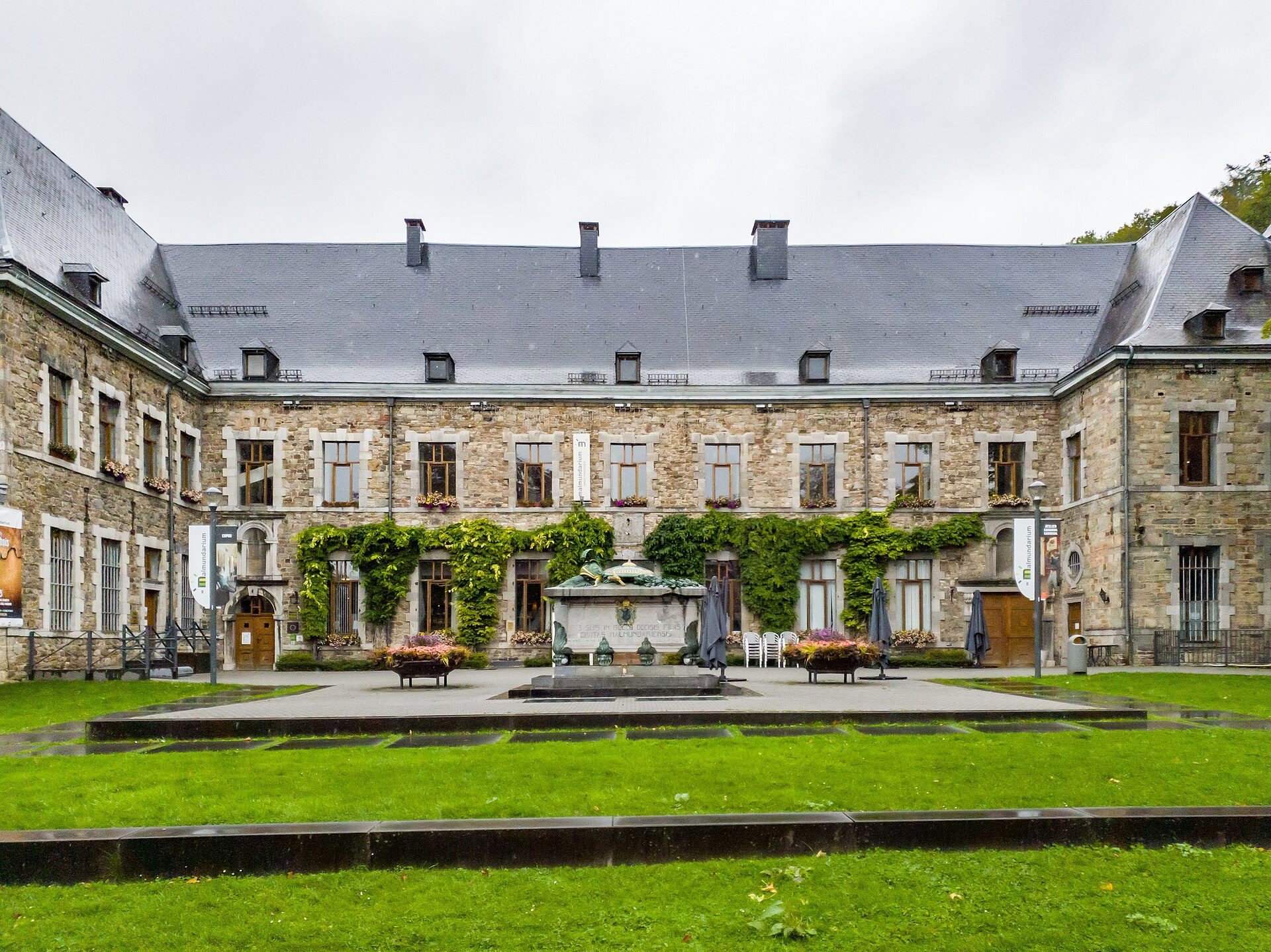
The former abbey complex is dominated by buildings reconstructed after the destruction of 1689. Most of the surviving fabric dates from the first decades of the eighteenth century, while the present abbey church belongs to the final years before the monastery’s suppression. Together, these remains reflect both the rebuilding of the monastic center after wartime destruction and its later adaptation to parish, civic, educational, and cultural uses.
Abbey Church
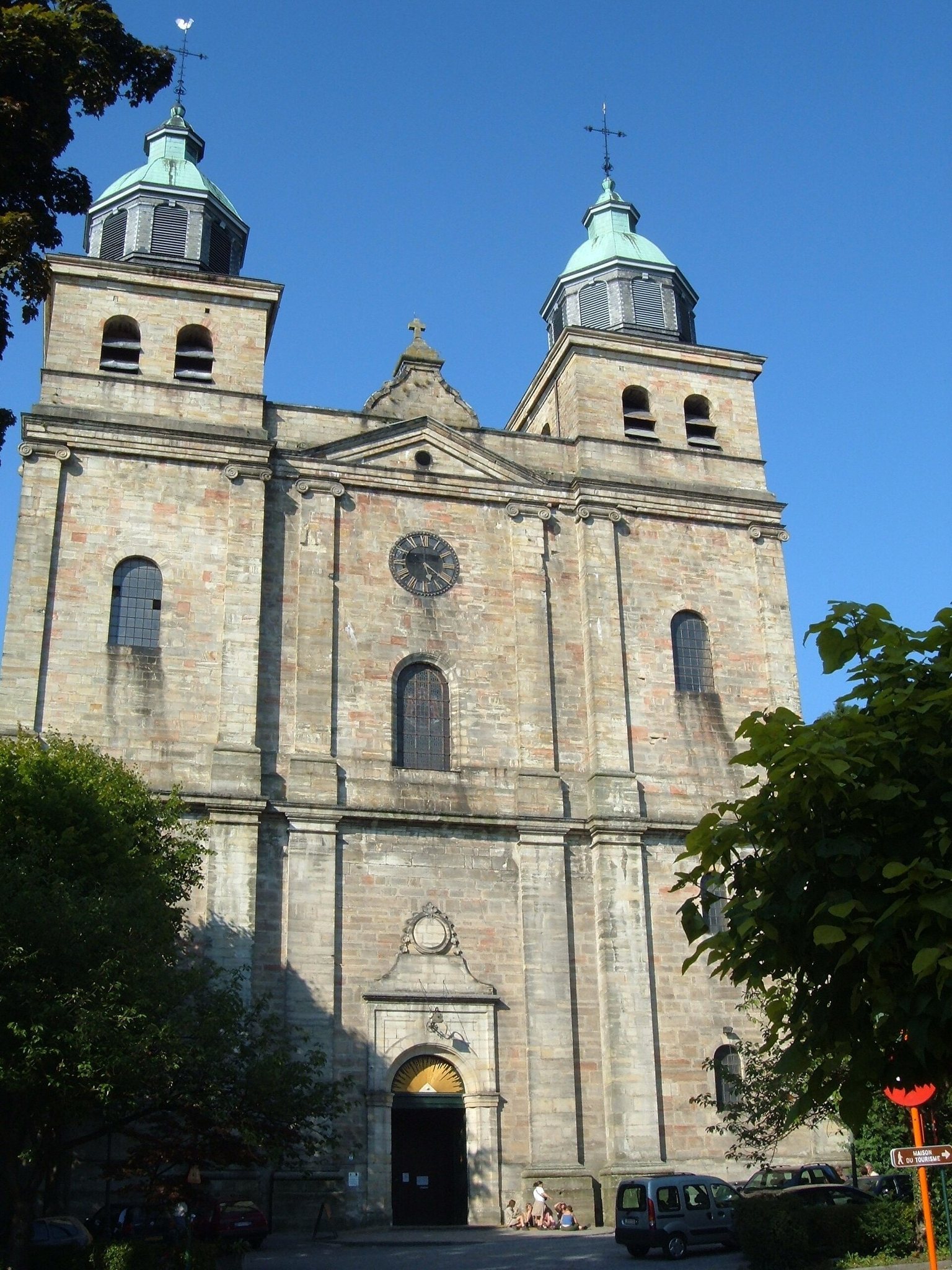
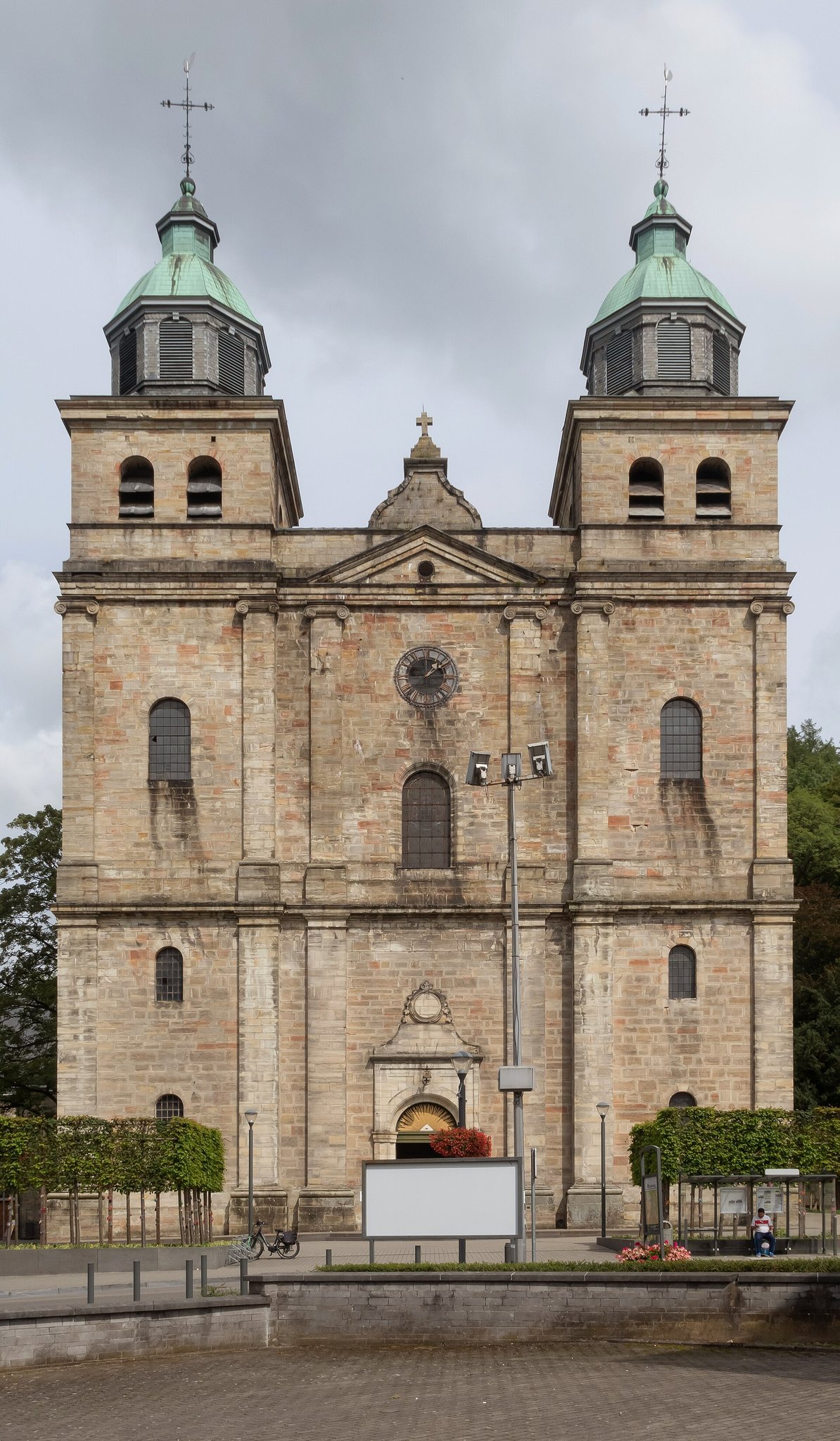
The Church of Saints Peter, Paul, and Quirin was built shortly before the suppression of the monastery. Designed by Charles Antoine Galhausen, construction began in 1775 or 1776 and ended around 1782, or possibly in 1784. The church has a Latin-cross plan and a facade with two square towers topped by campaniles, structures that house bells. During the French period, the building was used as a stable and carpentry workshop. A private individual later purchased it and gave it to the town, after which it became a parish church in 1819. Its furnishings include a statue of the Virgin and Child by Jean Delcour, a sculptor from Liège, an eighteenth-century reliquary shrine of Saint Quirin, and an altar made in 1773 by Boreux of Dinant.
Former Abbey Premises
The former monastic premises now contain the Malmundarium museum and a library. The museum presents the history of Malmedy, together with the town’s leather and paper industries, local carnival traditions, and temporary exhibitions. These continuing uses occupy buildings whose principal surviving form derives from the reconstruction undertaken between 1701 and 1708.