Dolmen Nobbin: A Neolithic Megalithic Tomb on Rügen
Site at a Glance
- Popularity
- Medium
- Country
- Germany
- Primary era
- Stone Age
- Eras represented
- Stone Age
- Civilizations
- Unclassified
- Site type
- Burial
- Remains
- Tomb
On this page7 sections
History
Dolmen Nobbin, also known as Riesenberg, is a Neolithic megalithic tomb near Altenkirchen on the island of Rügen, Germany. Associated with the Funnel Beaker culture, a prehistoric European culture named for its distinctive funnel-shaped pottery, it dates to about 3500–2800 BC. It is one of the largest megalithic tombs in northern Germany.
Prehistorians Wilhelm Petzsch and Karl-August Wilde carried out the first excavation in 1932–1933. Ewald Schuldt led further excavation in 1970. The burial chambers were disturbed in 1933 and again in 1970.
A second megalithic tomb has also been proposed in the area. Stone packing brought up by a farmer’s ploughing suggested a possible location about 250 m north of the Altenkirchen–Putgarten road, but the tomb’s precise position is unknown.
Remains
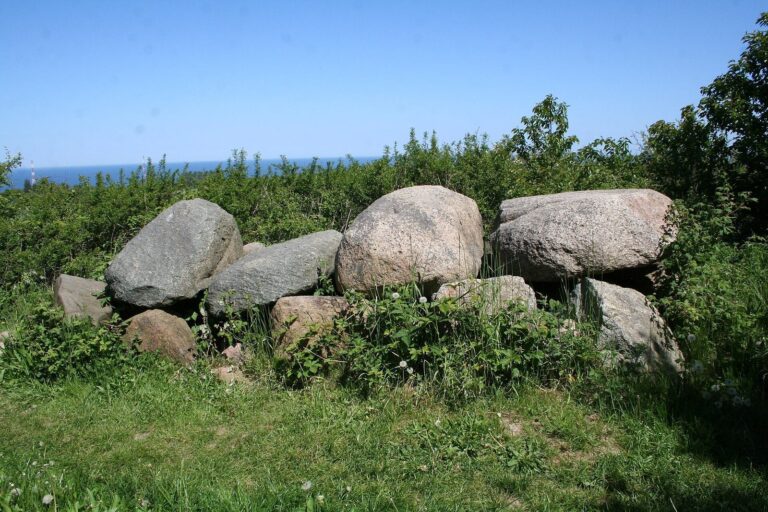
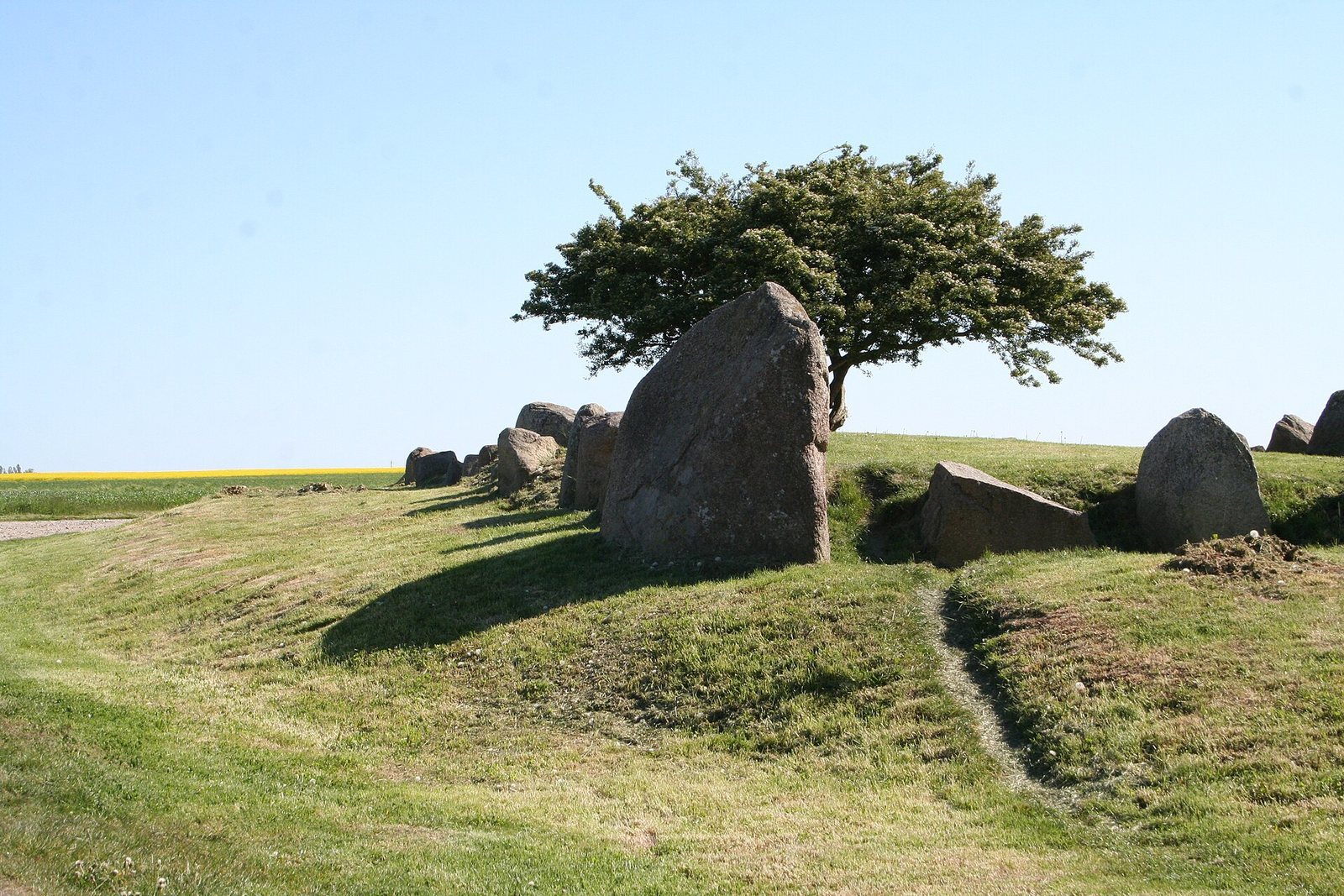
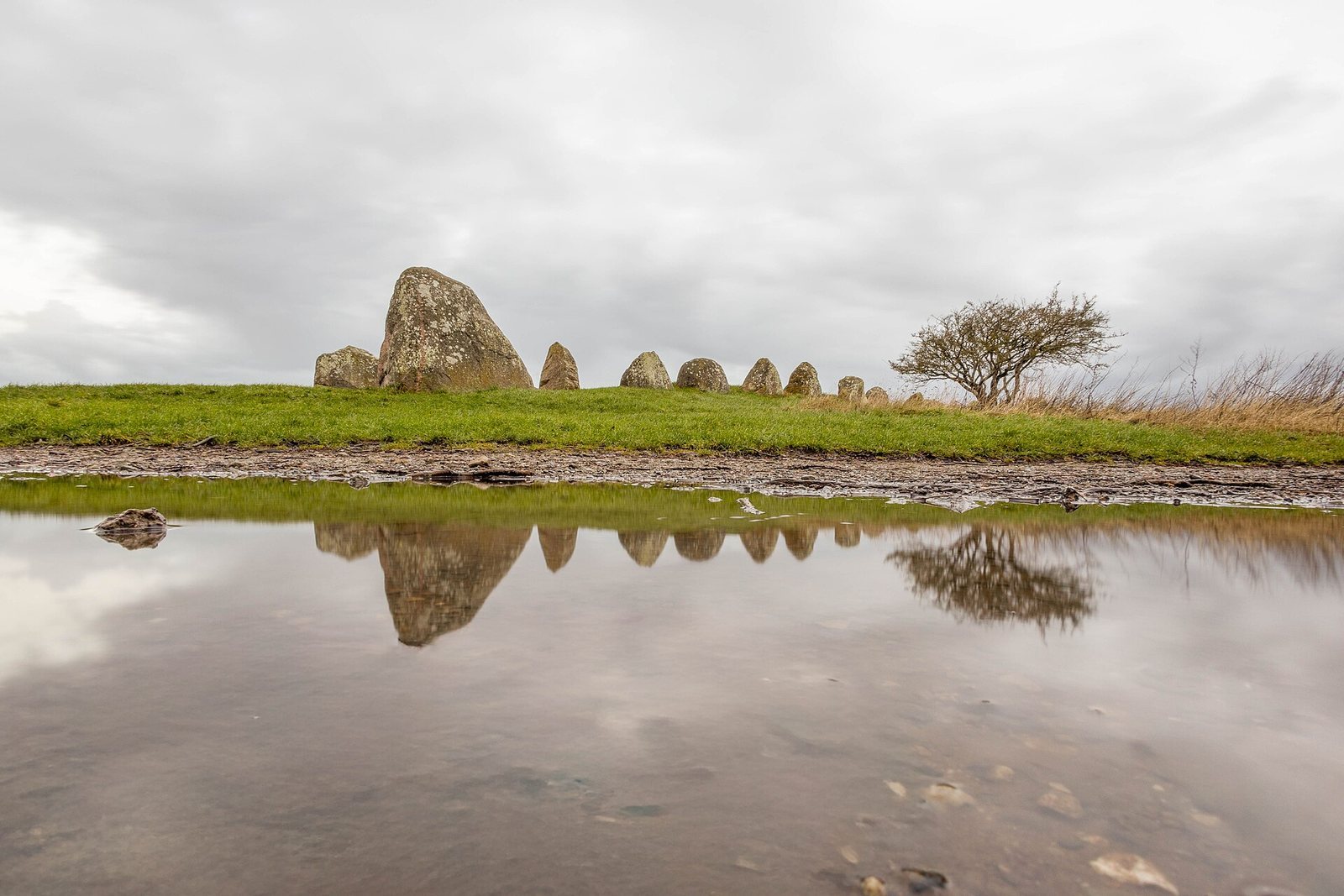
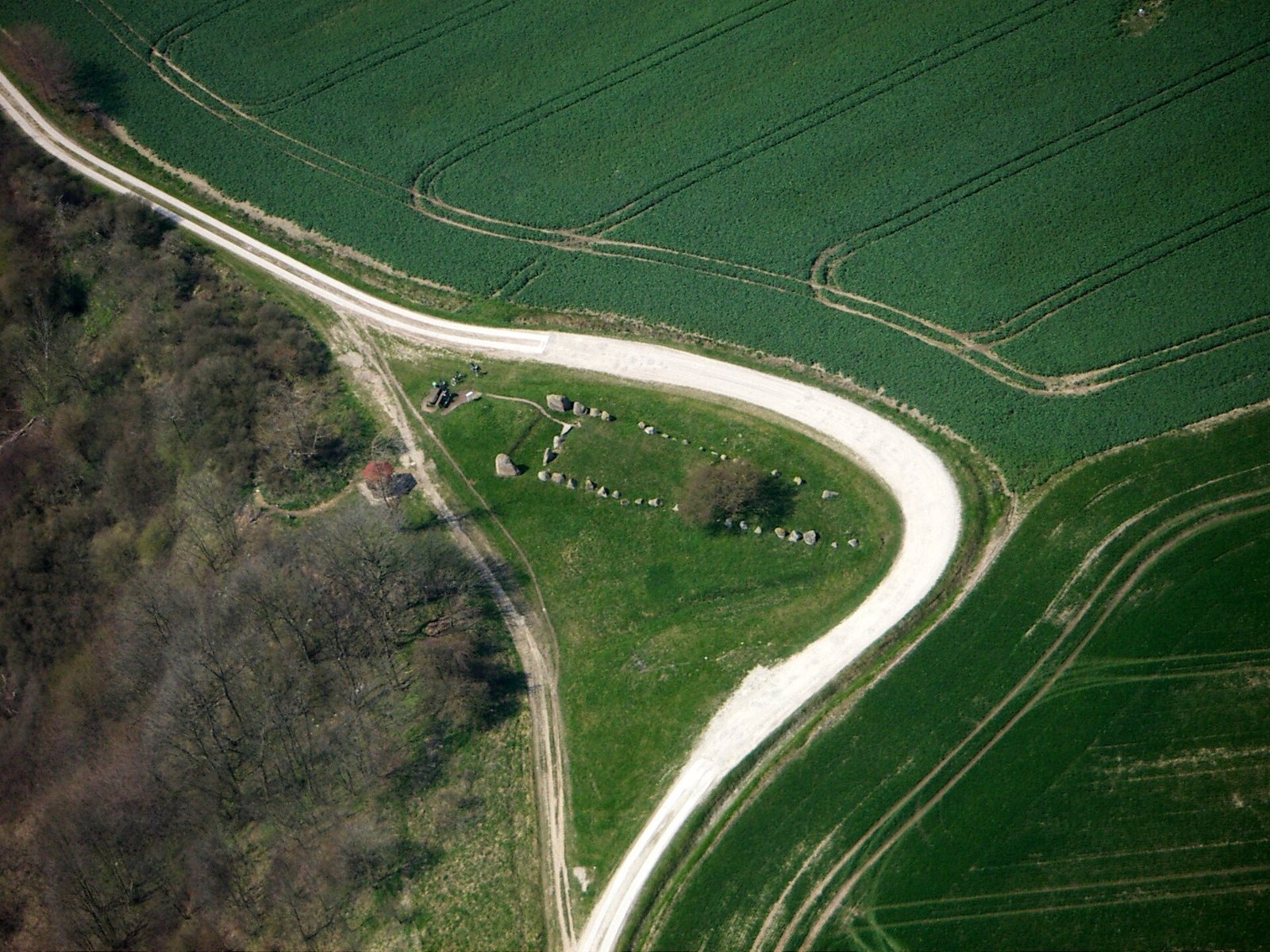
The tomb lies a few metres from the steep coast of Tromper Wiek. Its main structure is a trapezoidal enclosure of large boulders deposited by glaciers, measuring 34 m long and 8–11 m wide.
Burial structures and finds
Enclosure stones
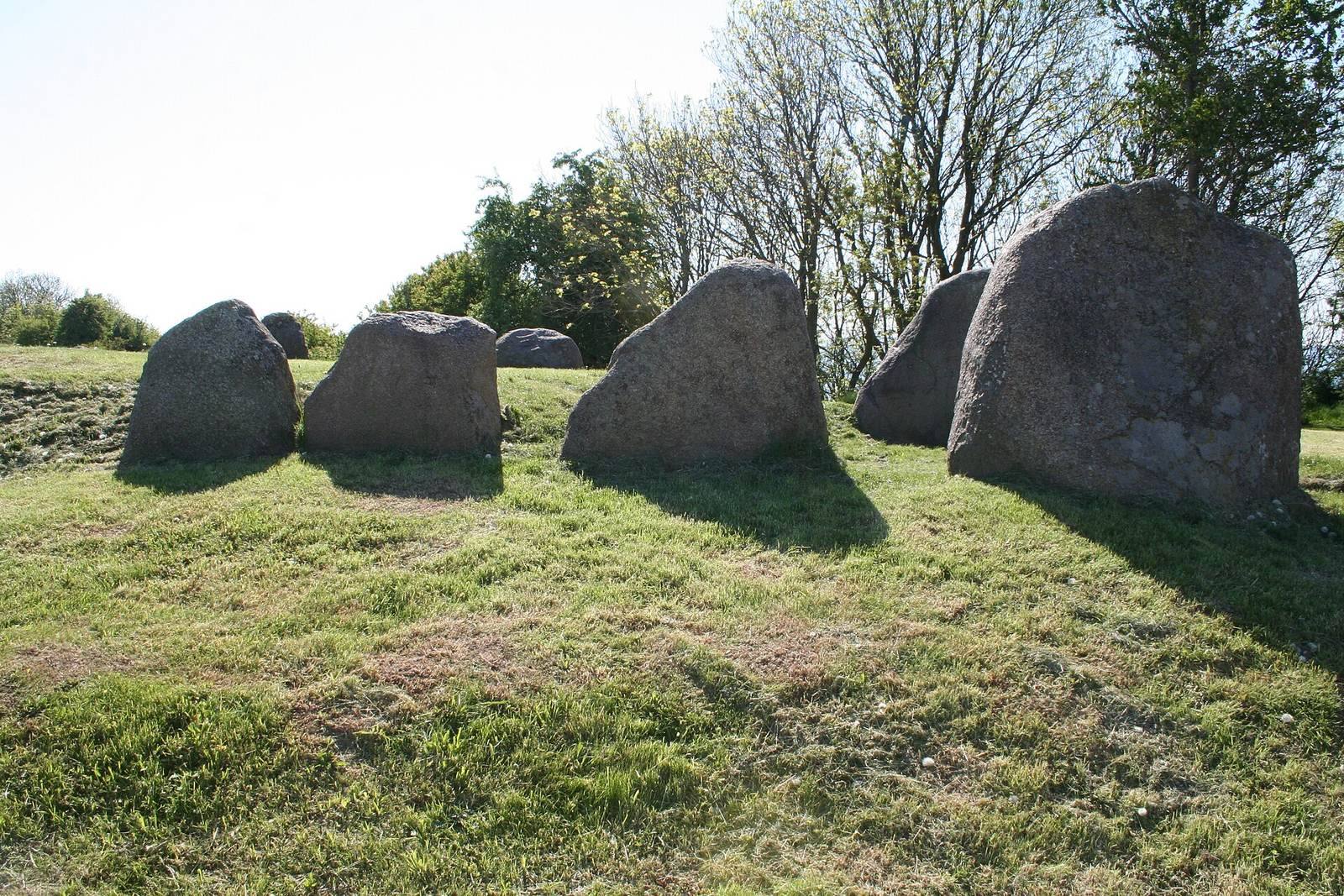
The enclosure was originally marked by 53 large stones, of which 39 survive.
Chambers
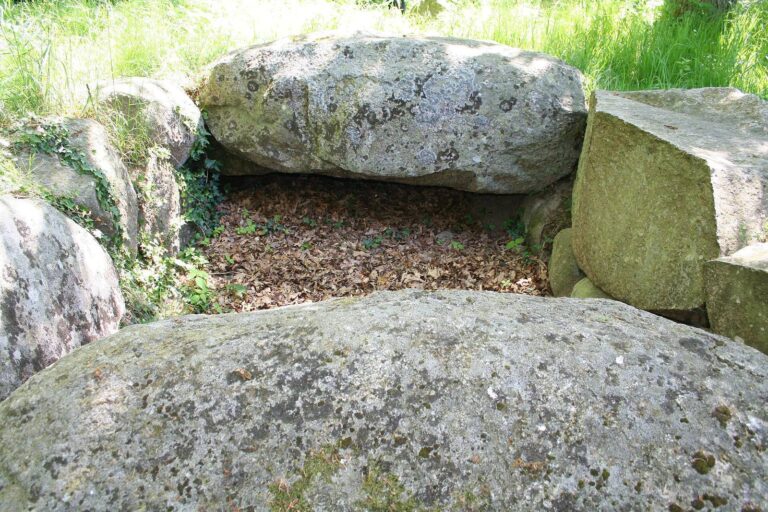
Two extended dolmens, megalithic tombs with elongated chambers, lie across the enclosure near its northwestern edge. The better-preserved chamber measures 1.4 m high, 1.8 m long and 1.1 m wide. It retains three supports resting on boulder bases and three roughly slab-shaped supports. Its slab-built entrance forms a sheltered entrance area aligned with the chamber, a design typical of large dolmens on Rügen. The second chamber had a similar arrangement, and one of its support stones survives.
Guardian stones
On the southwest side, a pair of stones known as guardian stones, a term for large stones placed outside a tomb enclosure, stands in front of the structure. They rise more than 3 m. Such stones are uncommon in Germany; similarly sized examples occur at Scandinavian dolmens and at the Rügen tombs of Dwasieden and Dummertevitz. Their presence at Nobbin has been linked to the site’s proximity to the Danish islands.
Excavated finds
Finds from the tomb include three arrowheads, a blade, pottery fragments from several vessels and a small number of bone fragments, including two skulls. The northern chamber held remains of an urn burial dating to the fifth century BC. Between the guardian stones, pottery from the period of Slavic settlement and cultural influence in the region was found alongside a ninth-century Arabic silver coin. Together, these finds indicate that the site remained important to people on the island across many centuries.