Dostoyevsky House in Staraya Russa: A Writer’s Home and Memorial Museum
Site at a Glance
- Popularity
- High
- Country
- Russia
- Primary era
- Modern
- Eras represented
- Modern
- Civilizations
- Russian
- Site type
- Domestic
- Remains
- House
On this page13 sections
History
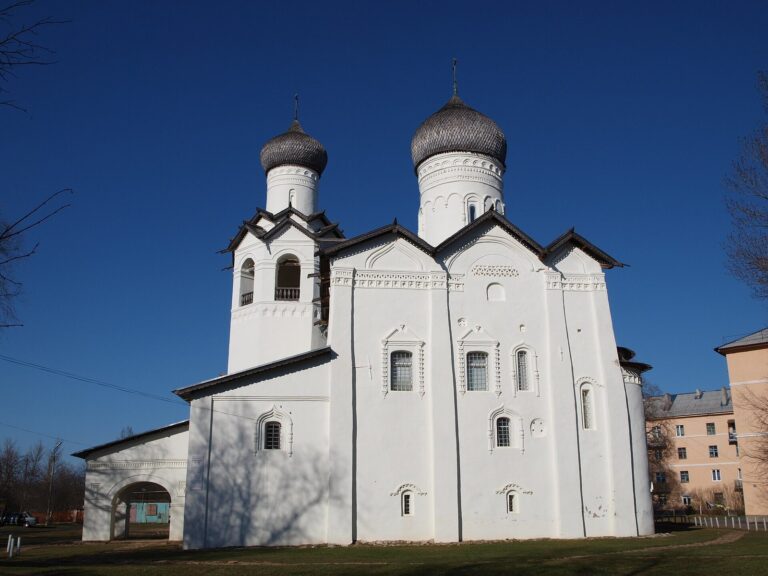
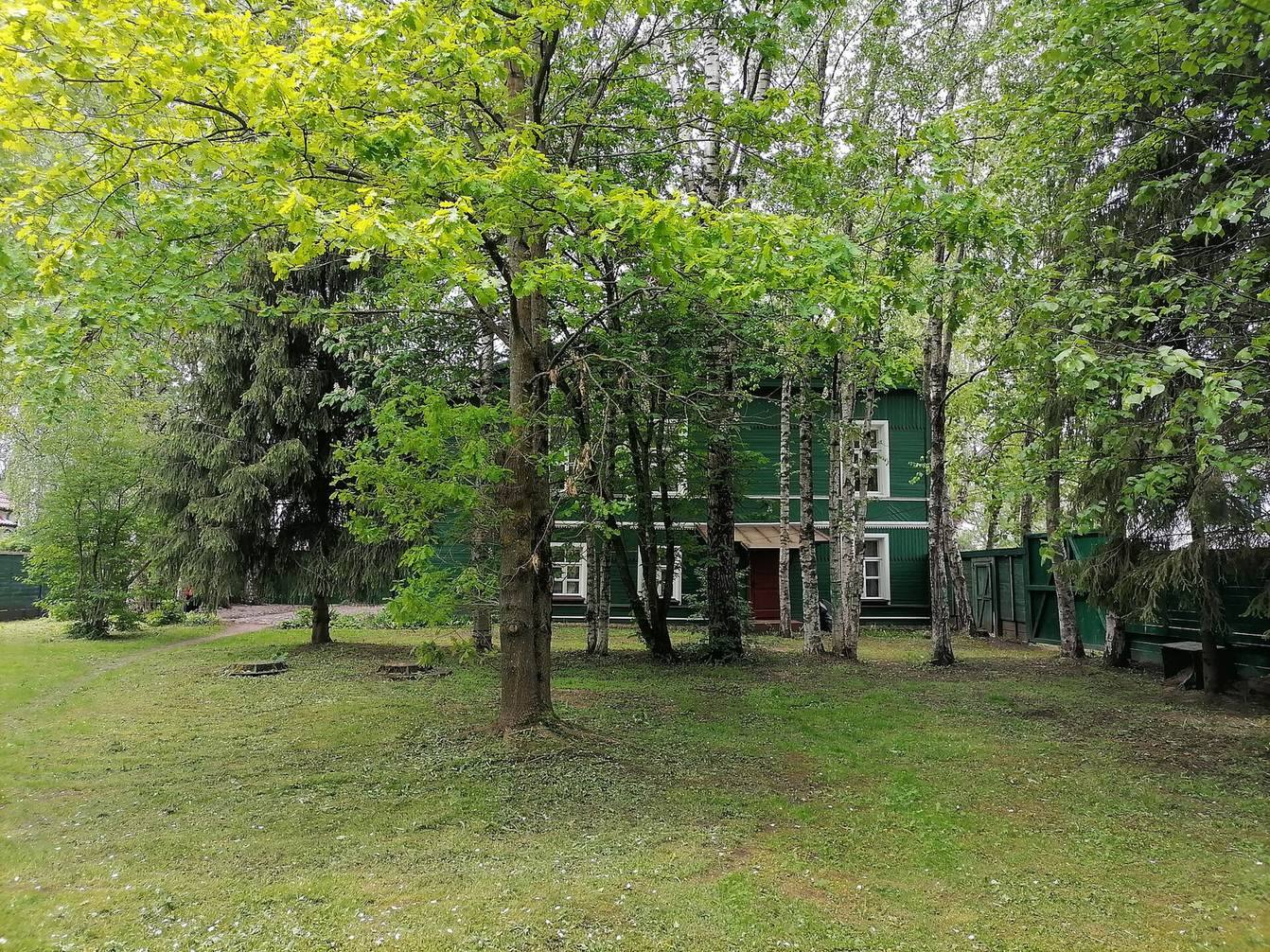
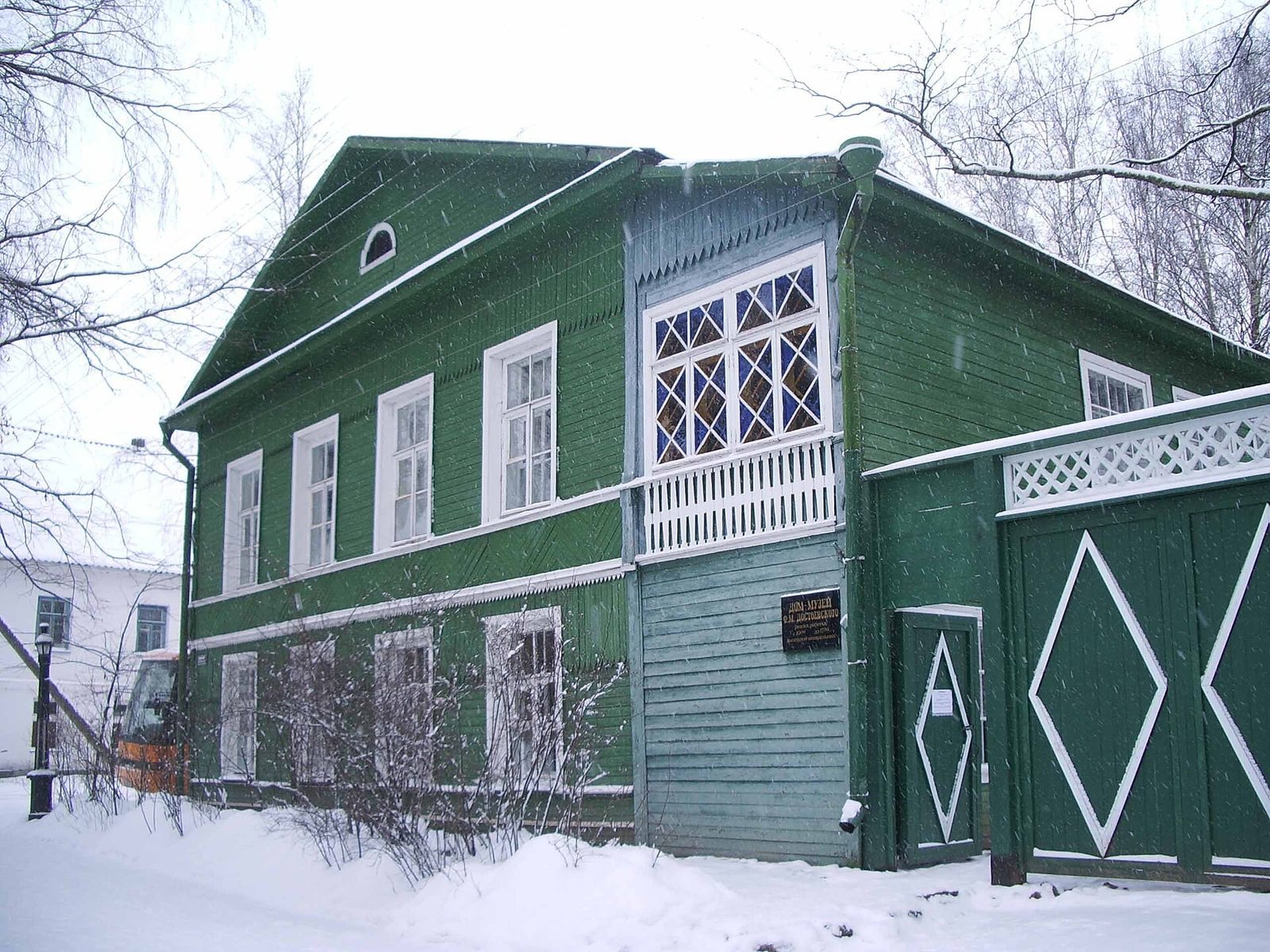
Dostoyevsky House in Staraya Russa is a two-story wooden residence in Russia associated with novelist Fyodor Dostoevsky and his family’s summer stays. They chose the town for its mineral springs, affordability, and convenient journey. Dostoevsky first arrived on May 18, 1872, and stayed with Father Ioann Rumyantsev, the priest responsible for St. George’s Church, who became his spiritual friend. Dostoevsky completed work on Demons during that stay.
Dostoevsky’s family home
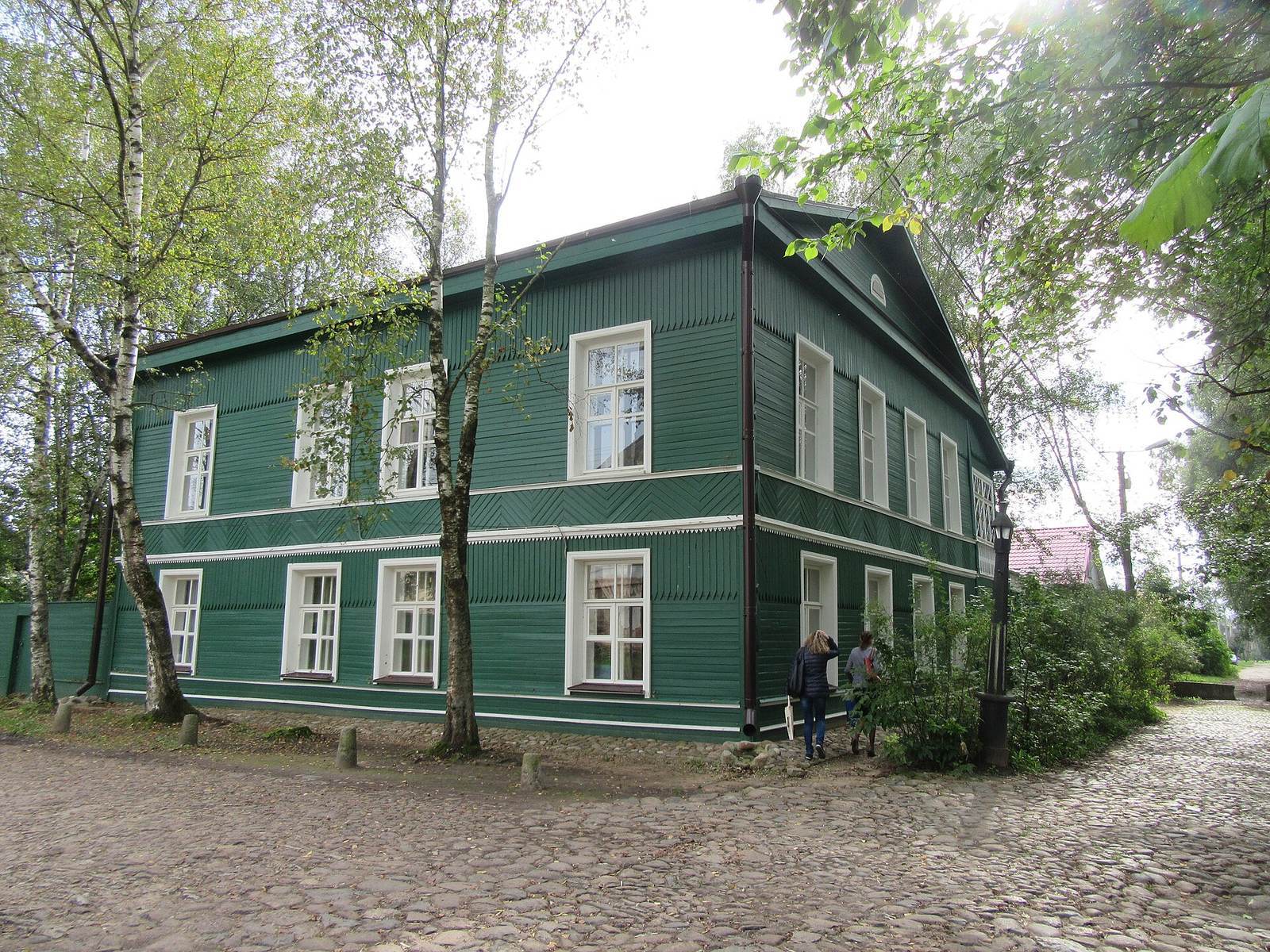
In the summer of 1873, the family rented a two-story wooden house belonging to retired lieutenant colonel A. K. Gribb. Their son Alexei was born there on August 10, 1875. After Gribb died, Dostoevsky bought the house from his heirs in May 1876. It was his first real estate purchase.
The house offered the family a retreat where Dostoevsky could work quietly away from the capital. He wrote there on The Adolescent, The Brothers Karamazov, and A Writer’s Diary. The fictional town of Skotoprigonyevsk in The Brothers Karamazov resembles Staraya Russa in many respects. In the summer of 1880, Dostoevsky wrote his Pushkin Speech over two weeks in the town, then delivered it in Moscow on June 8 at a meeting of the Society of Lovers of Russian Literature, a literary organization.
From family home to museum
After Dostoevsky died on January 28, 1881, his wife, Anna Dostoevskaya, continued to visit Staraya Russa until 1914. In 1883, she announced plans for a museum in the house, initially using two rooms on the upper floor. May 4, 1909, may be regarded as a foundation date for the house museum. In 1918, the city council declared the house a preserved historical and literary monument and transferred it to the Russian section of the Council for Public Education.
The house opened in 1921 as Staraya Russa’s first historical museum, named “The Manor House.” Anna had assembled much of its collection. By the time a memorial plaque was installed in the early 1930s, the museum had moved to Resurrection Cathedral. From 1930 to 1941, the house served first as a club and then as a dormitory for teachers.
War damage and the museum’s revival
During the Second World War, fire damaged the house, burning its veranda and roof. Repairs were completed by the winter of 1944–45, and the building was restored again in 1961 after a period of neglect. Much of Dostoevsky’s personal collection, which had been kept in Resurrection Cathedral, was looted after German soldiers used the building as a stable. Postwar efforts to restore the museum faced another obstacle when Dostoevsky’s works were removed from the school curriculum.
In the early 1960s, an architect began a local association whose members campaigned for a Dostoevsky museum. The idea gained fresh attention during Staraya Russa’s 800th-anniversary celebrations in 1967. An engineer published a book about Dostoevsky in the town, drawing on old postcards and photographs; local historian Georgy Smirnov and artist Vyacheslav Fyodorov also advanced the project. In 1969, Smirnov and Fyodorov arranged an exhibition in two rooms of the house. It covered Dostoevsky’s life before and during his years in Staraya Russa, including his involvement in the Petrashevsky Circle, a group of Russian intellectuals who discussed social and political ideas, and his penal servitude, imprisonment involving forced labor. A section on The Brothers Karamazov used a map of the town from the 1870s to identify places linked with events in the novel.
A museum exhibition opened in 1971, and on May 4, 1981, the whole house opened as a memorial museum. The museum is a branch of the Novgorod State United Museum-Reserve and is recognized as a cultural heritage site of federal significance. In 1982, a literary studio for schoolchildren began operating under director Vera Bogdanova and philologist Lyudmila Saraskina. The first Staraya Russa readings, titled “Dostoevsky and the Present,” took place there in May 1986. Museum staff and a Dostoevsky group at Pushkin House, a Russian literary research institution led by Georgy Friedlander, initiated the event.
Remains
Wooden house and estate
The two-story wooden house stands on a riverbank. Its estate included a large shady garden, a vegetable garden, and a Russian bathhouse that Dostoevsky particularly valued. The museum and its park and parking area together cover 1.3 hectares.
Memorial rooms and furnishings
Room arrangement
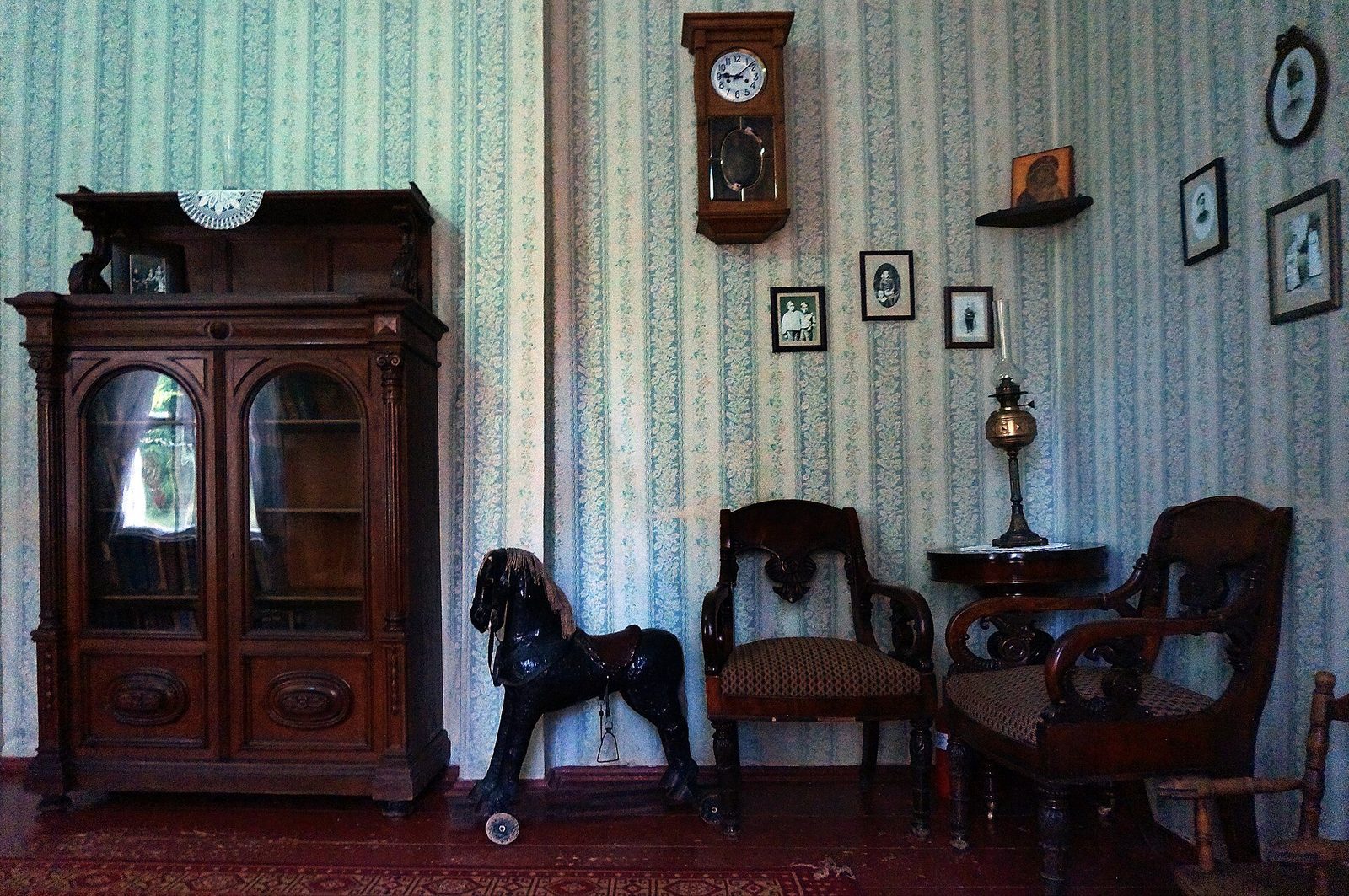
Six memorial rooms occupy the upper floor: an entrance hall, living room, study, dining room, Anna Dostoevskaya’s room, and a children’s room. Period furniture, photographs, and books help present the rooms as a family home. Their arrangement draws on recollections by family members, visitors, and guests.
Study
The study was reconstructed with the help of a nineteenth-century photograph. It contains Dostoevsky’s writing desk, manuscripts, editions of his works published during his lifetime, and writing equipment. Copies of paintings by Raphael, Titian, and Holbein the Younger hang alongside portraits of Balzac, Pushkin, Shakespeare, and Dickens. Photographs of Dostoevsky’s wife, children, and parents are displayed above the desk.
Dining room
The dining room is arranged for six people. An authentic porcelain service and silver tableware used by the Dostoevsky family are displayed on its table.
Museum holdings
The museum holds more than 8,000 items, including editions of Dostoevsky’s works published during his lifetime, books about his life and writing, illustrations, household objects, and furniture. Relatives transferred personal belongings of Dostoevsky and his family to the collection. These include his top hat and kid-leather glove, a harmonium, belongings of Anna, and the family table service. Another exhibit is a brick from the eighteenth-century guardhouse at Omsk Fortress, where Dostoevsky was imprisoned repeatedly during his forced-labor sentence.
Ground-floor and research spaces
The ground floor contains space for temporary exhibitions and musical or literary events. A scientific library is housed in the museum, while research staff work in a nearby attached building. The museum covers 170 square metres, including 50 square metres for temporary exhibitions and 22 square metres of storage.
House across the river
Almost opposite the Dostoyevsky house, across the river, stands the house where Agrippina Menytsova lived. She served as a model for Agrafena Alexandrovna Svetlova, known as Grushenka, in The Brothers Karamazov.