Pierre de Gargantua: A Neolithic Standing Stone in France
Site at a Glance
- Popularity
- Very Low
- Country
- France
- Primary era
- Stone Age
- Eras represented
- Stone Age
- Civilizations
- Unclassified
- Site type
- Civic
- Remains
- Megalithic Monument
On this page4 sections
History
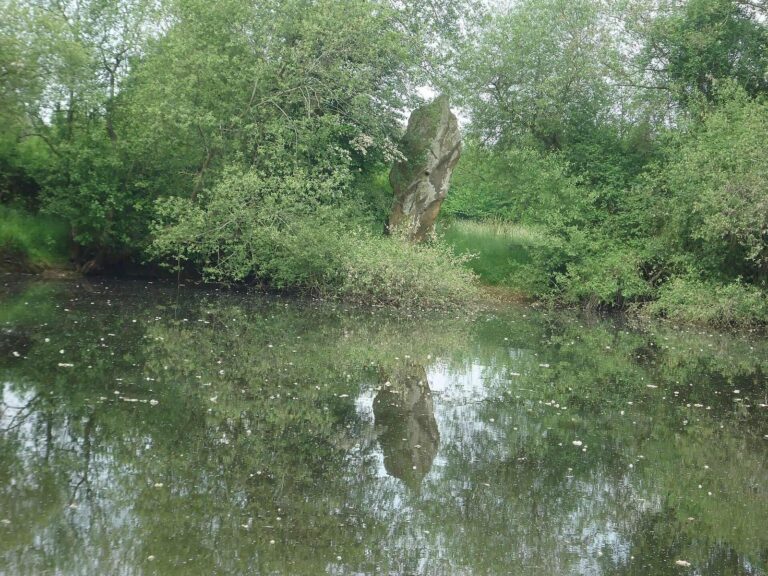
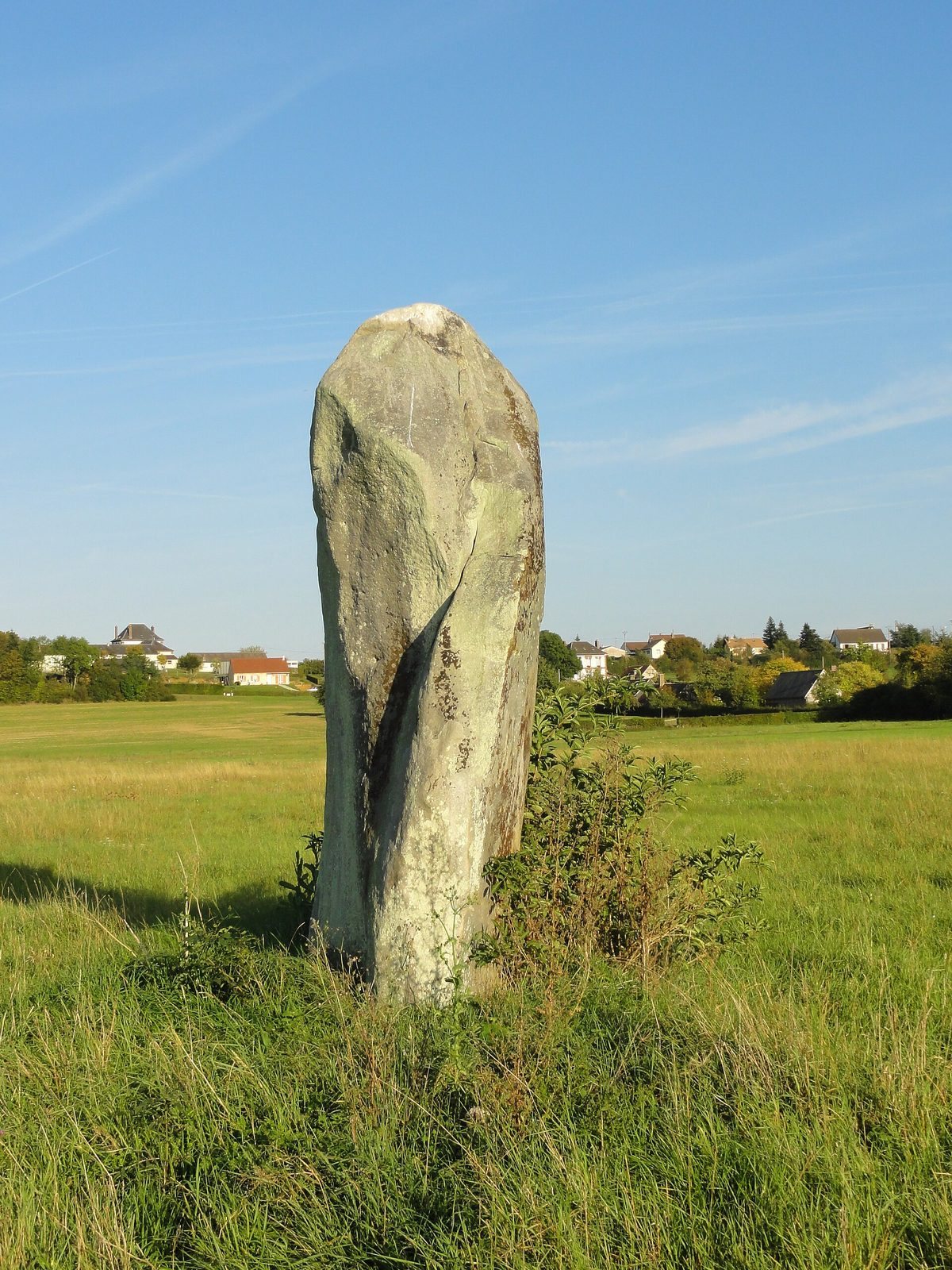
Pierre de Gargantua is a menhir, or prehistoric standing stone, in a field north of Neaufles-Auvergny, France. It dates to the Neolithic, the later part of the Stone Age, associated in many regions with farming and settled communities.
Early reference and later descriptions
A title from 1298 refers to a “long stone” in the meadows of the parish of Saint Hilaire of Nealpha, the earliest written mention of the menhir. Auguste Le Prévost reported that foundations of a building had been found near the stone and later destroyed. He also said that the land had once belonged to Lyre Abbey, a medieval monastery in Normandy.
Nineteenth-century antiquarians described the stone under different local names. In 1829, Frédéric Galeron portrayed an upright stone at Neauphle as Gargantua’s sharpening stone. Le Prévost recorded the menhir in a meadow at Neaufle-sur-Rille in 1832. The Viscount de Pulligny described it in 1879, and Léon Coutil included a detailed account in his 1896 inventory of Eure’s menhirs and dolmens.
Gargantua tradition and protection
The stone’s use for sharpening agricultural tools became part of local stories about Gargantua, a giant in French popular and literary tradition best known from François Rabelais’s writings. In Le Prévost’s 1832 version, Gargantua sharpened his scythe on the stone and, when his work was done, threw it into a valley as useless.
Pulligny’s longer 1879 tale places Gargantua near Rugles during the harvest. He examined the wheat, weighed grain in his hand, and encouraged the workers. Seeing harvesters overcome by heat near Neaufles-sur-Risle, he went to Rugles, then known for its iron foundries, and returned with a huge scythe. After sharpening it on the broad stone held in one hand, he cut the crop in a single stroke. The scythe was never found again; the stone remained where he had thrown it, and workers thereafter used it to sharpen their tools. The menhir was classified as a historic monument by order on 22 June 1934.
Remains
The menhir is a sandstone block standing in the middle of a field north of Neaufles-Auvergny. It is 4 metres high, averages 2.10 metres in width, and is 0.85 metres thick. Its perimeter measures 5.36 metres at ground level and 4.20 metres at human height. Its alternative name translates as “Gargantua’s sharpening stone.”
In 1832, Le Prévost estimated the stone’s height at 12 to 13 feet and its width at about 5 feet. He compared its fine-grained sandstone with stone from Chambrais and noted that it could be used to sharpen tools.