Pierre de la Joure: A Neolithic Menhir in Normandy
Site at a Glance
- Popularity
- Very Low
- Country
- France
- Primary era
- Stone Age
- Eras represented
- Stone Age
- Civilizations
- Unclassified
- Site type
- Civic
- Remains
- Megalithic Monument
On this page5 sections
History
Prehistoric setting and local traditions
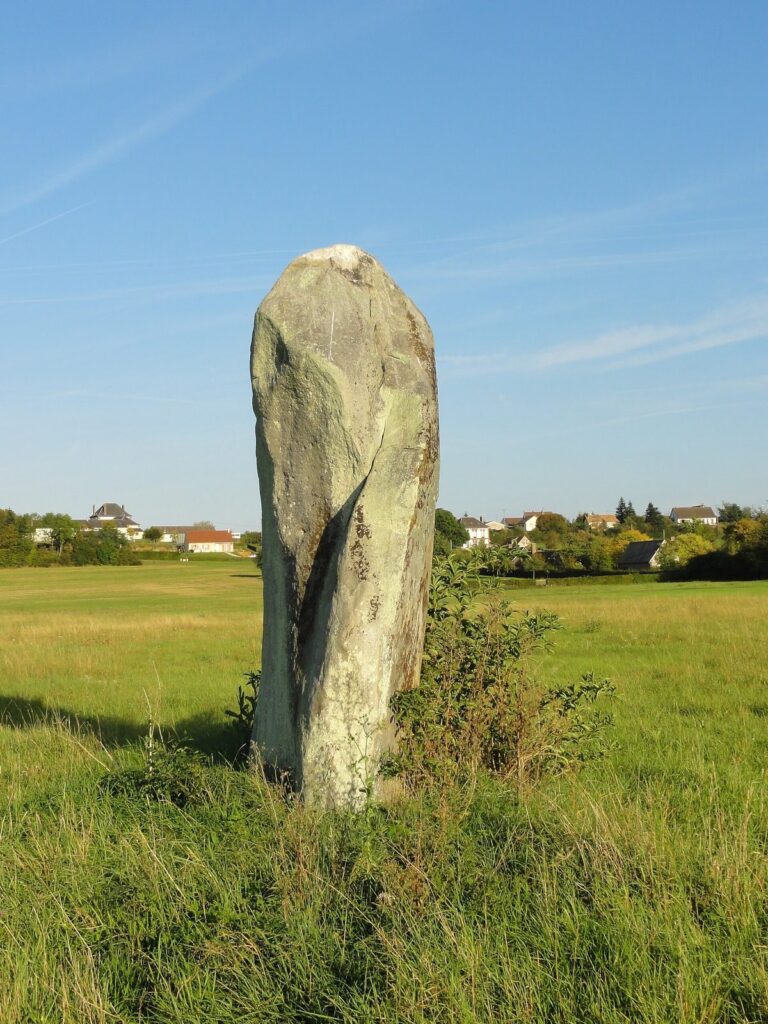
Pierre de la Joure is a menhir, a large upright prehistoric stone, near Saint-Nicolas-d’Attez, Saint-Ouen-d’Attez, and Condé-sur-Iton in Eure, Normandy, France. It dates to the Neolithic, the later Stone Age. Flint tools found in the commune, including axes, scrapers, hammerstones, arrowheads, and cores from which flakes were struck, indicate human presence over a long period. Nearby finds include almond-shaped Paleolithic axes and points made in the Mousterian tradition, a Middle Paleolithic stone-tool tradition.
Local stories connect the stone with the Roman conquest of Gaul. One places events around 57 BC, when Publius Crassus supposedly took control of the Eburovices, a Gallic people whose territory included the area around modern Évreux. In the tale, a local leader named Hoël and his clan hide in thickets as a Roman legion passes. Overcome by grief and shame, Hoël kills himself and is buried in front of the stone, said to have been a place of ancestral worship. The same tradition tells of sobbing heard nearby on stormy nights.
The menhir also has several traditional names, including Pierre de Gargantua, invoking the giant of French folklore. One Christmas legend says the stone rises during Mass to reveal treasure. Another claims that gold may be drawn from a cleft at midnight on Christmas Eve, during the elevation at Mass, but that the opening can close on the hand of someone who seeks it greedily.
Descriptions and threat to the stone
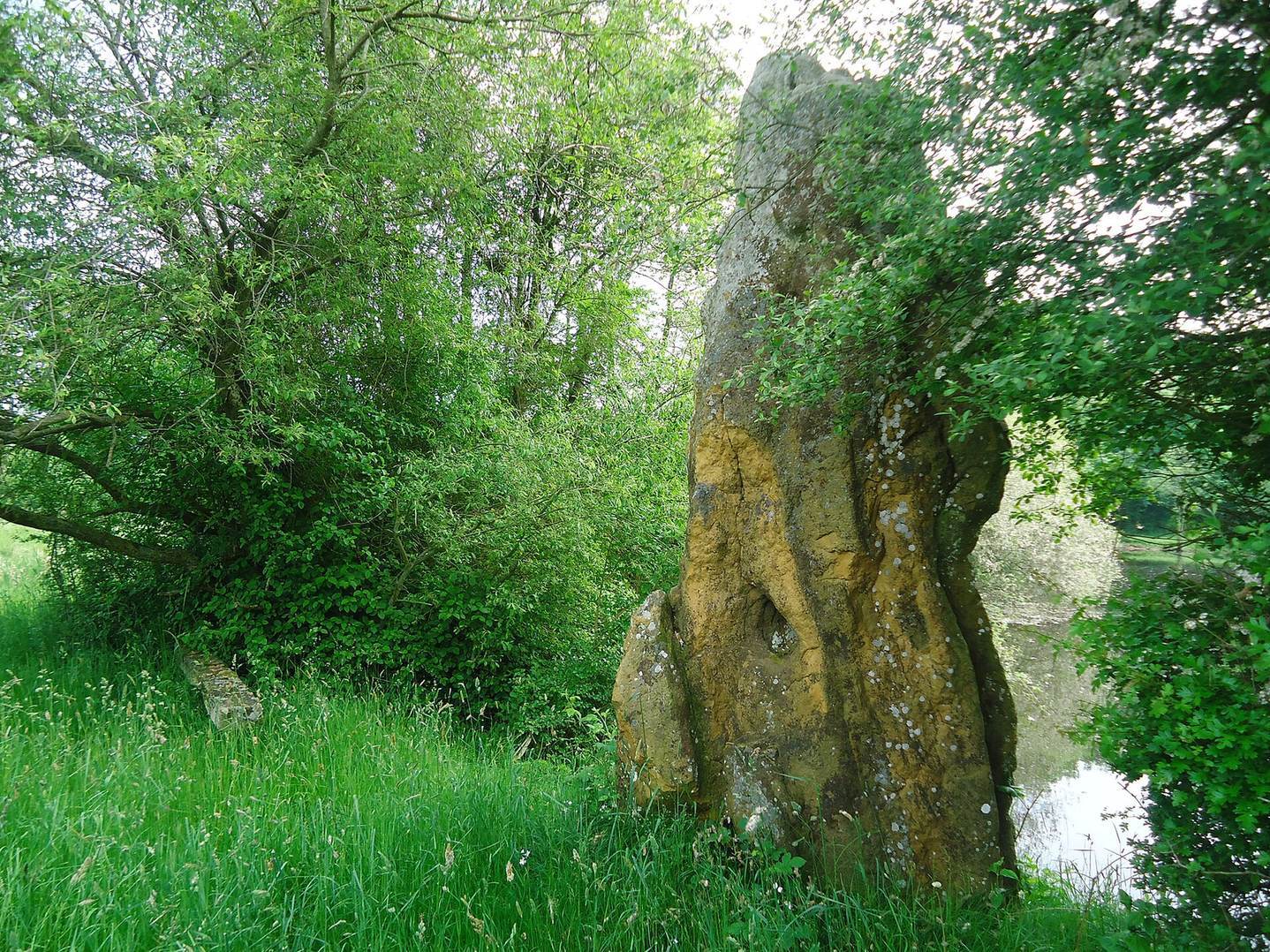
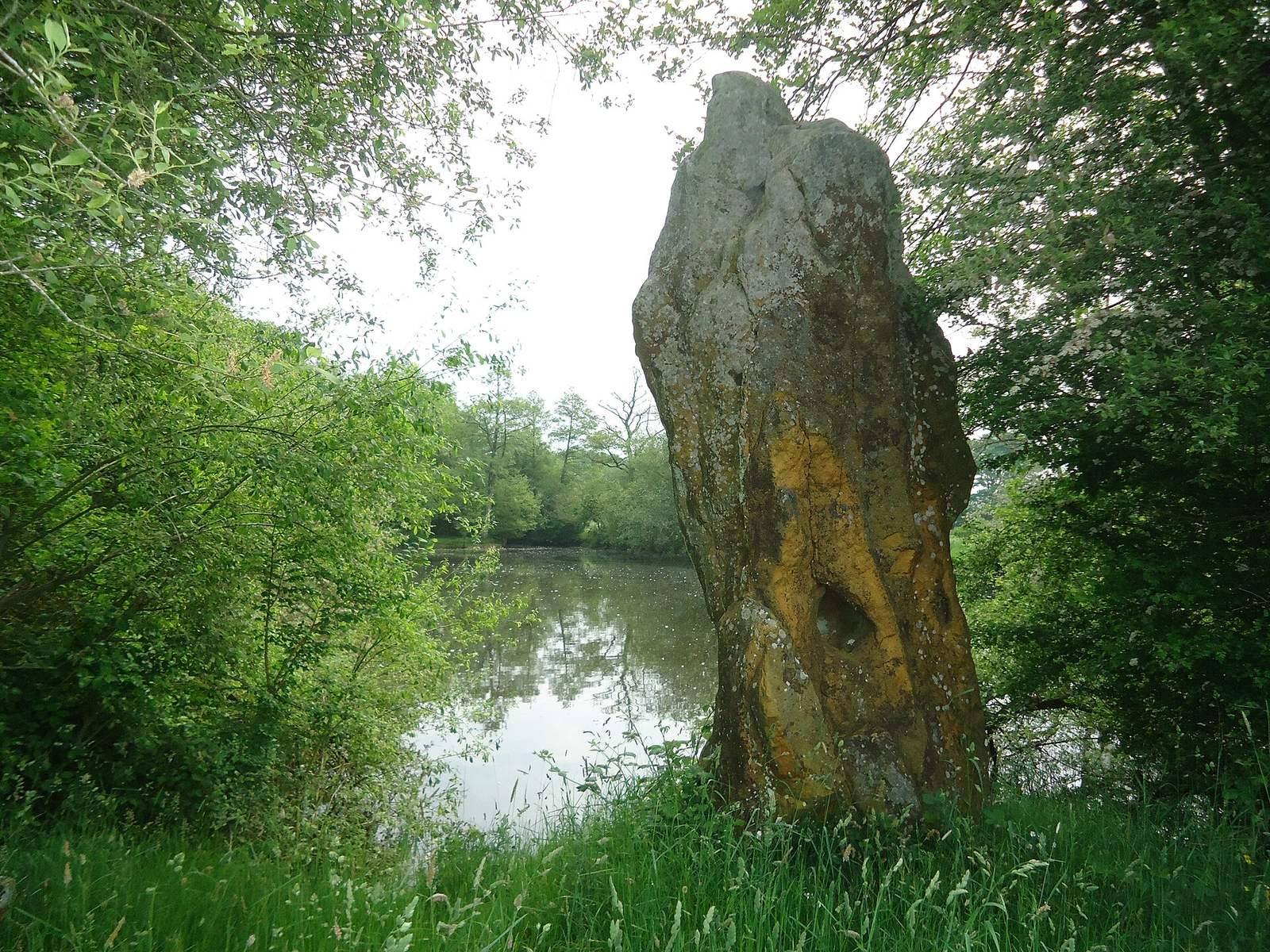
Auguste Le Prévost gave an early description in 1832. In 1896, Léon Coutil, then president of the French Prehistoric Society, described the menhir and sought to prevent its destruction. In that year, Alphonse-Georges Poulain interpreted the rounded extension at its summit as a rough likeness of a human head. He suggested that three partly weathered holes might represent eyes and a nose, perhaps depicting a locally celebrated hero.
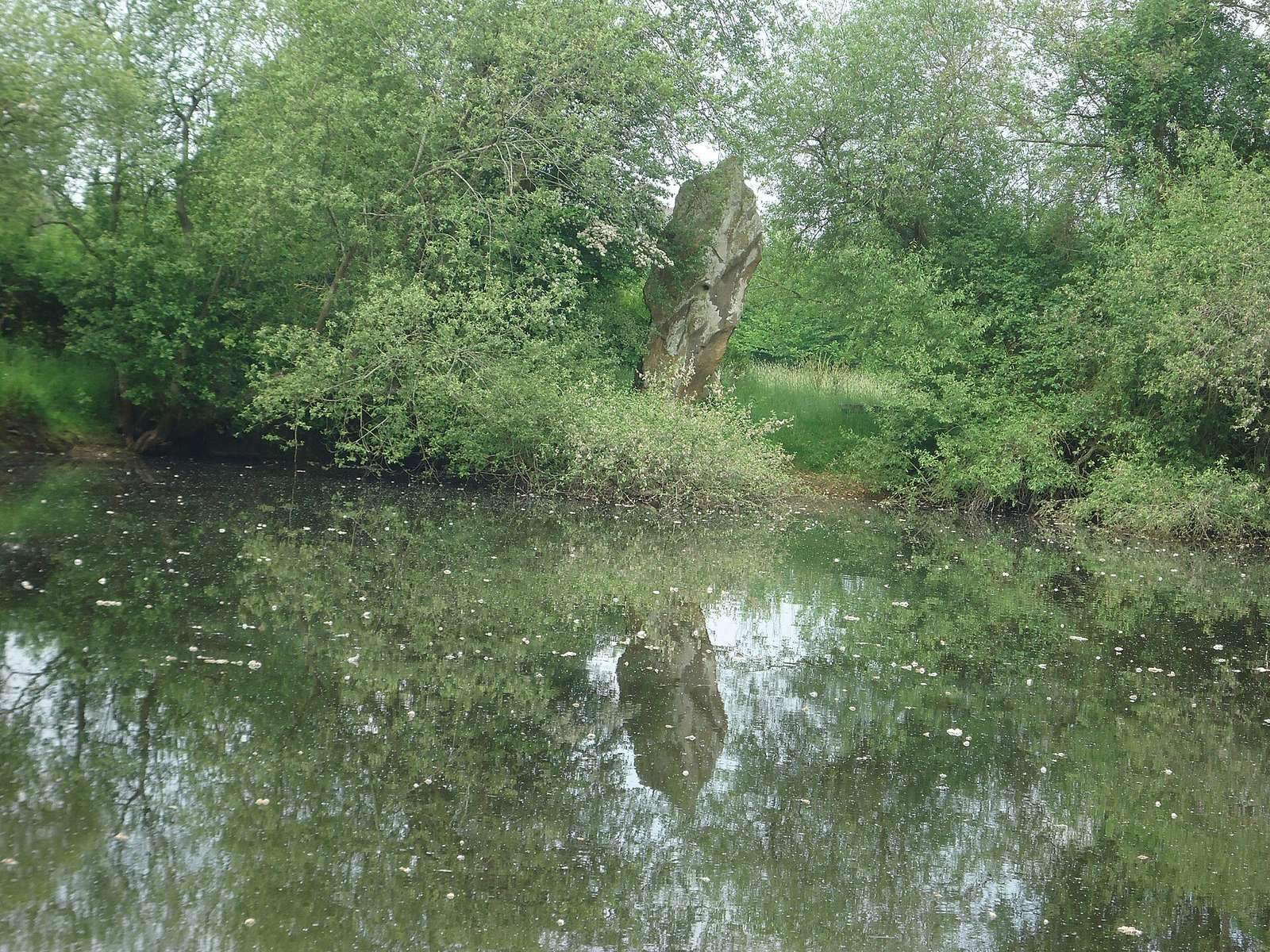
When Coutil returned in 1901, sand and gravel almost concealed the stone. Only 1.2 m remained exposed beneath a heap more than 30 m long and 3.3 m high. A masonry contractor from Breteuil had bought the marshy, alluvial land and extracted material for three months during a dry spell. The work left a water-filled pit only 4–5 m from the menhir’s base; the Iton lay about 55 m to the south. Coutil tried to buy the stone after it was uncovered, but the asking price was too high. The land was subsequently sold to a Breteuil business agent who planned to move the menhir to a château park. The extraction also weakened the ground and contributed to the stone’s present tilt.
Protection
Pierre de la Joure was classified as a historic monument by an order dated 6 December 1934, giving it formal protection.
Remains
The menhir stands at the edge of a pond fed by the Iton, near the boundaries of Saint-Nicolas-d’Attez, Saint-Ouen-d’Attez, and Condé-sur-Iton. Made of very hard ferruginous sandstone, meaning sandstone containing iron minerals, it rises 4.5 m. Its recorded measurements also give an average width of 2.2 m and a further dimension of 1.6 m. The stone narrows toward a rounded point. Its east face is flat, while the west face bulges near the top; 1.5 m below the summit, the flattened side reaches a maximum width of 1.4 m. A fissure at the top measures 0.4 m long and 0.05 m wide, and deeper fissures mark the west face, including one about 0.8 m above the ground. On the side away from the pond, a cleft lies about 0.6 m below the summit.