Menir de Luzim: A Prehistoric Standing-Stone Monument in Portugal
Site at a Glance
- Popularity
- Low
- Country
- Portugal
- Primary era
- Stone Age
- Eras represented
- Stone Age
- Civilizations
- Unclassified
- Site type
- Civic
- Remains
- Megalithic Monument
History
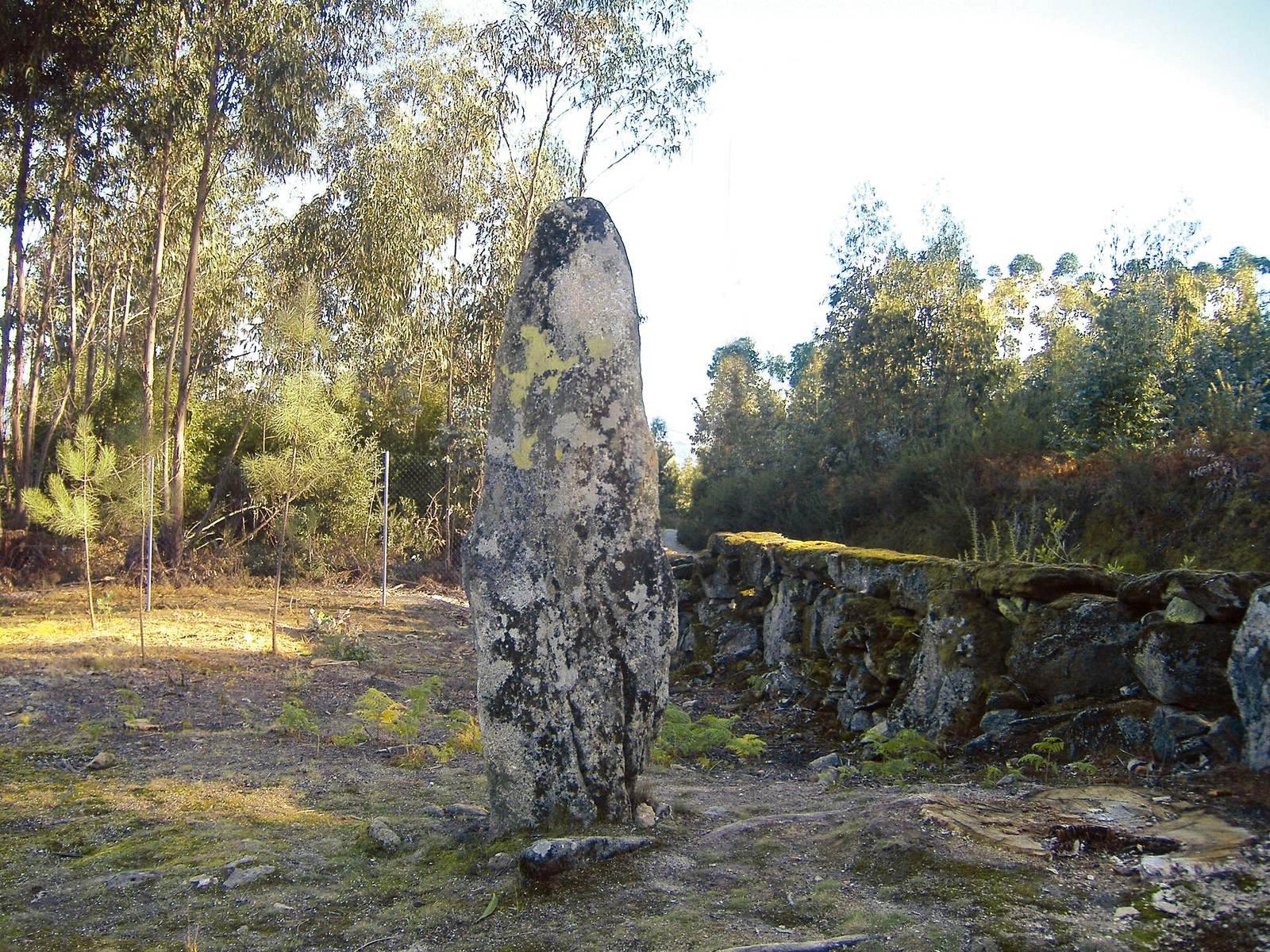
Menir de Luzim, also known as Marco de Luzim, is an upright stone monument in Luzim, Portugal. It is thought to have been erected in the Neolithic, a prehistoric period associated with farming and settled communities, or the Chalcolithic, a period associated with the use of copper.
The earliest known written references date to 1864, when Simão Rodrigues Ferreira wrote about the monument. These references may be the earliest Portuguese records of a megalith of this type. Ferreira returned to the subject in 1875 and 1880, and José Leite de Vasconcellos mentioned it in 1895.
In the 1930s, Joaquim Santos Júnior studied the stone and excavated its base at the invitation of local priest José Monteiro de Aguiar. The two published a joint study in 1940, following a presentation at the Portuguese World Congress, a scholarly and cultural gathering held in Portugal. José Lanhas wrote about the monument in the 1960s. Portugal designated it a Property of Public Interest in 1970, a legal category protecting immovable cultural heritage. In 1982, Vítor Oliveira Jorge investigated it for his doctoral thesis on megalithism in northern Portugal. The monument was cleaned in 2008.
Remains
The monument is an elongated granite stone with a roughly pentagonal cross-section. It stands about 2.5 metres high, with 2.15 metres above ground. Small wedge-shaped stones around its base support it.
Menir de Luzim stands at Lomar, in the Tapada de Sequeiros area, amid several rises in gently undulating terrain considered part of the Serra de Luzim. It lies on the boundary between the parishes of Luzim e Vila Cova and Perozelo, in Penafiel municipality. The stone is associated with the Luzim, or Tapada de Sequeiros, prehistoric monument group, which comprises five earth mounds and the rock paintings of Pegadinhas de São Gonçalo.