Trethevy Quoit: A Neolithic Portal Tomb near Liskeard
Site at a Glance
- Popularity
- Medium
- Country
- United Kingdom
- Primary era
- Stone Age
- Eras represented
- Stone Age
- Civilizations
- Unclassified
- Site type
- Burial
- Remains
- Tomb
On this page10 sections
History
Trethevy Quoit is a Neolithic portal tomb near Darite, north of Liskeard, in the United Kingdom. A portal tomb is a burial chamber made from large stones supporting a capstone, and Neolithic refers to the later Stone Age. The monument probably dates to around 3700–3500 BC, when farming communities built structures of this kind. Such tombs may have served as communal graves or places of religious activity.
Tradition and early records
Local tradition calls the tomb “The Giant’s House” and attributes it either to giants or, in an Arthurian story, to Merlin. John Norden, an English mapmaker and topographer, made the earliest known record in 1584. He described a small structure of massive stones on a hill among fields and included a drawing. His manuscript was presented to James I, then king of England, in 1604, published in 1728 and acquired by the British Museum in 1753.
Antiquarian and archaeological study
In the nineteenth century, Cornish antiquary and archaeologist William Copeland Borlase studied the monument and drew it. His interpretations considered how the collapsed rear wall affected the tomb and what it may have looked like before that damage.
In 1932, archaeologist Hugh O’Neill Hencken published a modern interpretation of Trethevy Quoit. He discussed its entrance space and compared the structure with examples in Brittany.
Protection and management
Trethevy Quoit was scheduled as a monument in 1923, placing it under legal protection. The Cornwall Heritage Trust acquired the site in 2016 and manages it on behalf of English Heritage. In 2017 it was added to the Heritage at Risk Register because of fencing damage, increasing erosion by livestock and work in surrounding fields.
Remains
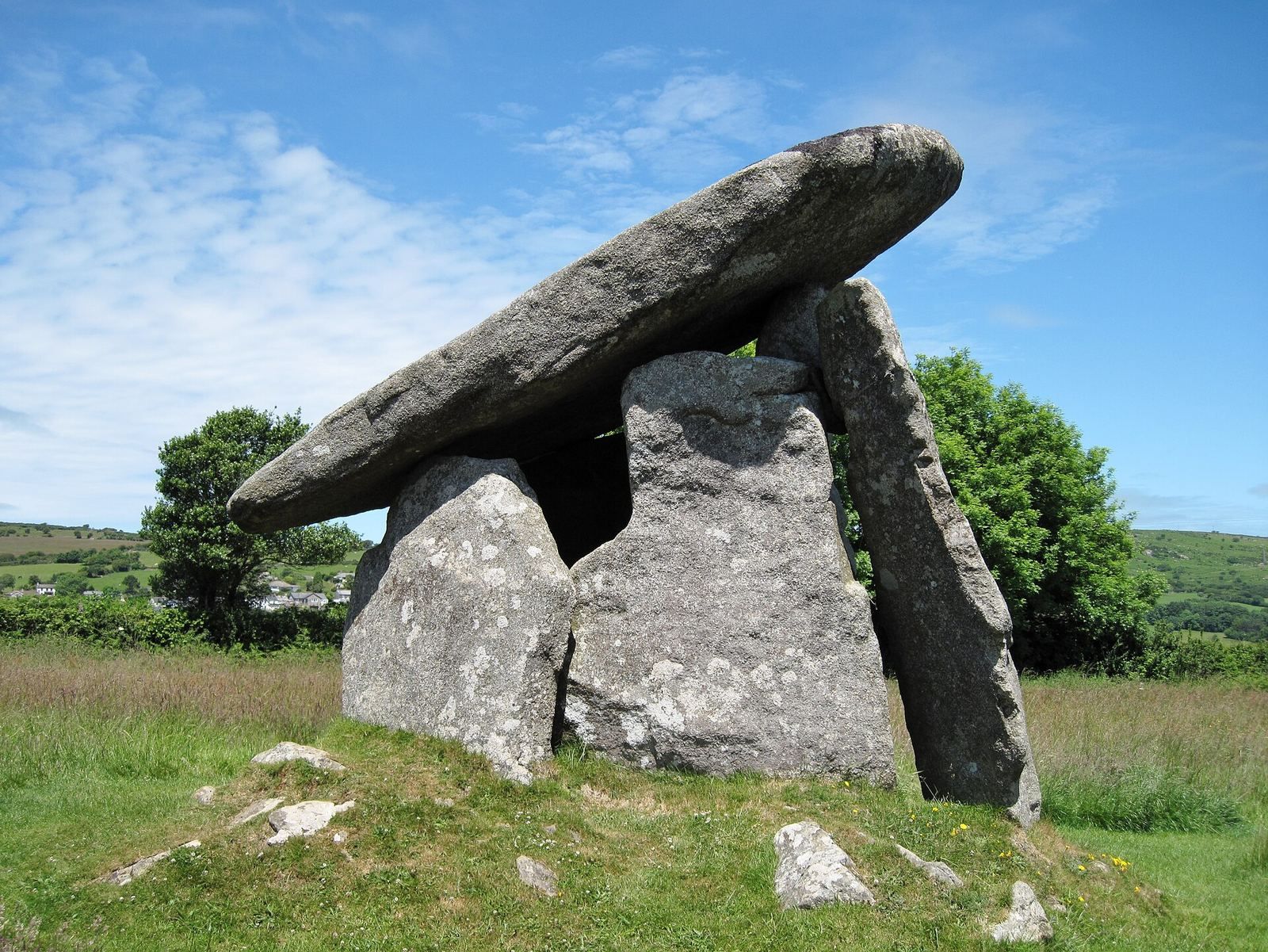
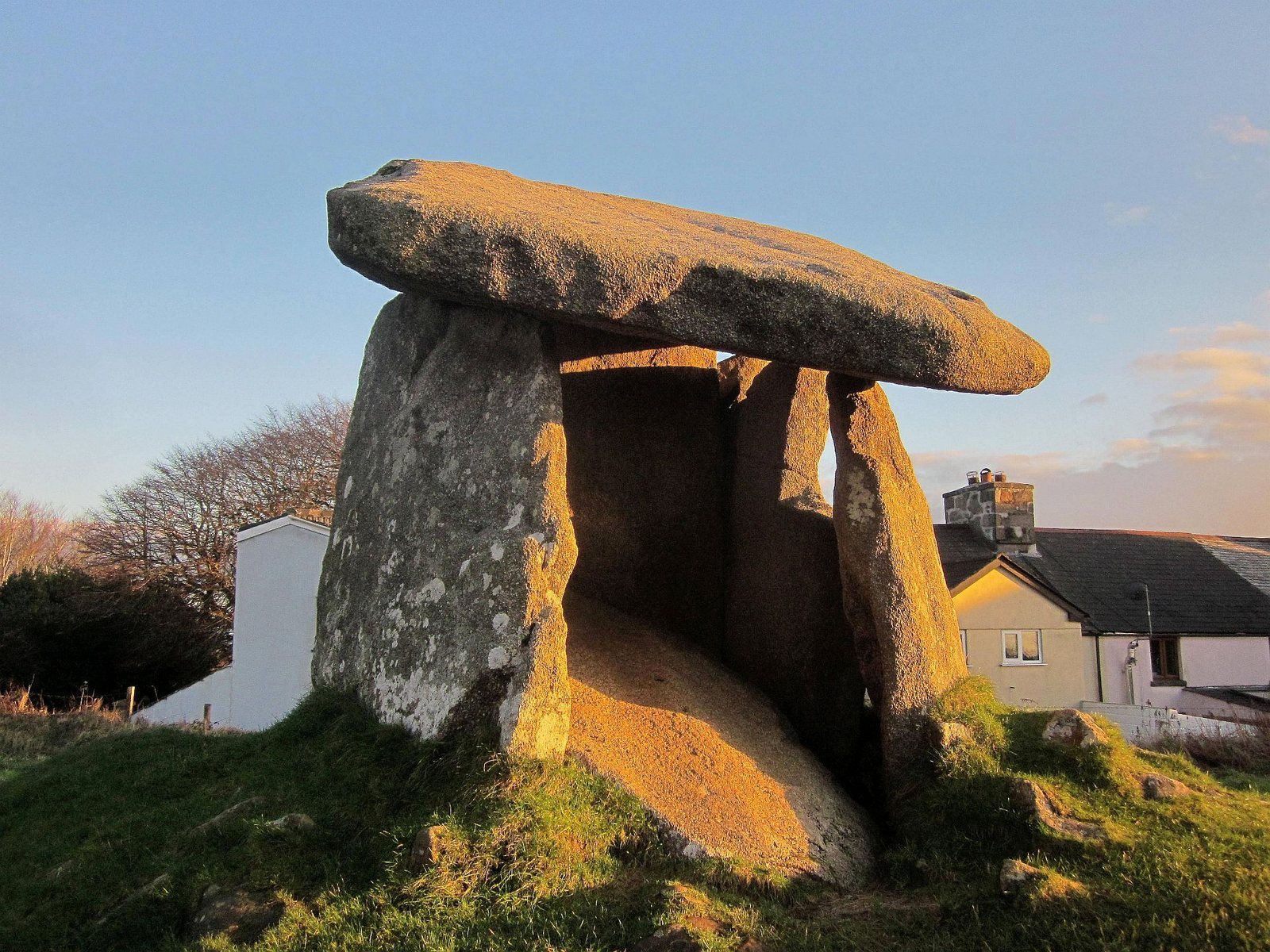
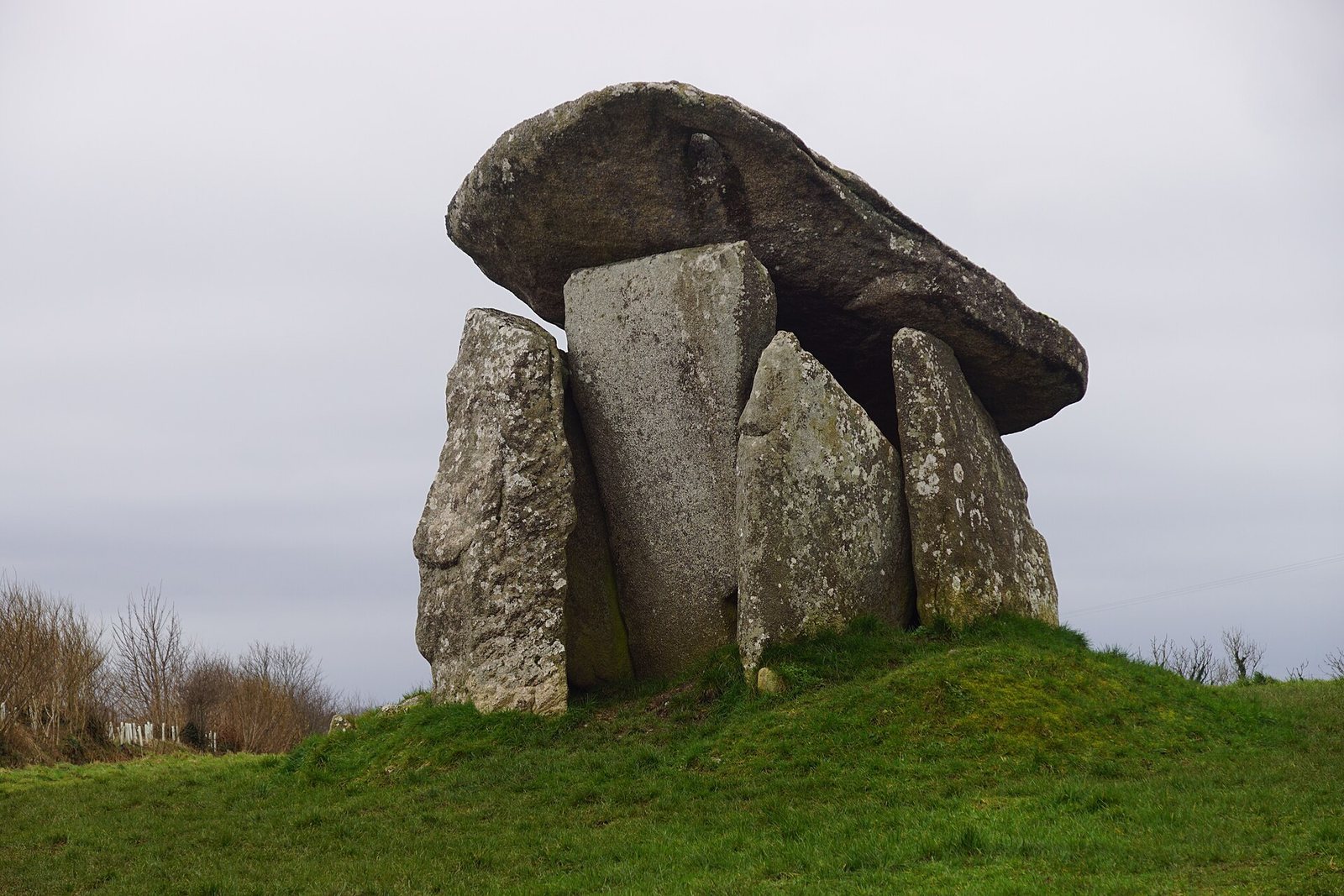
The surviving monument centers on a stone chamber beneath a large capstone, with a partly enclosed space in front. Its stones and the traces of the former mound preserve the outline of the tomb’s original arrangement.
Setting and mound
The quoit stands on a promontory on Bodmin Moor, in Tremar Coombe between St Cleer and Darite. It overlooks the meeting of several streams south of the River Seaton. The tomb was once enclosed within an earthen mound, traces of which indicate a diameter of about 6.5 metres.
Stone chamber
Supports and capstone
The structure is about 3 metres high and weighs around 20 tonnes overall. Seven stones remain apart from the cover slab. The principal supports include a fallen rear wall, two overlapping side stones, a front stone and a set-back flanking stone. The cover slab is 3.7 metres long and weighs 10.5 tonnes. A natural hole near its upper end may have been used for observing the sky, while perforations in some stones served as decoration.
Chamber and entrance space
The chamber measures about 2 metres long and 1.5 metres wide, reaching 4.6 metres at its highest point. A partly enclosed space before it forms an antechamber, an entrance area associated with portal graves in Cornwall. A small, movable rectangular stone at the lower right of the front provides access to the chamber, unlike the usually fixed front stones of portal tombs.
Collapsed rear wall
The rear wall has fallen inward and forms a pile inside the chamber. Had it remained upright, it would have been about as high as the front stone. This suggests that the capstone rested almost horizontally on the front and rear supports rather than on the side stones. A resulting gap between the supports and side walls could have allowed earth into the chamber. The rear wall’s collapse and the capstone’s fall probably damaged the side stones.