San Bernardino in Panisperna: A Baroque Church in Rome
Site at a Glance
- Popularity
- Low
- Country
- Italy
- Primary era
- Early Modern
- Eras represented
- Early Modern
- Civilizations
- Papal States
- Site type
- Religious
- Remains
- Church
On this page15 sections
History
San Bernardino in Panisperna is a Roman Catholic church on Via Panisperna in Rome, Italy. Dedicated to Saint Bernardino of Siena, a fifteenth-century Franciscan preacher, it was built in the early seventeenth century in the Baroque style and consecrated in 1625.
Monastery and church foundation
In the late sixteenth century, Pope Clement VIII, who reigned from 1592 to 1605, directed Franciscan tertiary nuns from Sant’Eufemia al Foro Traiano to move to a monastery at this site. These nuns belonged to a community in the Franciscan tradition, distinct from the Poor Clares. The monastery was dedicated to Saint Veneranda and included an oratory. The name Panisperna may come from the Latin words panis (bread) and perna (ham). A traditional explanation connects the name to Poor Clares at the monastery of San Lorenzo in Panisperna, who were believed to have distributed bread and ham to the poor.
Roman noblewoman Gregoria Principessa di Santacroce promoted the church’s construction. Cardinal Guglielmo Sirleto, a scholar and librarian of the Vatican Library, is buried in the church; he died in 1585, before its consecration.
Later use and community
Shortly after 1870, the Italian state expropriated the nunnery and converted it into a school.
Since 2003, the church has served as an official parish church for Rome’s Chinese Roman Catholic community. It belongs to the parish of Santa Maria ai Monti in the Diocese of Rome and follows the Roman Rite, the principal liturgical tradition of the Latin Catholic Church.
Remains
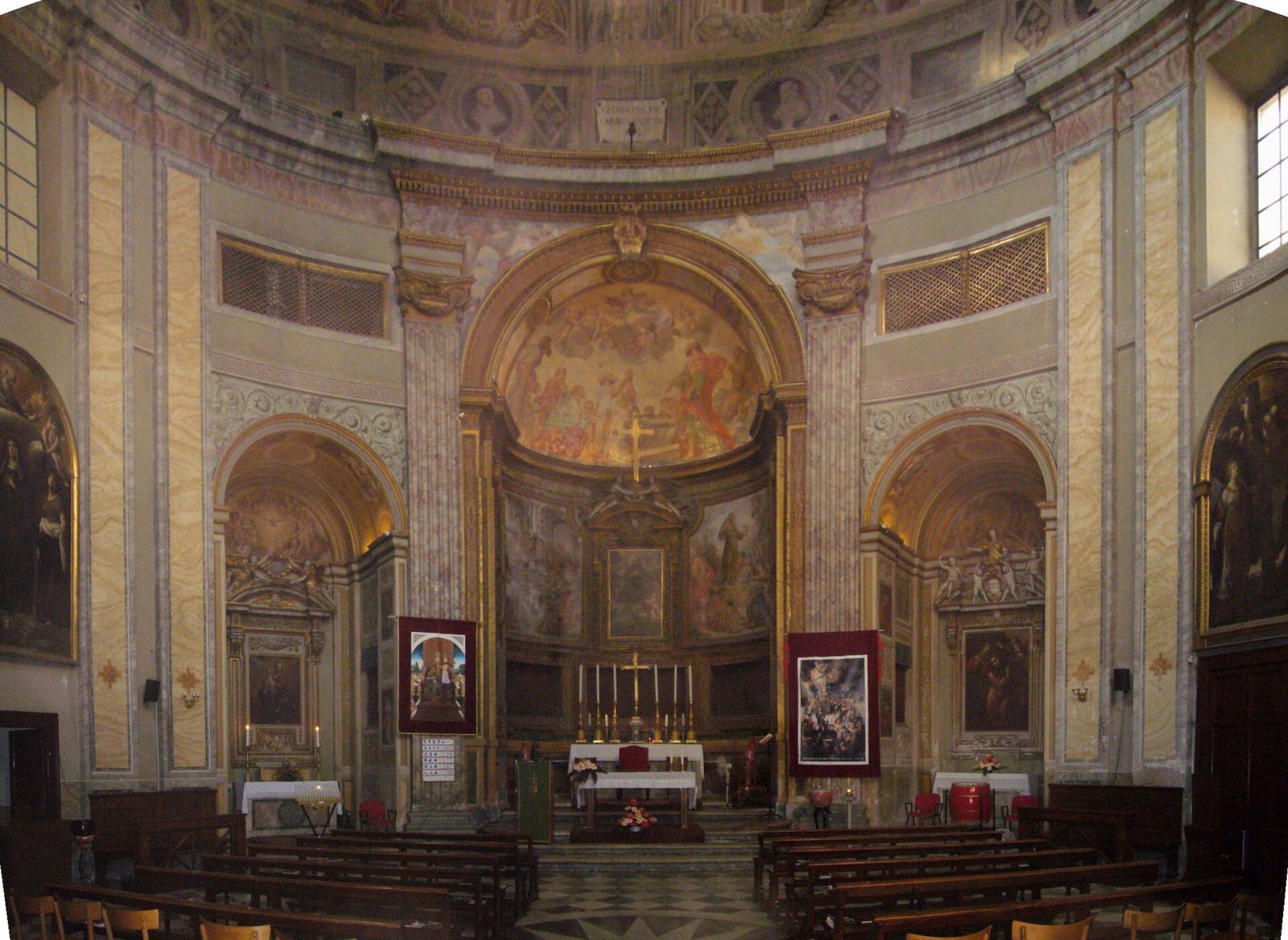
The church combines a plain, north-facing street exterior with a richly decorated interior. Its plan is elliptical, with a central domed arrangement over a circular ground plan. Four side chapels, two on each side, radiate from the main interior.
Exterior and earlier remains
Façade
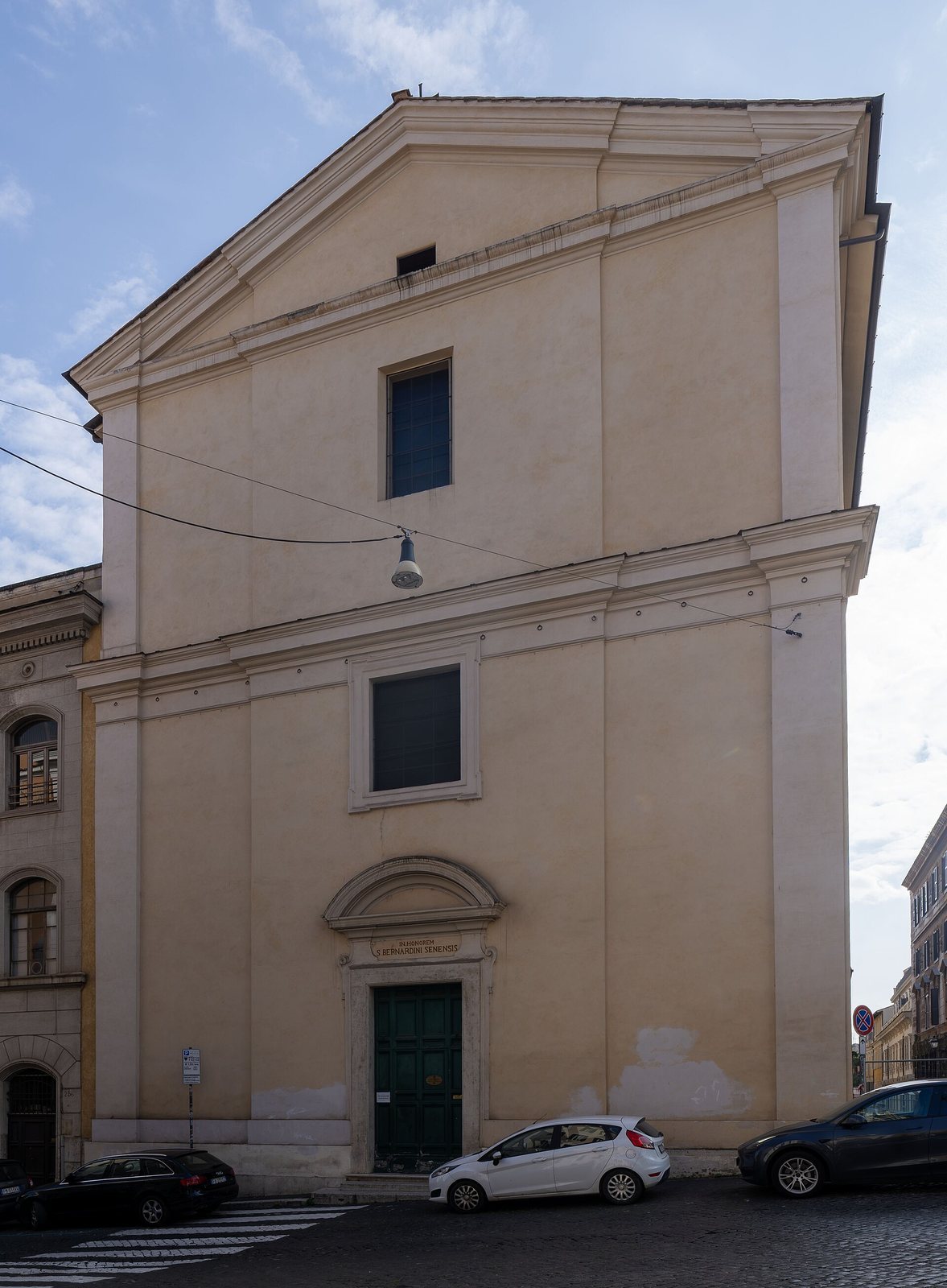
The plain façade has two storeys framed by Tuscan-order pilasters, shallow wall supports in a classical style. Its slightly projecting central section has a framed rectangular window below and an unframed window above. The entrance carries a dedication inscription and a curved pediment, with small scroll-shaped ornaments beside its frame. Stepped cornices, projecting horizontal mouldings, follow the façade’s outline, which ends in a simple triangular pediment.
Monastic and ancient remains
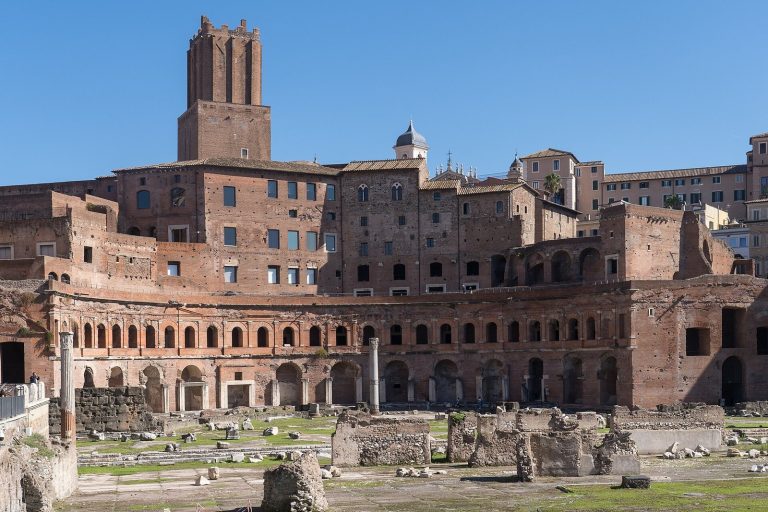
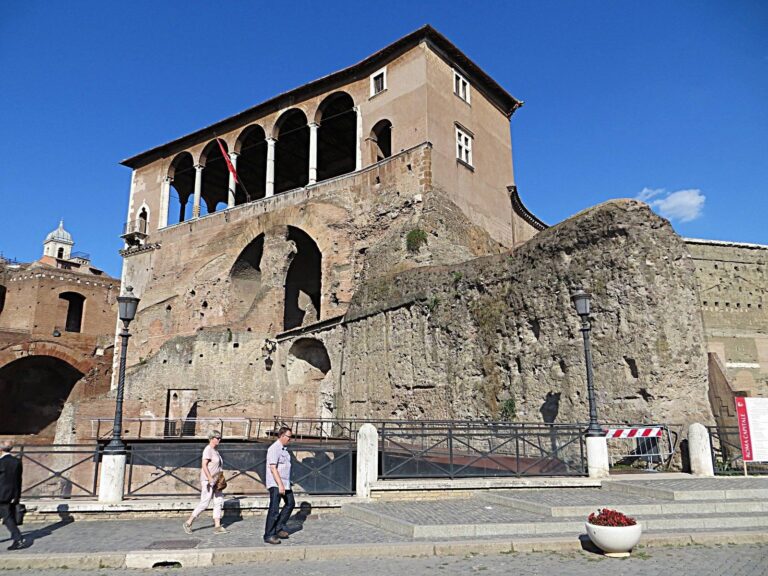
The church stands above the ruins of the monastery of Santa Veneranda, and the outline of an underlying elliptical building survives. During the church’s construction, an ancient circular domed room was discovered; its diameter matches that of the present dome. Excavations in the first half of the eighteenth century revealed further ancient building remains, including mosaic floors and painted walls.
Baroque interior
Plan and dome
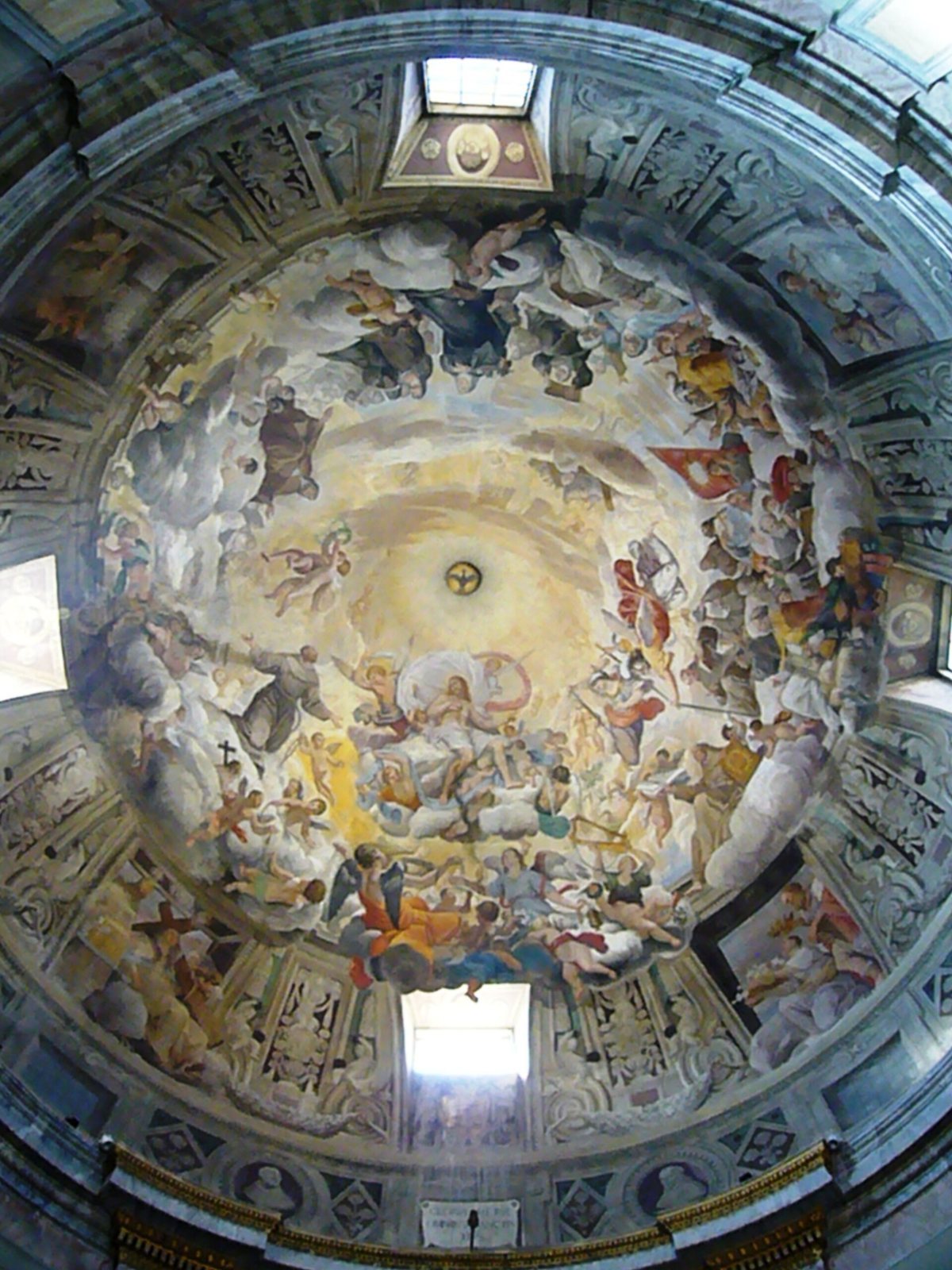
Paired Tuscan pilasters divide the spaces between the side chapels. The choir chapel has Ionic pilasters with garland-decorated capitals. A slightly stepped cornice runs around the interior, while the side chapels have barrel vaults, continuous arched ceilings. Four windows pierce the dome. Bernardino Gagliardi’s 1638 dome fresco depicts the glory of Saint Bernardino and other Franciscan saints. Painted architectural forms cover the upper wall zone and the lower part of the dome.
Chapel of Saint Francis
The first chapel on the right when viewed from the high altar is dedicated to Saint Francis of Assisi. Its altarpiece shows Francis receiving the stigmata, the wounds associated with Christ’s crucifixion. Frescoes depict the approval of the Franciscan rule and Francis presenting his rule to Christ. Between the two right-hand chapels, a painting by De Vecchi shows Francis before Christ’s cross, which Saint Helena holds. Above the sacristy door, Giovanni Baglione painted Saints Francis, Clare, and Agatha.
Chapel of the Passion
The second chapel on the right is dedicated to the Passion, the suffering and death of Jesus. Its altarpiece, attributed to Giovanni Alberti, depicts Christ carrying the cross with the Virgin Mary, the apostle John, and Saint Veronica holding a cloth associated in Christian tradition with Christ’s face. Other paintings show Christ on the cross and scenes of Jesus in Gethsemane, the scourging, the mockery, the presentation as “Behold the Man,” and the Crucifixion. Grey-toned images of the instruments of the Passion occupy the upper parts of the side walls.
Chapel of Saint Verdiana
One chapel on the left is dedicated to Saint Verdiana. Its anonymous mid-seventeenth-century altarpiece shows her adoring the crucified Christ. A praying man and woman at the bottom of the painting are thought to represent Bernardo Attavanti, who paid for the chapel, and his wife. The woman’s image was uncovered when the painting was restored in 1965.
Chapel of the Immaculate Conception
The other left-hand chapel is dedicated to the Immaculate Conception, the Catholic teaching that Mary was preserved from original sin from the moment of her conception. Biagio Puccini’s 1717 painting of the Virgin and Child is topped by two angels holding a framed line from the Song of Songs, a book of biblical poetry. Puccini also painted other works in the chapel, including the Nativity of the Virgin. Frescoes of saints decorate pilasters on the left side of the church.
Choir and high altar
Antonio Amorosi’s high-altar painting depicts the glorification of Saint Bernardino. On the choir walls, Clemente Maioli painted scenes of Bernardino preaching and dying; Maioli also decorated the apse, the recessed end of the church around the altar.
Crucifix associated with Saint Bridget
A chapel contains a crucifix before which Saint Bridget of Sweden, a fourteenth-century religious visionary, is said to have prayed.