Crómlech de Cantos Blancos: A Neolithic Gathering Site in Spain
Site at a Glance
- Popularity
- Low
- Country
- Spain
- Primary era
- Stone Age
- Eras represented
- Stone Age
- Civilizations
- Unclassified
- Site type
- Civic
- Remains
- Megalithic Monument
On this page8 sections
History
Neolithic construction and later change
The Crómlech de Cantos Blancos is a prehistoric stone monument arranged in enclosures, in Bernardos, Segovia, Spain. Neolithic communities built it during the fifth and fourth millennia BC, in the period when farming and animal husbandry spread. The rise of large-stone monuments in the region is linked to this shift, while Neolithic settlements are known in the northern Iberian sub-plateau from around the fifth millennium BC.
The monument is understood as an aggregation site, a place where people from surrounding communities gathered for shared activities rather than necessarily living there permanently. It may have taken shape through several building phases over time. Alongside other discoveries around Bernardos, it forms part of a wider complex of large-stone monuments, and was the first cromlech found in Castile and León.
In the later Chalcolithic, or Copper Age, some comparable monuments were deliberately toppled. The Crómlech de Los Almendros in Évora is one example. Such destruction has been interpreted as reflecting technological, social, and ideological changes that challenged the earlier meaning of these monuments.
Discovery and archaeological study
An archaeological survey team discovered the Crómlech de Cantos Blancos in autumn 2020, and excavation began that year. Its interpretation as a gathering place has made it relevant to the study of communal sites in the region.
Remains
Setting and overall layout
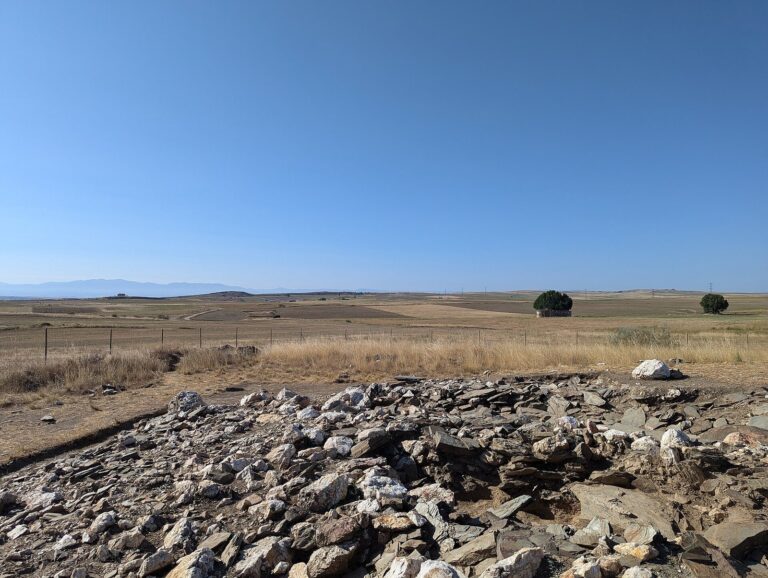
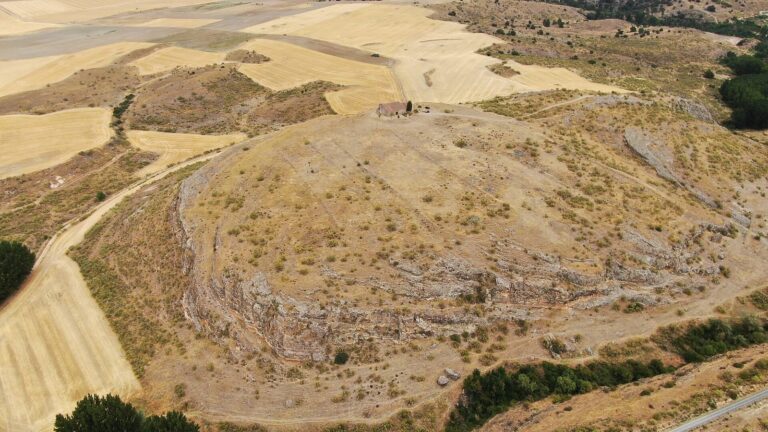
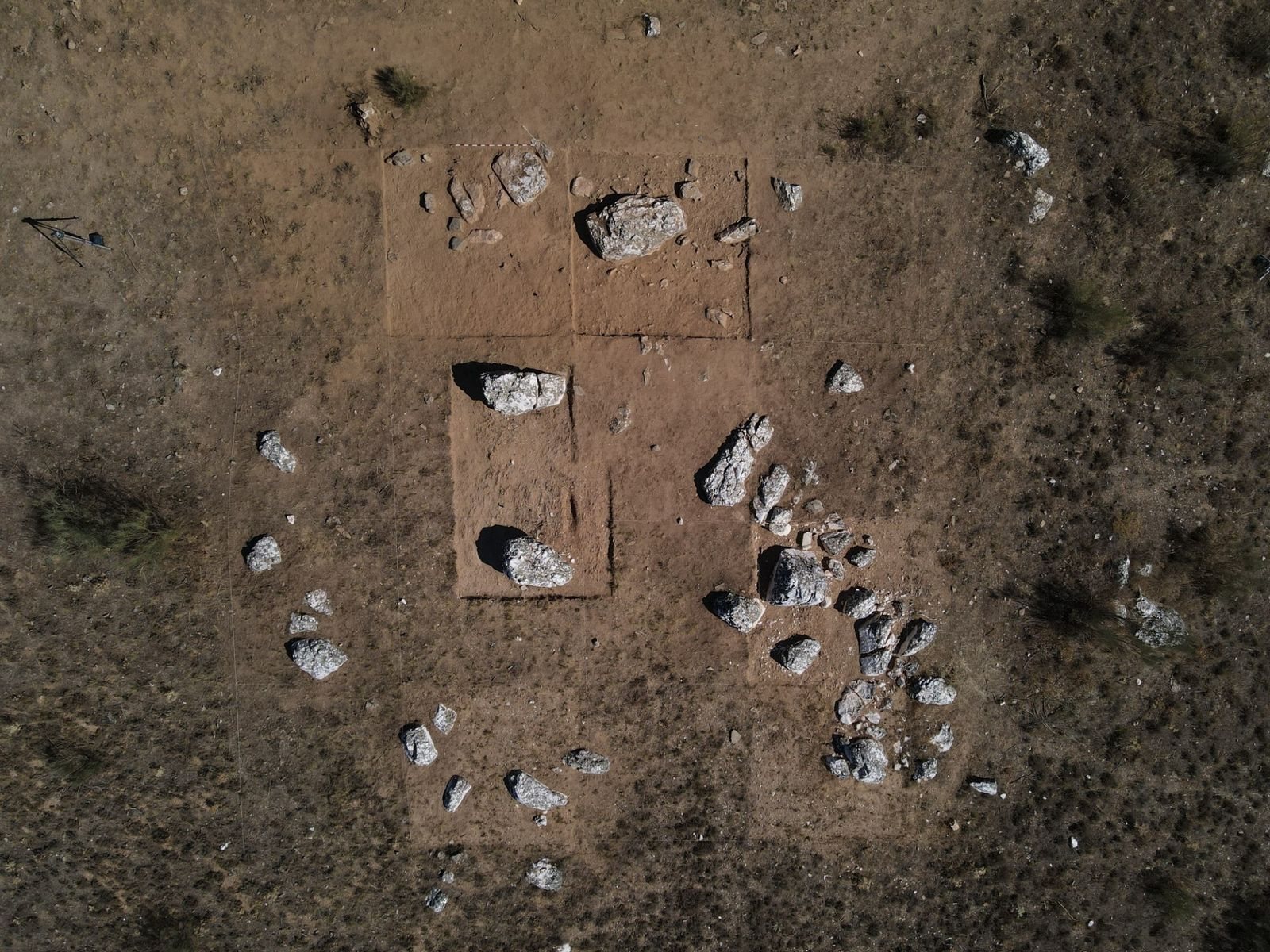
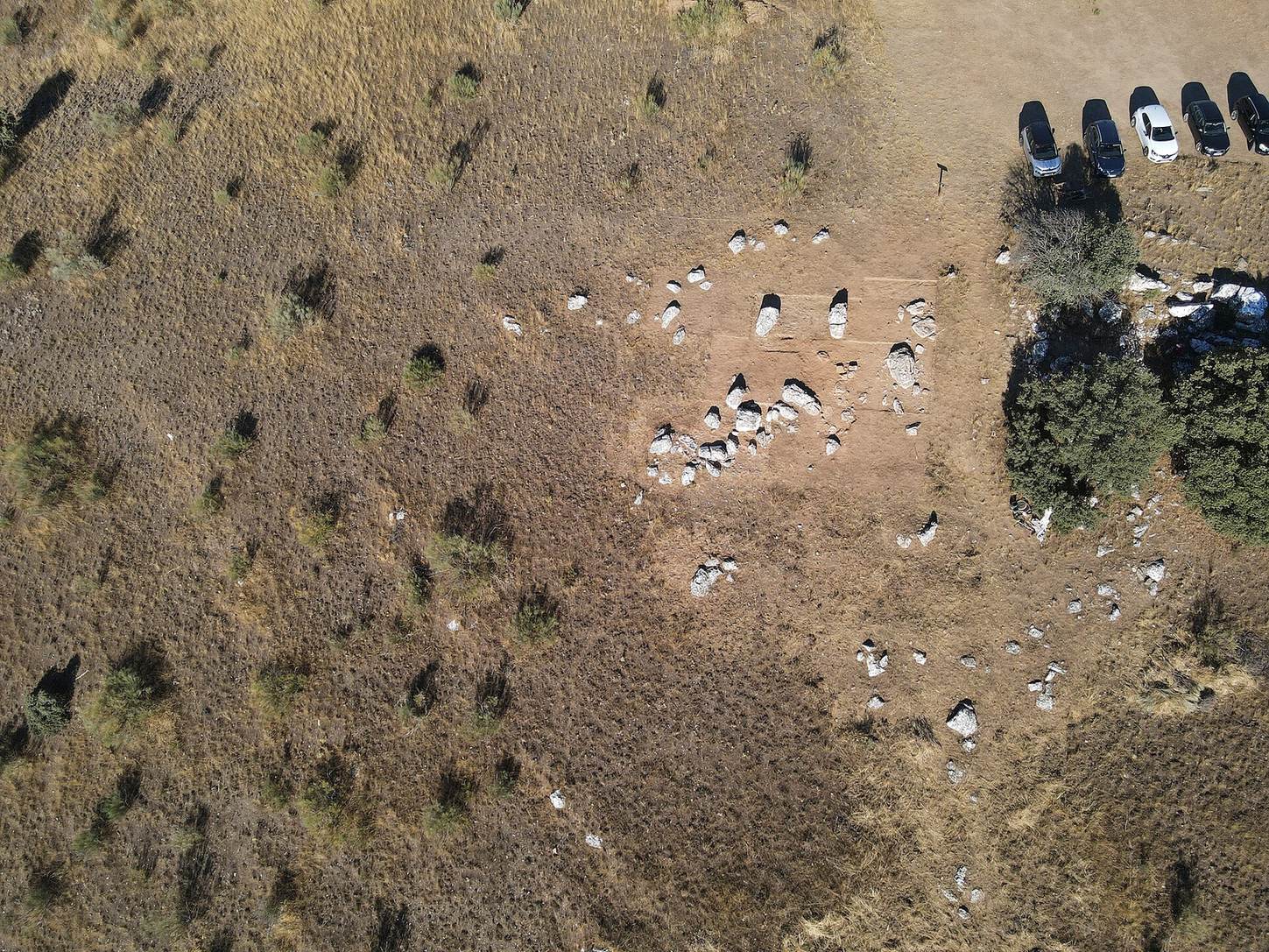
The site covers about one hectare on a shoulder above the Eresma Valley, within the Duero basin, where the Santa Inés stream joins the Eresma. Its stone features occupy this meeting of valley and stream. The arrangement includes enclosures and lines of stones, with plans ranging from circular and oval to square and rectangular.
Stone arrangements and finds
Enclosures and alignments
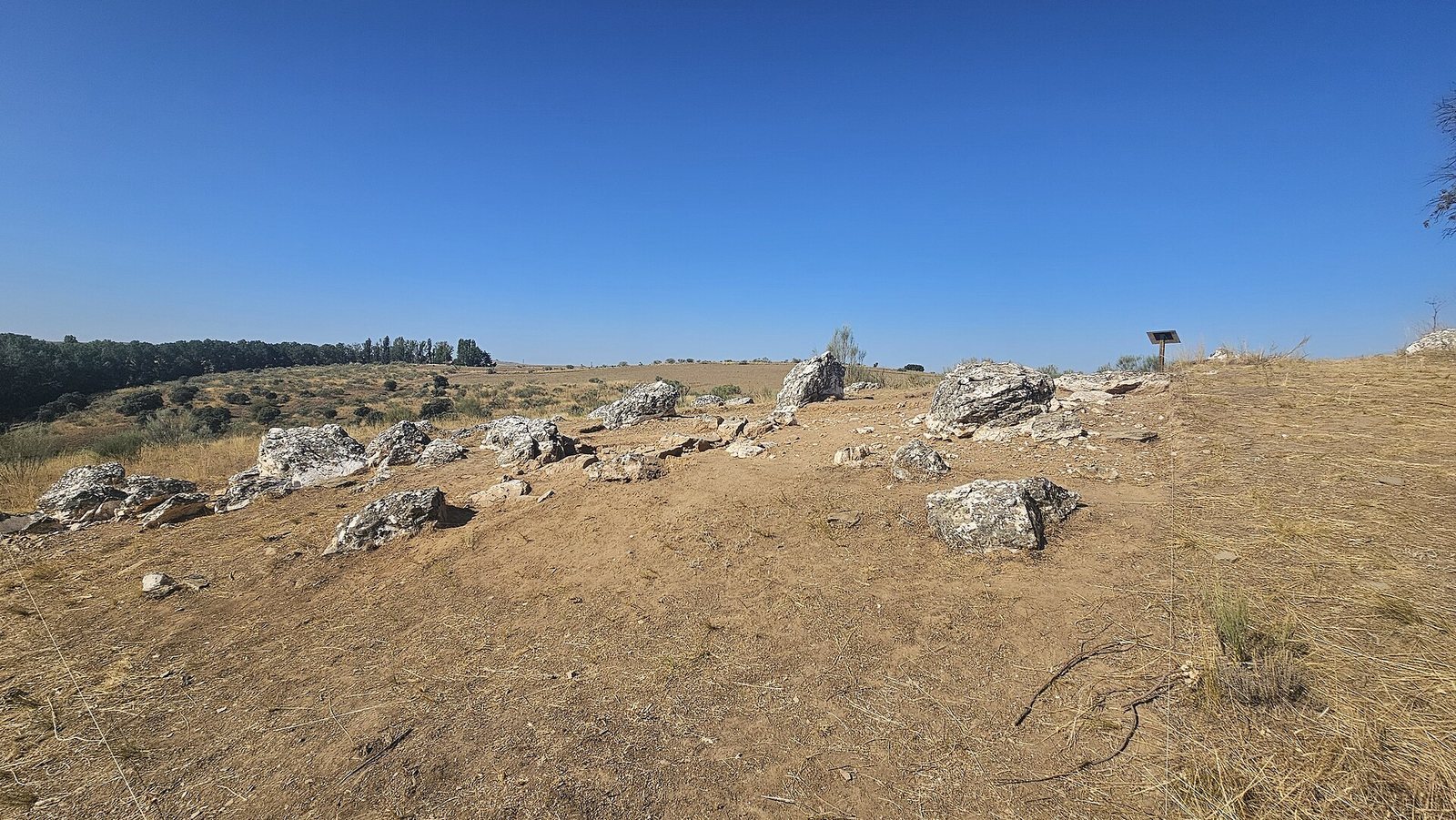
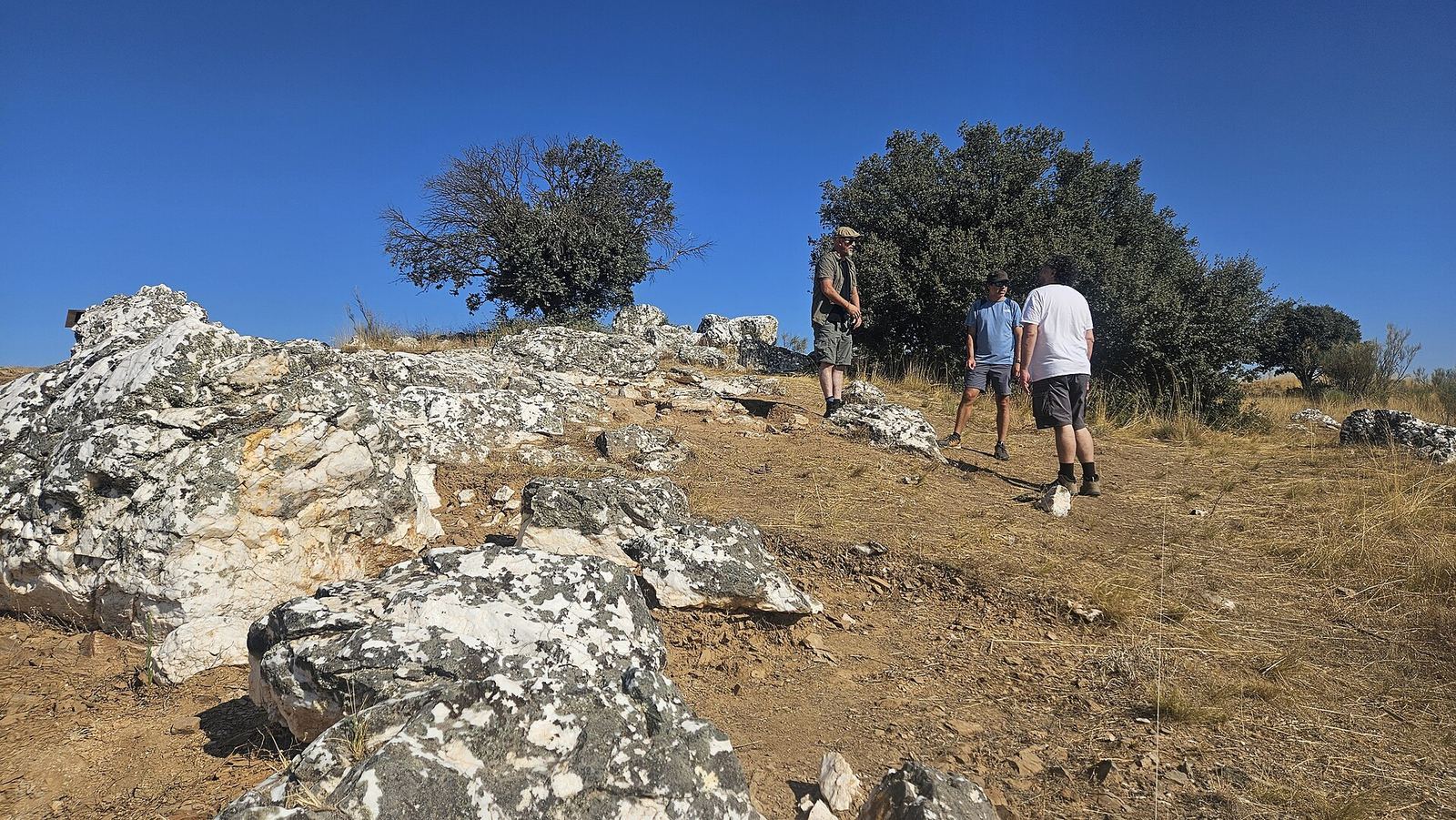
Quartz menhirs, large stones originally set upright, and other monoliths form carefully arranged lines and enclosures. The site includes circular enclosures, and at least one line of stones is oriented toward Peñalara, a peak in the Sierra de Guadarrama. Most of the menhirs now lie fallen to one side.
Pottery and slate objects
At the base of some menhirs, excavators recovered fragments of handmade pottery and objects shaped from slate. Similar materials are also found at the nearby Dolmen of Santa Inés, a prehistoric tomb made from upright stones and a large covering slab.