D34: A Neolithic Megalithic Tomb near Valthe, Netherlands
Site at a Glance
- Popularity
- Very Low
- Country
- Netherlands
- Primary era
- Stone Age
- Eras represented
- Stone Age
- Civilizations
- Unclassified
- Site type
- Burial
- Remains
- Tomb
On this page7 sections
History
D34 is a Neolithic megalithic tomb near Valthe in the Netherlands, built between 3470 and 2760 BCE by communities of the western Funnel Beaker culture. This was a farming culture of northern and central Europe, named for its distinctive pottery; the western group is a regional classification.
Early records and surveys
R. Boelken first mentioned the tomb in 1818. Leonhardt Johannes Friedrich Janssen, a curator of Dutch antiquities, visited in 1847 and included D34 in his general survey of Dutch megalithic tombs, published the following year with descriptions and plans.
In 1874, Willem Pleyte and photographer Jan Goedeljee made the first systematic photographic record of the Dutch tombs during a journey through Drenthe. Concern that restoration might alter the original condition of the monuments led the Society of Antiquaries in London, a British learned society focused on history and antiquities, to ask William Collings Lukis and Henry Dryden to survey them. They examined D34 on 19 July 1878 and included it as Plan XXIX. Their report was not published until 2015, when Drenthe archaeologist Wijnand van der Sanden assessed the work as high quality. Albert Egges van Giffen later included D34 in his atlas in 1918.
Damage, ownership, and archaeological work
D34 was partly demolished in 1869, and objects from its chamber were taken away. Drenthe province bought the tomb from Valthe’s traditional communal landholding body in 1871. At a later date, it passed from Het Drentse Landschap, a regional heritage organization, to Staatsbosbeheer, the national agency responsible for state-owned nature areas and forests.
Van Giffen investigated and restored D34 in 1952. He described it as severely disturbed, and the chamber had already been emptied. Remains of the nearby tomb D33 also survived until 1955, when Van Giffen dismantled them and reused the stones in the restoration of D49, known as the Papeloze Kerk.
Photographs of D34 were used for a 3D atlas in 2017 through photogrammetry, a method of measuring and modeling from photographs. The project involved Drenthe province, the University of Groningen, and the Gratama Foundation. The University of Groningen excavated the tomb in 2021 and 2022 under the direction of Dutch archaeologist Daan Raemaekers.
Remains
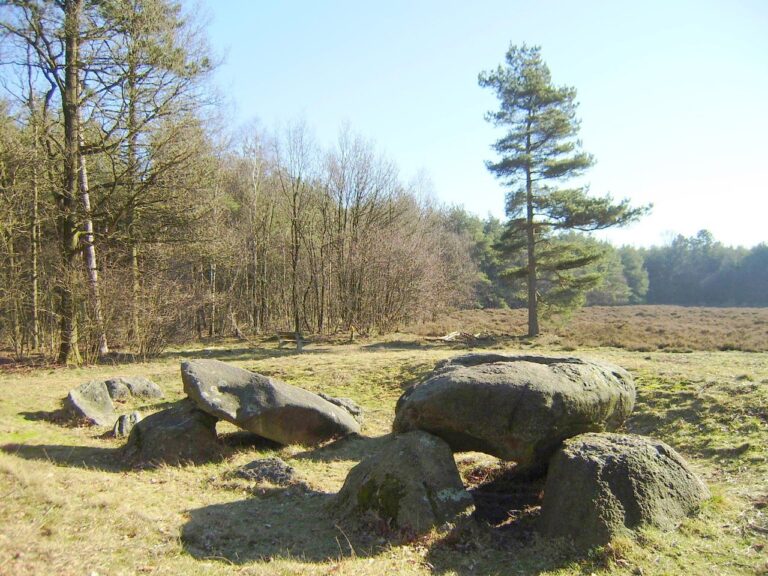
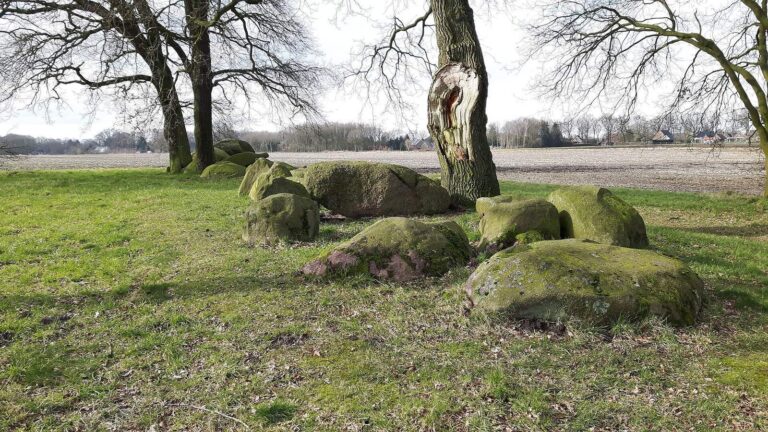
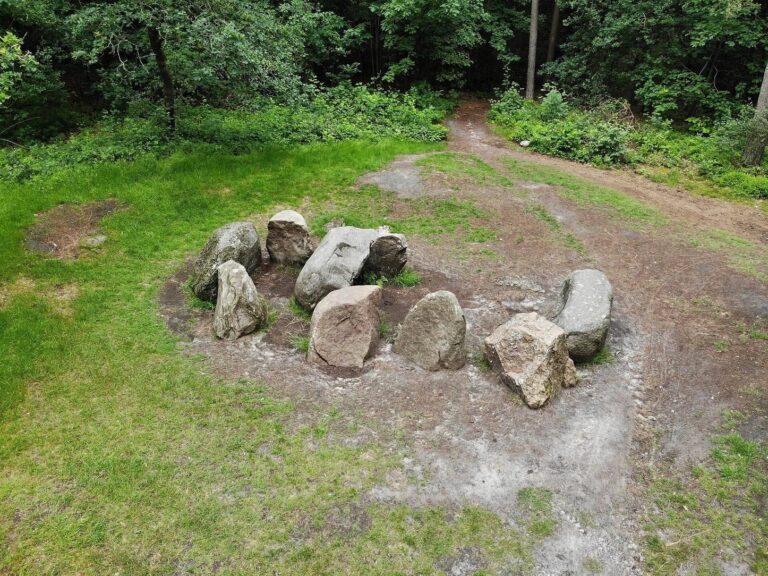
D34 is aligned southeast to northwest. Its stone burial chamber has an entrance passage on the southwest side, and a remnant of the covering mound forms a ring around the tomb.
Burial chamber
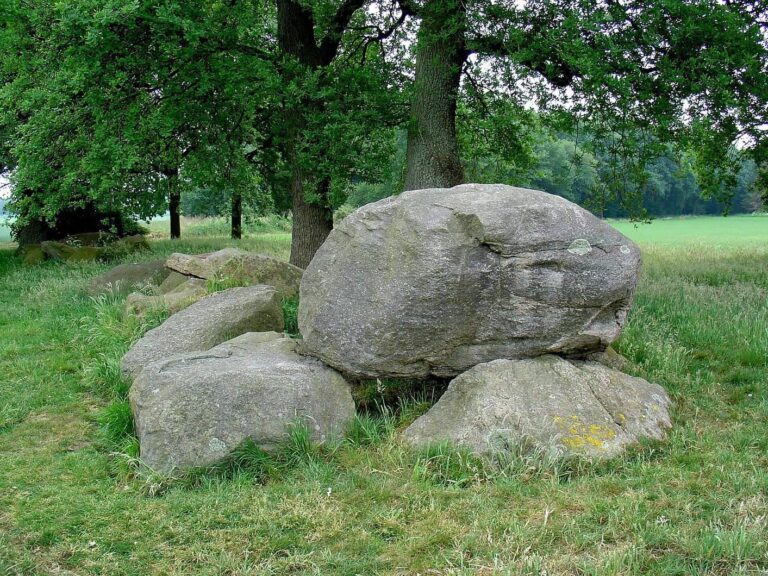
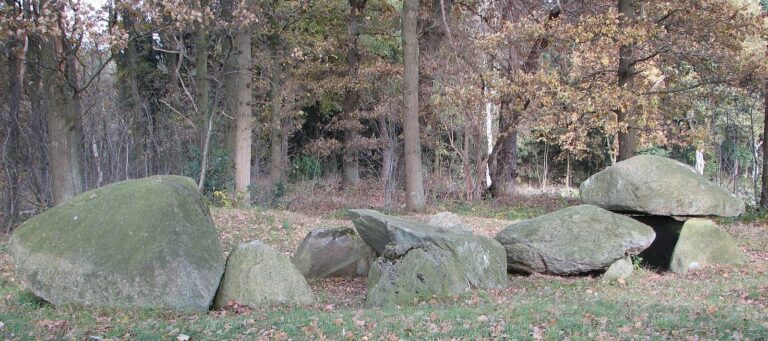
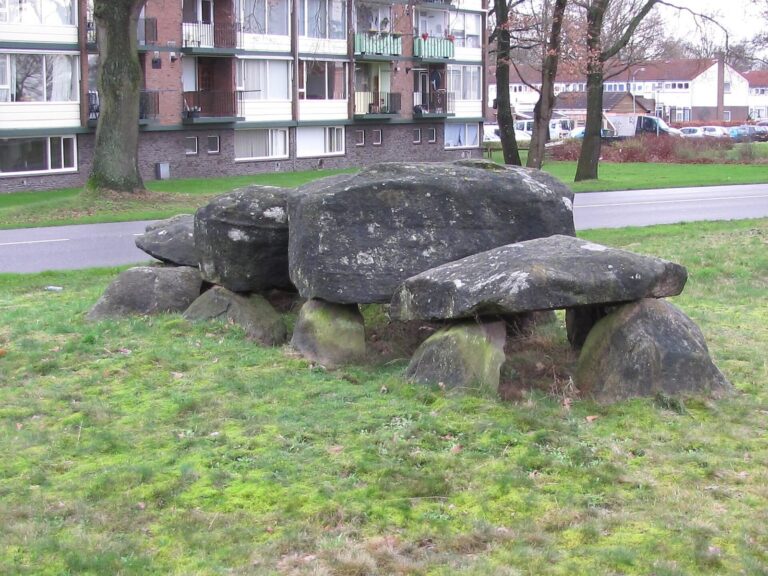
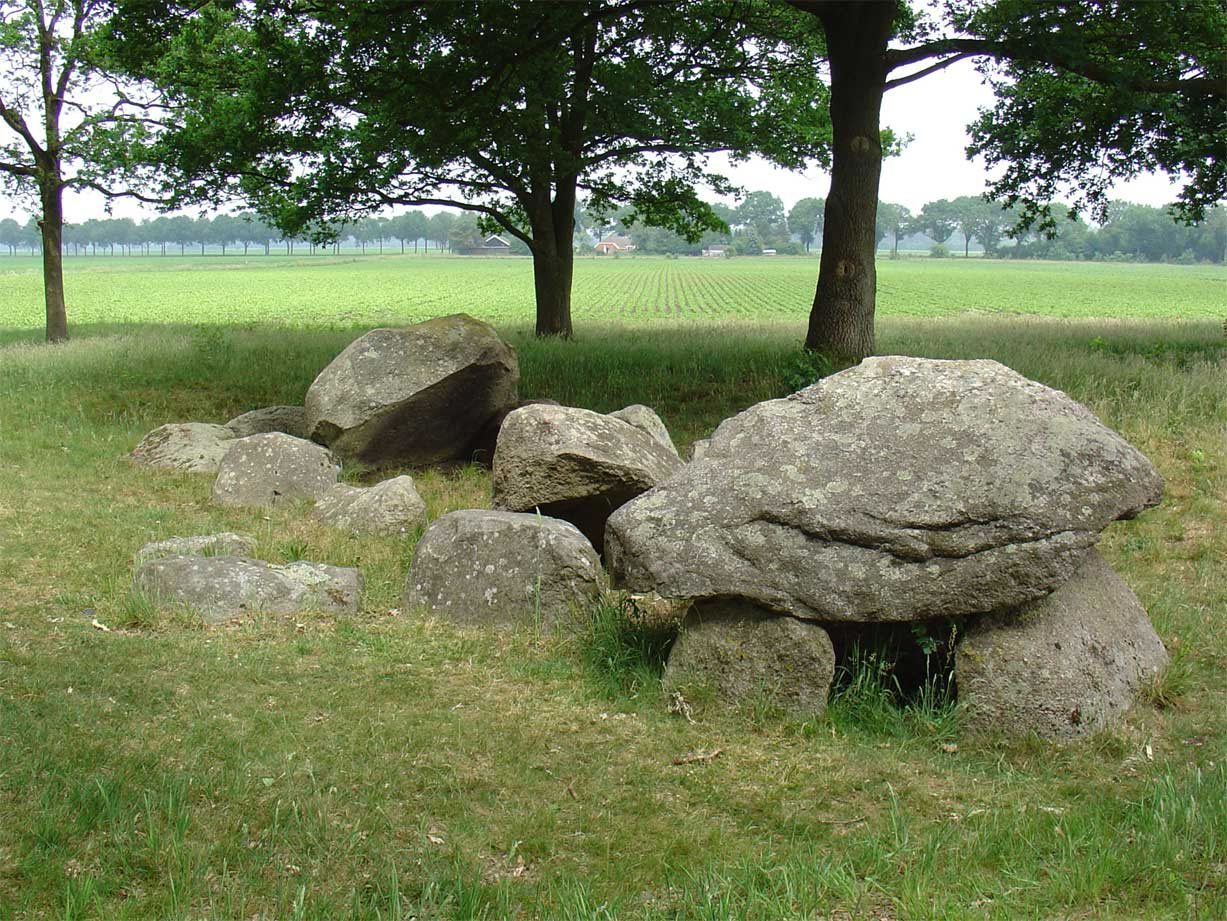
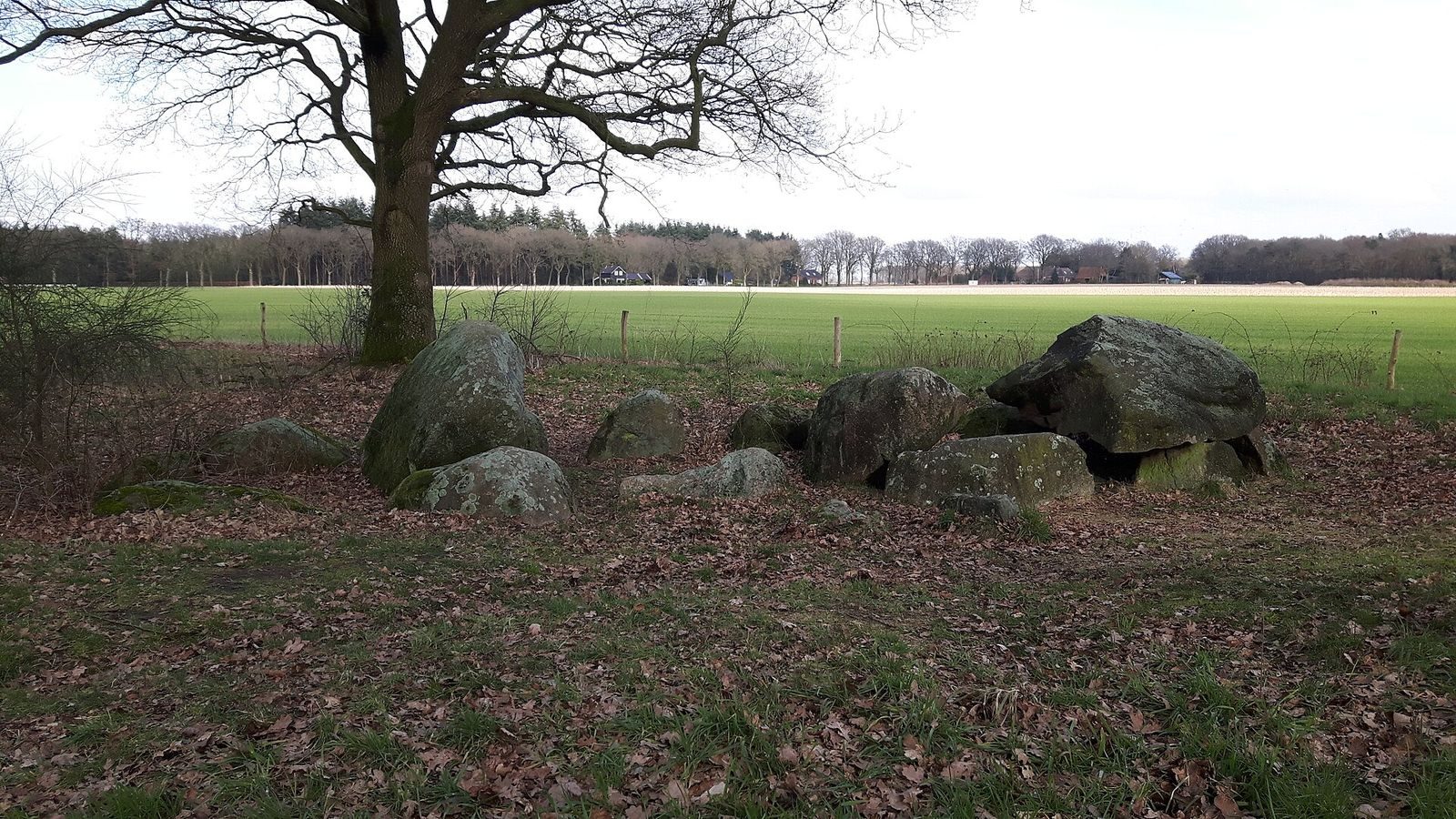
The chamber measures 7.8 metres long and 3 metres wide. Five pairs of upright stones form its long sides, with one end stone closing each short side. Most of these ten supporting stones and two end stones lie below ground level. Three of the original five capstones survive. Lukis and Dryden noted in 1878 that the eastern capstone had shifted after a supporting stone was removed; they also described a broken neighboring capstone and a shifted capstone at the western end.
Entrance
The entrance is on the southwest side, between the second and third wall stones when counted from the southeast. Two upright stones mark the opening, and a short passage, formed by two stones, leads into the chamber. Lukis and Dryden recorded one entrance stone and pointed out that Janssen had earlier placed the entrance incorrectly.
Covering mound and surroundings
The mound’s surface was measured in 1878 at approximately 20 by 14.5 metres, with its height level with the tops of the chamber’s supporting stones. D34 lies among other megalithic graves on the Oosterveld, between Odoorn and Valthe, west of Valthe near the boundary with Odoorn. D35 is about 860 metres to the south-southeast, while D36 and D37 lie about 1.8 kilometres east; D32 is about 2.4 kilometres northwest and D31 about 2.8 kilometres north. A prehistoric route described as Drenthe’s oldest trade route passes D31, D33, D34, D35, and the Eppiesbergje, Drenthe’s largest burial mound, about 550 metres to the north-northwest. The Valtherzandweg still forms part of this route.