D37: A Neolithic Dolmen in Drenthe, Netherlands
Site at a Glance
- Popularity
- Very Low
- Country
- Netherlands
- Primary era
- Stone Age
- Eras represented
- Stone Age
- Civilizations
- Unclassified
- Site type
- Burial
- Remains
- Tomb
On this page7 sections
History
D37 is a Neolithic dolmen, a prehistoric stone-built burial monument, attributed to the Funnel Beaker culture, near Valthe in Drenthe, Netherlands. This northern and central European Neolithic culture takes its name from its distinctive funnel-shaped pottery.
Early records and ownership
D37 first appears on the Hottinger map, produced between 1788 and 1792. In 1822, Dutch minister and antiquarian Nicolaas Westendorp described D37 and nearby D36, noting that both had been dug into. The Province of Drenthe bought the two monuments from the Valthe boermarke in 1871. A boermarke was a local farmers’ community that managed shared land and communal interests.
The 1878 survey
During the 1870s, concern in England that Dutch restoration work was changing the dolmens’ original appearance prompted the director of the Society of Antiquaries of London, a learned society devoted to history and material antiquities, to ask British antiquaries William Collings Lukis and Sir Henry Dryden to record them. Lukis and Dryden visited D37 on 19 July 1878 and included it as Plan XXVIII in their survey of 40 dolmens on the Hondsrug. They measured and described the monuments and painted watercolours of them. Their report to the Society was not published at the time.
In 2015, Drenthe archaeologist Wijnand van der Sanden published their work with an extensive introduction and an account of developments in dolmen research since the survey. He judged the 1878 work to be of high quality.
Restoration and later investigation
A small restoration took place in 1952. Accidental digging in a protected area bordering D37 in 2011 led to archaeological work in the adjoining area the following year.
Remains
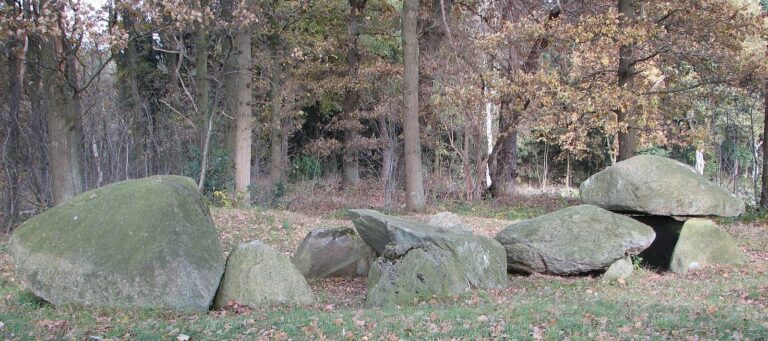
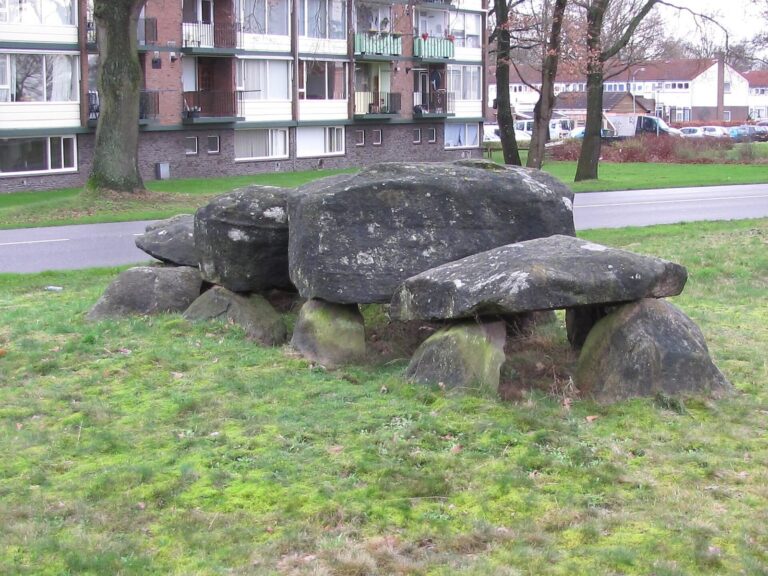
D37 and D36 are stone-built burial monuments aligned 8.2 metres apart at the edge of the Ooster esch, south of Valthe, beside the Kampervenen marsh. Their entrances face south. The pair may once have stood beneath a single covering mound, and a prehistoric route probably passed close to D37.
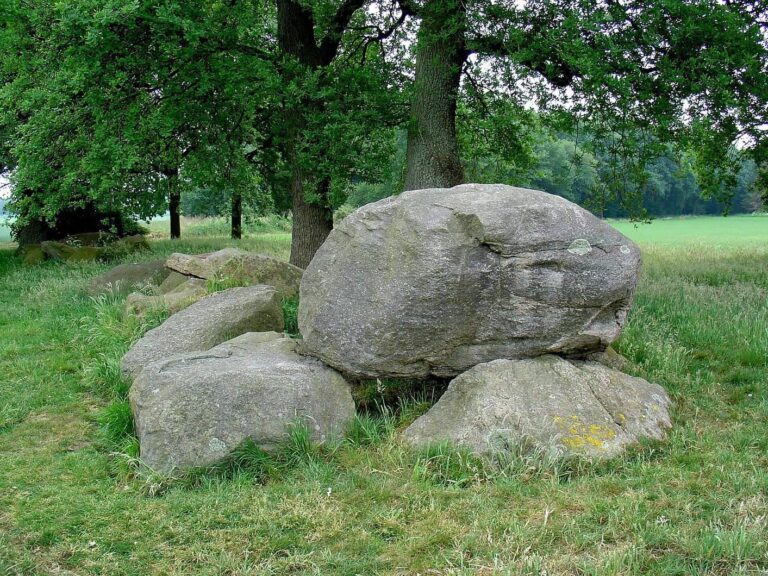
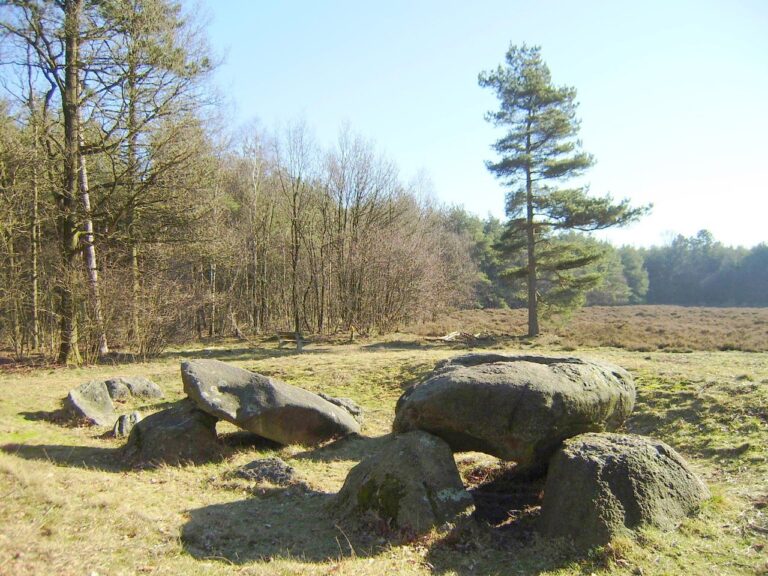
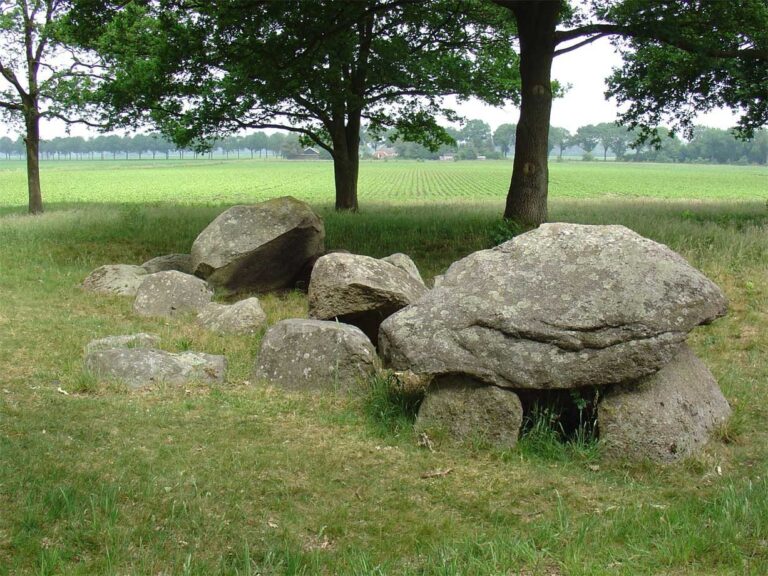
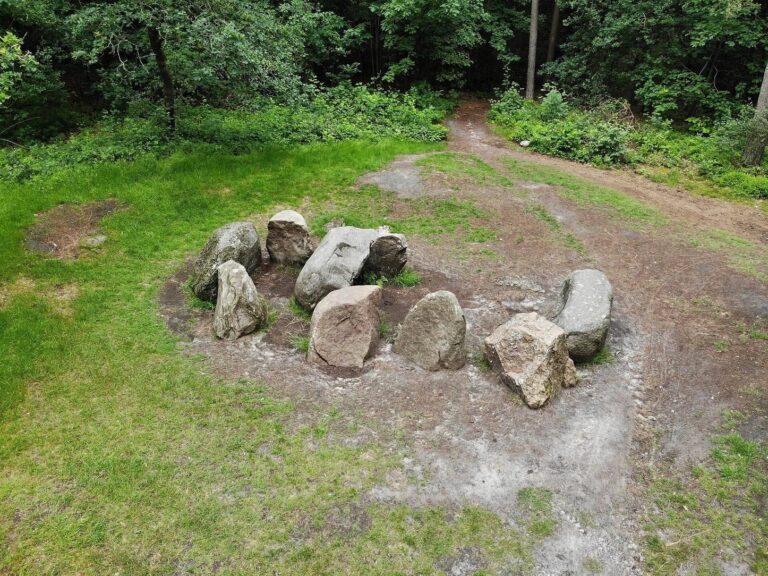
D37’s surviving stones
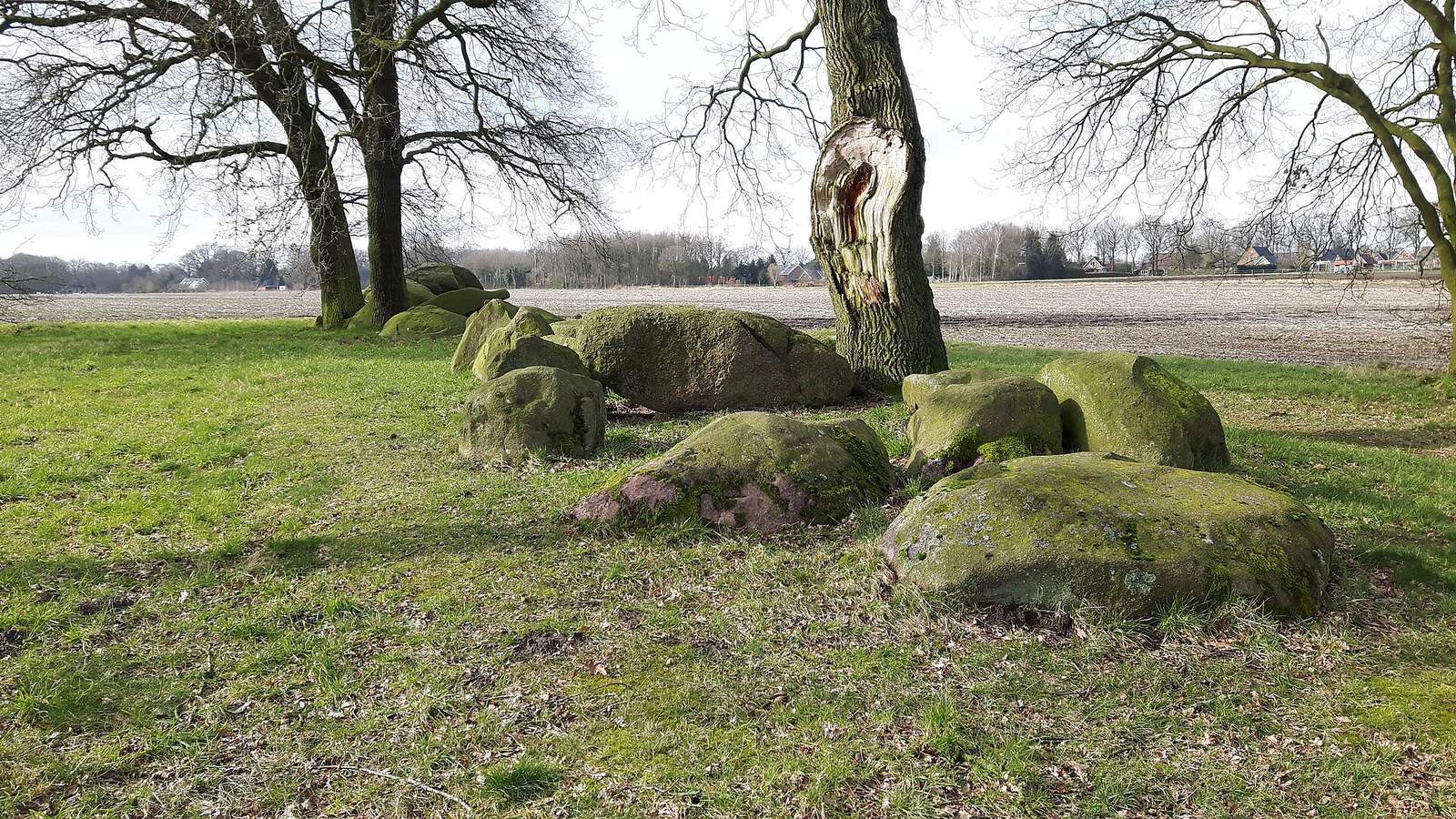
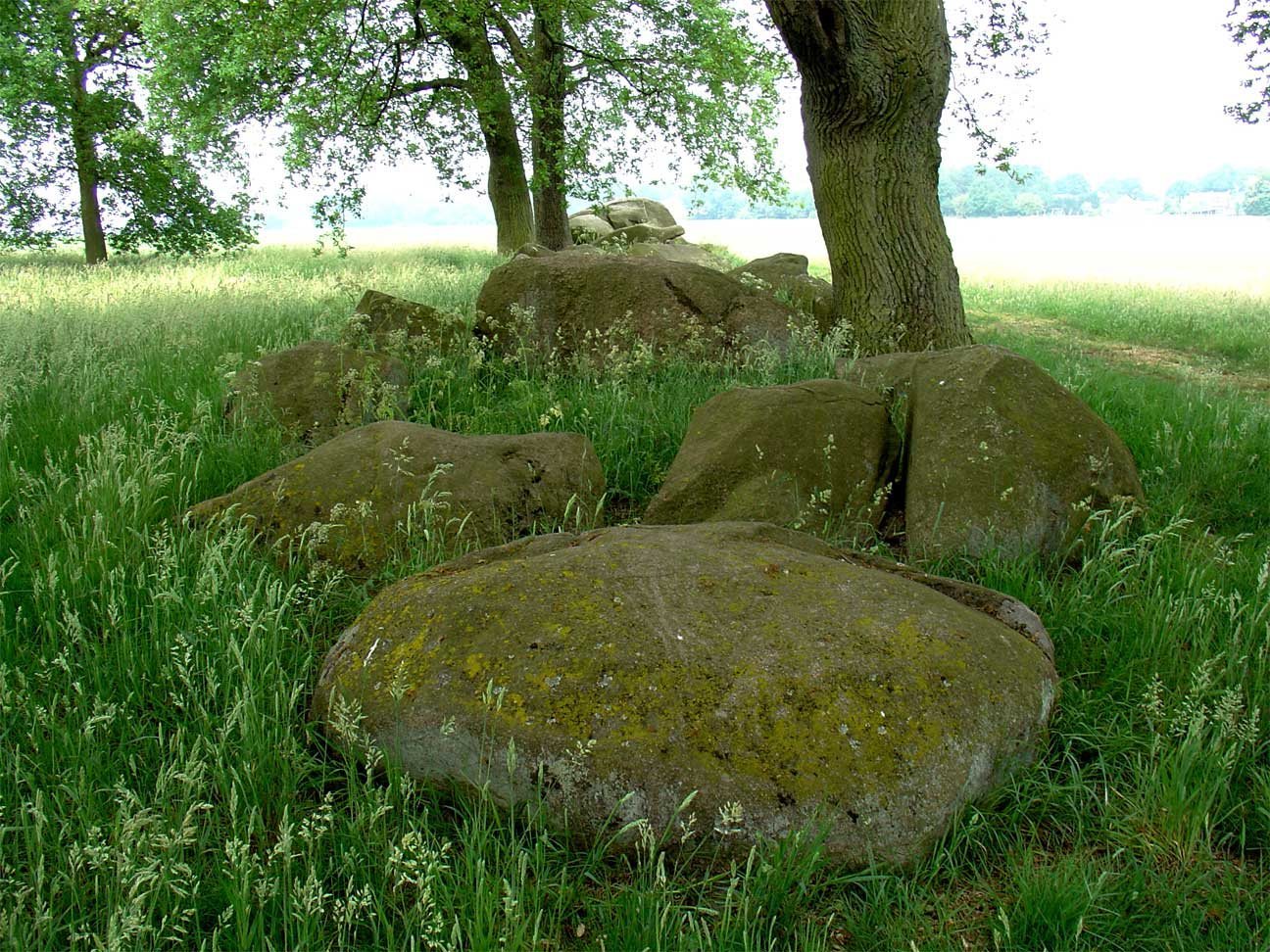
D37 measures 11.4 metres long and 3.7 metres wide, and is less intact than D36. Its stones are irregularly displaced; two capstones lie on the ground, while most supporting stones remain. Lukis and Dryden recorded three capstones in the burial chamber, including one that was broken, and counted 12 supporting stones. They also noted traces of the covering mound. Van Giffen later recorded capstones numbered 1, 4 and 6 within the chamber.
Finds from the adjoining area
The 2012 investigation recovered 133 pottery sherds decorated with Funnel Beaker motifs and two baking plates. Fragments of burnt flint axes came from the space before the entrance. The excavation also revealed traces of buildings from the Funnel Beaker period and the Iron Age, when iron became widely used for tools and weapons.