Hakuchozuka Kofun: A Late Kofun-Period Burial Mound in Japan
Site at a Glance
- Popularity
- Medium
- Country
- Japan
- Primary era
- Medieval
- Eras represented
- Medieval
- Civilizations
- Yamato
- Site type
- Burial
- Remains
- Burial Mound
On this page5 sections
History
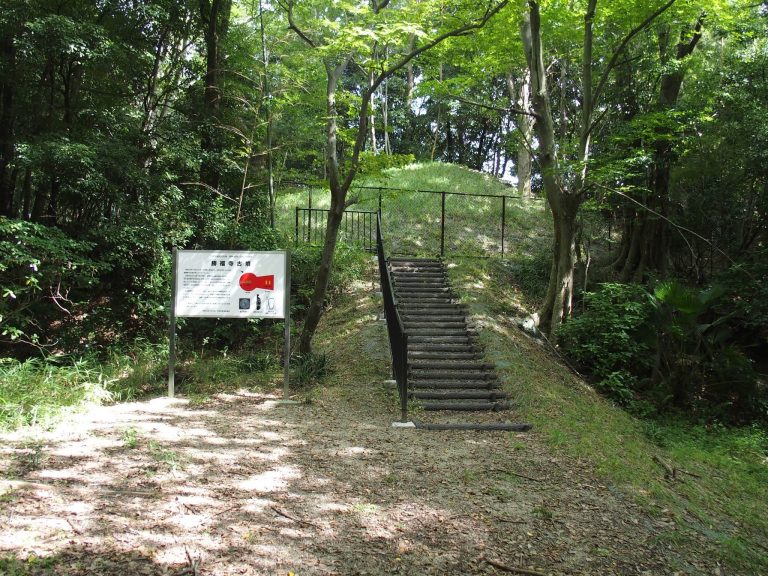
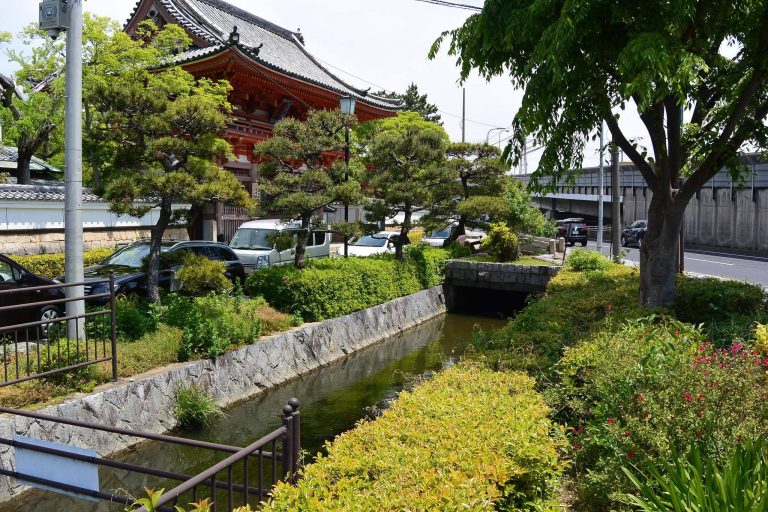
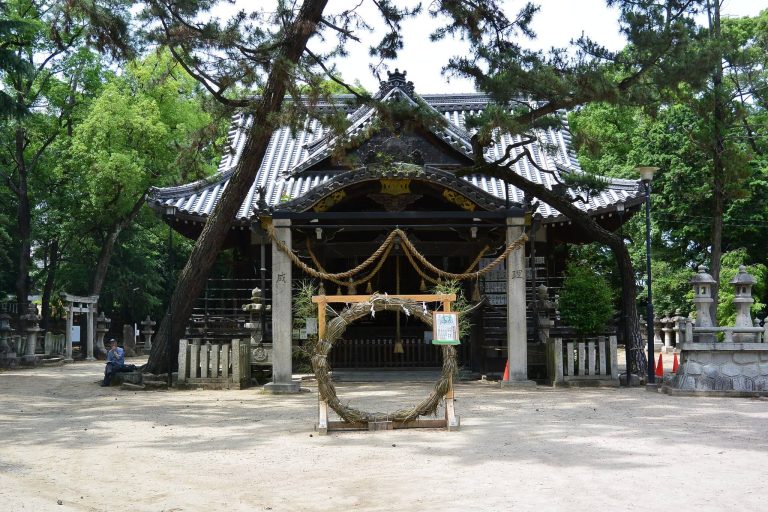
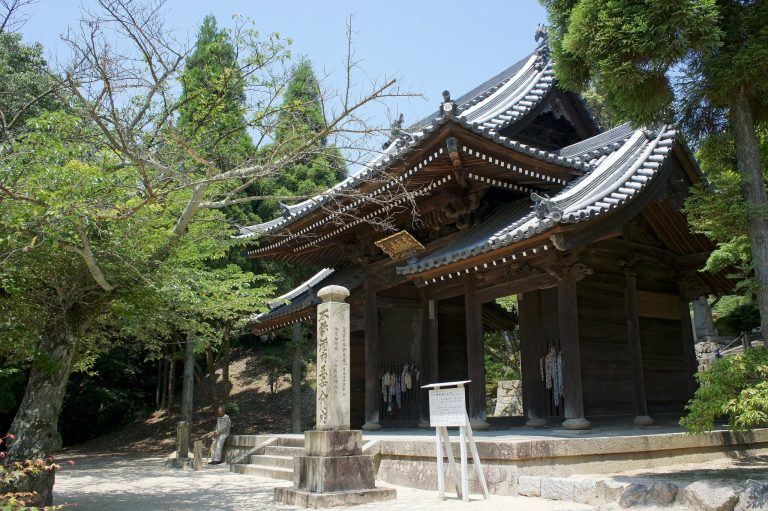
Hakuchozuka Kofun is a Japanese burial mound within the grounds of Nakayamadera temple in Takarazuka, Hyogo Prefecture, Japan. Dating to the late sixth or early seventh century, it belongs to the terminal Kofun period, a Japanese historical and archaeological era conventionally dated from about the third through the seventh centuries. Its unusually large chamber, considered alongside the octagonal Nakayama-soen Kofun, has been taken to suggest the presence of a powerful clan in the western Settsu plain, within a historical province covering parts of present-day Hyogo and Osaka.
The person buried in the tomb has not been identified. Nakayamadera’s temple tradition names a former empress of Emperor Chuai, a figure in Japan’s legendary imperial chronology, as the occupant. An Edo-period guide to Settsu called the tomb “White Bird Cave,” also popularly known as “Stone Chest,” and identified it as the burial place of Prince Oshikuma, an imperial prince known from early Japanese chronicles.
British metallurgist and archaeologist William Gowland investigated the tomb in 1887. It was designated a Hyogo Prefectural Historic Site on March 31, 1960, under the name Nakayamadera Kofun. A three-dimensional survey of the stone chamber was conducted in fiscal year 2015 and reported in 2017.
Remains
Burial architecture
Mound and chamber
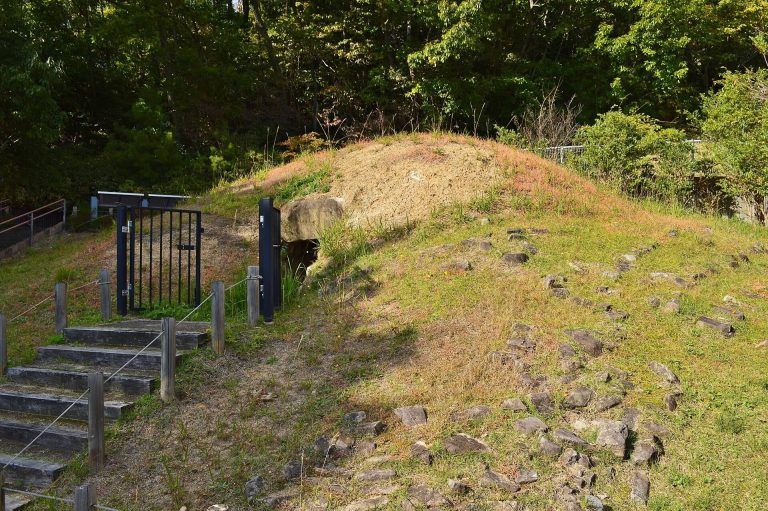
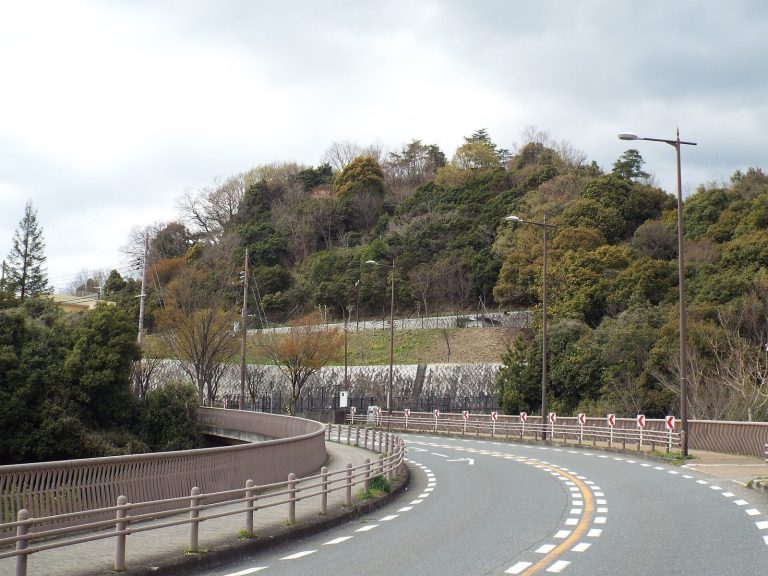
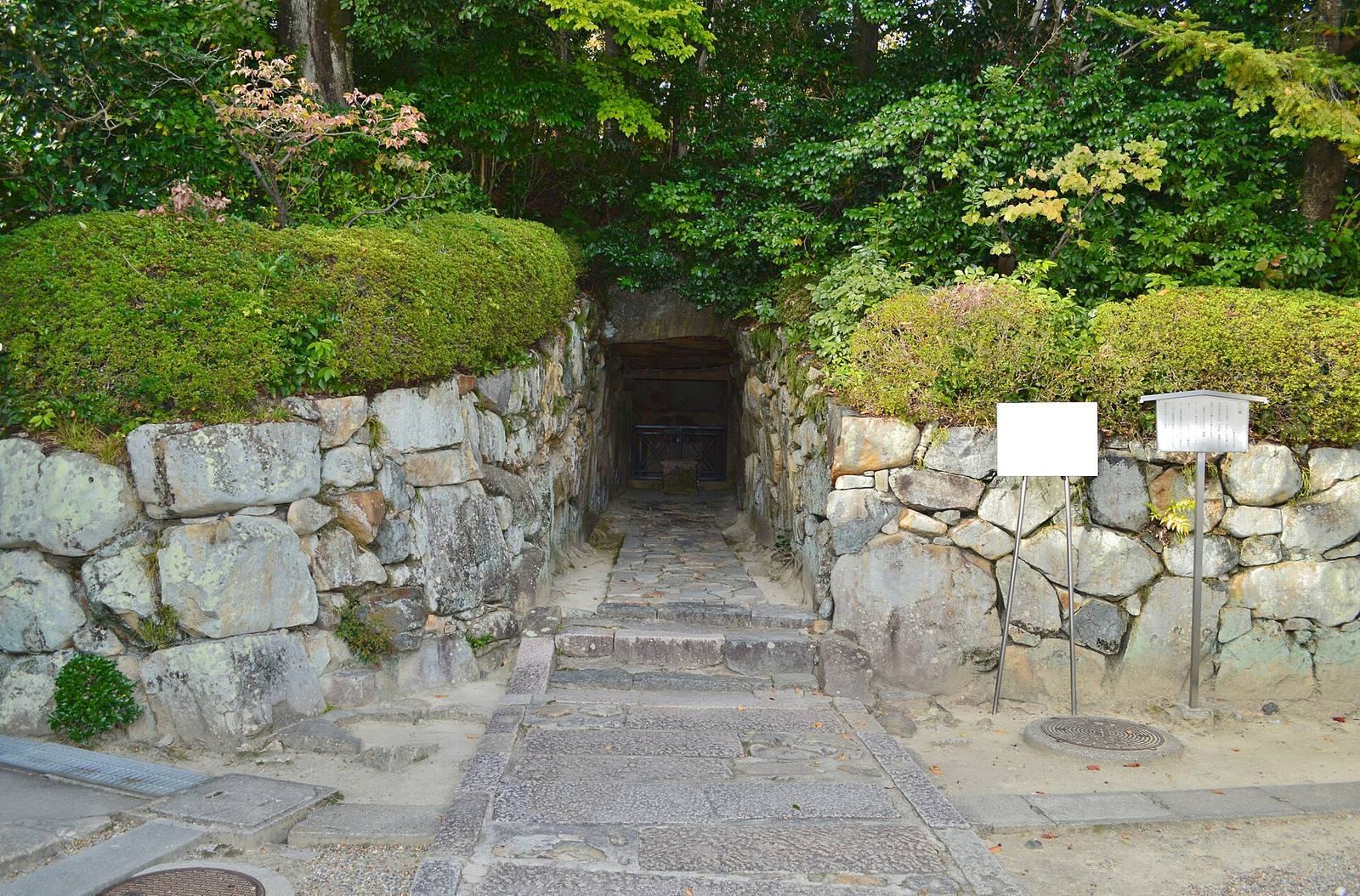
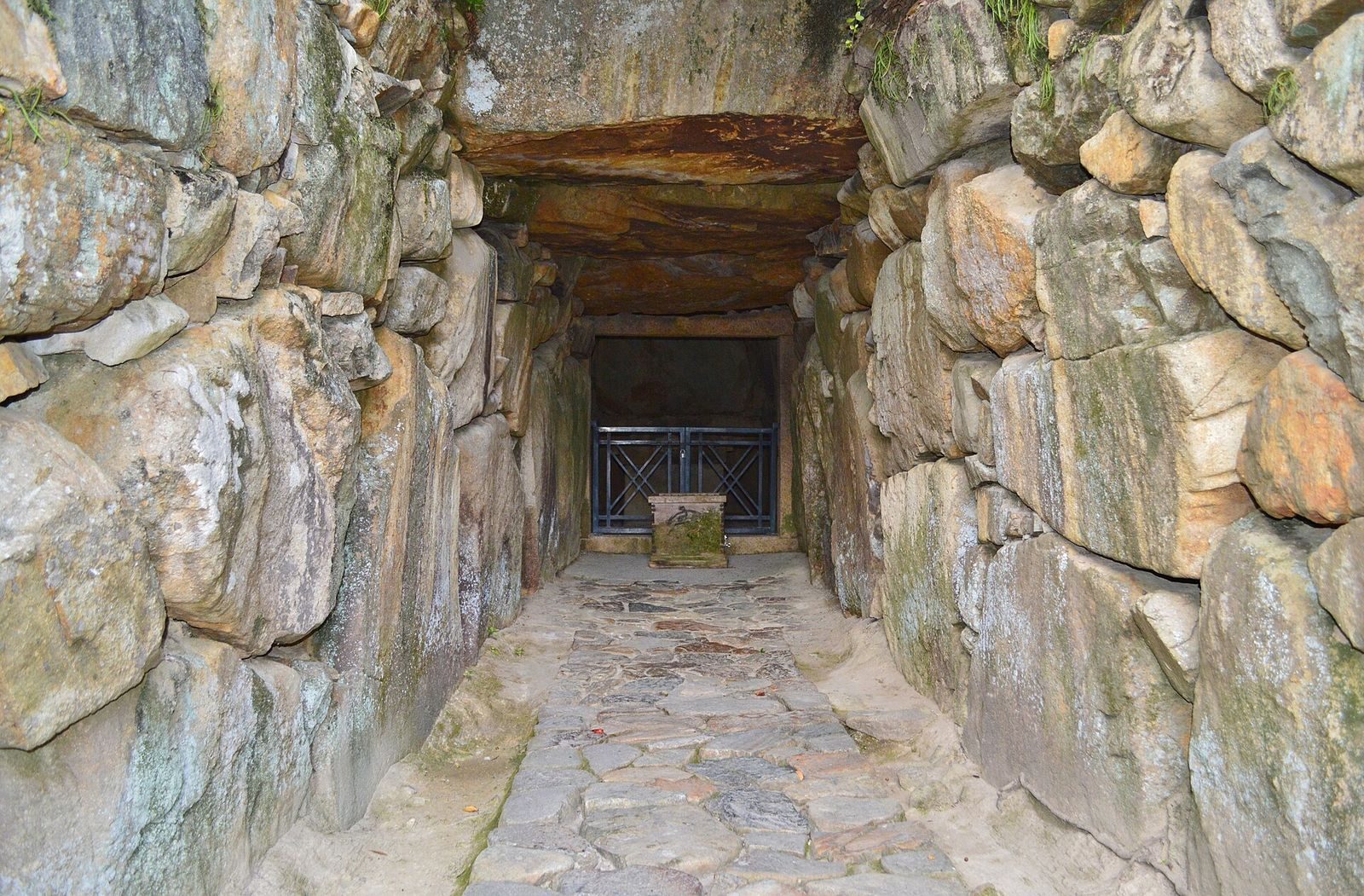
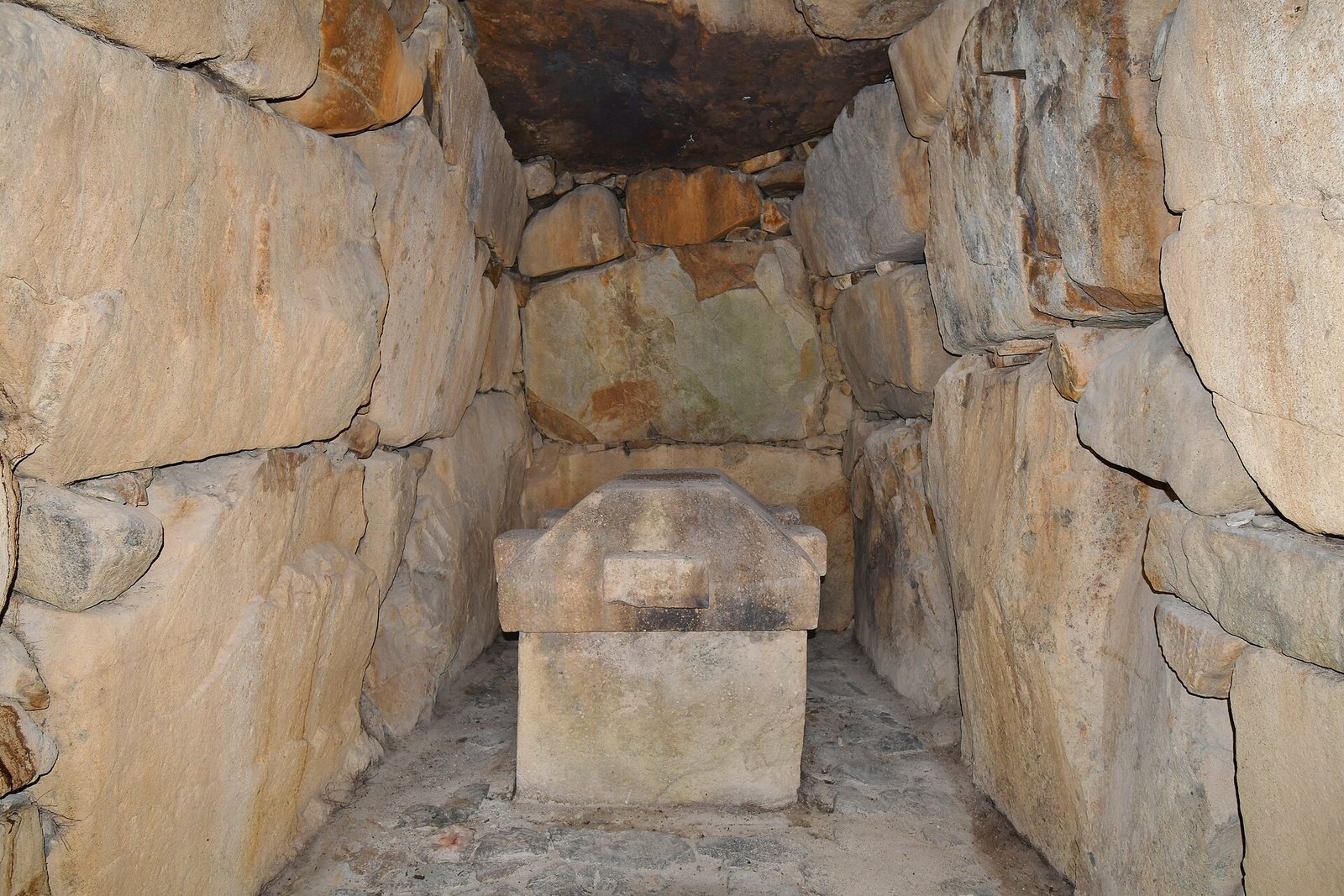
The tomb lies at the southern foot of the Nagao Hills. Its mound has been substantially altered; one interpretation proposes a square plan with sides at least about 25 metres long. The burial chamber is entered from the southeast through a passage, and the surviving stone structure measures 16.2 metres in total. The chamber is 5.5 metres long, 2.4 metres wide near the middle, and 2.9 metres high near the rear wall. The passage is 10.6 metres long, 1.8 metres wide near the chamber entrance, and 2.0 metres high at that point.
Massive granite blocks form most of the chamber, with some crystalline tuff also used. The rear wall has three courses of stone, the side walls have two or three, and two slabs make up the ceiling. Later alterations include a stone frame and iron door at the chamber entrance, small stones at the passage opening, paved floors in both sections, and a step where the passage meets the chamber. The chamber is the largest in the Nagao Hills and approaches the scale of large chambers in Yamato, the historical region centered on the Nara Basin. Its construction has closer parallels with Yamato chambers than with others in the hills, and it stands somewhat apart from the group tombs in their eastern half.
Stone sarcophagus
A house-shaped stone coffin, carved from a single block, sits slightly north of the chamber’s center. Made from Tatsuyama stone from the Kakogawa basin, its body measures 1.80 metres long, 1.06 metres wide, and 0.66 metres high. The lid measures 1.90 by 1.16 by 0.49 metres, and its upper-flat-surface index is 43, a measure comparing the width of its flat top with the lid’s full width. Six projections for hanging ropes are arranged in pairs at the front and rear, with two further pairs along the sides. The coffin body probably remains in its original position. Tatsuyama stone is now identified as a water-quenched volcanic breccia, formerly classified as rhyolitic welded tuff.