Cueva del Pindal: A Magdalenian Cave-Art Site in Asturias
Site at a Glance
- Popularity
- Medium
- Country
- Spain
- Primary era
- Stone Age
- Eras represented
- Stone Age
- Civilizations
- Unclassified
- Site type
- Civic
- Remains
- Rock Art
On this page8 sections
History
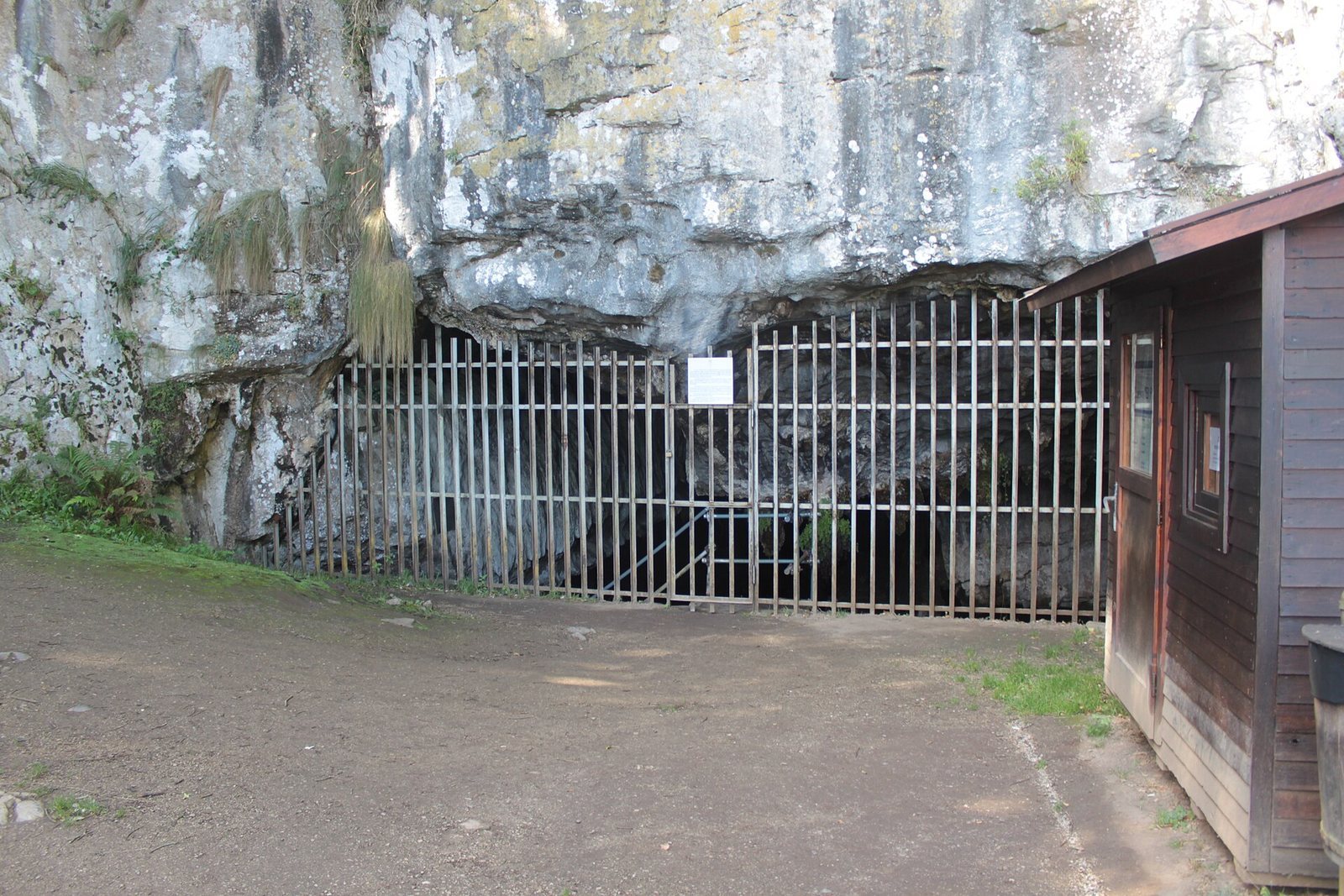
Cueva del Pindal is a decorated Paleolithic cave near Pimiango in Asturias, northern Spain. Its paintings and engravings are broadly assigned to the Magdalenian, a cultural period of the European Upper Paleolithic, around 18,000 to 14,000 years before present, a dating convention counted back from 1950. Their style points more specifically to the late Magdalenian, but the lack of a cultural layer inside the cave makes precise dating difficult.
Spanish archaeologist and prehistorian Hermilio Alcalde del Río discovered the cave in 1908. It has been protected as a Spanish Property of Cultural Interest since 25 April 1924. In 2008, it became part of the UNESCO World Heritage property Cave of Altamira and Paleolithic Cave Art of Northern Spain, first inscribed in 1985.
Remains
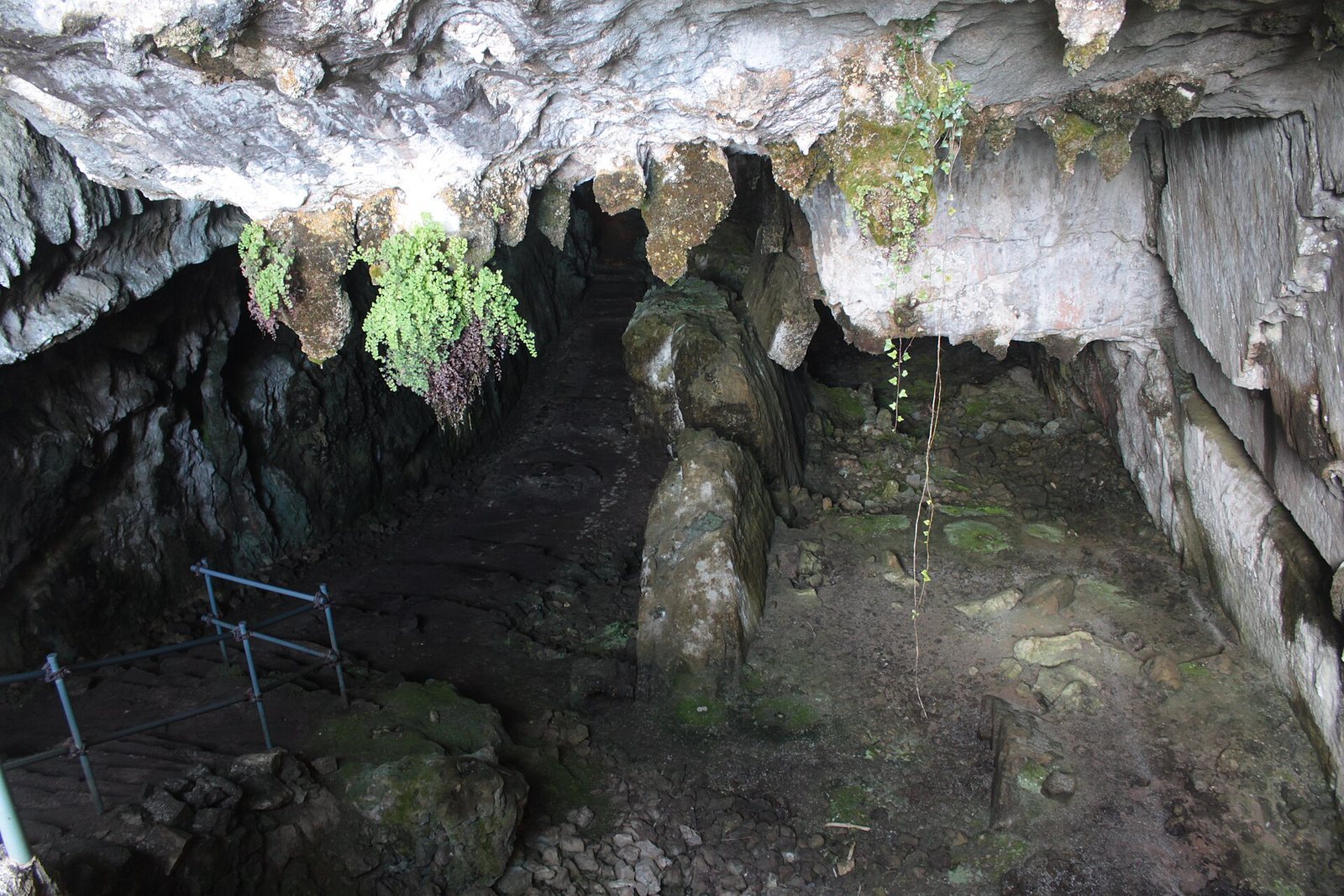
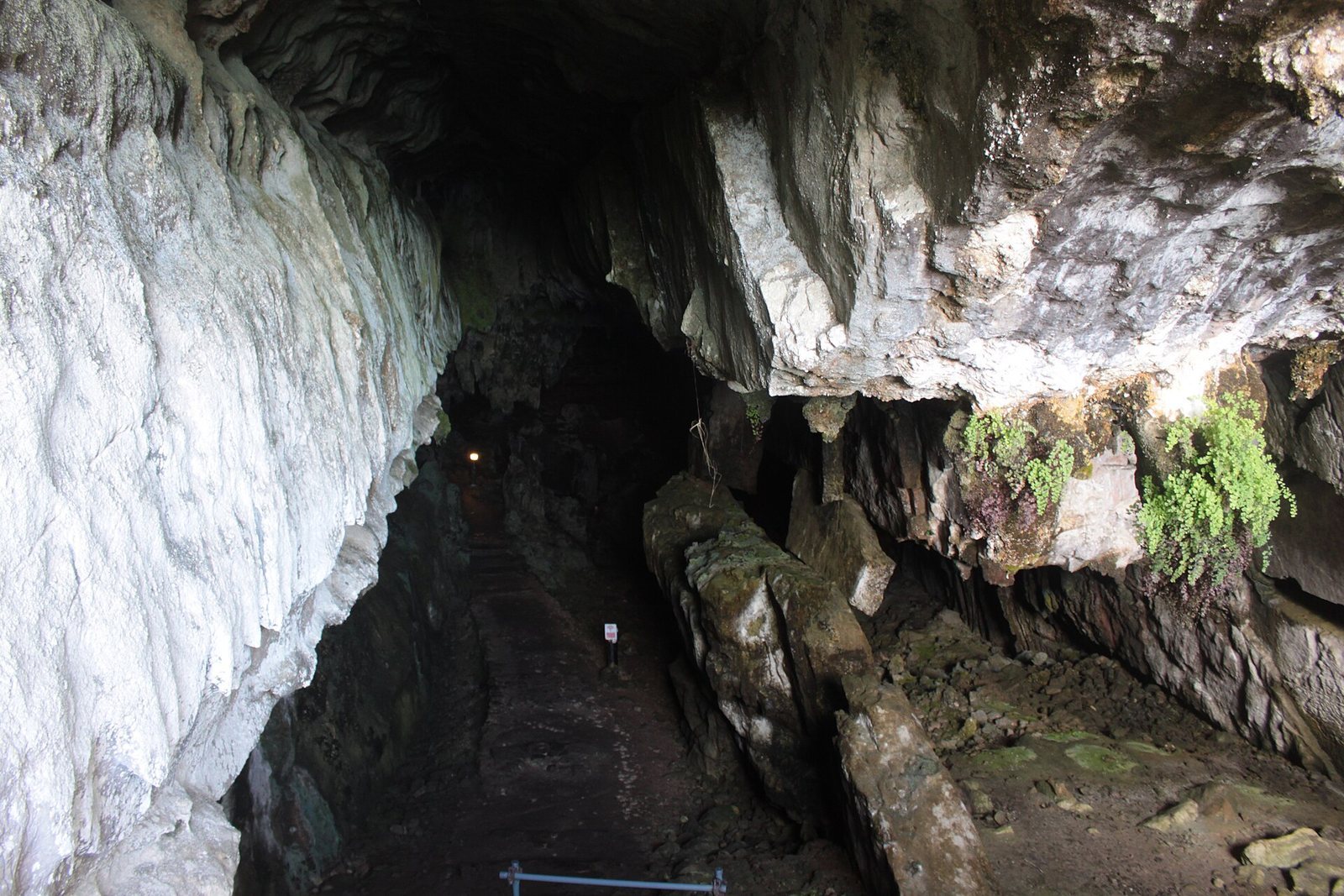
The cave is a roughly 300-metre-long, linear gallery formed in carbonate rock, with eastern and western sectors and no side branches. Its surrounding landscape and underground forms reflect coastal erosion, water flow, rock collapse and mineral deposits.
Geological setting and cave formation
Coastal platforms and slopes
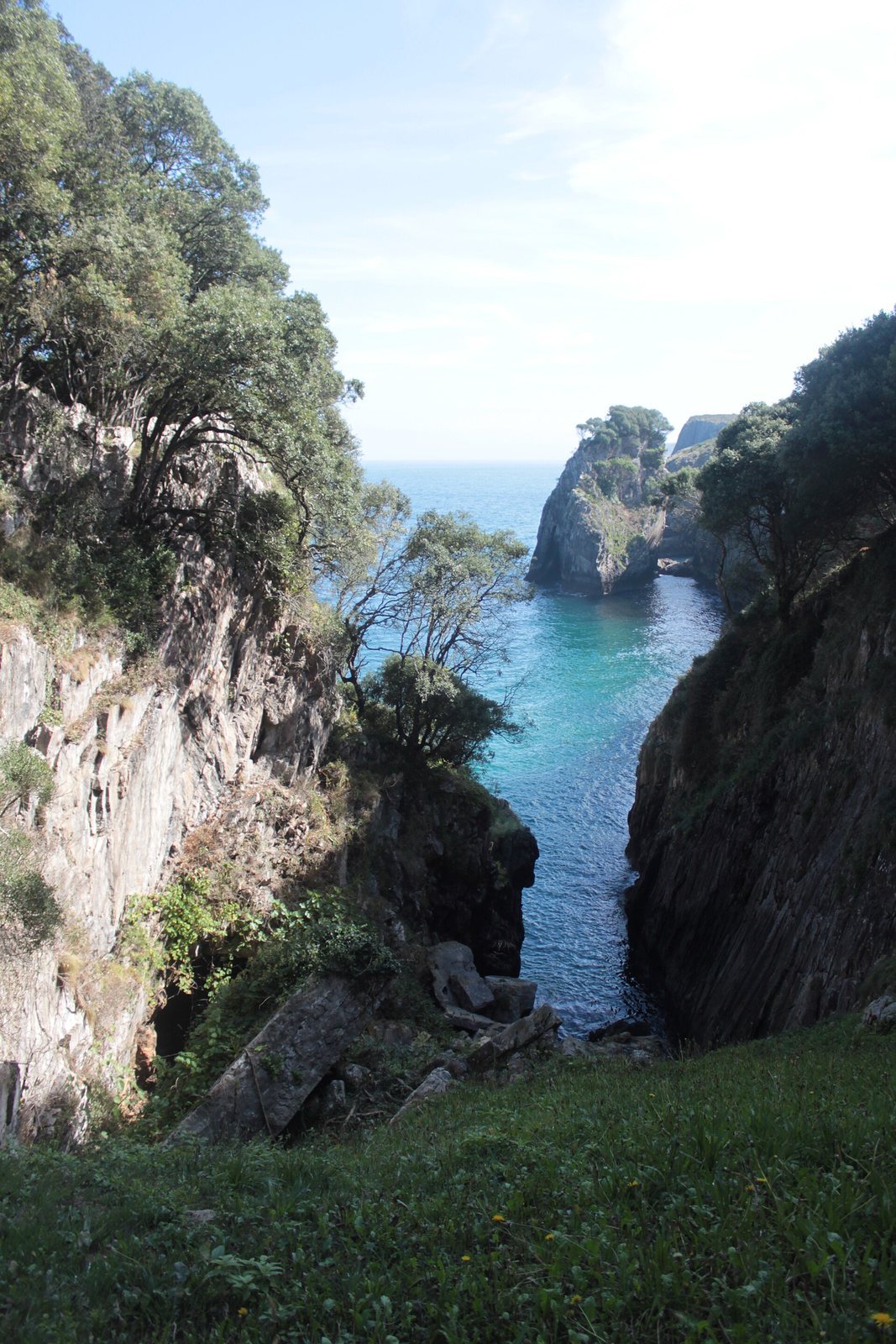
Two relatively level surfaces cut by wave erosion lie near the cave. Rasa II de Pimiango, 160 metres high and north of the cave, rests on quartzite from the Barrios Formation. Rasa I, 50 metres high to the south, rests on limestone of the Barcaliente Formation. Their emergence has been attributed to tectonic uplift, a fall in sea level, or both. The wider geological substrate also includes Devonian detrital rocks, formed from fragments of older rocks, in the Ermita Formation, and limestone of the Alba Formation.
Rainfall has shaped torrent basins and alluvial fans along the northern face of Rasa II. Rockfalls and gradual slope movement have left deposits on the basin slopes and across the front of the platform.
Karst and cave forms
Karst landforms develop as water dissolves rock such as limestone. Closed depressions called dolines contain insoluble material left by limestone dissolution. On Rasa I, several dolines join to form a blind valley, beneath which the cave lies. Joints and faults in the rock allow surface water and water from nearby channels to seep in and dissolve the carbonate bedrock.
Inside the cave, flowing water and rock dissolution have produced forms including roof pendants, remnants of rock that project down from the ceiling. Collapse deposits reflect gravity-driven breakdown, while mineral precipitation has formed abundant stalactites, which hang from ceilings, stalagmites, which grow upward from floors, and columns.
Gallery and cave art
Gallery and central panel
The cave’s eastern and western sectors divide the long gallery. Most of its rock art appears on the right-hand wall and is grouped in five principal areas. The central panel lies about 240 metres from the entrance, extends for 20 metres along the wall and contains around 50 images.
Paintings, engravings and signs
The animal figures include 13 bison, eight horses, a hind, a stag, other deer, isolated antlers, at least one mammoth and fish, alongside forms that cannot be identified. Artists rendered figures in red and black. Red markings include dots, lines, parallel strokes, geometric shapes and club-shaped forms.
A comparison of mammoth images at Cueva del Pindal and the French cave of Rouffignac has prompted the interpretation that they may depict hunting. A heart-shaped mark near the center of the Pindal mammoth image has been proposed as a sign of a serious wound inflicted by hunters.