Neumünster Abbey: A Benedictine Monastery and Cultural Centre in Luxembourg
Site at a Glance
- Popularity
- Medium
- Country
- Luxembourg
- Primary era
- Early Modern
- Eras represented
- Early Modern
- Civilizations
- Habsburg, Holy Roman Empire, Spanish
- Site type
- Religious
- Remains
- Monastery
On this page11 sections
History
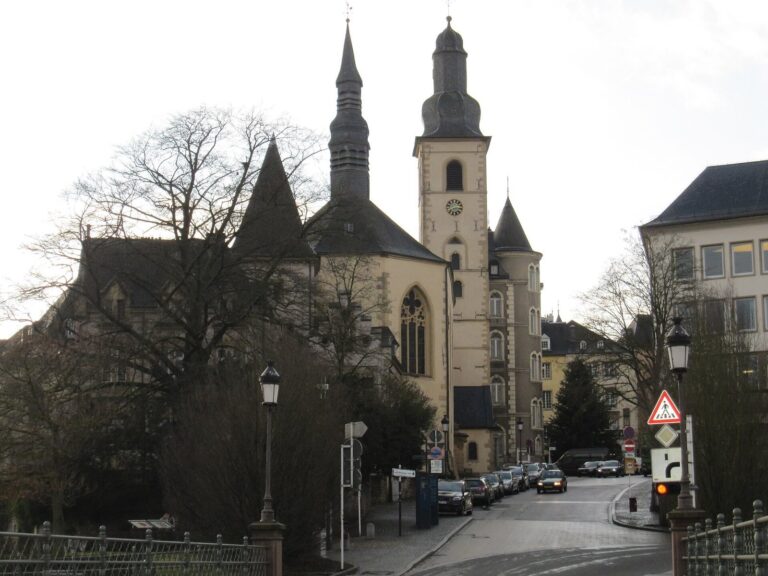
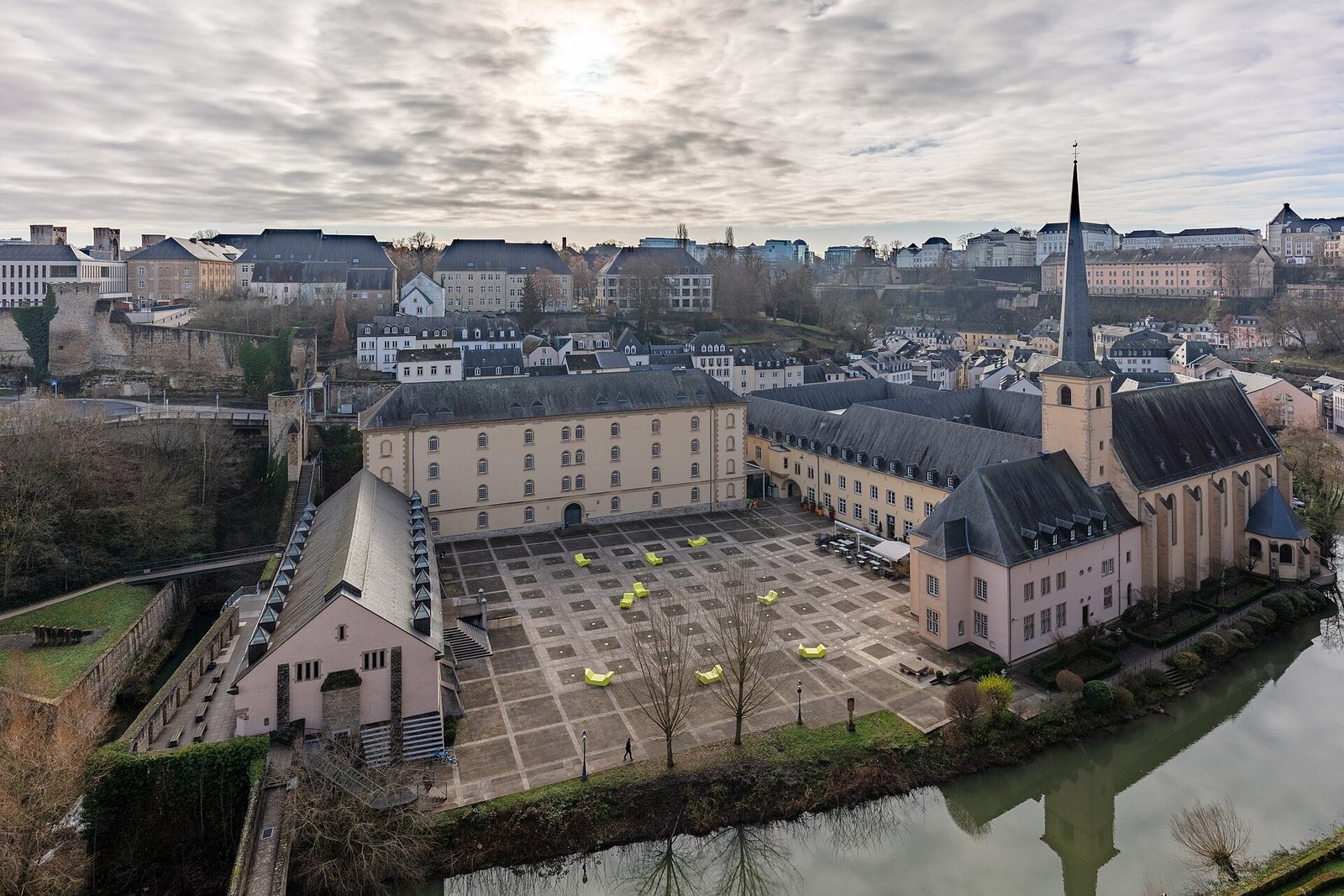
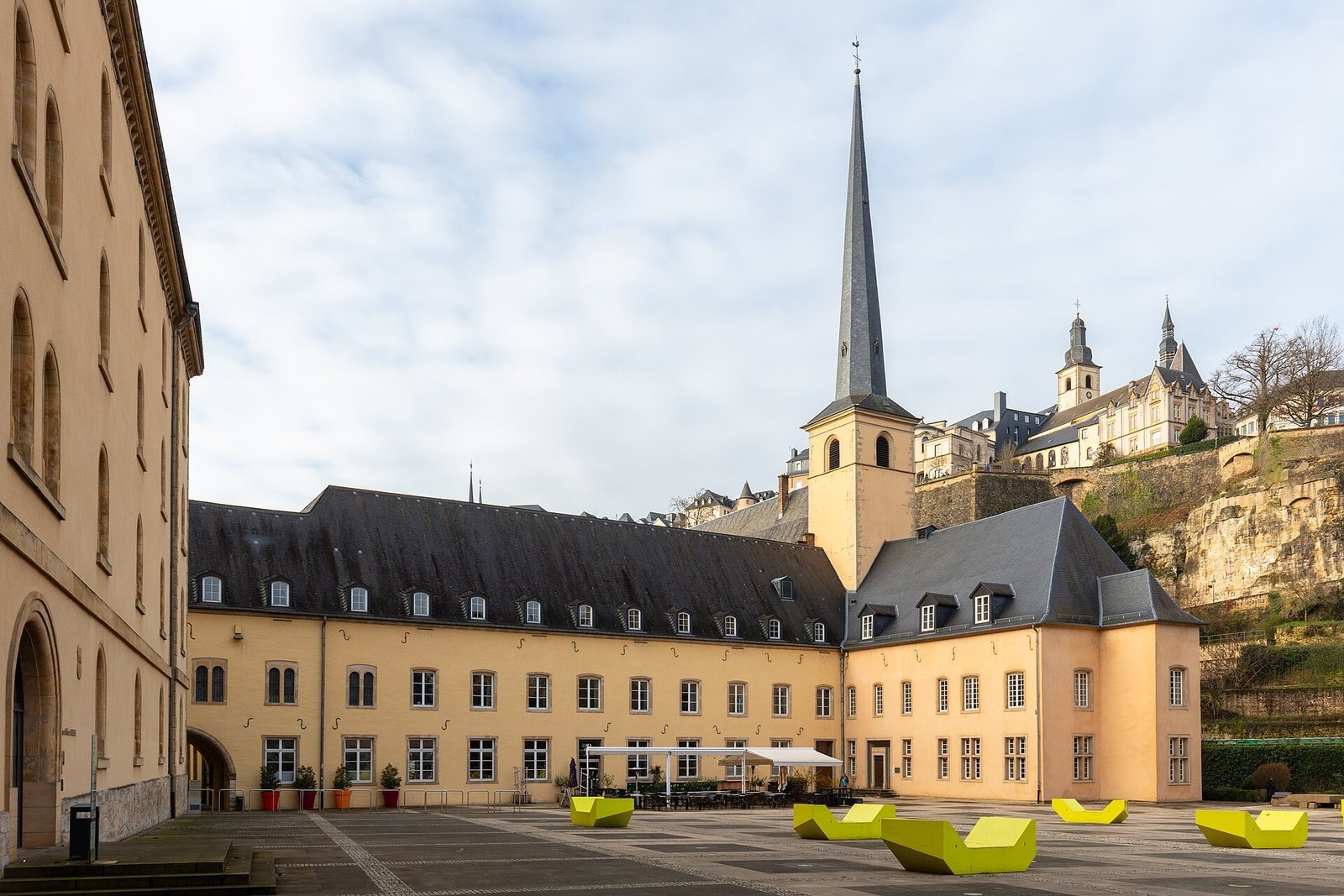
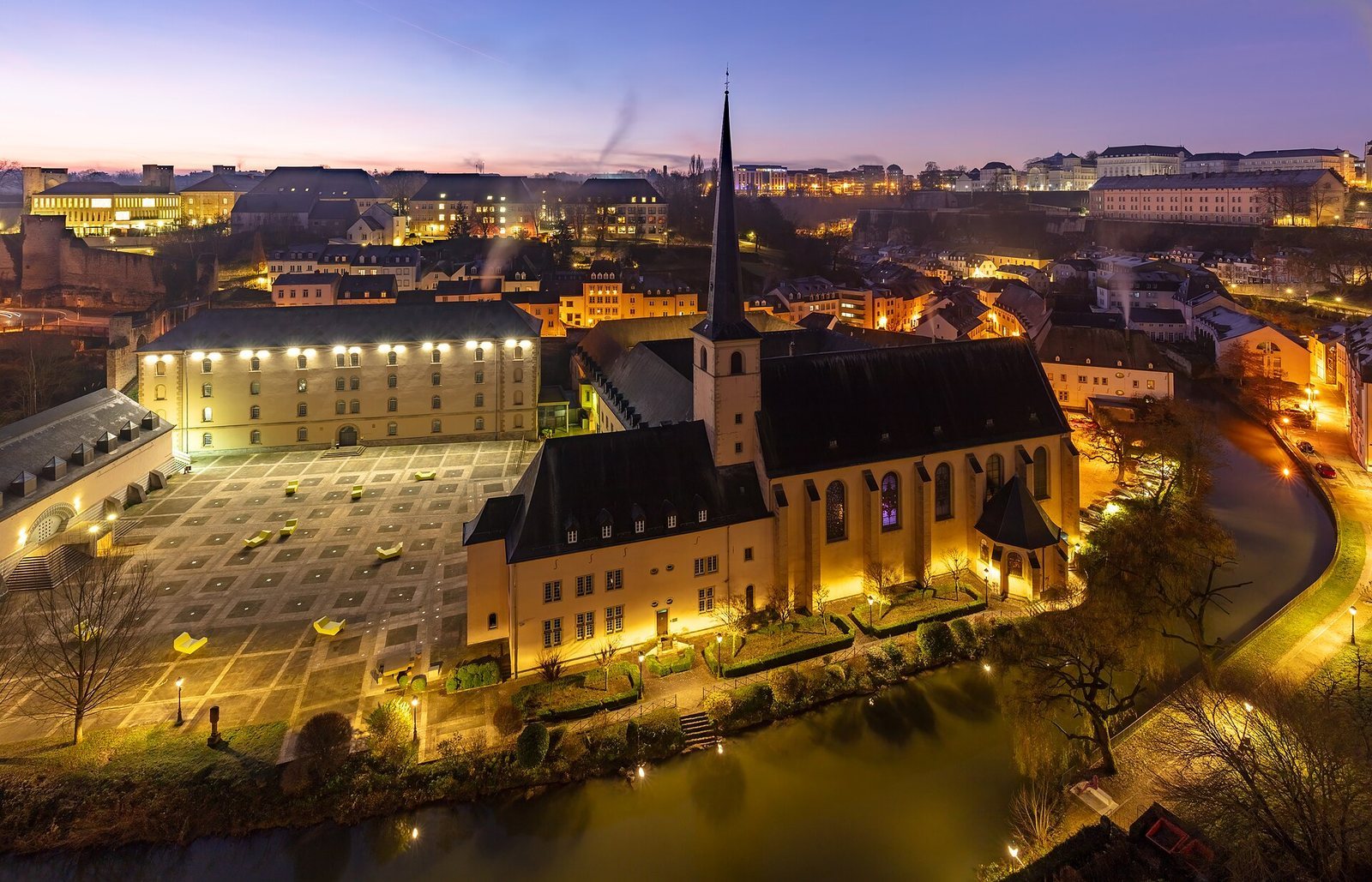
Neumünster Abbey was a Benedictine monastery in the Grund district of Luxembourg City, Luxembourg; its former buildings now serve as a public cultural and meeting centre. Benedictine monks, members of a Catholic monastic order that follows the Rule of Saint Benedict, established the Grund monastery in 1606. The complex is associated with Baroque architecture, an ornate European style that developed in the seventeenth century, and Neoclassical design, based on ancient Greek and Roman forms.
From the Altmünster predecessor to the Grund abbey
The abbey’s predecessor stood on the Altmünster Plateau. French forces under King Francis I destroyed it in the early 1540s during their occupation of Luxembourg City.
In 1606, Benedictine monks established a new abbey in Grund. They transferred there the bones of John the Blind, king of Bohemia, who died in 1346.
Siege and rebuilding
In 1684, during the Siege of Luxembourg, forces of Louis XIV, king of France, besieged and bombarded the city under Marshal Créquy and the military engineer Vauban. The abbey was destroyed. Reconstruction on the same site began in 1688, and the complex was enlarged in 1720.
Revolutionary and military uses
French revolutionary authorities secularized and confiscated the abbey in 1796, expelling the monks. Two years later, the complex was put to use as a prison and barracks. The municipality’s welfare office made it an orphanage in 1805, but a gunpowder explosion destroyed the building in 1807.
After 1815, the complex served as a Prussian barracks. St John’s Church became a military hospital for troops of the German Confederation, an association of German states established after the Napoleonic Wars. The Prussian garrison departed after the Second Treaty of London in 1867 declared Luxembourg neutral and independent.
Prison and cultural centre
From the late 1860s into the 1980s, the Luxembourg state used the abbey as a prison. For part of that period it held male prisoners. During the Second World War, Nazi authorities imprisoned political resisters there, including Luxembourgish sculptor Lucien Wercollier.
Restoration work from 1994 to 2004 accompanied the buildings’ transition to a public cultural and meeting centre, a role they have held since 2004. The European Institute of Cultural Routes has been based at the site since the late 1990s. On 25 April 2005, Bulgaria and Romania signed their Treaty of Accession to the European Union at the abbey. Its official name changed from Neumünster Abbey to Neimënster Abbey in 2014.
Remains
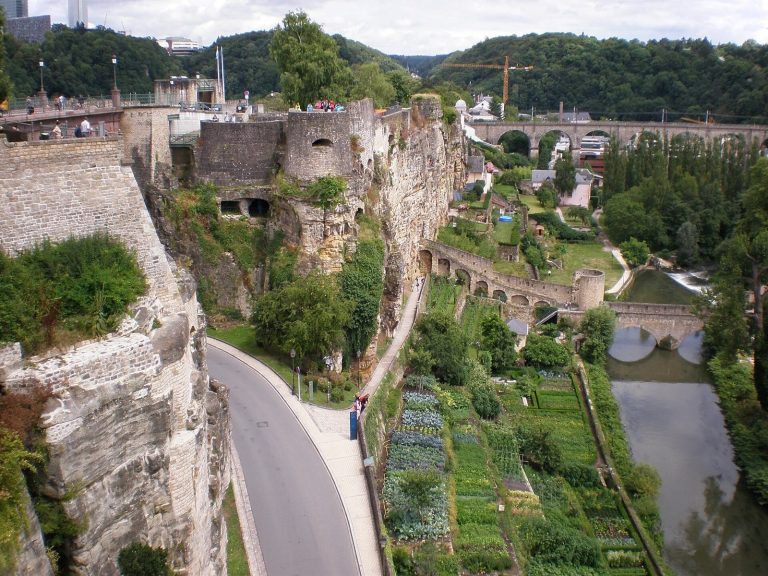
The present complex covers approximately 12,000 square metres beside the Alzette in Grund. Its buildings combine Baroque and Neoclassical architecture and include an abbey church and associated structures.
Archaeological and architectural features
Courtyard settlement and workshops
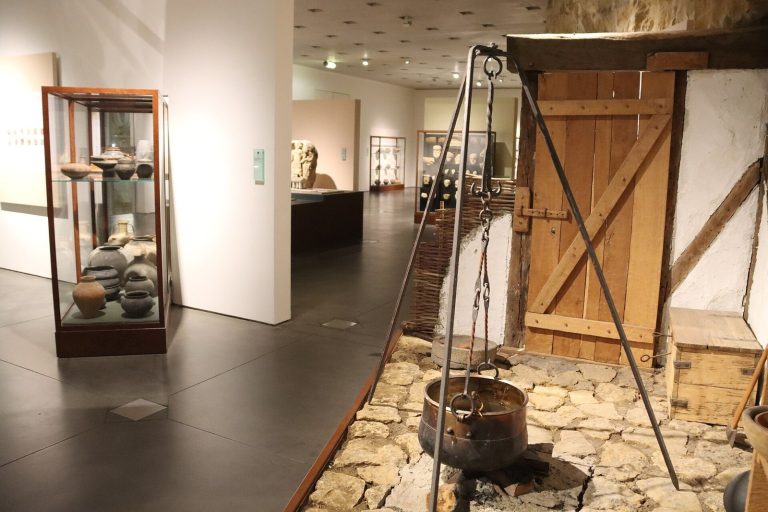
In the courtyard of the Robert-Bruch building, traces of settlement and craft activity appear to date to the twelfth and thirteenth centuries. Wooden huts from around the turn of the fifteenth century were later replaced by stone workshops.
Churches and tomb
The abbey complex included an abbey church and associated buildings, among them St John’s Church. A marble tomb was constructed in 1618 to house the bones of John the Blind, which had been transferred from Altmünster.
Tanners beside the Alzette
In the seventeenth century, a community of tanners worked on the Alzette’s left bank, opposite the church.
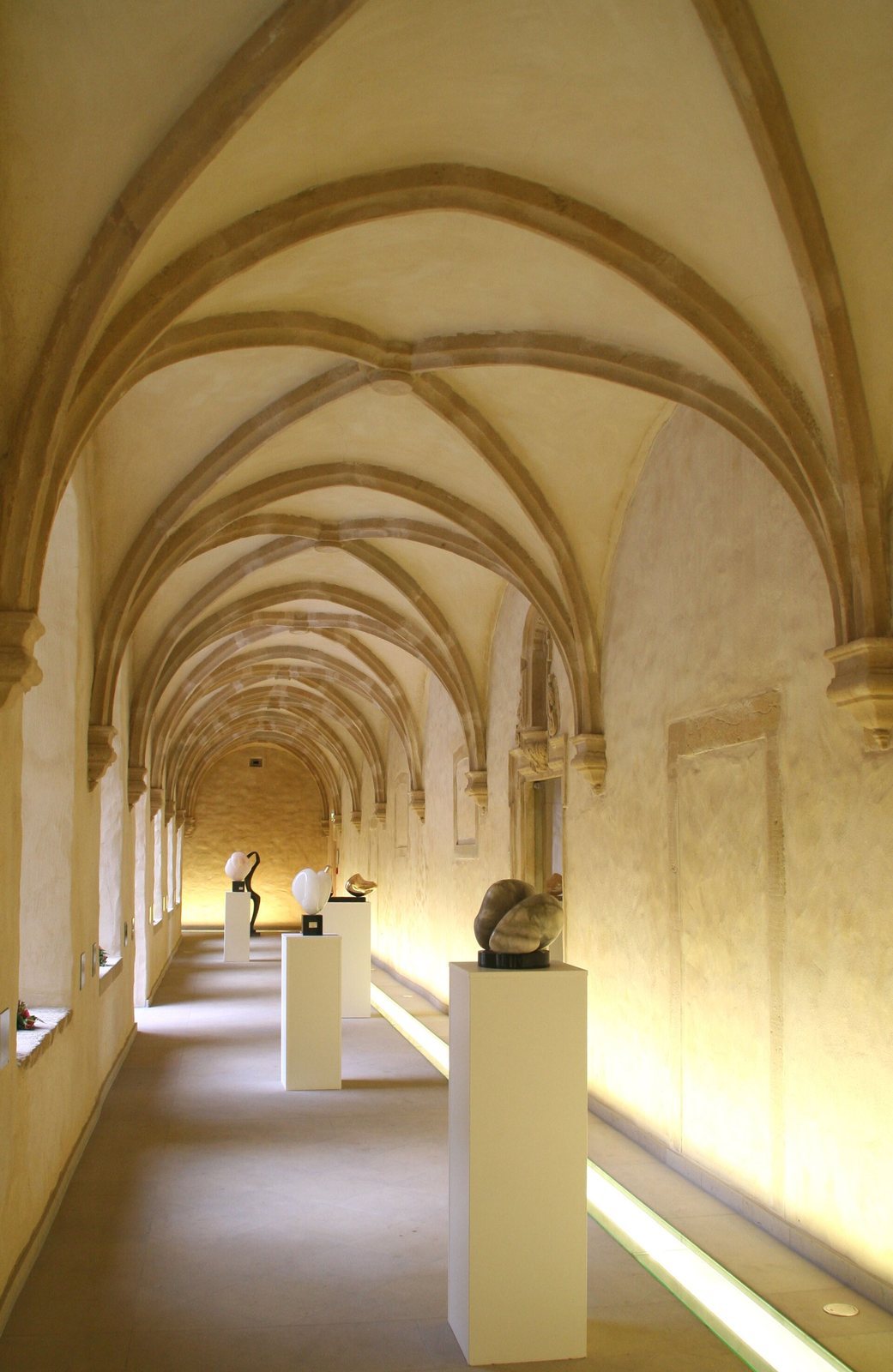
Lucien Wercollier Cloister
The Lucien Wercollier Cloister permanently displays several works from the sculptor’s private collection.