Urnburg Castle: A Hilltop Stronghold in Germany
Site at a Glance
- Popularity
- Very Low
- Country
- Germany
- Primary era
- Unclassified
- Eras represented
- Unclassified
- Civilizations
- Holy Roman Empire
- Site type
- Military
- Remains
- Castle
On this page4 sections
History
Urnburg Castle, also known as Dalenburg, was a hilltop stronghold on a wooded rise south of Rohrdorf in Eutingen im Gäu, Germany. It was among the notable castles between Horb am Neckar and a bend in the Neckar River, and for a long period served as the ancestral seat of a branch of the Lords of Weitingen, a regional noble family.
Transfers and late-medieval conflict
In 1381, Count Rudolf III of Hohenberg sold the property to Duke Leopold III of Austria. The lands had been pledged as security and had not been redeemed, so Rudolf’s wife, Ida von Toggenburg, retained control of the lordship. The castle also served for a time as her widow’s residence. In 1392, Duke Leopold IV of Austria exercised the right to recover the property, and Austrian owners later pledged the lordship repeatedly.
During the War of the Cities, late-medieval fighting between towns and territorial rulers, Margrave Bernhard of Baden unsuccessfully besieged the castle. In 1465, amid a legal dispute, Count Eberhard im Bart of Württemberg ordered it shelled until it could no longer be inhabited. After further changes of control, the lordship passed to him.
Rebuilding and dismantling
The castle was rebuilt with financial support from King Maximilian I, a Habsburg ruler and Holy Roman Emperor. After a falling-out with Duke Ulrich of Württemberg, Ulrich ordered it plundered and burned. It later served for a time as a granary.
In 1576, the ruin and its associated villages returned to Austrian rule. That rule ended in 1805 under the Peace of Pressburg, a treaty between France and Austria. Farmers from Rohrdorf then used the ruin for building material for their farmsteads, and the castle was dismantled.
Remains
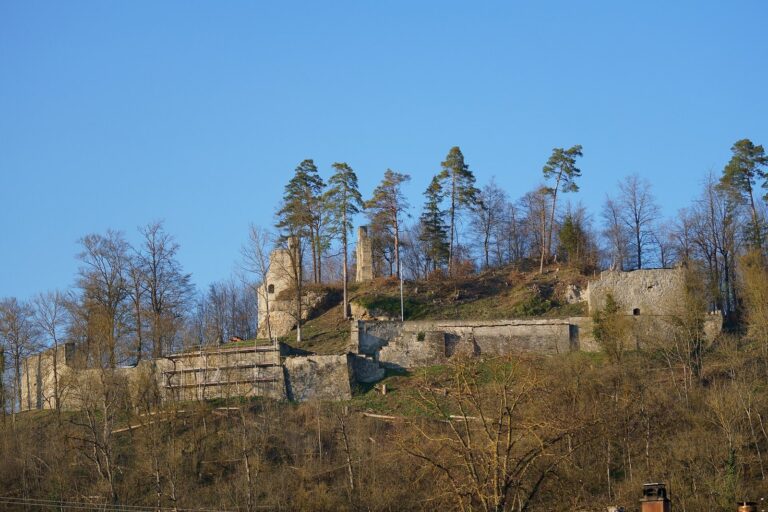
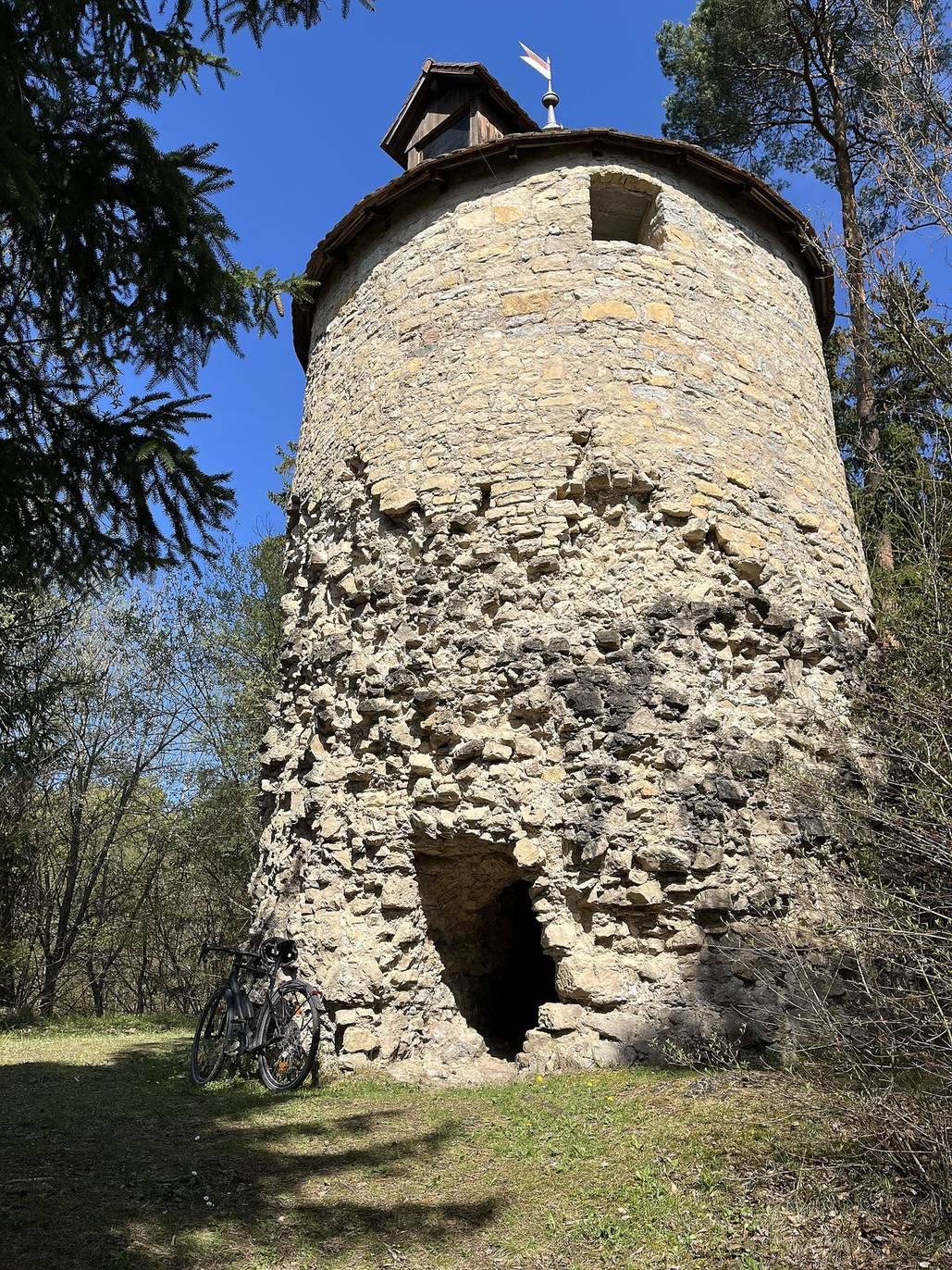
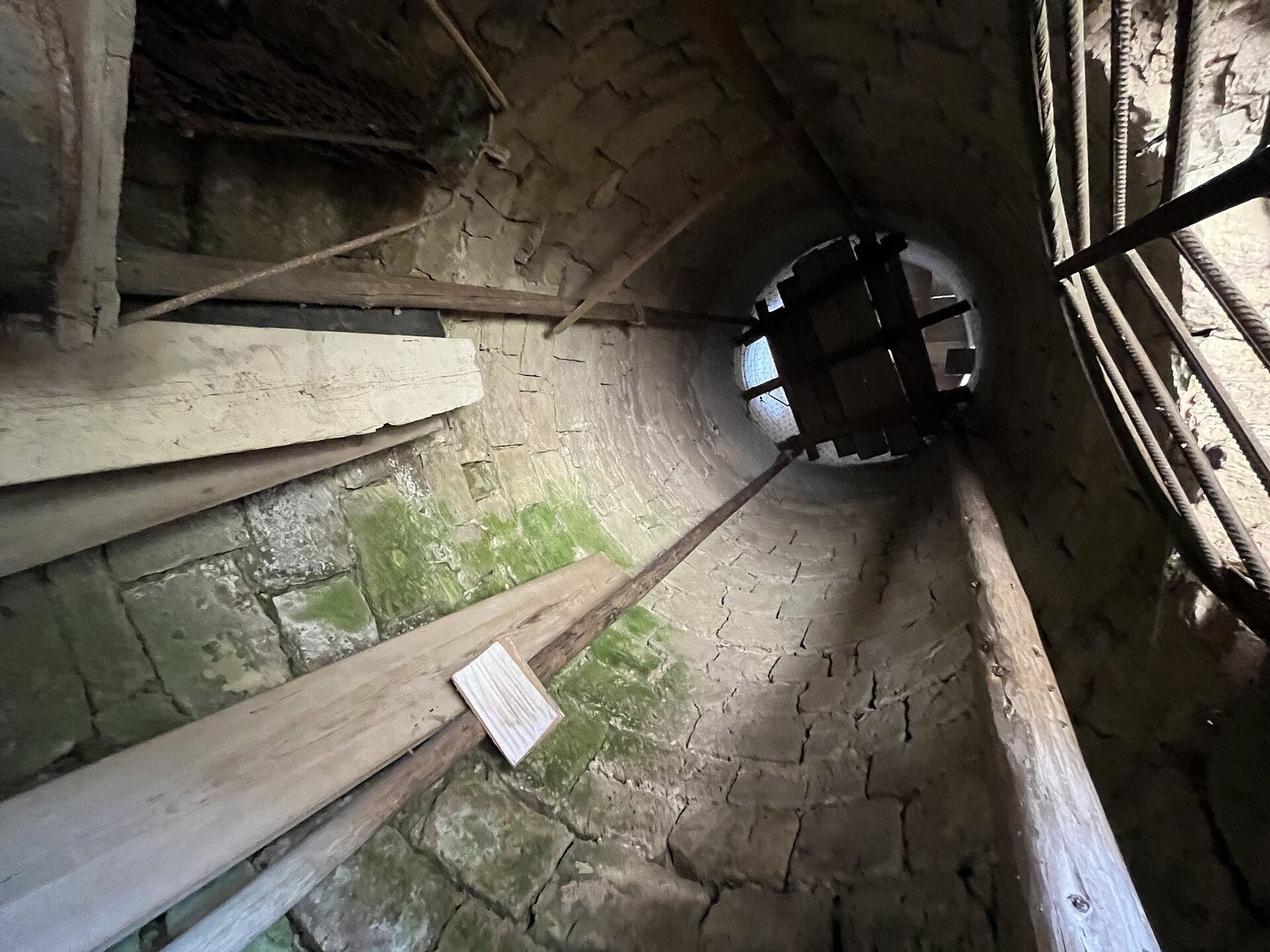
The castle stood on a wooded hilltop south of Rohrdorf. Its sole surviving part is a low, roofed round tower; the rest of the castle was dismantled and used as building material.