Schmalegg Castle: A Medieval Hilltop Stronghold in Ravensburg
Site at a Glance
- Rating
- 5
- Popularity
- Very Low
- Country
- Germany
- Primary era
- Medieval
- Eras represented
- Medieval
- Civilizations
- Holy Roman Empire
- Site type
- Military
- Remains
- Castle
On this page10 sections
History
Foundation and early lords
Schmalegg Castle was a medieval hilltop stronghold on Schlossbüchl near Schmalegg, in the city of Ravensburg, Germany. Also known as Schenkenburg, it was built by the Schenken of Schmalegg around 1148, the year it first appears in writing as Smalunekke. The Schenken were a ministerial family, part of a service-based noble class whose members held duties and status under a lord. They were first associated with the Welfs, a major ruling dynasty in southern Germany, and later with the Hohenstaufen, another major ruling dynasty.
In the 13th century, the castle also served as the ancestral seat of Ulrich von Winterstetten, a Minnesinger, or medieval German poet associated with courtly lyric song. The knights of Schmalegg used arms with a right-tilted triangular shield, a gold background, and a device interpreted as either a wolf hook or a wall hook. A rounded helmet above the shield supported a backward-curving horn bearing three smaller shields, each with the same device and three peacock feathers. Schmalegg’s former municipal coat of arms was based on this design.
Transfer to Ravensburg
Between 1274 and 1294, the castle passed by sale to the counts of Werdenberg-Sargans. On 4 July 1413, Count Eberhard of Werdenberg-Sigmaringen sold the lordship of Schmalegg to Ravensburg for 6,300 Rhenish florins, a medieval currency. Ravensburg was then an imperial city, a self-governing city under the Holy Roman Emperor, and appointed a bailiff at the castle to administer its authority there.
Destruction and later memory
Swedish troops burned the castle in spring 1647 during the Thirty Years’ War, the European conflict fought from 1618 to 1648. The ruins were subsequently quarried for stone. Grain was being grown on Schlossbüchl in 1824, and stone from the remaining castle ruins was used to build Schmalegg’s church in 1862.
A local legend says that a golden set of skittles lies hidden at the castle. Each year during carnival, the Bettelspitz Schmalegg carnival association holds a skittles competition for local schoolchildren and kindergarten children in remembrance of the story.
Remains
Setting and layout
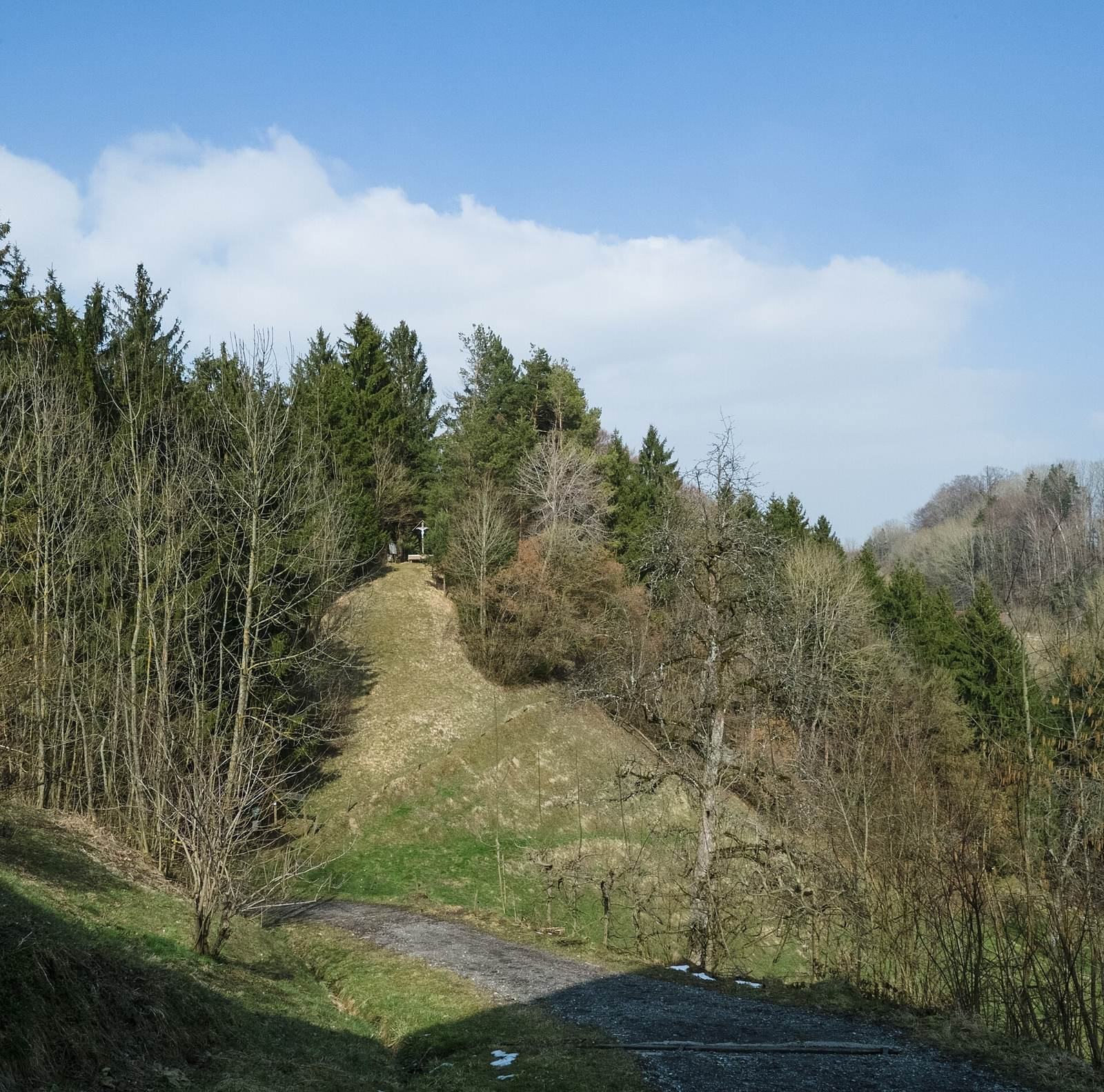
The castle stood at 555 metres above sea level on Schlossbüchl. The name Schmalegg means narrow corner and refers to a tongue of land projecting into a ravine, where the old village of Schmalegg and Schlosshalde lie. Closely spaced farmsteads on this tongue formed an outer ward. A drawbridge divided it from the main castle, which occupied a raised landform projecting into the ravine. The outer ward probably also had a defensive barrier separating it from the adjoining plateau. The complex included a chapel dedicated to St Nicholas, a Christian saint, suggesting that the castle was of some size.
Surviving features
Castle remains
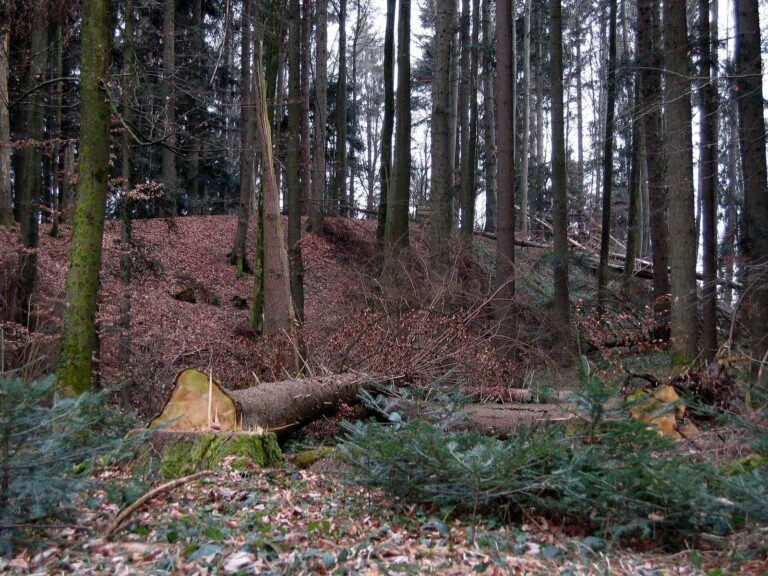
Substantial parts of the gate tower and defensive wall remained in 1824. The only surviving trace of the castle itself is now a deep saddle in the ground, representing the former moat.
Cross and site markers
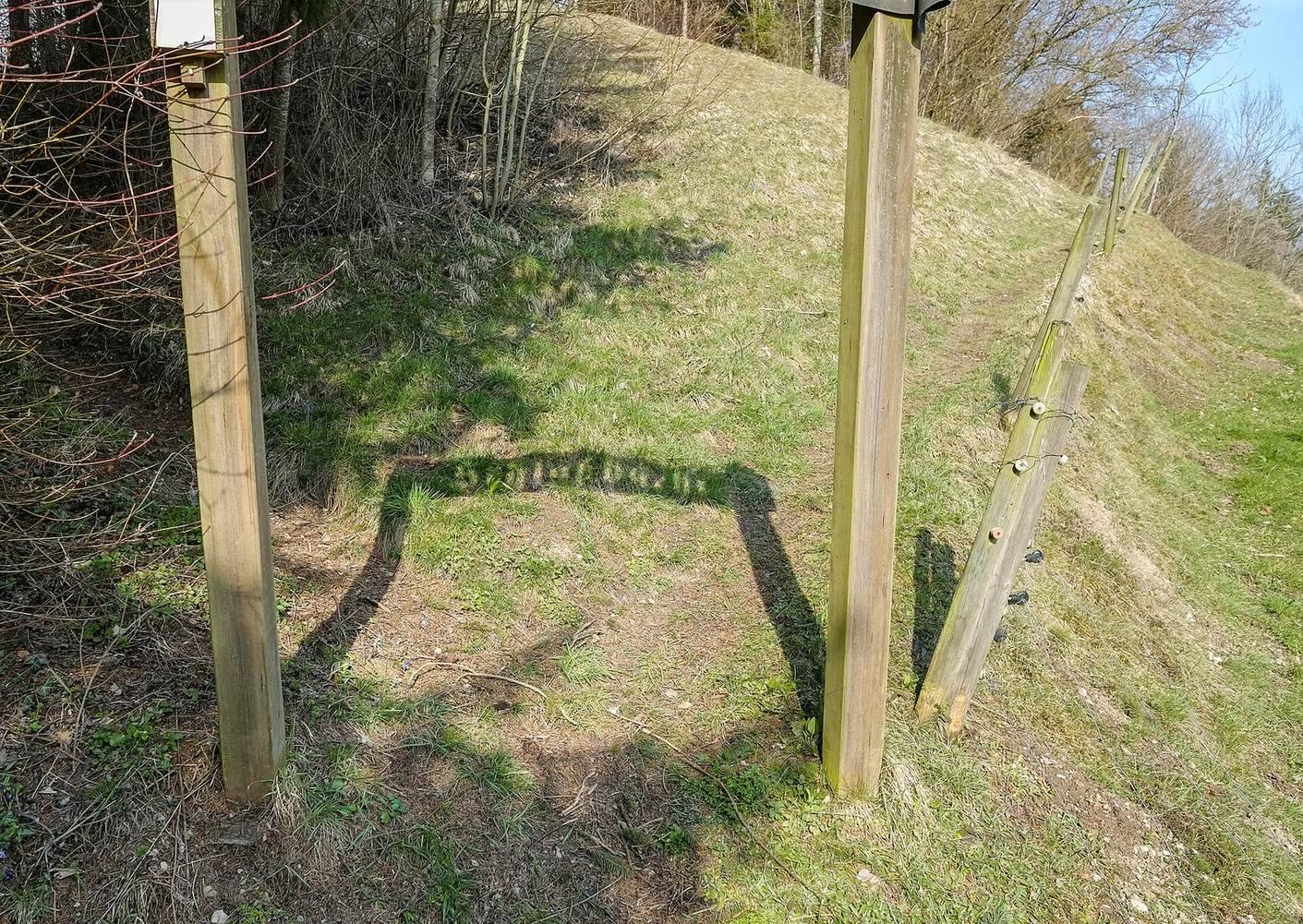
A cross, a bench, and several information panels marking the former lordship are now at the site. Woodcarver Riegel of Altshausen made the cross. It was dedicated on 3 July 1956 and renewed in 1981.
Lady’s-slipper orchid
A rare lady’s-slipper orchid grows wild on Schlossbüchl. It is classified as endangered on the Red List, which assesses species’ conservation status, and is strictly protected under Germany’s Federal Species Protection Ordinance.