Cyclopean Tomb: A Mycenaean Tholos Tomb at Mycenae
Site at a Glance
- Popularity
- Very Low
- Country
- Greece
- Primary era
- Bronze Age
- Eras represented
- Bronze Age
- Civilizations
- Mycenaean
- Site type
- Burial
- Remains
- Tomb
On this page12 sections
History
Construction and chronology
The Cyclopean Tomb is a Mycenaean tholos tomb, a circular burial structure with a domed chamber, at Mycenae, Greece. It was probably built around 1500 BCE, in the early Late Helladic IIA phase, part of the chronology used for Mycenaean Greece. That phase is dated approximately 1635/1600–1480/1470 BCE. The tomb was one of nine tholoi built at Mycenae during the Late Bronze Age.
Alan Wace placed the tomb in the first group of Mycenae’s tholos tombs and considered it, alongside the nearby Panagia Tholos, among the oldest. Its relatively simple construction informed his assessment.
Later history and investigation
The tomb was looted in antiquity, probably during the Iron Age, and had partly collapsed before archaeological investigation. It was known before major excavations at Mycenae began in 1876, and appears on a site plan from 1878 and a map dated 1881–82.
Christos Tsountas excavated the tomb in 1891. Wace returned in 1922 to examine its approach passage and entrance corridor, and to study material removed during Tsountas’s excavation. The tomb forms part of the Archaeological Sites of Mycenae and Tiryns, inscribed as a UNESCO World Heritage Site in 1999.
Remains
Layout and setting
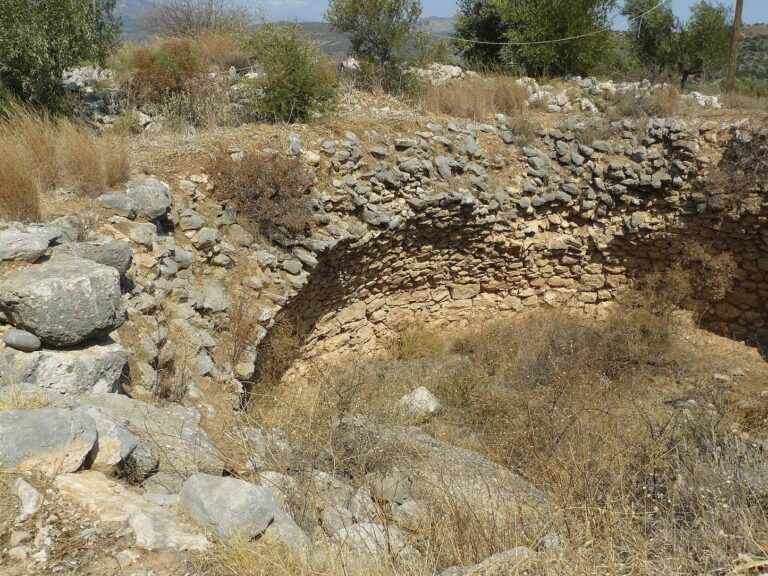
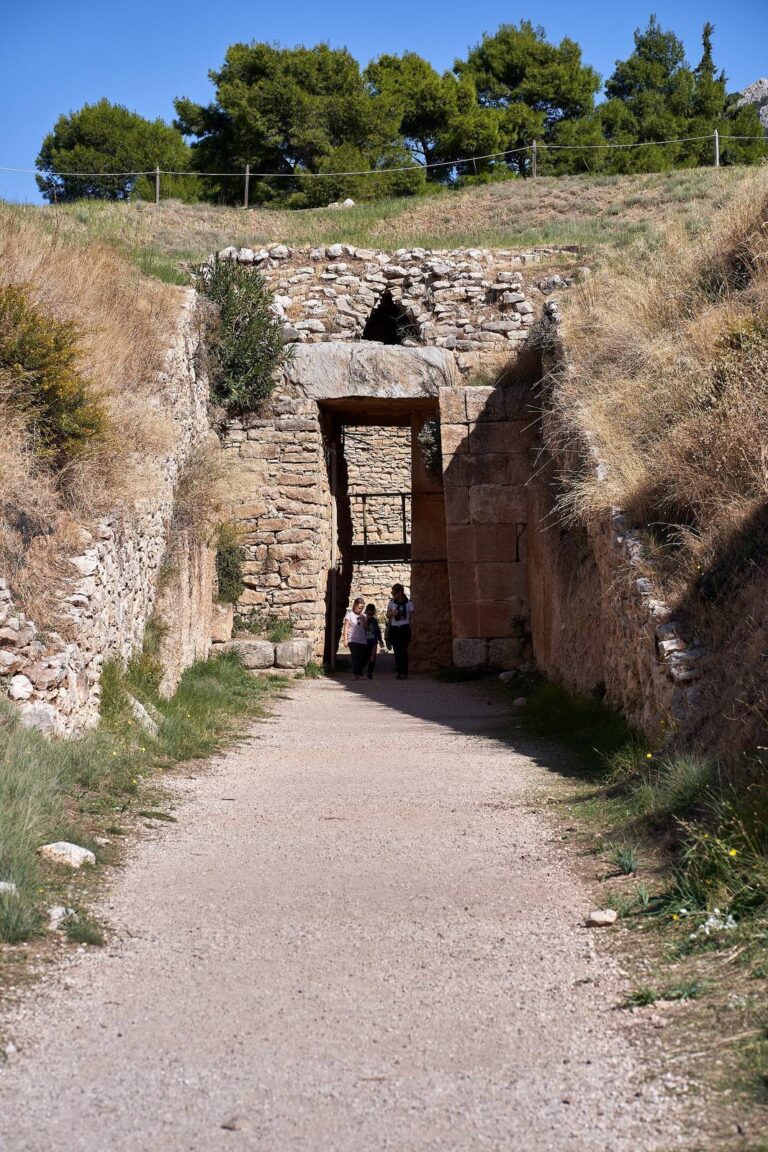
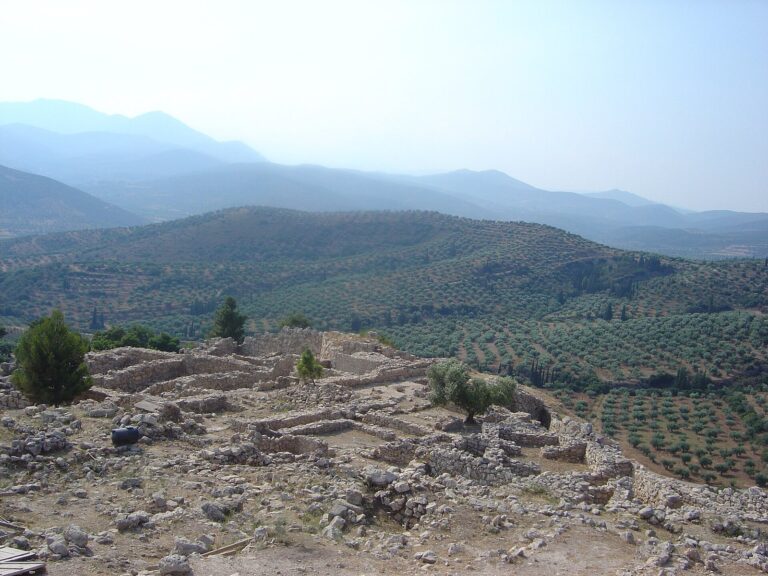
The tomb lies on the western slope of Panagitsa Hill, about 600–650 metres from Mycenae’s citadel, or upper city. It is south of the Tomb of the Genii, approximately 60 metres away. A narrow approach passage leads to an entrance corridor and then to the round burial chamber. The large, roughly worked limestone and conglomerate blocks used in the passage and dome give the tomb its name. Smaller stones fill gaps between the larger blocks.
Entrance passage and corridor
Approach passage
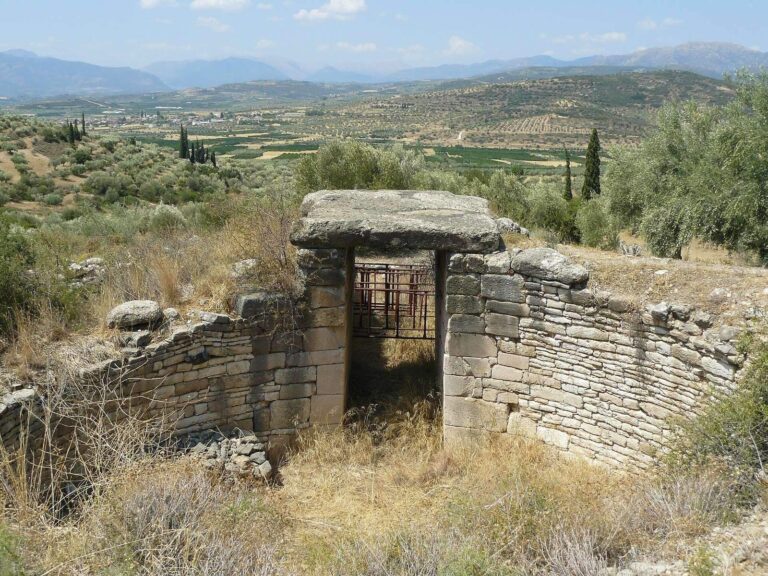
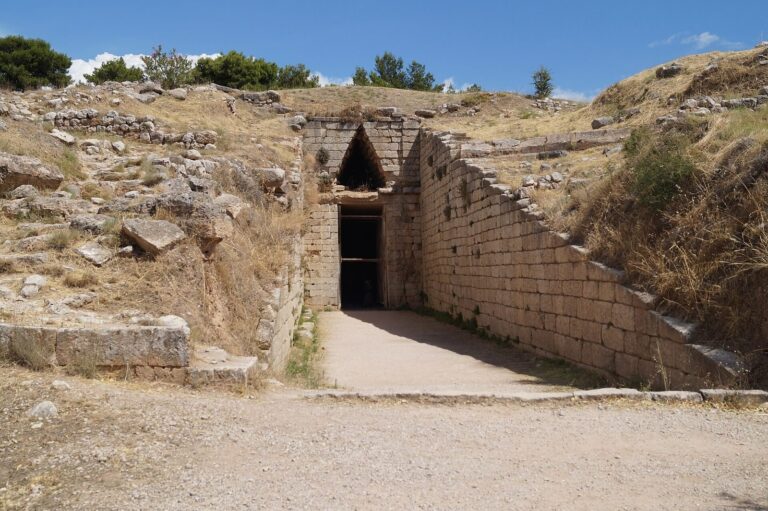
The dromos, or approach passage, was cut into soft rock. Its sides had collapsed before measurements were made in the early twentieth century, and agricultural use caused further damage. Its full length is uncertain: it was at least 10 metres long, with measurements of 12–13 metres. It is about 2 metres wide and slopes gently down toward the tomb.
Entrance corridor
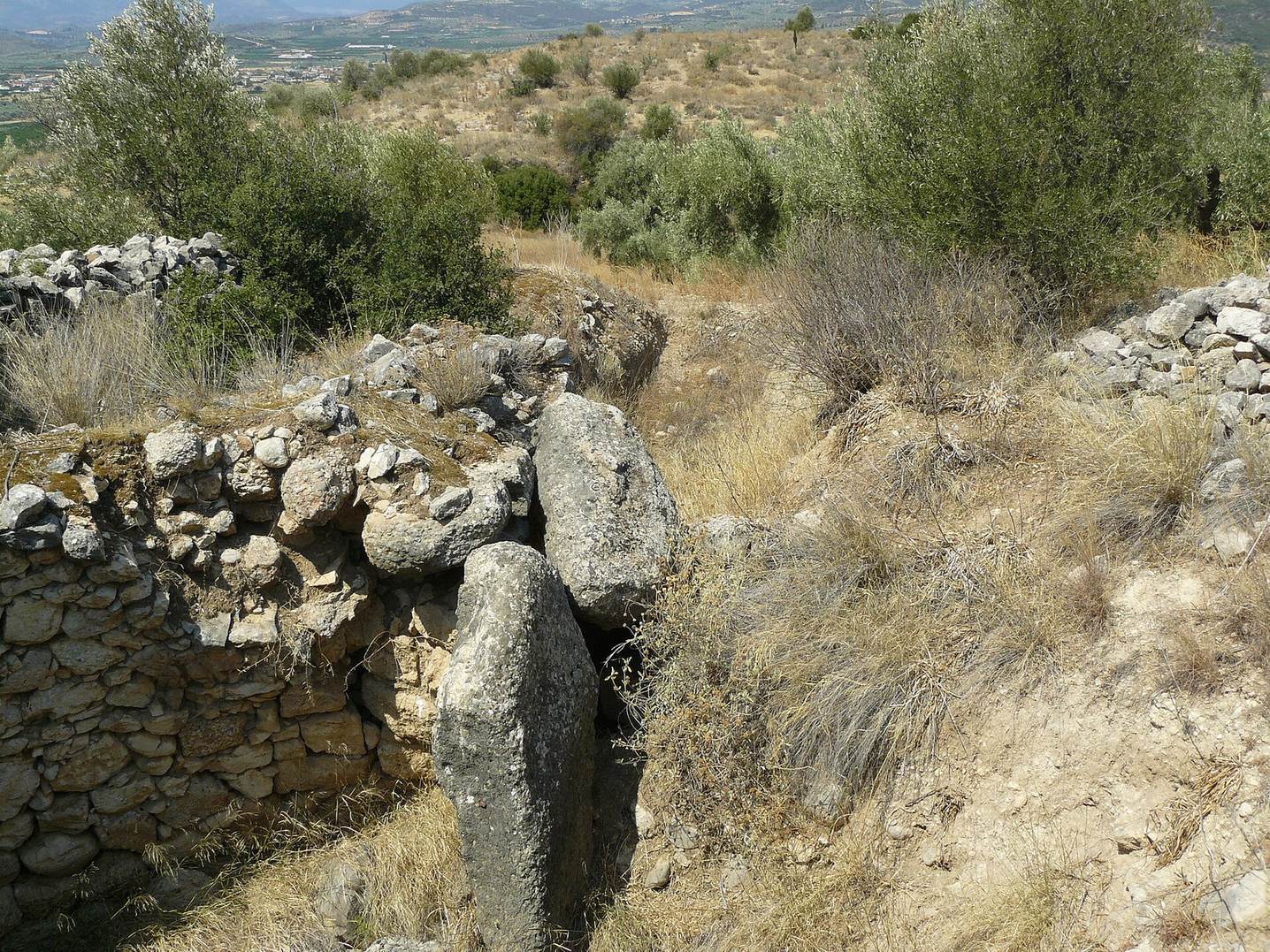
The stomion, or entrance corridor, is about 3 metres high, 1.4 metres wide, and 3.4 metres deep. Its side walls angle slightly inward. The entrance supports and outer face use lightly dressed or roughly worked limestone and conglomerate from nearby quarries. Three large conglomerate slabs covered the corridor. Since its top was approximately level with the ground, the slabs could be drawn into place rather than lifted. Rough stones blocked the outer end.
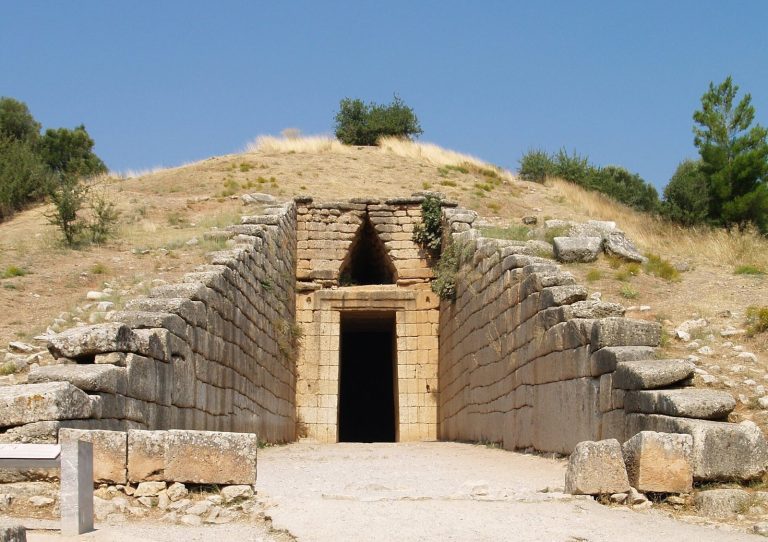
Wace considered whether the entrance had a relieving triangle, a triangular opening above a doorway that helps reduce the load above it. His comparison included the Tomb of Aegisthus, where a relieving triangle was exposed in 1997.
Burial chamber and dome
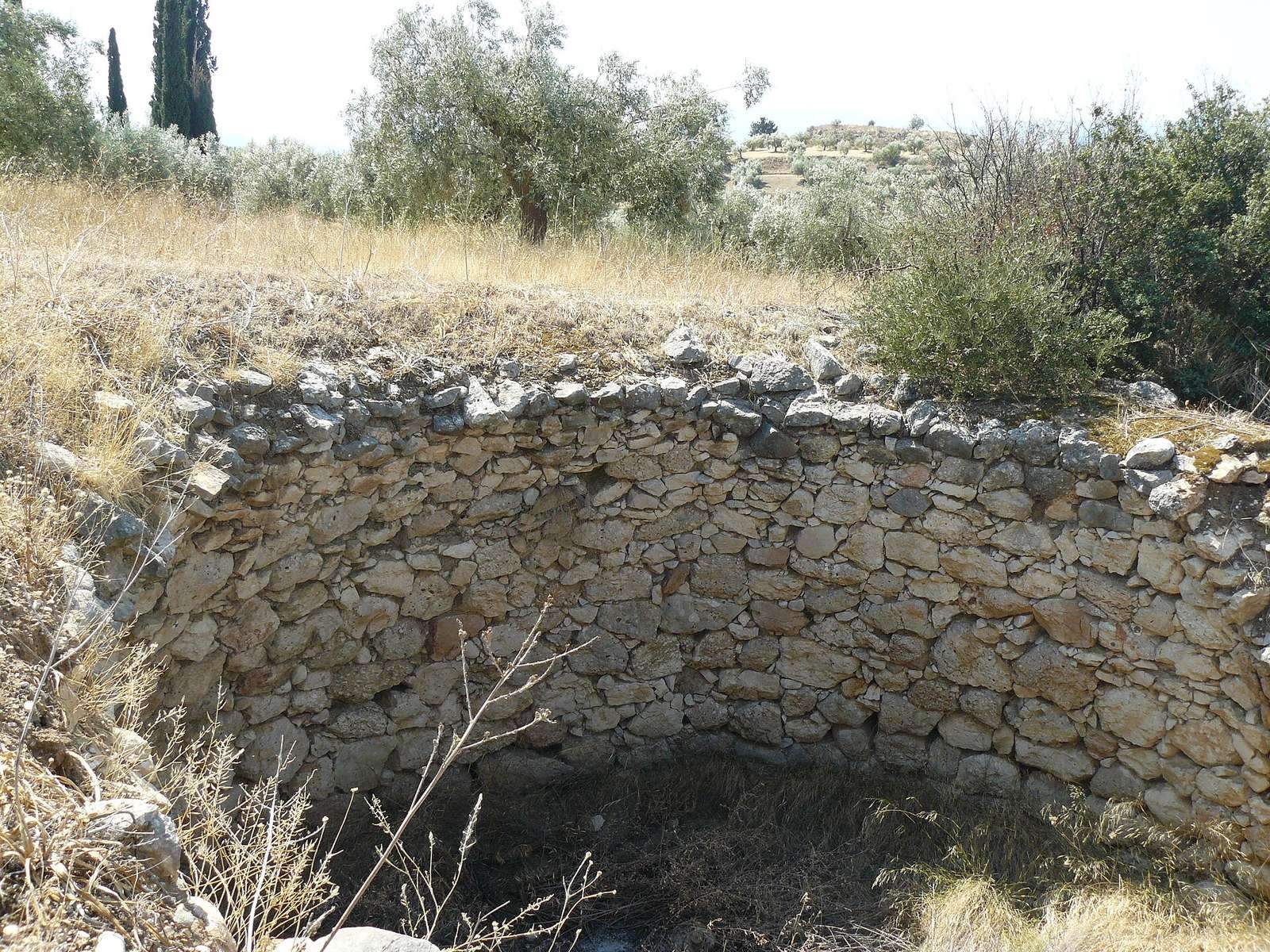
The circular chamber is about 8 metres in diameter, and its original height was estimated at roughly 8 metres. It was set within a round hollow cut into soft rock, with a levelled bedrock floor. The dome was made from roughly worked limestone and conglomerate, using corbelling, a roofing method in which each stone course projects inward toward the top. Stones placed outside the dome acted as counterweights, stabilizing its upper courses and making the outer wall thicker toward the top. The dome and much of the chamber roof have collapsed.
Finds
Excavated objects
Finds from Tsountas’s excavation included a bronze knife wrapped in gold leaf and an ivory rod described as gold-covered. Other objects included pieces of gold foil, a bronze pin with a gilded head, a bronze ring, glass necklace beads, an obsidian arrowhead, and a broken, lens-shaped soapstone seal stone. A soapstone spindle whorl, a weighted tool for spinning thread, dates to Late Helladic III and was probably placed in the tomb later. Some of the finds are exhibited at the National Archaeological Museum in Athens.
Pottery and tile
Pottery fragments from the dromos included nine pieces from vessels and large palace-style amphorae, or two-handled storage jars, dated to Late Helladic II. A further 20 pieces belong to the transition between Late Helladic I and II, and 40 date to Late Helladic III.
Finds from the stomion comprised four Middle Helladic fragments, from the period preceding Late Helladic; eight Late Helladic II fragments; 26 Late Helladic III fragments; one from the later Geometric period; and a tile fragment from the Hellenistic period. The Geometric fragment and later tile have been interpreted as possible evidence that people used the tomb for worship of revered or mythical ancestors after the Bronze Age.
Material examined from the excavation soil also included two fragments from a palace-style Late Helladic II amphora, one from an alabastron, a small vessel commonly used for oils or perfumes, and 53 fragments that could not be identified more specifically.