Grotta di San Michele Arcangelo: An Early Medieval Cave Sanctuary in Italy
Site at a Glance
- Popularity
- Medium
- Country
- Italy
- Primary era
- Medieval
- Eras represented
- Medieval
- Civilizations
- Lombard
- Site type
- Religious
- Remains
- Sanctuary
On this page9 sections
History
Grotta di San Michele Arcangelo is a cave sanctuary in Italy, established around the eighth century in honor of Michael the Archangel, a prominent angelic figure in Christian tradition. Its religious complex dates from the ninth and tenth centuries, and the sanctuary became a pilgrimage destination during the Early Middle Ages, the earlier part of medieval European history.
Early sanctuary and pilgrimage
The earliest notices of the sanctuary date to the 860s and 870s. The cave and the sanctuary of St Michael on the Gargano were both associated with Michael’s cult from Christianity’s early centuries. Itineraries to the Holy Land included the cave sanctuary alongside the tombs of the Apostles in Rome and the Gargano sanctuary.
In the wider Olevano area, seven churches built into rock recesses date to the ninth century, and many contain frescoes.
Salerno and Castrum Olibani
In the mid-tenth century, the sanctuary and the territory of Castrum Olibani became possessions of the Church of Salerno. The sanctuary lay in the northern part of Locus Tuscianus, a medieval district in the Tusciano area. It remained administratively dependent on Salerno until a territorial lordship of Castrum Olibani was established in the eleventh century.
The sanctuary was excavated and restored in 2015 and 2016.
Remains
Cave and built layout
The natural cave opens in a limestone cliff on the western slope of Monte Raione, overlooking the valley near the Tusciano River. Its entrance is about 600 metres above sea level, and a passage extends roughly 900 metres into the mountain before a collapse blocks it. The complex contains a basilica and five chapels, built as independent structures with their own roofs or domes rather than using the cave vault as a covering. A large staircase on the inner slope leads from the entrance to a broad esplanade with two chapels. A path between them passes beside a cliff on its right, where another chapel stands, then climbs a second ridge. A fourth chapel lies partway up the slope, and a fifth is in complete darkness.
The buildings are also described as including a basilica with one main lengthwise space, two devotional shrines with a courtyard, a church, and a small prayer building. The complex has five buildings of the martyrion type, Christian shrines associated with martyrs or their commemoration.
Chapels and painted interiors
Basilica
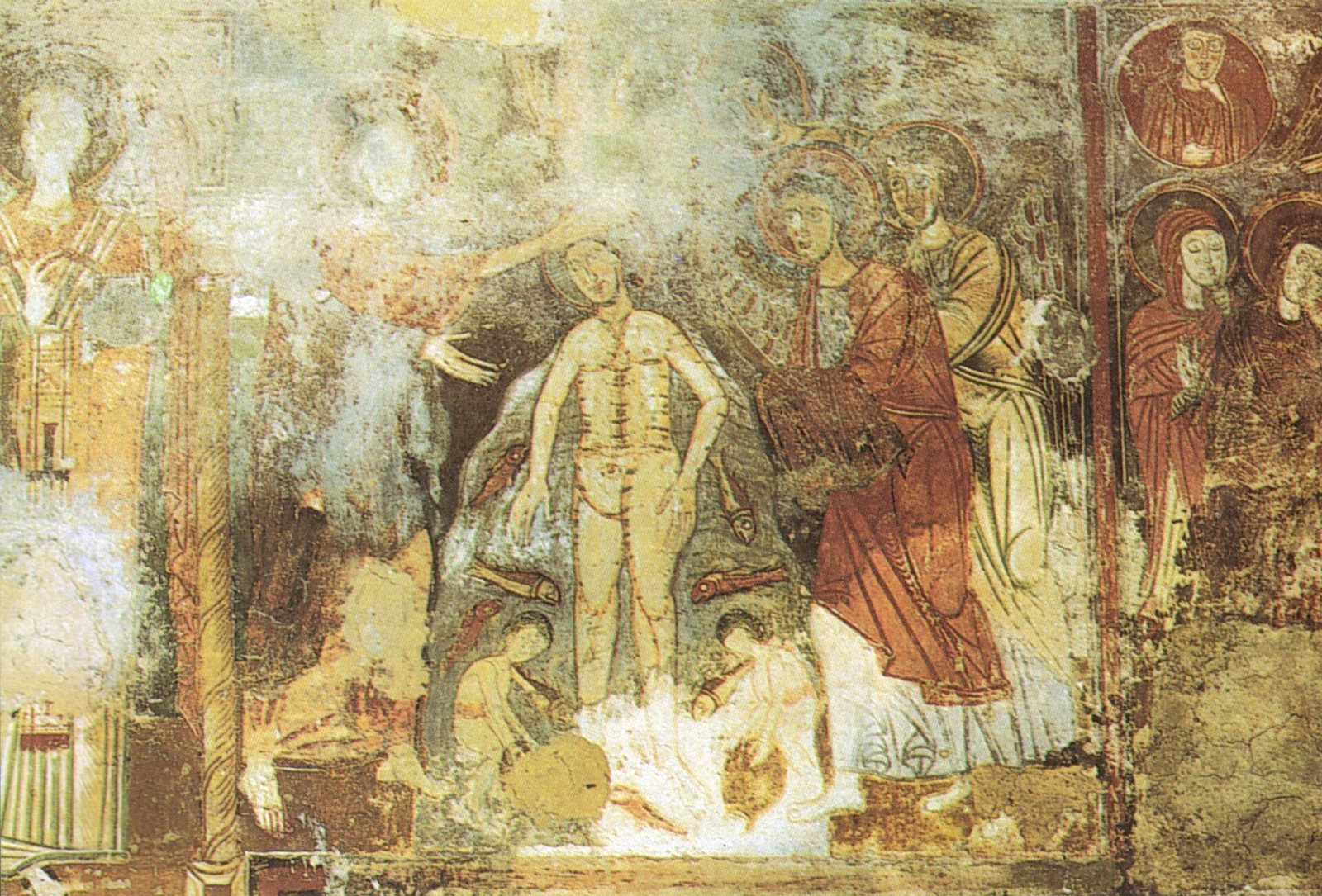
The basilica has frescoes from the Lombard period, when Lombards ruled parts of Italy in the early Middle Ages. A ninth-century fresco depicts the Baptism of Christ.
Chapel of the Angel
The Chapel of the Angel contains 29 frescoes arranged in cycles concerning Christ and Saint Peter.
Church with the Hodegetria
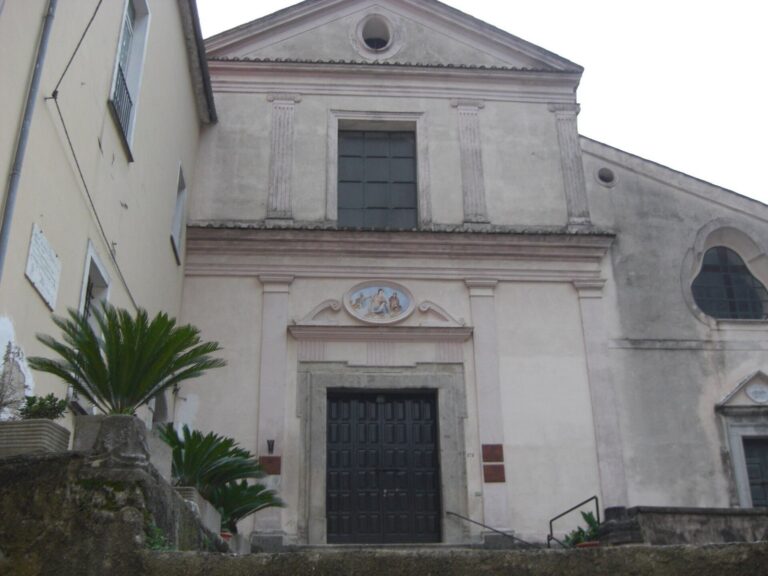
Another church has a fresco of the Hodegetria, an image of the Virgin Mary pointing toward Christ, on its pediment, the upper front section of the building. Numerous other frescoes in the complex follow Byzantine artistic traditions, the Christian art associated with the Byzantine Empire, the eastern continuation of the Roman Empire.