Dolmen des Sept Chemins: A Neolithic Megalithic Monument in France
Site at a Glance
- Popularity
- Very Low
- Country
- France
- Primary era
- Stone Age
- Eras represented
- Stone Age
- Civilizations
- Unclassified
- Site type
- Burial
- Remains
- Tomb
On this page7 sections
History
The Dolmen des Sept Chemins is a prehistoric stone monument at Bougon, France, dating to the Middle to Final Neolithic, a period associated with farming and settled communities.
Regional classification
Its architectural classification remains disputed. Claude Burnez and Jean-Pierre Mohen considered it possibly Angevin, while Frédéric Bouin classified it as Angoumoisin and noted Angevin influence. Angevin and Angoumoisin are regional categories for dolmen forms. Angoumoisin forms are associated with Q-shaped plans and circular mounds; Angevin forms are associated with a portico, or covered entrance, and a narrow mound.
Excavation and protection
Baugier excavated the monument in 1840. Jean-Pierre Mohen excavated it in August 1986, after which it was restored. In 1995, Frédéric Bouin excavated the whole mound at the request of the Deux-Sèvres department, then the site’s owner, which sought to promote its heritage value. The monument was listed as a historic monument in 1875 and again in 1971.
Remains
Setting and mound
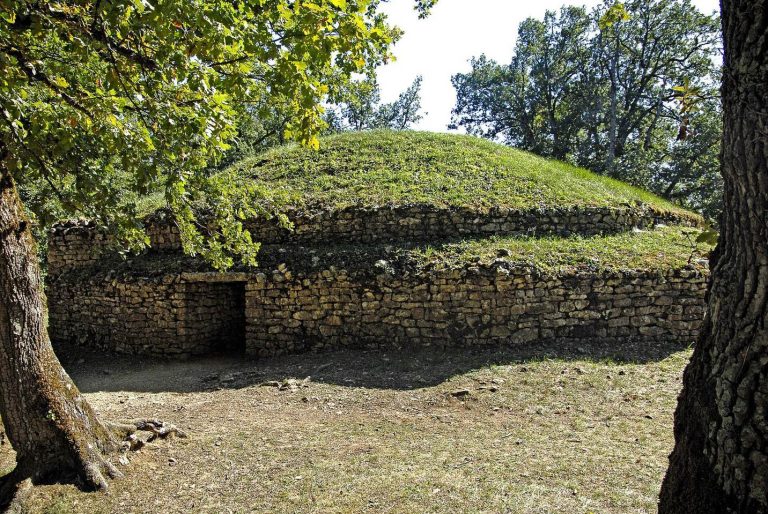
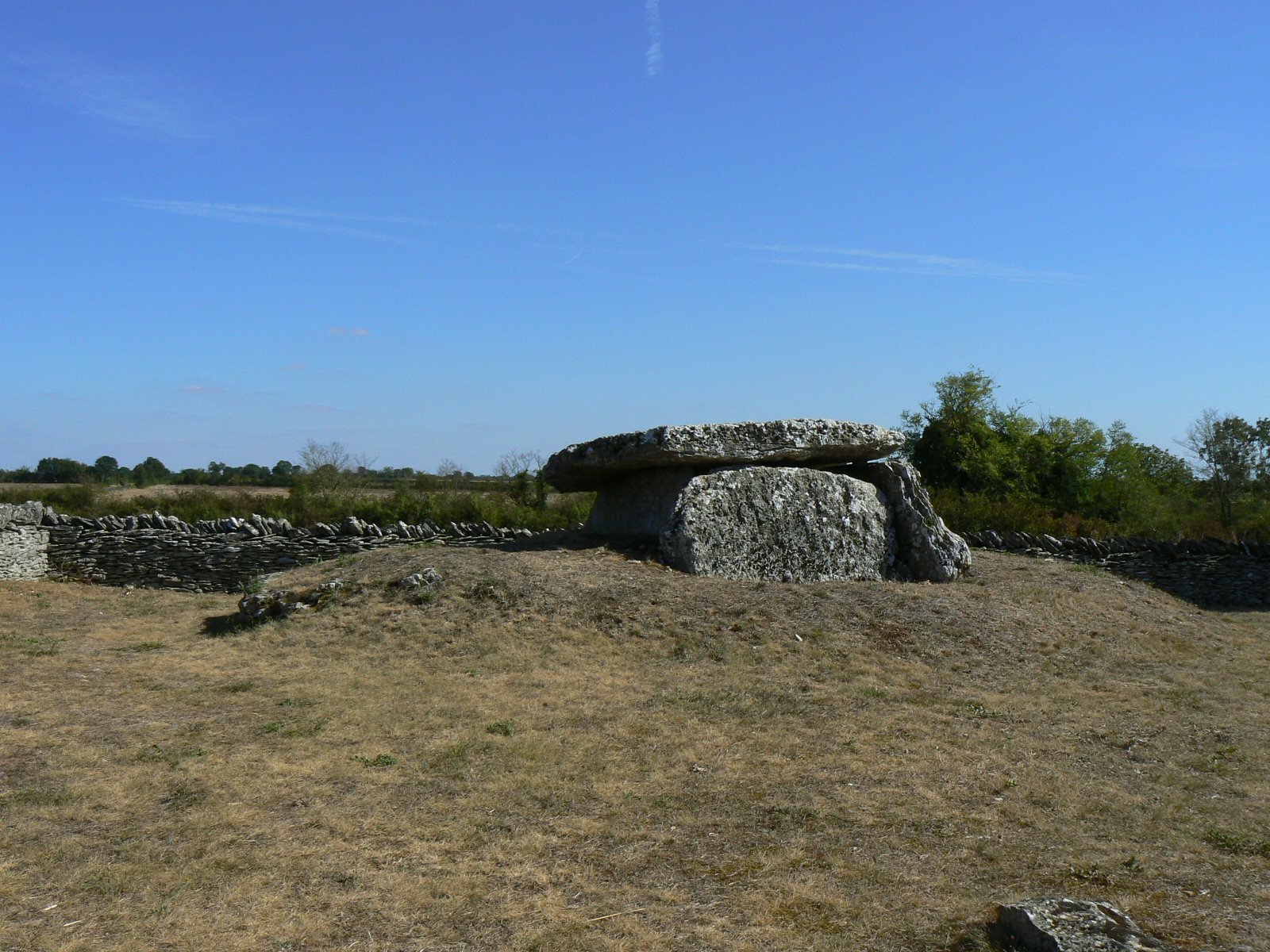
The monument stands on a south-facing slope near a summit overlooking the Sèvre Niortaise valley, immediately south of the Sept Chemins crossroads and about 1,600 m from the Bougon necropolis. Its circular mound is about 9 m across and 0.5 to 0.75 m high, with the dolmen set off-centre. The mound stones are laid in irregular, scale-like courses. A roughly built curved facing wall belongs to the original construction, while renovated dry-stone masonry encloses the surviving mound. A straight wall on its north side was added later to hold back fallen stones.
Chamber and entrance
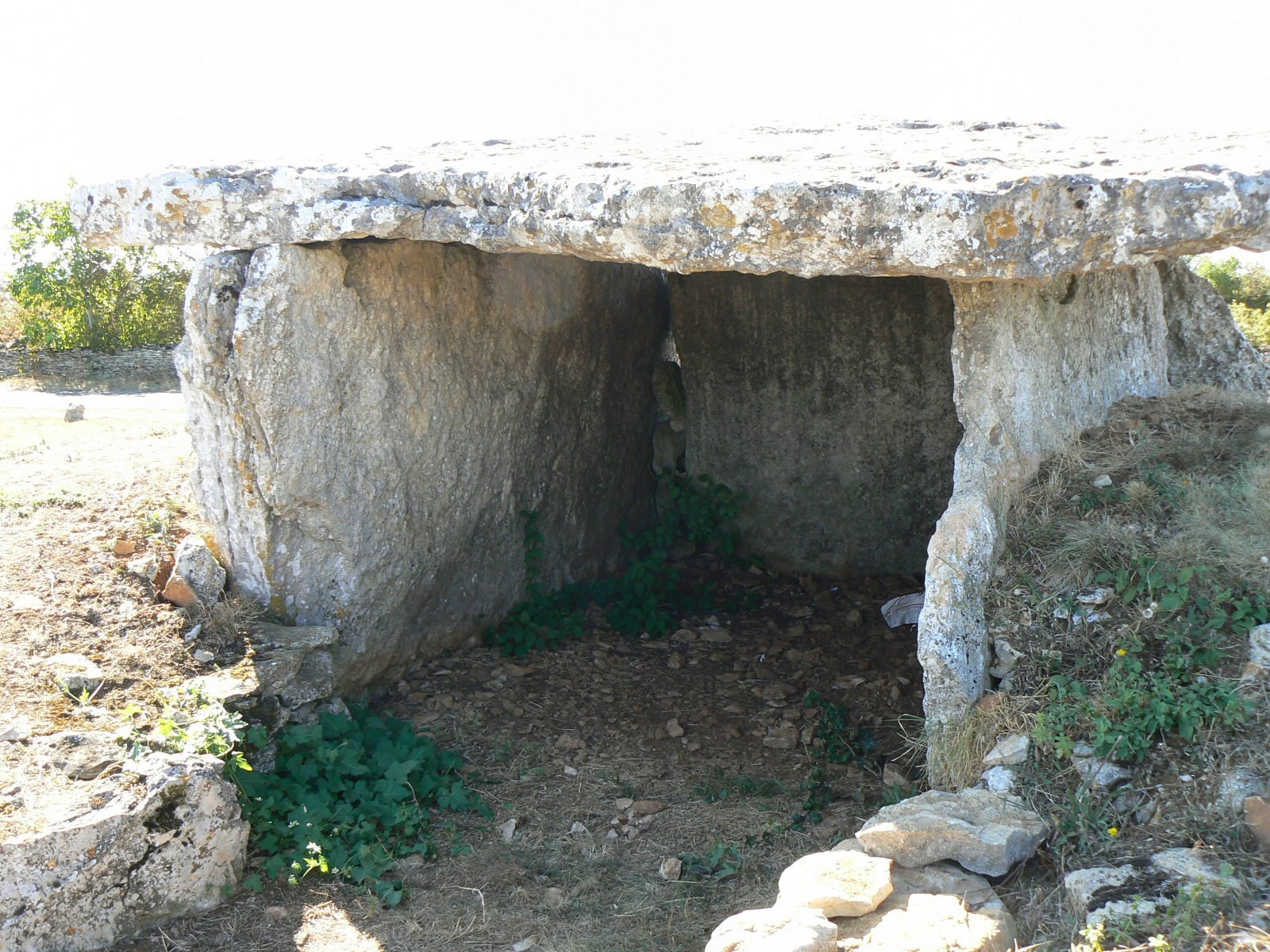
The trapezoidal chamber is about 3 m long, measuring roughly 2 m across at the entrance and 2.30 m at the back. Three upright slabs support a single capstone, which slopes forward and is 20 to 27 cm thick. The chamber stones lean inward, apparently by design. Its southeast-facing entrance is open across about 2 m and may have been disturbed. A short passage, offset to the right and about 1 m wide, is marked by two upright slabs and a third slab on the ground. The arrangement probably formed a trilithon, two upright stones supporting a third. The slabs are Bathonian limestone, formed during the Middle Jurassic, and were probably brought from a small valley about 200 m to the south.
Archaeological finds
Baugier recovered human bones and pottery in 1840, with the pottery described as relatively recent in manufacture. Mohen’s 1986 excavation produced sherds from a vessel decorated with parallel bands and oblique impressions. Bouin’s 1995 excavation yielded ceramic and bone material, including black pottery containing fine mica particles mixed into the clay. Sherds of the same type as those found in 1986 probably belonged to the same vessel. The archaeological material is attributed to the Middle to Final Neolithic.