Karatay Han: A Seljuk Caravanserai in Turkey
Site at a Glance
- Popularity
- Medium
- Country
- Turkey
- Primary era
- Medieval
- Eras represented
- Medieval
- Civilizations
- Seljuk
- Site type
- Economic
- Remains
- Caravanserai
On this page15 sections
History
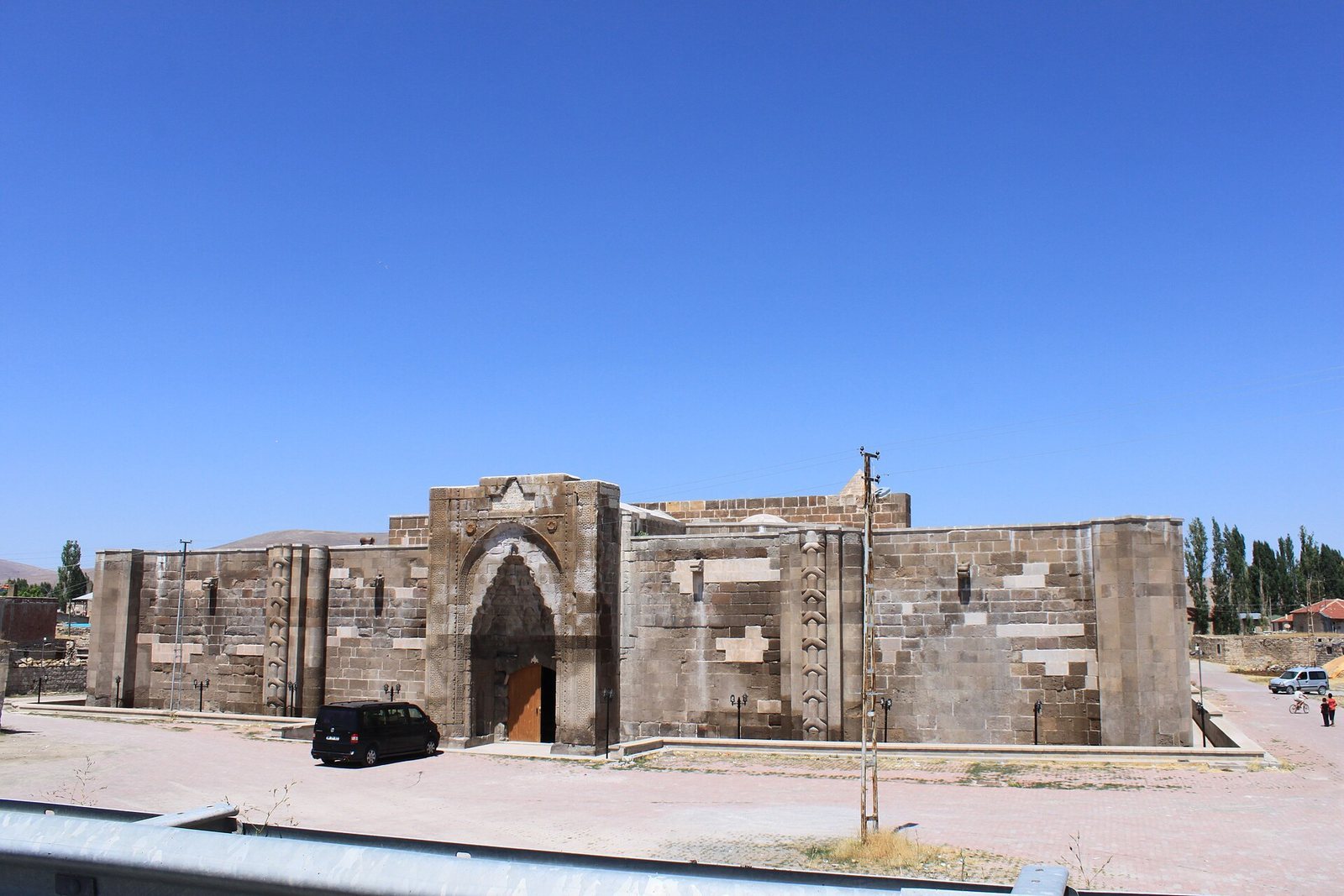
Karatay Han is a 13th-century caravanserai in Turkey, built under the Seljuk dynasty, whose rulers established the Sultanate of Rum in Anatolia. A caravanserai was a roadside lodging and service complex for travelling caravans. The Seljuk grand vizier Celâleddin Karatay endowed the han on the Kayseri–Malatya road, an important route leading east and south toward Syria. It is the fourth-largest Seljuk han.
Construction and endowment
Construction began with the covered winter hall, built between 1219 and 1236. The complex was completed with its courtyard in late 1240 or early 1241. Karatay served as grand vizier under Ala ad-Din Kai Kobad I and Kai Chosrau II, sultans of Rum.
In his endowment deed of 1247–48, Karatay set out provisions for travellers. Each was to receive about one kilogram of bread and 250 grams of meat, along with firewood, oil, candles, and washing supplies at no charge. The han remained in use for many years.
Military use and later changes
In April 1277, Baibars I, the Mamluk sultan who ruled Egypt, stopped at the han with his army during a campaign against the Mongols, before the Battle of Elbistan.
From the 16th century, changing trade routes reduced the han’s importance. Local people used it for purposes including as a stable, and it was converted into a zawiya, an Islamic religious lodge often associated with Sufi practice. The building’s first restoration took place in 1964. After private acquisition late in the 20th century, it was renovated again in 2008 and subsequently used as a hotel and restaurant.
Remains
Plan and construction
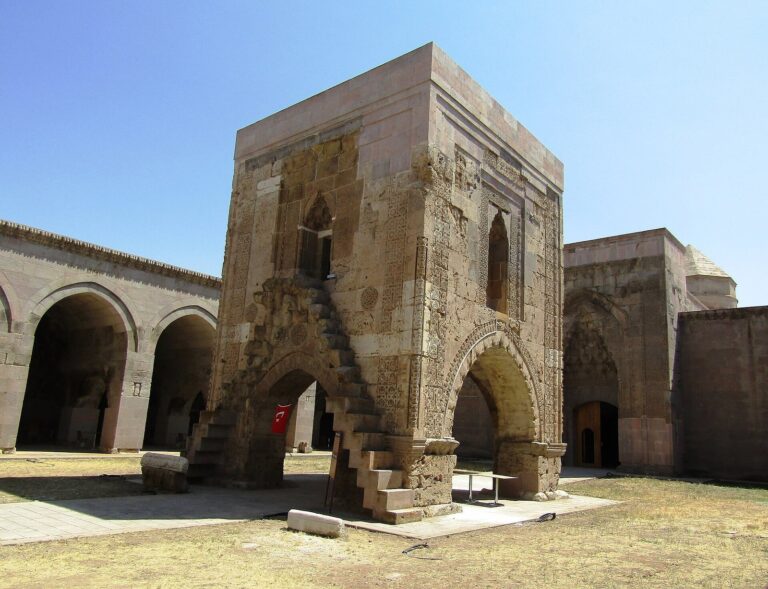
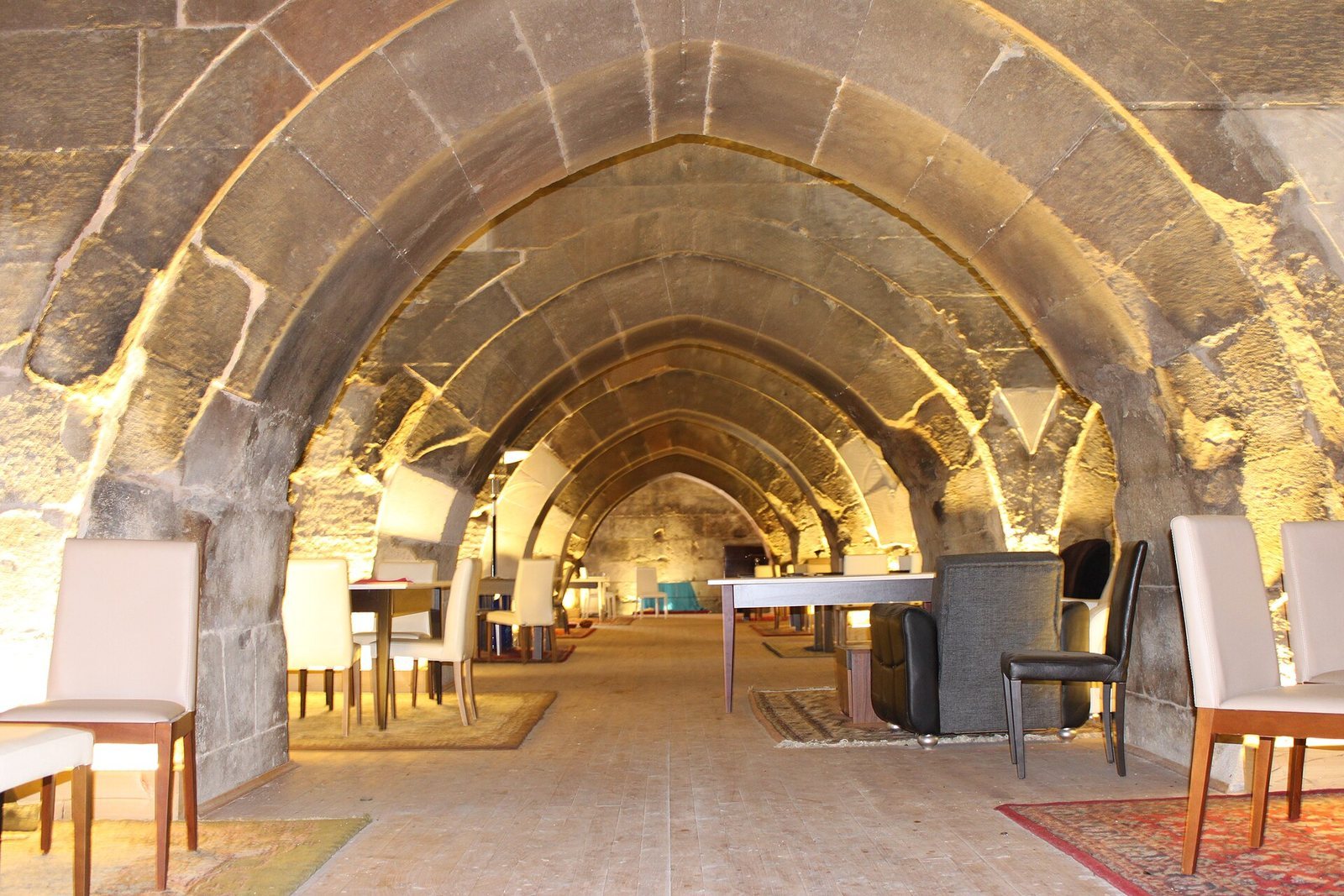
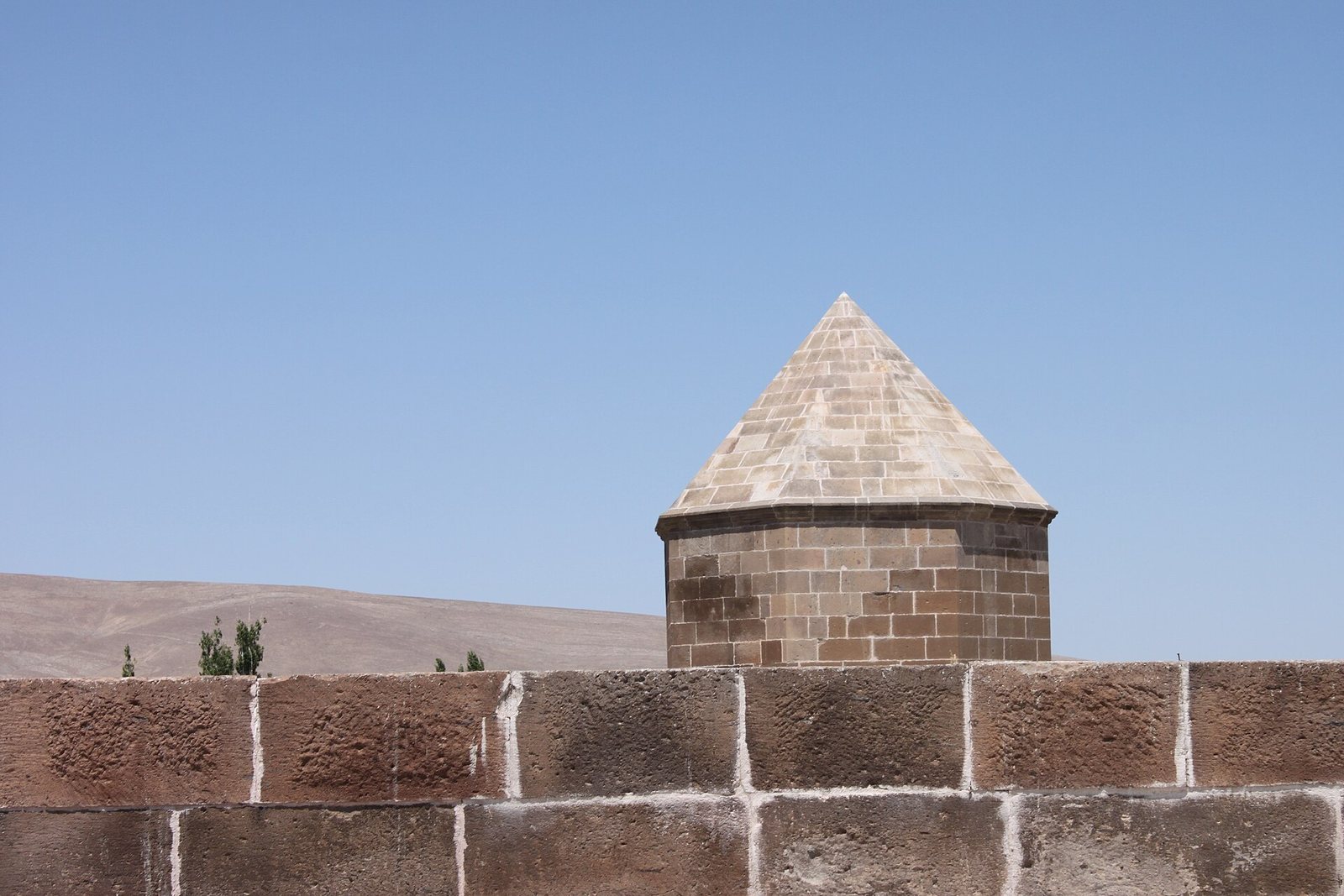
The complex has a symmetrical Seljuk plan, with rooms around a courtyard and a smaller enclosed section behind the main block. The principal block is about 48 metres across, the courtyard about 25 metres across, and the halls between 12 and 15 metres wide. The winter hall stands along the courtyard’s north side. It measures about 25 by 35 metres and has seven crosswise aisles. Its raised central aisle supports a small octagonal tower, where lanterns were hung at night to guide caravans.
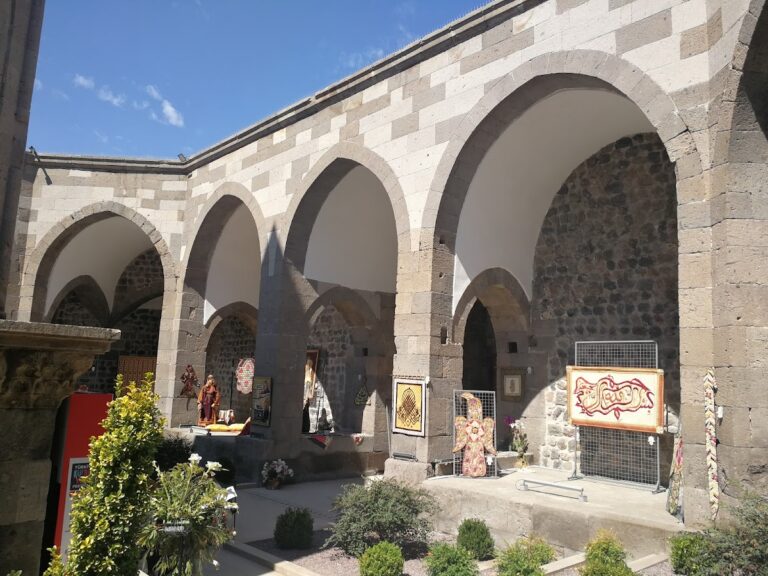
Light sandstone walls and barrel-shaped vaults survive mostly in their original condition. Six towers mark the outer corners, while twelve more are spaced symmetrically along the sides. The roof was designed to collect water, in a system compared to a cistern.
Portals and carved ornament
Main entrance
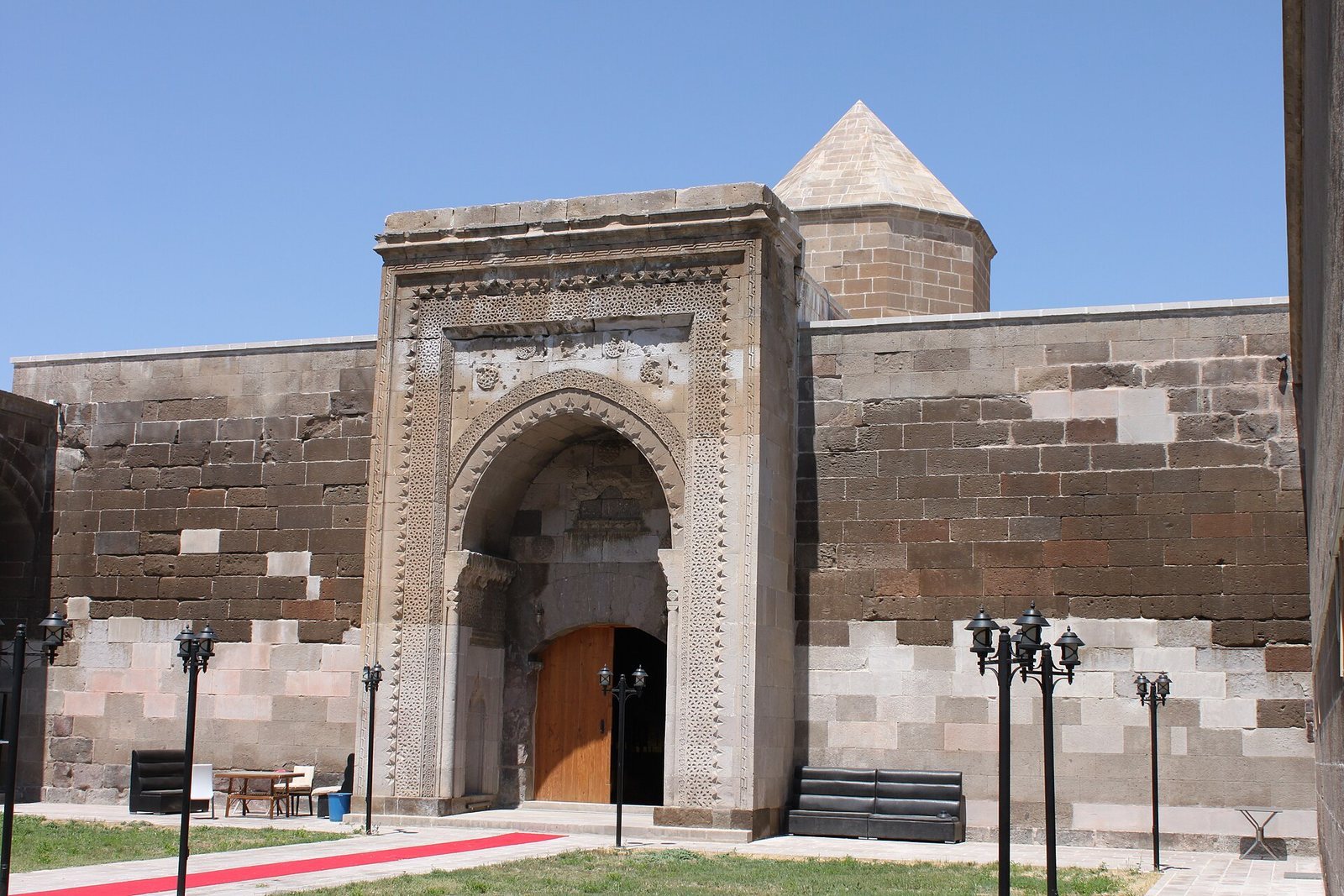
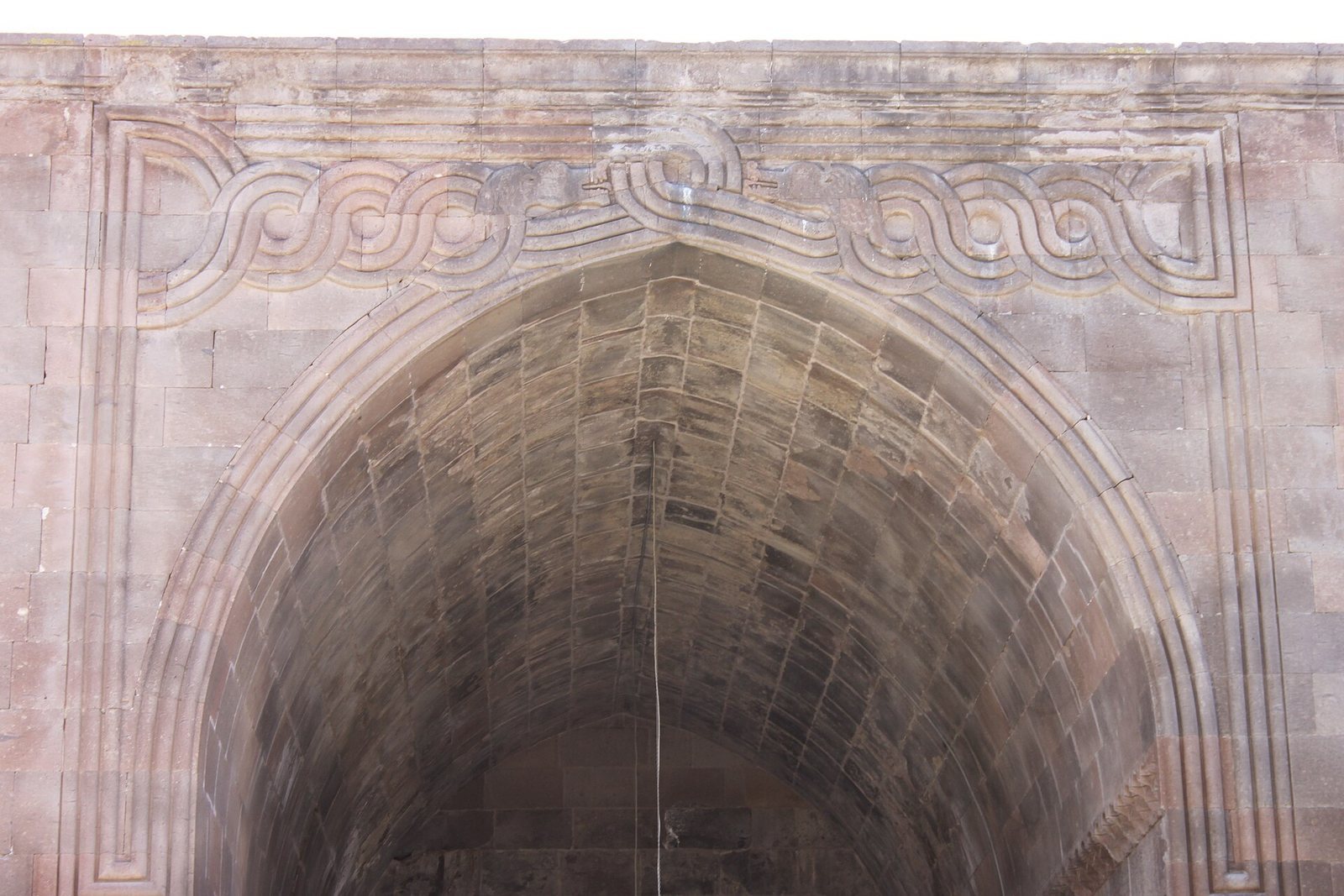
The main entrance is centred on the south side and has richly decorated Seljuk muqarnas, a three-dimensional ornament formed from tiers of projecting cells or niches. A white marble plaque above the entrance invokes God and gives Ala ad-Din Kai Kobad titles including “great sultan,” “king of kings,” and “shadow of God on earth.” It gives the year as 638 and identifies him as the son of Kai Chosrau. A smaller marble plaque on the inner side names Sultan Kai Chosrau II.
Carved decoration includes two lions on one side of the entrance columns and two birds on the other. Cattle heads and human figures appear in the framing above, while interlaced bands, braid-like patterns, and an elephant decorate the entrance area.
Winter-hall portal
A second portal leads from the courtyard into the winter hall. It faces south, bears muqarnas ornament, and is dated to 1236.
Animal sculpture and water features
Dragon-head bands
Ornamented bands near Karatay’s tomb and in the courtyard end in dragon heads. In Central Asian symbolism, dragons represented fertility, harmony, and order. This form of dragon imagery is unique among Seljuk hans.
Waterspouts
Animal-head waterspouts decorate the exterior walls. Animal and human waterspouts on the south wall date to 1240.
Burial and service spaces
Karatay’s tomb
Karatay’s tomb lies in the eastern passage through the gate, screened from it by an ornamental wooden lattice. Another burial attributed to him is at the Karatay Medrese near Konya, and which burial is authentic remains disputed.
Bath and treasury
The eastern side of the entrance contains a bath and a treasury for caravaners’ valuables. The bath lies east of the mosque.
Mosque and infirmary
A small mosque and a former infirmary occupy the western side of the entrance. The mosque entrance is dated to 1236–1240.