Monastery of San Jerónimo: A Renaissance Hieronymite Complex in Granada
Site at a Glance
- Popularity
- High
- Country
- Spain
- Primary era
- Early Modern
- Eras represented
- Early Modern
- Civilizations
- Crown of Castile, Spanish
- Site type
- Religious
- Remains
- Monastery
On this page12 sections
History
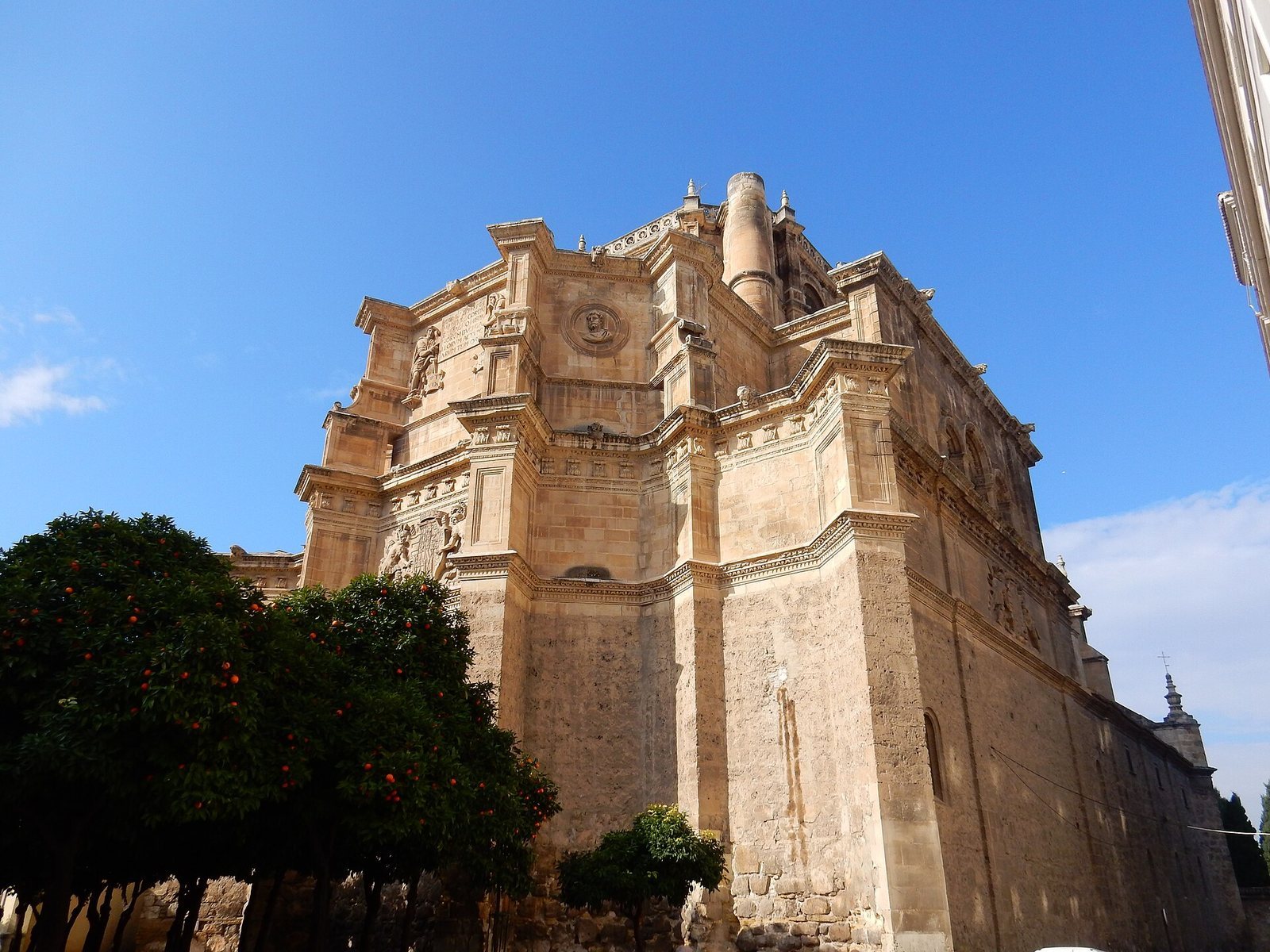
The Monastery of San Jerónimo is a Catholic church and monastery of the Hieronymite order, an Augustinian religious community associated with Saint Jerome, in Granada, Spain. Construction of the present complex began in 1504, during the Renaissance, a European cultural and artistic period. The church was the first temple consecrated to the Immaculate Conception of Mary, the Catholic doctrine that Mary was conceived without original sin.
Foundation and Renaissance construction
The Catholic Monarchs, Isabella I of Castile and Ferdinand II of Aragon, founded the Hieronymite monastery at Santa Fe during the siege of Granada, before the city’s conquest. The community moved to Granada in 1504, when building work on the present monastery began. María de Manrique, widow of the military commander Gonzalo Fernández de Córdoba, known as the Gran Capitán, was the principal patron.
Diego de Siloé is credited with most of the construction. Jacopo Florentino was directing the work by 1513, and Siloé later succeeded him. Juan de Aragón, Juan Bautista Vázquez the Younger, Pedro de Orea, and Pablo de Rojas also took part; Vázquez, Orea, and Rojas were associated with the Granadan school of sculpture. The main chapel was completed in 1522. That year, Gonzalo and María’s remains were transferred to the monastery from the Casa Grande of the Convent of Saint Francis.
The second cloister hosted Isabella of Portugal, wife of Charles V, Holy Roman Emperor, during her wedding journey. The monastery is dedicated to Saint Jerome and belongs to the Hieronymite order.
French invasion and restoration
During the French invasion of the Napoleonic era, the Hieronymite community was expelled and the complex came close to ruin. French forces demolished the church tower and reused its stones to build Puente Verde over the Genil, connecting Paseo de la Bomba with Avenida de Cervantes.
The State restored the complex from 1916 to 1920. The tower was rebuilt later in the twentieth century, with work completed in 1989. The Ministry of Culture restored the main altarpiece in 2004–2005.
Protection and later history
The church was declared a monument worthy of preservation in 1877. In 1931, the monastery was designated a historic-artistic monument belonging to the National Artistic Treasury; the complex is now protected as a Cultural Heritage Site in Spain.
On 1 November 2022, the monastery’s image of Our Lady of Solitude received a formal Catholic coronation under a decree issued by Pope Francis on 18 October.
Remains
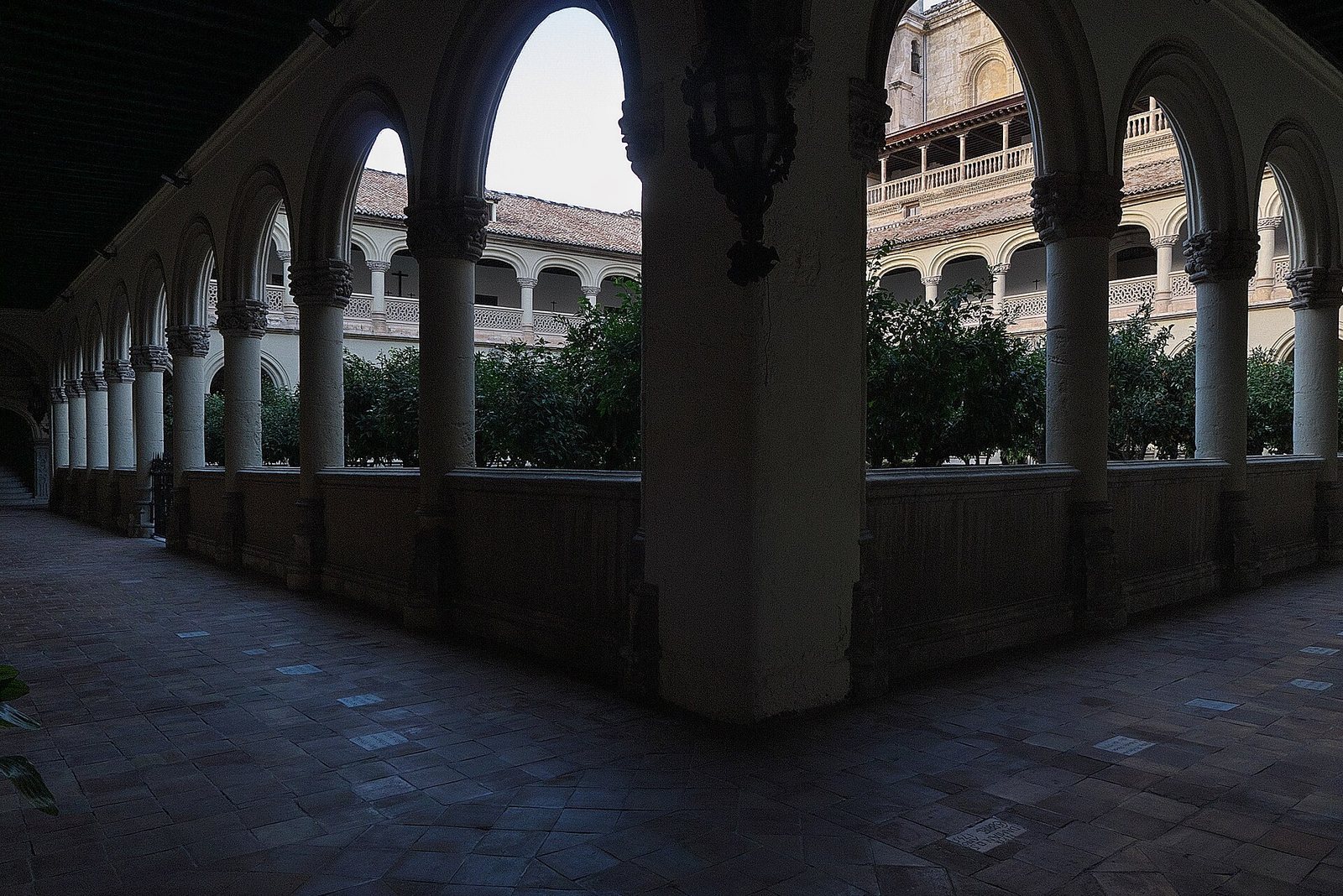
The Renaissance complex comprises a church and monastery, with two cloisters arranged around gardens. The church has a Latin-cross plan, while the monastic spaces include both a richly decorated older cloister and a second cloister used by Hieronymite nuns.
The church
Plan and tower
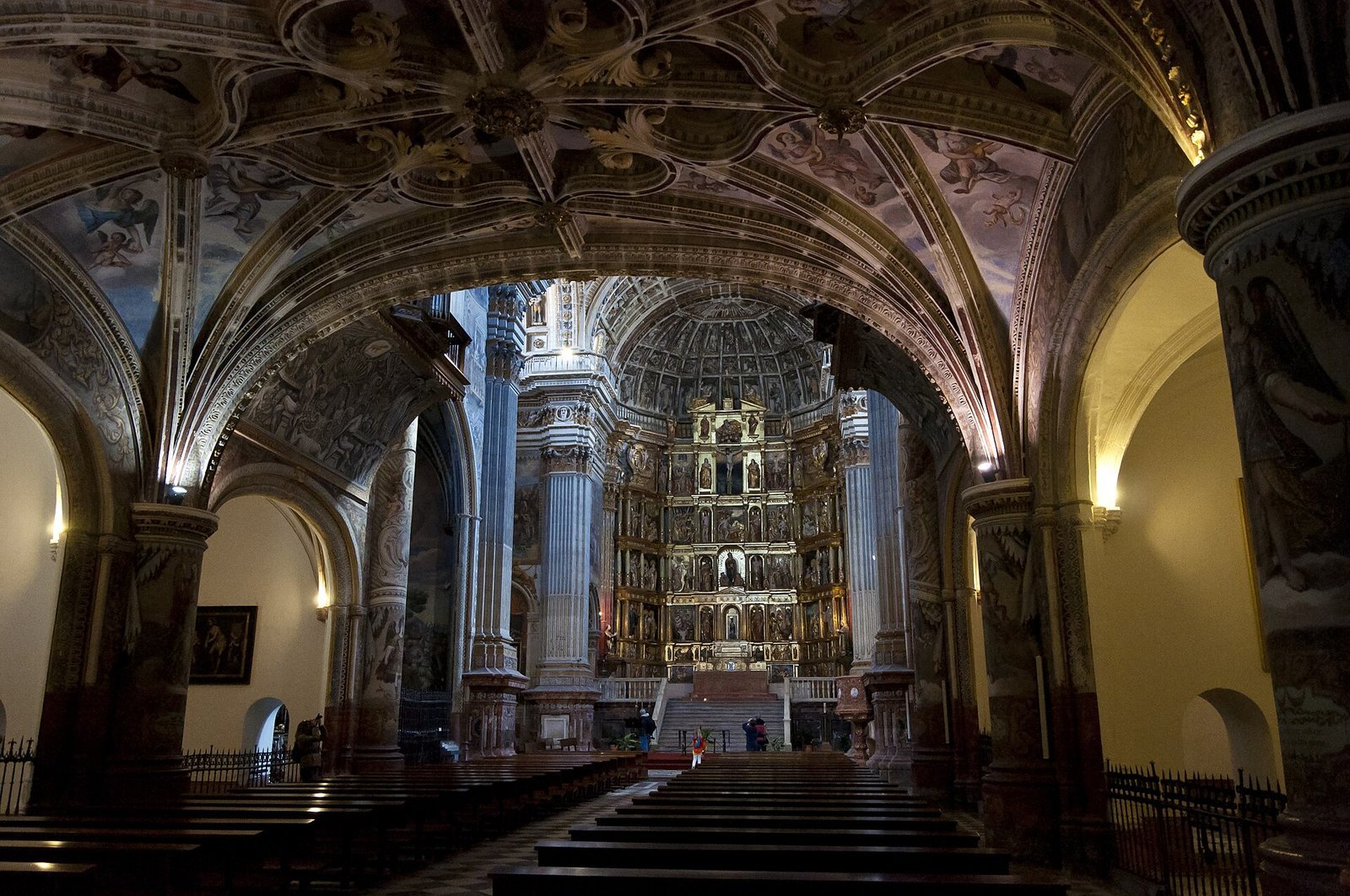
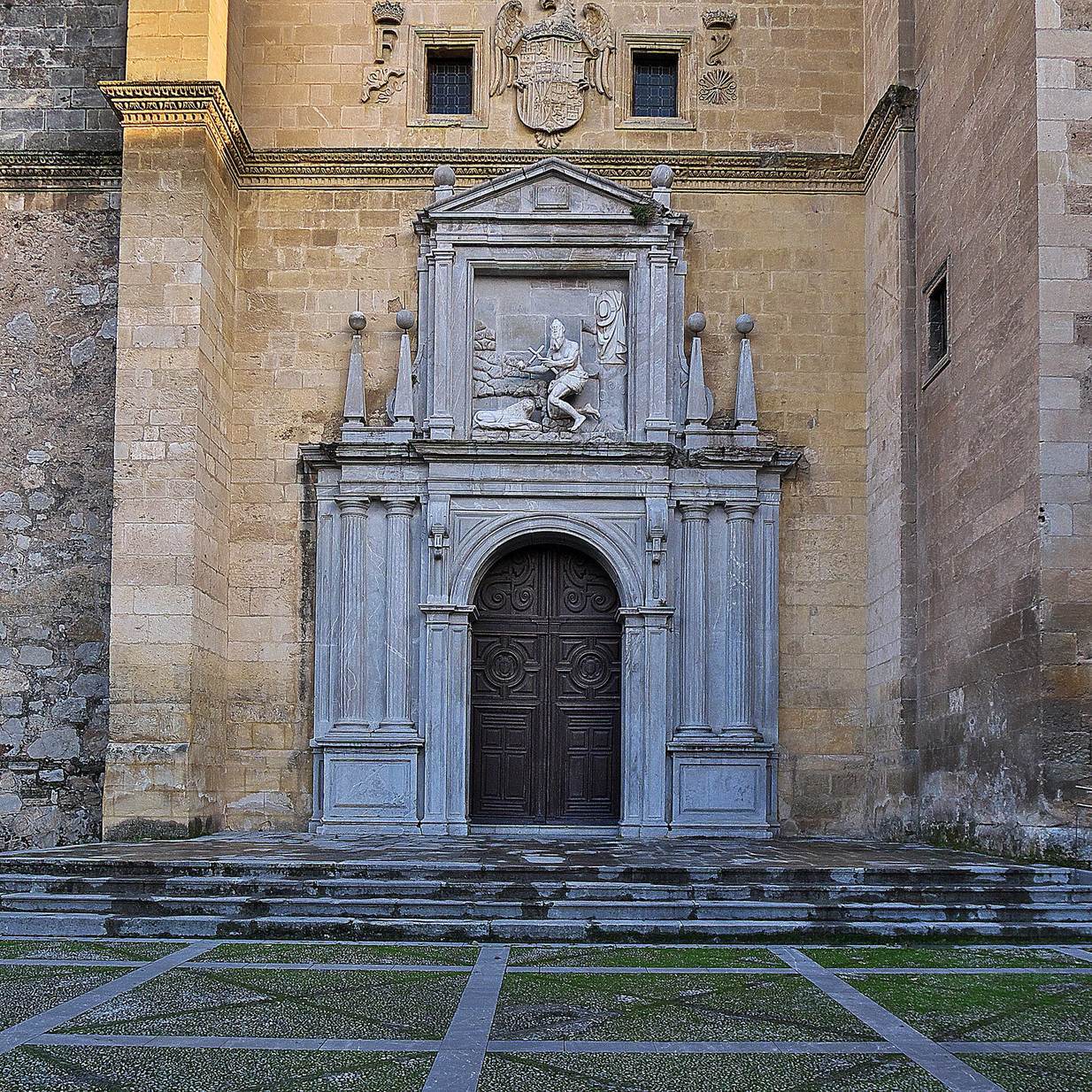
The church’s elevated choir is at its foot, and a broad staircase leads up to the altar. A slender tower forms part of the church complex.
Main chapel and altarpiece
The main chapel’s Mannerist altarpiece, in a style associated with the later Renaissance, is principally the work of Pablo de Rojas. It is regarded as a starting point for Andalusian sculpture as a distinct tradition. Coffered decoration, scallop-shell forms, and sculptural groups contribute to its Renaissance design. Its imagery celebrates the military achievements and heroism of Gonzalo Fernández de Córdoba. Gonzalo and María de Manrique are buried in the church’s crossing.
The monastic precinct
Older cloister
The older cloister surrounds a garden and is distinguished by Renaissance decoration. Seven richly decorated, classically designed arched recesses are arranged as chapels. They form a funerary space intended for Gonzalo Fernández de Córdoba’s remains.
Second cloister
The second cloister is also arranged around a garden and serves as the enclosure of the Hieronymite nuns.
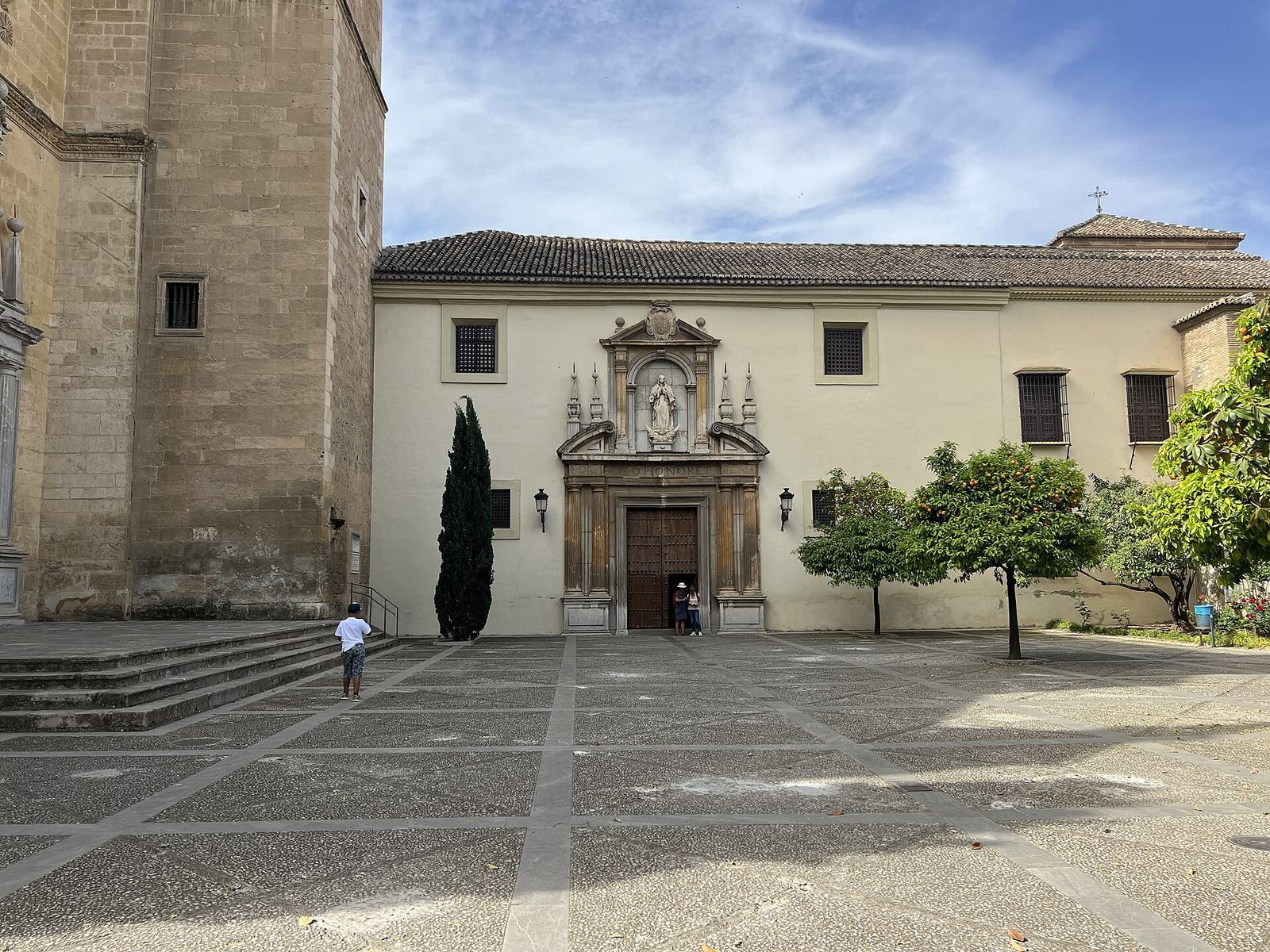
Gateway
The gateway separates the monastery’s forecourt from Calle Rector López Argüeta. Once part of the complex, it disappeared in the nineteenth century and was later found abandoned at a rural property in the Vega. It was returned to its position in the 1960s. The image of Our Lady of Sorrows now displayed on it is not the original.