Troldstuerne: A Neolithic Double Passage Grave in Denmark
Site at a Glance
- Popularity
- Very Low
- Country
- Denmark
- Primary era
- Stone Age
- Eras represented
- Stone Age
- Civilizations
- Unclassified
- Site type
- Burial
- Remains
- Tomb
On this page5 sections
History
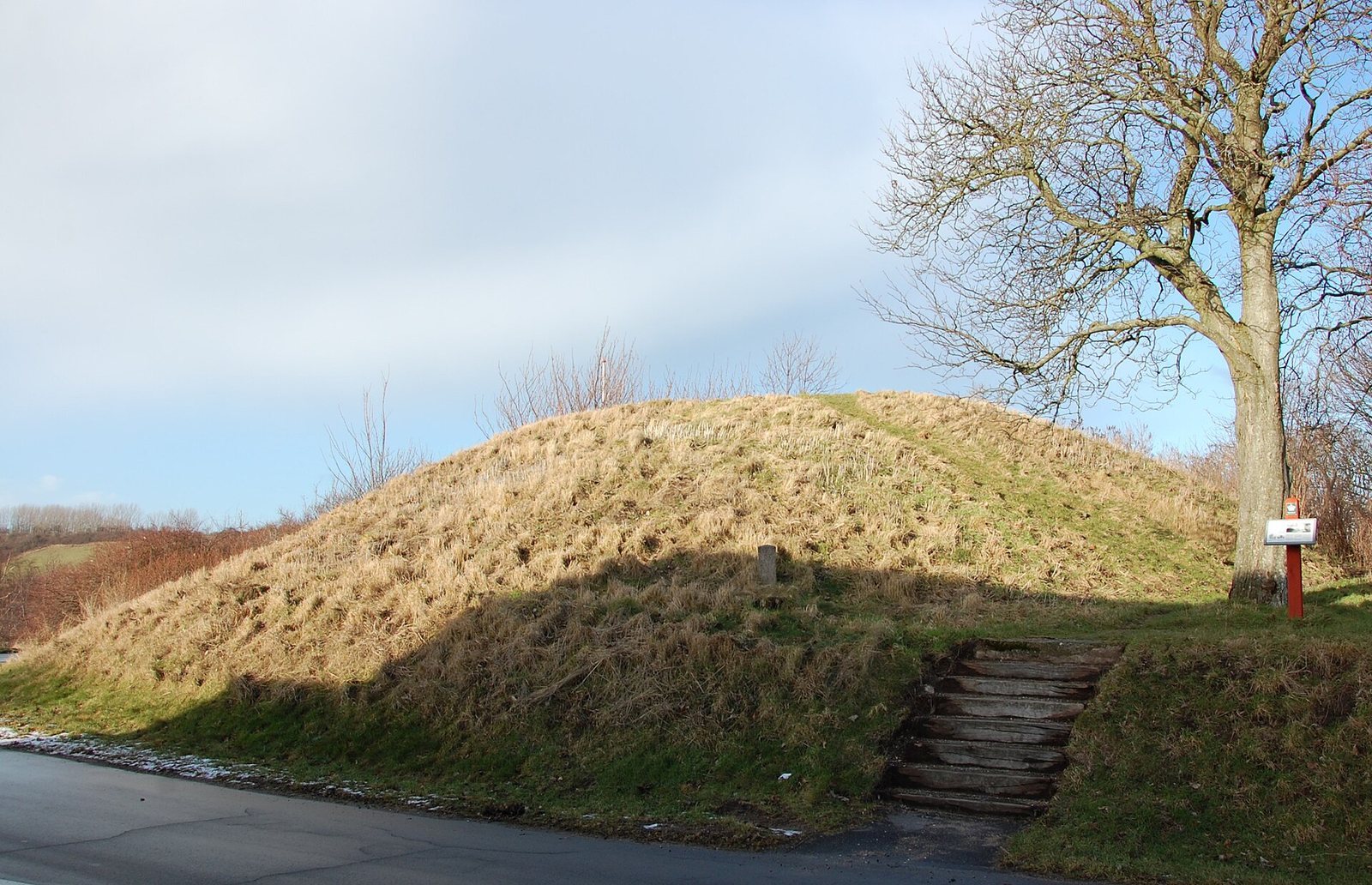
Troldstuerne, also known as Troldhøj of Stenstrup, is a double passage grave near Stenstrup, between Højby and Lumsås in northwestern Zealand, Denmark. This megalithic tomb, built from large stones, has two burial chambers reached by separate passages. It dates to 3500–2800 BC, in the Neolithic, or later part of the Stone Age, and belongs to the Funnel Beaker culture, a northern European farming culture named for its funnel-shaped pottery.
Double passage graves make up about one-tenth of the roughly 500 passage graves surviving in Denmark. Examples are known only in Denmark and Sweden, with 57 in Denmark and three in Sweden. Most are on Jutland and Zealand, with isolated examples on Møn, Langeland, Funen and Samsø.
Remains
Chamber layout
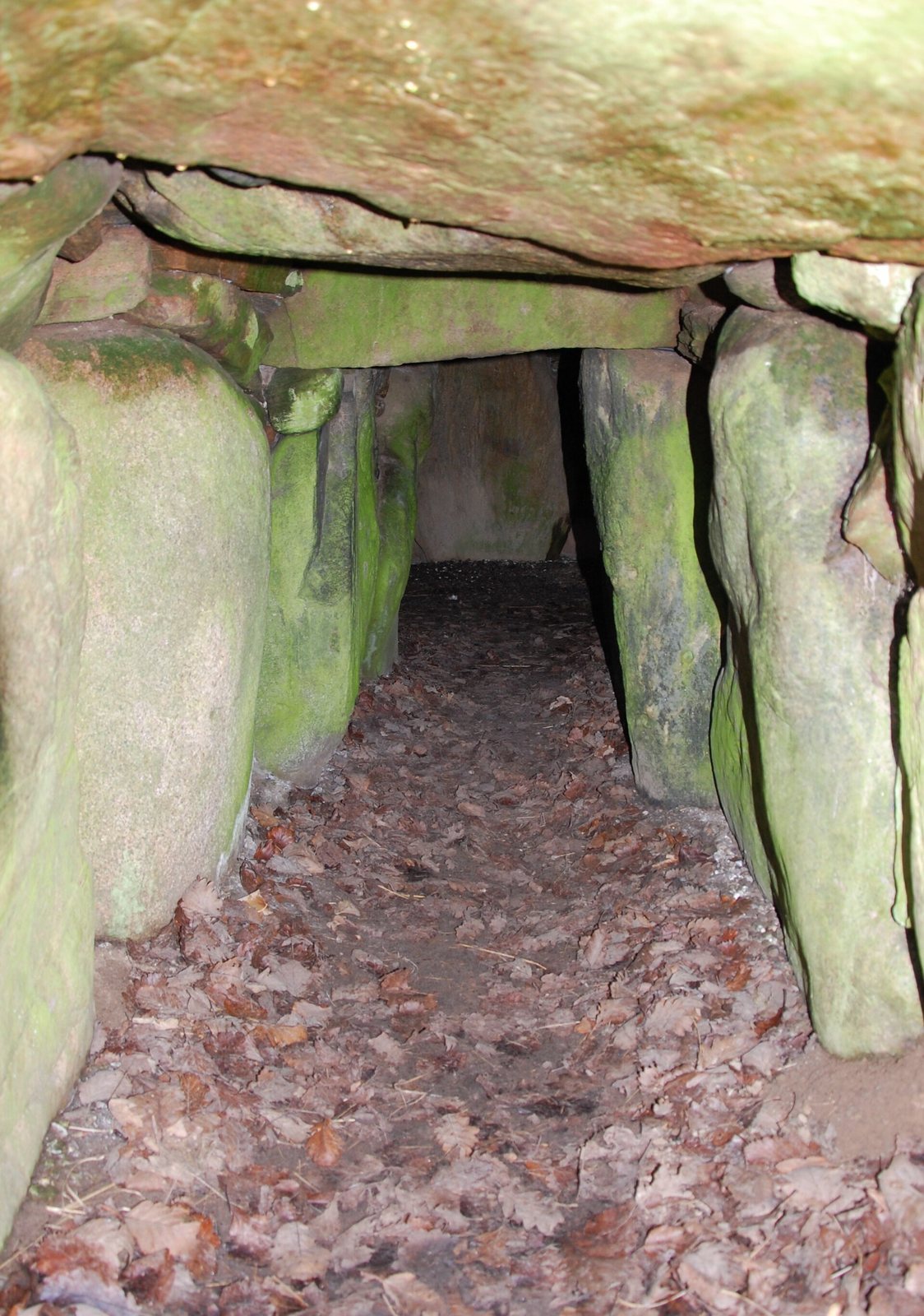
The circular mound measures 26 m. Inside it, two oval chambers join at their narrow ends and share a dividing wall. One stone serves as the right wall of one chamber and the left wall of the other. The chambers measure about 6.3 by 2.2 m and 6.4 by 2.8 m, and their axes meet at an obtuse angle. Their long passages follow the mound’s curve. This plan differs from that at Klekkende Høj, a Neolithic tomb on Møn, where the two axes of a divided chamber form a straight line.
Passages and stonework
Each chamber has 14 supporting stones and four capstones, the stones forming its roof. Two capstones were made from a single erratic boulder, a rock carried from its original geological setting by glacial ice; the boulder was split using fire and water rather than mechanical tools. At each passage entrance, a lintel, a horizontal stone spanning an opening, and its two supports project slightly into the chamber. They help hold the two central capstones, which rest only narrowly on the lintel or on a recessed neighboring support. Both passages have stepped sections at the rear for a blocking device, and the northern passage retains its door stone. The southern passage has 10 supporting stones and four capstones, with one or two capstones missing; the northern has 11 supporting stones and three capstones, likewise with one or two missing.
Finds
Objects from the tomb include 21 amber beads and fragments, 11 daggers (one with a hilt), nine knives, three arrowheads, and several axes: three sharpened axes with thick necks and thin blades, one sharpened axe with a thin neck and thin blade, and another axe. Other finds include a flint sword, a copper-tin tube, a chisel, a scraper, a slate pendant, a pin, a boar’s tooth and more than 53 flakes. Pottery finds include four vessels; the ceramic inventory also includes four hanging vessels, four different bowls, two clay pots, a Troldebjerg bowl, an angular bowl and a funnel beaker. The finds are displayed at a small museum in Stenstrup and at the National Museum.