Ramkvilla Church: A Medieval Parish Church in Sweden
Site at a Glance
- Popularity
- Very Low
- Country
- Sweden
- Primary era
- Medieval
- Eras represented
- Medieval, Early Modern, Modern
- Civilizations
- Swedish
- Site type
- Religious
- Remains
- Church
On this page10 sections
History
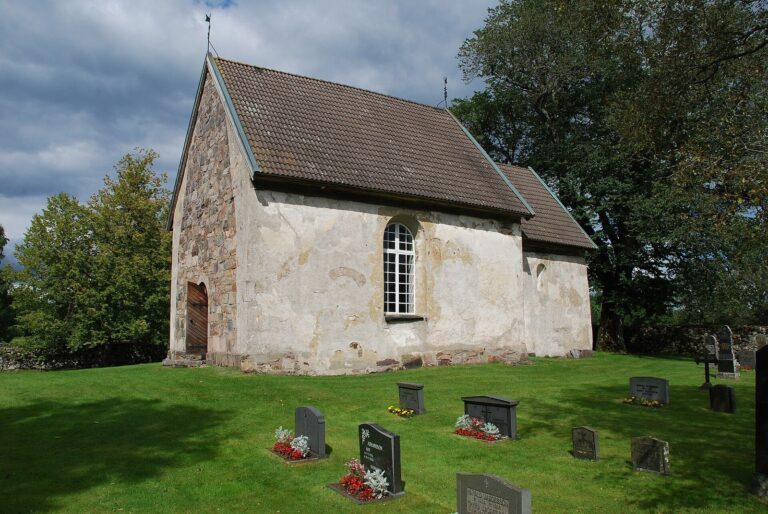
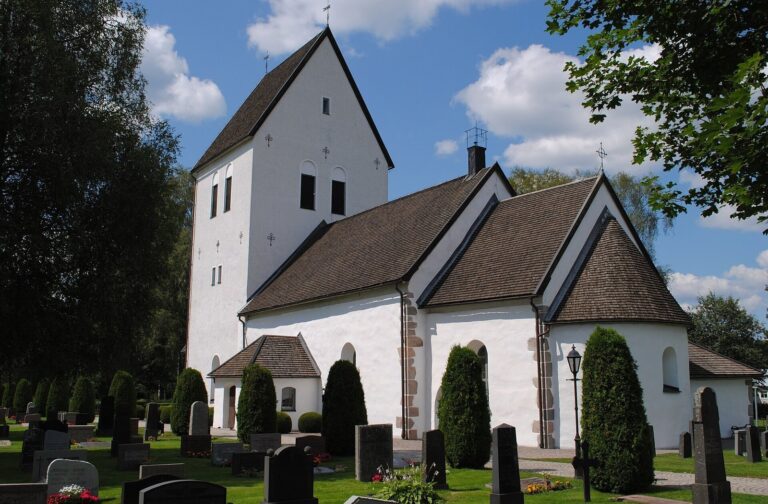
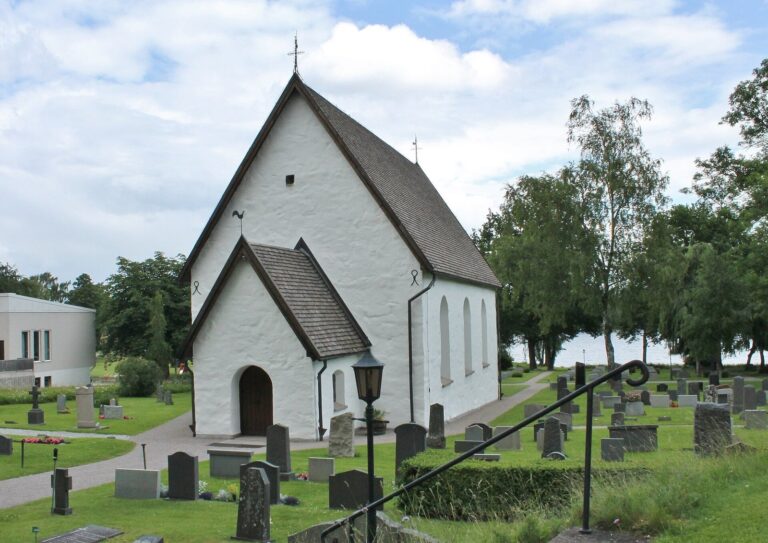
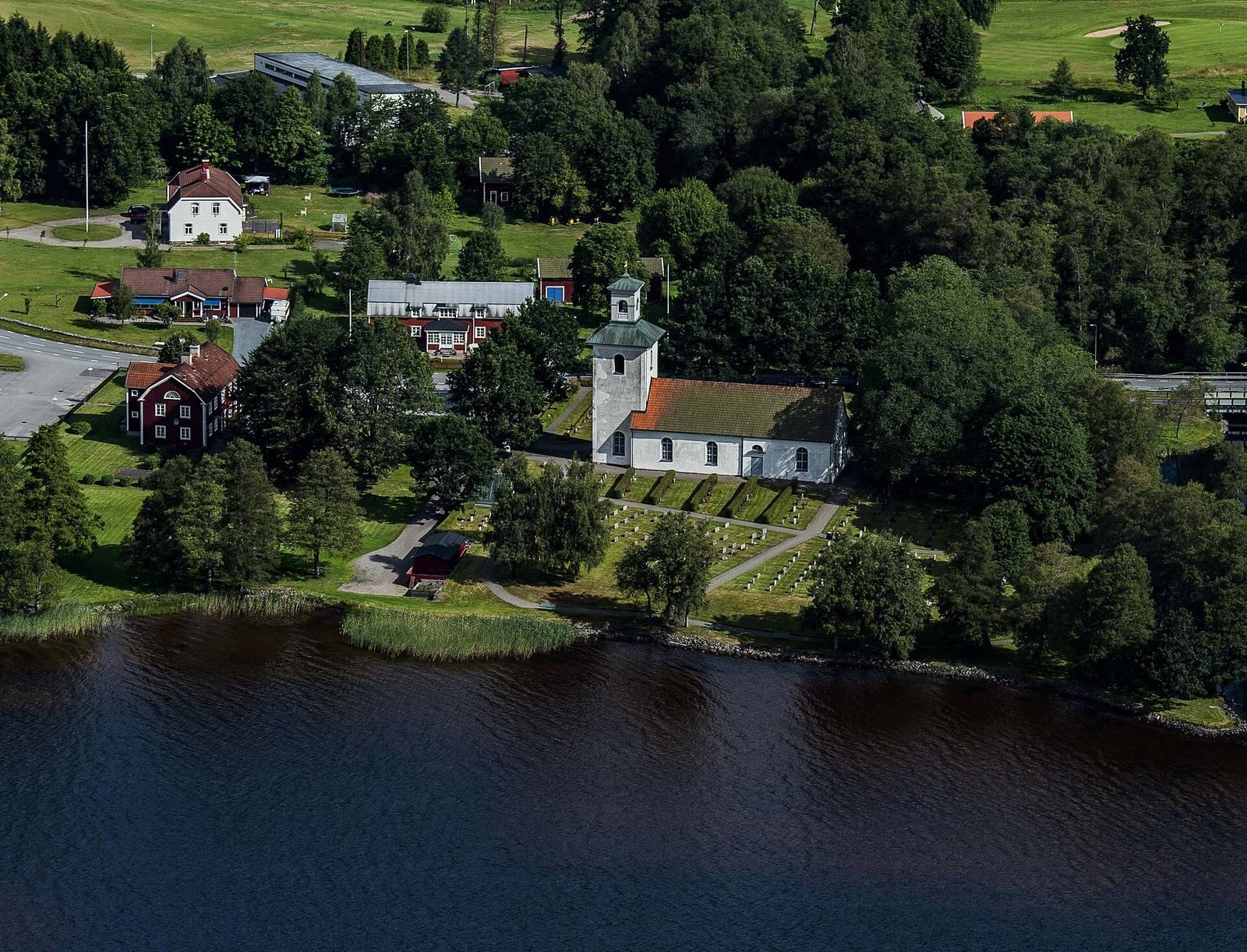
Ramkvilla Church is a medieval parish church in Ramkvilla, Sweden, in Lannaskede parish and the Diocese of Växjö. The diocese is a regional church administrative area within the Church of Sweden, Sweden’s national Lutheran church. The church was dedicated during the Middle Ages, and the present building is considered to have origins in the 14th century.
Medieval beginnings
Boards from a 12th-century church were found during restoration work in the 1960s, indicating that a church stood on the site before the present building. The boards do not establish whether that earlier church was made of wood or stone.
Extensions and later changes
In 1707–1708, the nave was extended eastward and a new chancel with a straight end was built. A sacristy followed in 1710. These works changed the church’s plan, adding to its medieval core.
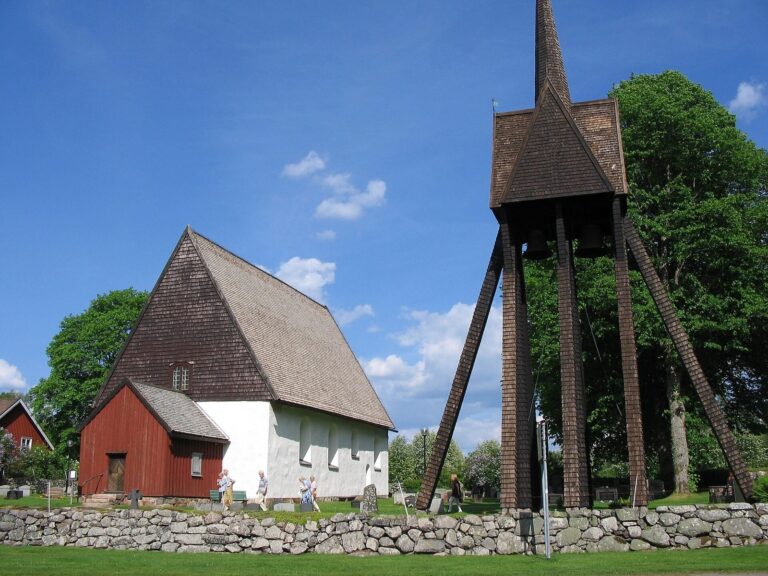
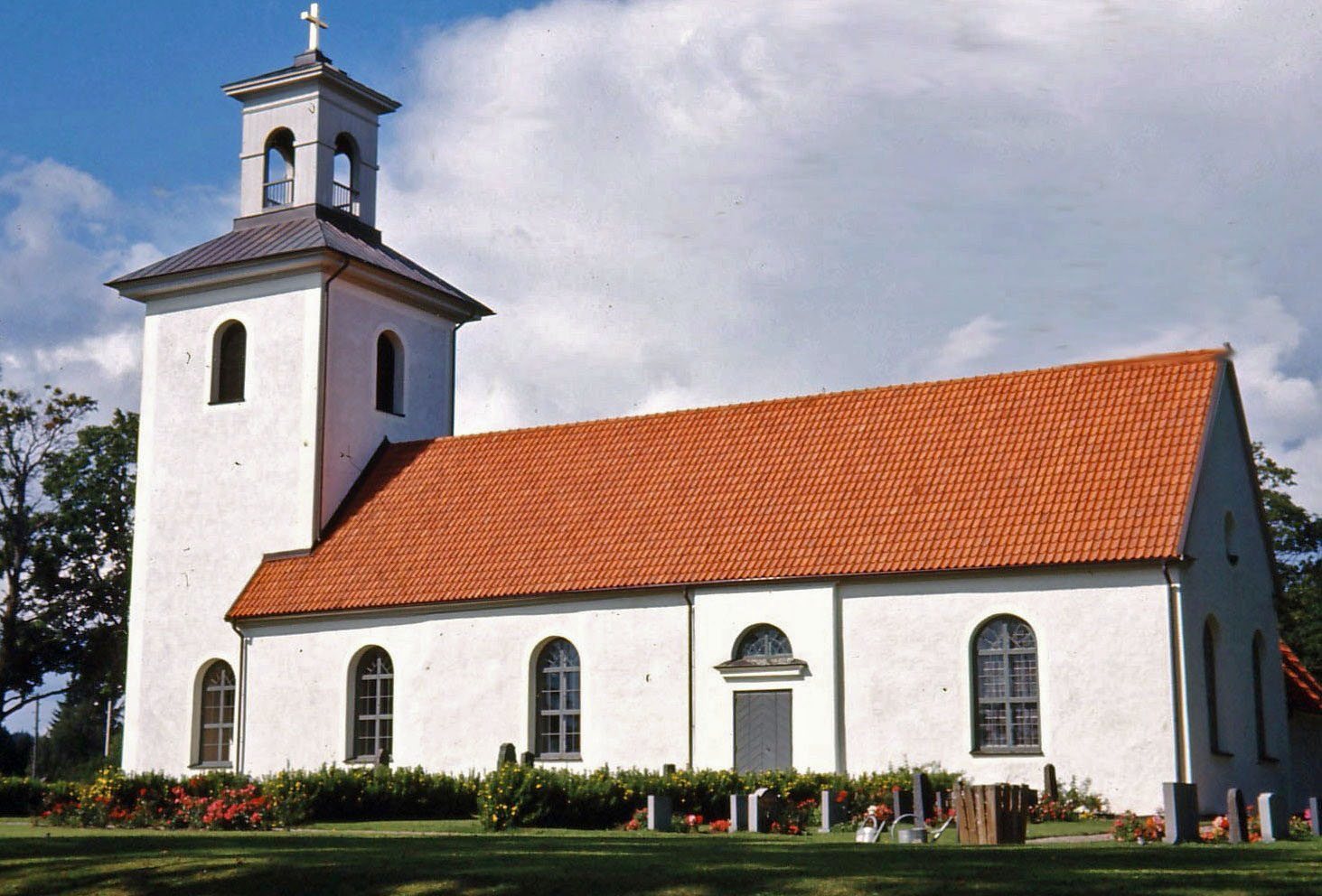
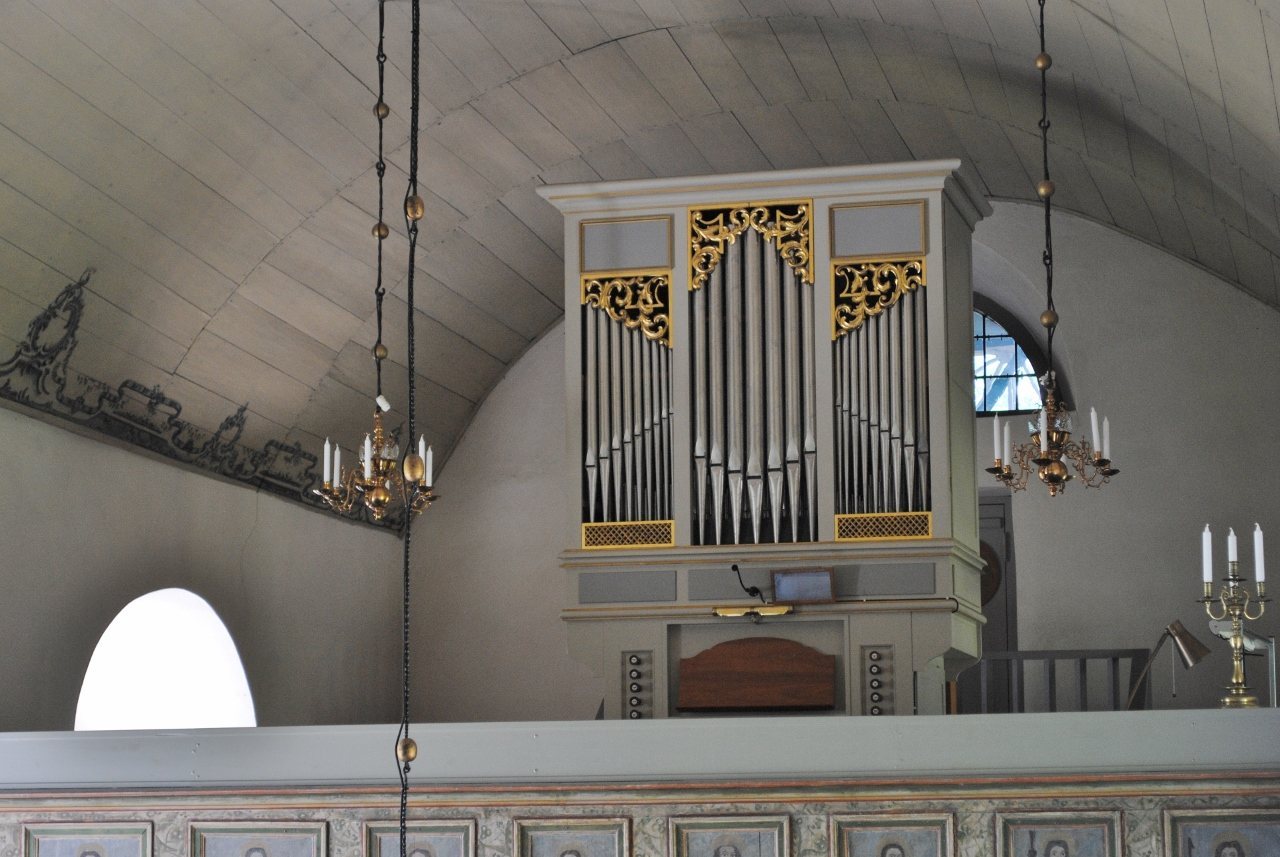
A stone tower was built at the west end between 1832 and 1834, to designs by Swedish architect Axel Almfelt. The bells were moved from a separate freestanding frame into the tower, giving the church a Neoclassical exterior. The church underwent further restoration in the 20th century, and the organ installed in 1931 was replaced by the present instrument in 1975.
Remains
Layout and exterior
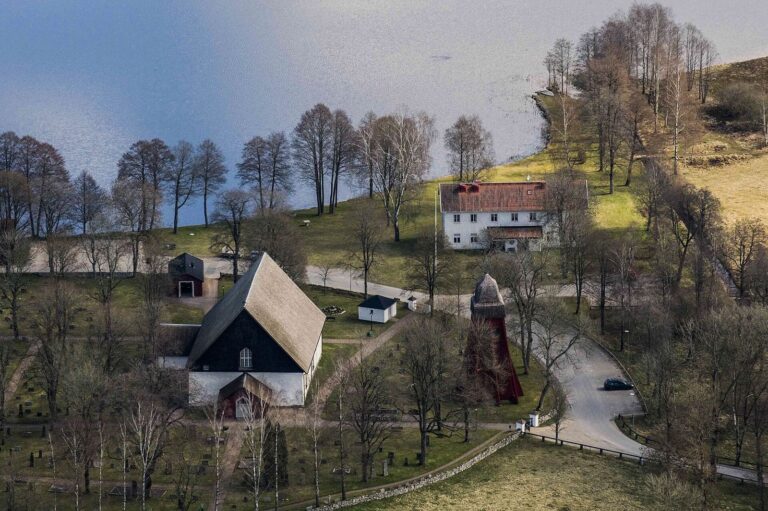
The churchyard surrounds the building and slopes toward Lake Klockesjön. Inside, the nave extends east to a straight-ended chancel, while the sacristy stands against the nave’s north wall and connects to the chancel. The western tower is made of stone and has four openings for the bells. Above them is an open lantern, the tower’s upper open stage, topped by a cross. The tower gives the exterior its Neoclassical character.
Interior decoration and furnishings
Ceiling and gallery
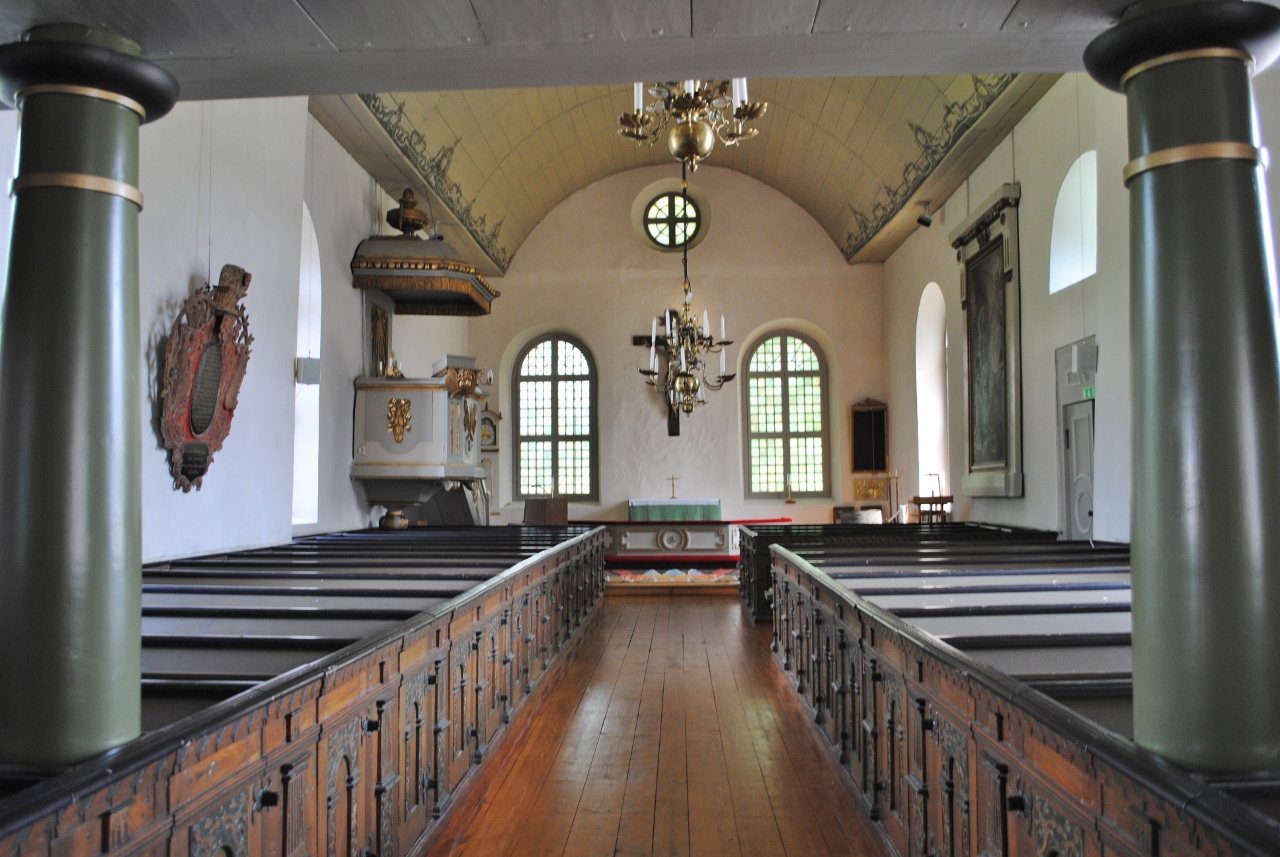
The interior is arranged as a hall church, a single unified worship space rather than a taller central nave flanked by lower aisles. Its wooden ceiling has a barrel-shaped vault. Eighteenth-century paintings on the ceiling are by Master Vadstein, a painter associated with Vadstena. A Rococo border follows the cornice of the vault. It was uncovered in 1931 after being painted over, when images of apostles on the gallery front were also revealed.
Medieval furnishings
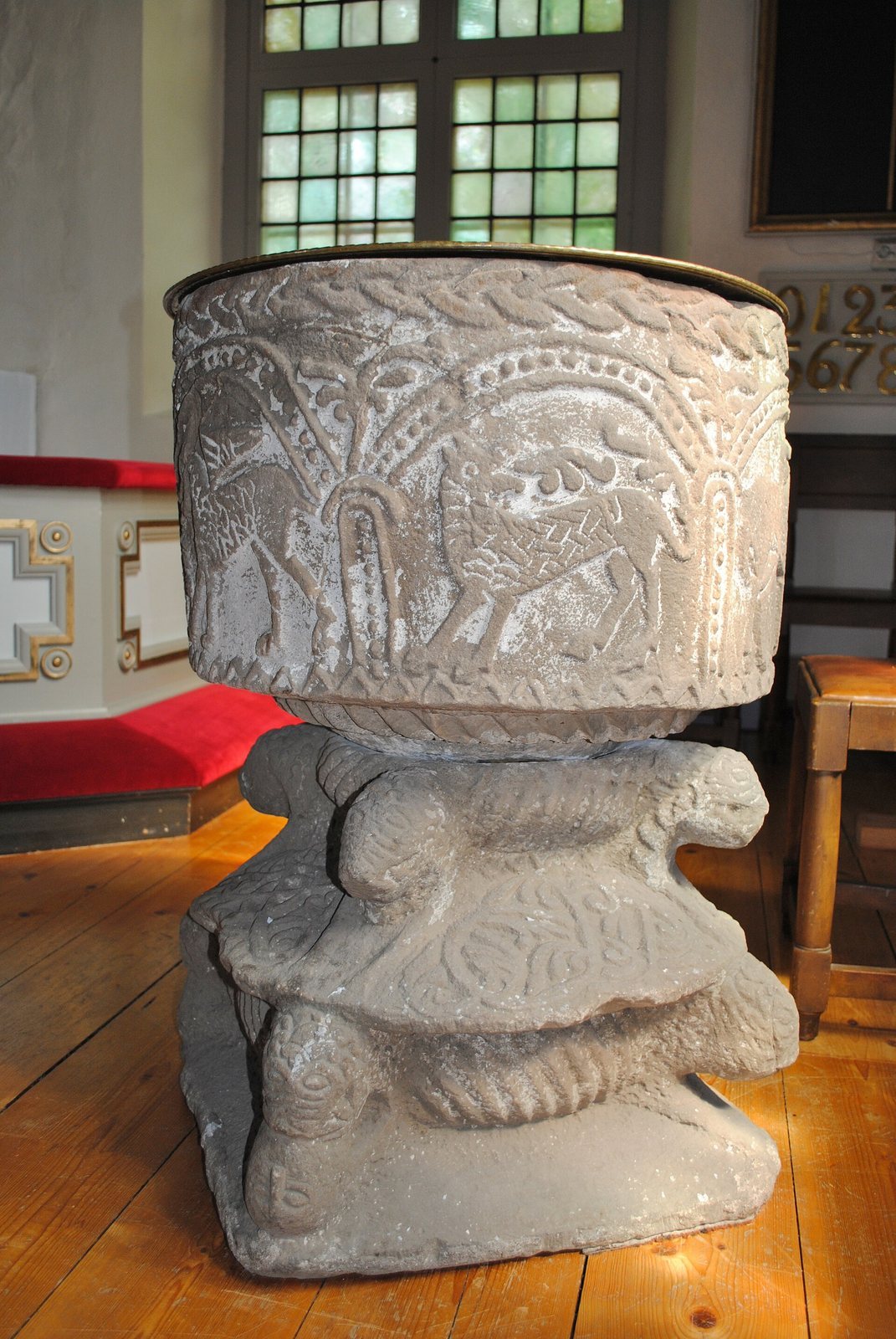
A sandstone baptismal font decorated with mythical creatures dates to the second half of the 12th century. It is attributed to the Master of Njudung, an art-historical name for an unidentified medieval sculptor. The church also contains an oak sculpture of Saint Olaf, usually identified as Olaf II Haraldsson, a Norwegian king venerated as a Christian saint; the sculpture dates to the 13th century. A 14th-century triumphal crucifix, a large crucifix displayed prominently in a church, stands above the altar.
Altar and pulpit
The altar retable, an ornamental structure behind or above an altar, was designed by T. Wennberg, while its associated altarpiece was made by Anton Isaksson. Both were moved from the chancel to the south wall of the church room in 1931. The Neoclassical pulpit dates to 1794 and was made to designs by Thure Wennberg. Its sounding board is a canopy positioned above the pulpit.
Memorials, pews, and organ
An epitaph commemorates Court of Appeal commissioner Daniel Stocke, an official serving an appellate court, and his family. The church also has closed pews with carved doors dating to the 18th century. Images of apostles appear on the organ loft. The present organ was built in 1975 by Nils-Olof Berg of Nye; it has mechanical action and a new façade.