Anta dos Pombais: A Neolithic Megalithic Tomb in Portugal
Site at a Glance
- Popularity
- Very Low
- Country
- Portugal
- Primary era
- Stone Age
- Eras represented
- Stone Age
- Civilizations
- Unclassified
- Site type
- Burial
- Remains
- Tomb
History
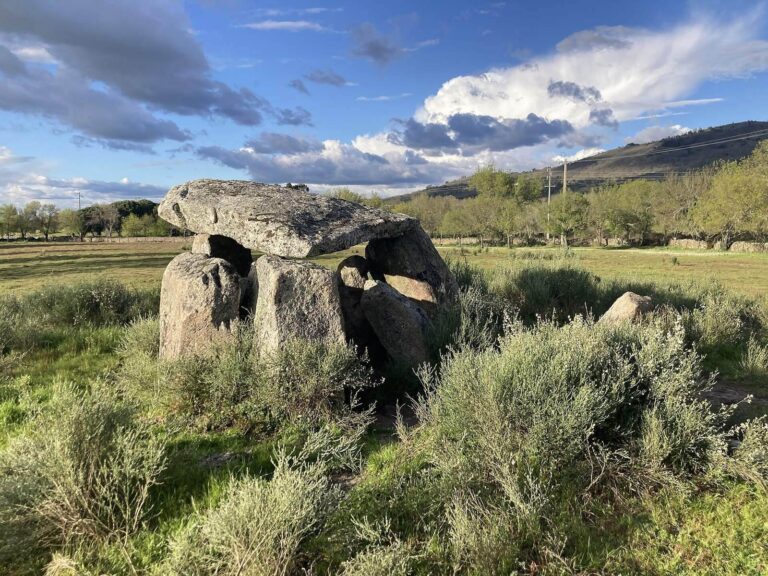
Anta dos Pombais is a megalithic tomb in Santa Maria da Devesa, Portugal. It belongs to the Neolithic, the later part of the Stone Age, and to the tomb-building tradition of western Iberia. Around 5,000 monuments of this kind were built in the region by successors of the Cardial or Impressed Ware culture, whose pottery was decorated with shell impressions.
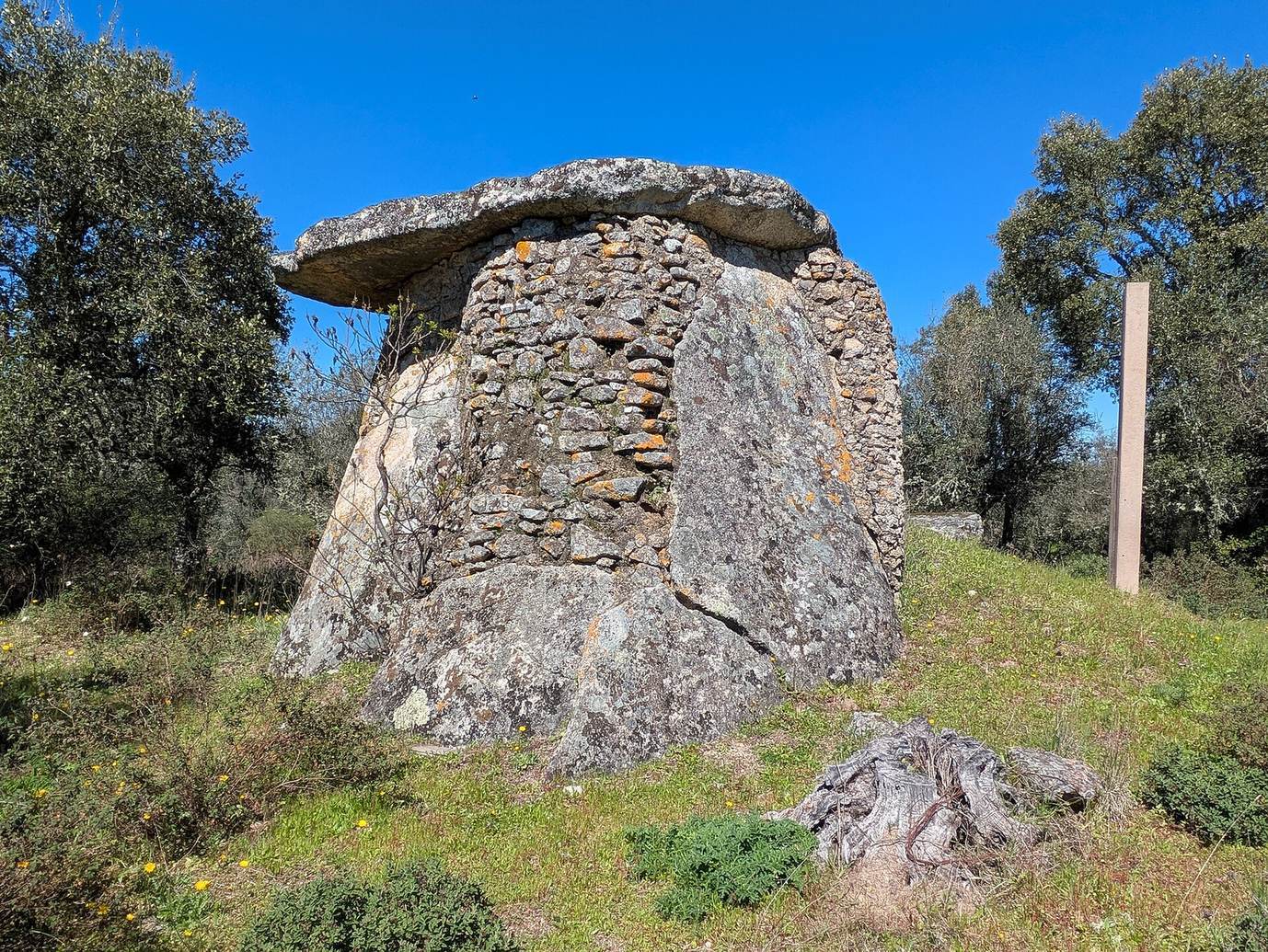
Portuguese scholar Francisco A. Pereira da Costa investigated the tomb and published his findings in 1867–1868. Before its protection in 1910, it was used as an agricultural building and may also have served as a chapel. This reuse destroyed finds and disturbed deposits in the ground. Walls built between and against the supporting stones helped keep the burial chamber from collapsing. The monument was protected as a National Monument in 1910. Cleaning and inventory work took place in 2010.
Remains
The tomb stands on a hill about 2.3 km north of Castelo de Vide. Its polygonal granite burial chamber is about 3.4 m in diameter and 3.8 m high. Seven irregularly quadrilateral upright stones originally formed the chamber; five remain in place. A large capstone, which overhangs the chamber, also survives. Walls run between and against the supporting stones. Despite alterations from later use, Anta dos Pombais is among the best-preserved megalithic tombs of this type in the region.
The chamber’s original arrangement beyond its surviving structure remains uncertain. It is not known whether a passage or covering mound once formed part of the monument, and a definitive assessment requires modern archaeological investigation.