Jordán: Tábor’s Historic Reservoir in Czechia
Site at a Glance
- Popularity
- Medium
- Country
- Czechia
- Primary era
- Early Modern
- Eras represented
- Early Modern, Modern
- Civilizations
- Holy Roman Empire, Kingdom of Bohemia
- Site type
- Infrastructure
- Remains
- Dam
On this page8 sections
History
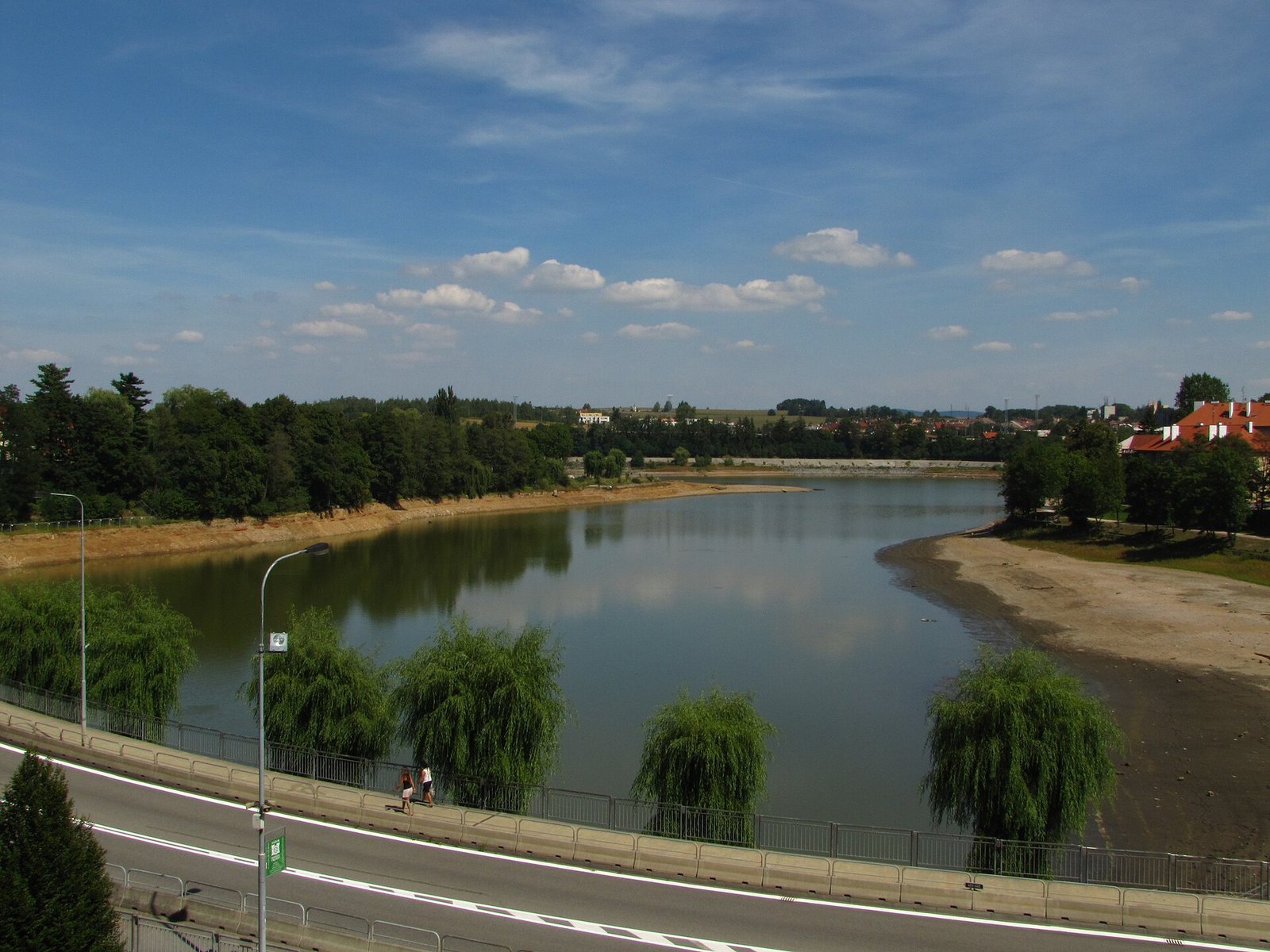
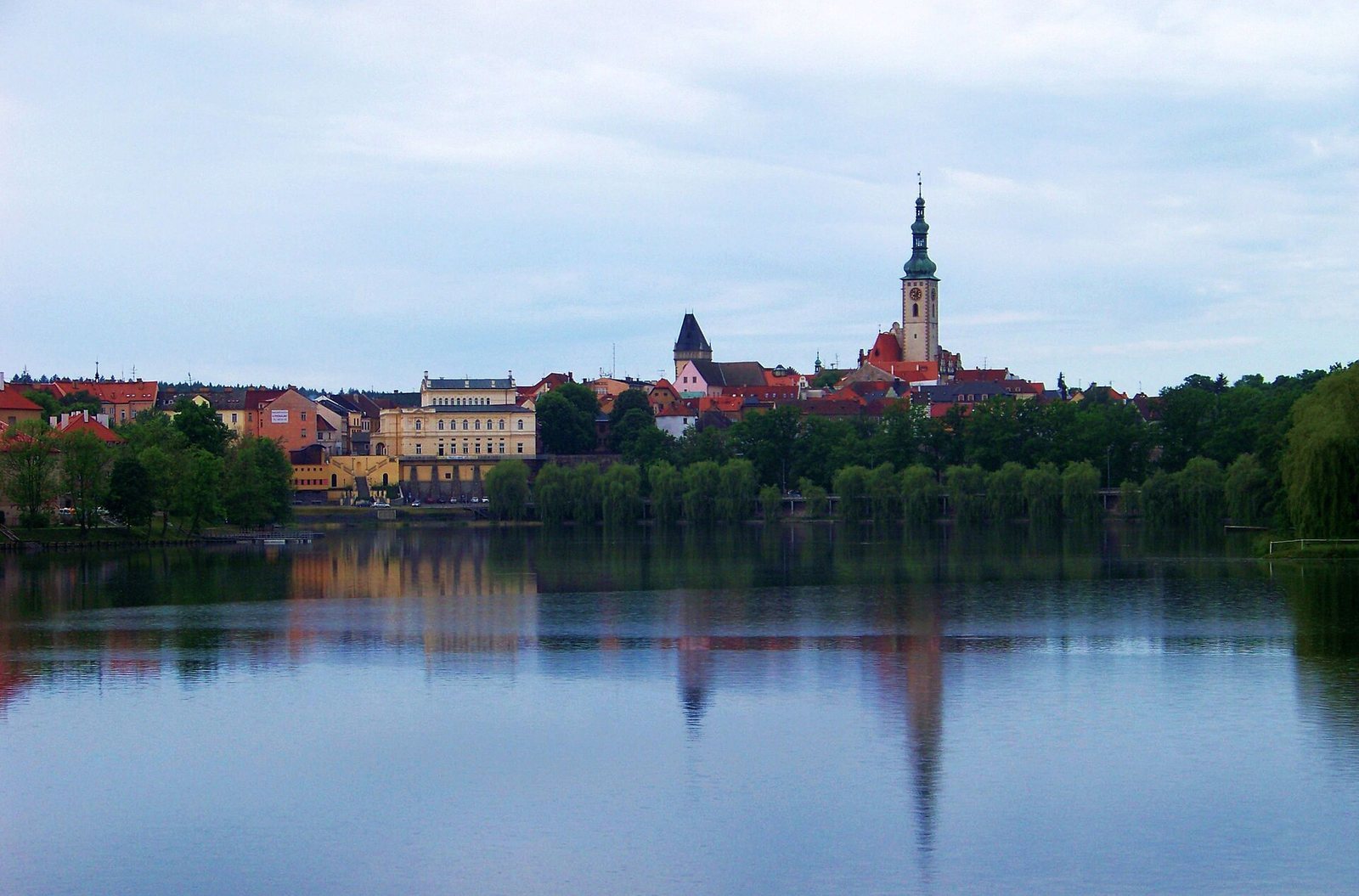
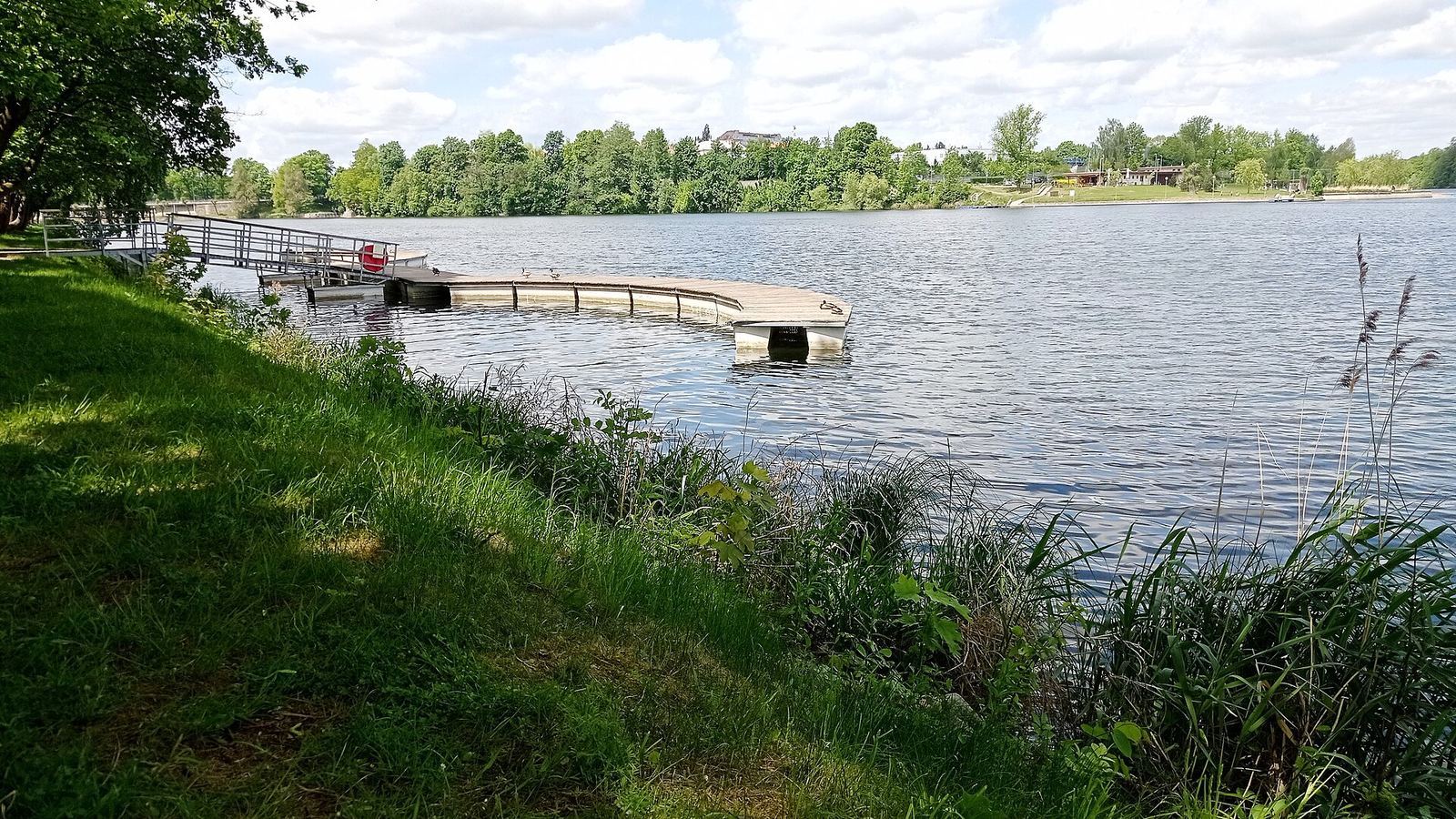
Jordán is a reservoir in eastern Tábor, Czechia, formed in 1492 by damming the Košínský Brook. Its dam is recognized as the Czech Republic’s oldest reservoir dam. The reservoir was created to provide drinking water for the town, with fish farming introduced later.
Waterworks and early uses
Water had been pumped from Jordán since 1508. Below the dam, waterworks official Master Jan and miller Matouš Zycha of Náchod built the first waterworks, which operated for 365 years. Water began reaching Tábor’s fountains in 1567, starting with a fountain in the marketplace. A fire led to the installation of a replacement wooden pump, identical to the earlier one, in 1569. The spillway that forms the waterfall was built around 1693.
Reservoir use and municipal supply
Jordán was drained in 1830 for necessary dam repairs. It could not later be emptied through its bottom outlet because the outlet’s location and usability were unknown. Difficult drainage and the technical demands of harvesting fish with long nets contributed to the end of large-scale fish farming by the mid-20th century. The reservoir has since been used mainly for sport fishing and recreation. Among the fish caught there, a 24-kilogram carp was taken in June 1875; a 28-kilogram carp, described as the largest recorded at Jordán, was found dead near the dam in 1890.
A Ministry of Agriculture order issued on 1 December 1932 concerning Tábor’s drinking-water supply prompted plans for a treatment and filtration plant. The system was to use water from existing wells alongside treated and chlorinated water from Jordán. The plant was built in 1936.
Modern changes and reconstruction
A road bridge over the reservoir was built between 1984 and 1991. Jordán received protected cultural-monument status in 1992. After floods in 2002, reconstruction plans included a new bottom outlet. Work began in November 2011, when a siphon and pumps partly emptied the reservoir before the remaining water was drained through a newly excavated tunnel. The work revealed two historical bottom outlets and an upper outlet that had supplied the town waterworks.
Remains
Jordán lies beside Tábor’s main square. The Košínský Brook feeds the reservoir, while the Tismenický Brook carries water away toward the Lužnice River. Upstream on the Košínský, below the Košín I reservoir and just before Jordán, is the smaller Malý Jordán, or Small Jordán. Jordán covers 51.77 hectares, holds about 3 million cubic metres of water, and reaches a maximum depth of 12.5 metres. A certificate from 1873 gave its area as 52.87 hectares; railway construction later filled an inlet, reducing the water surface to its present area.
Dam and outlet system
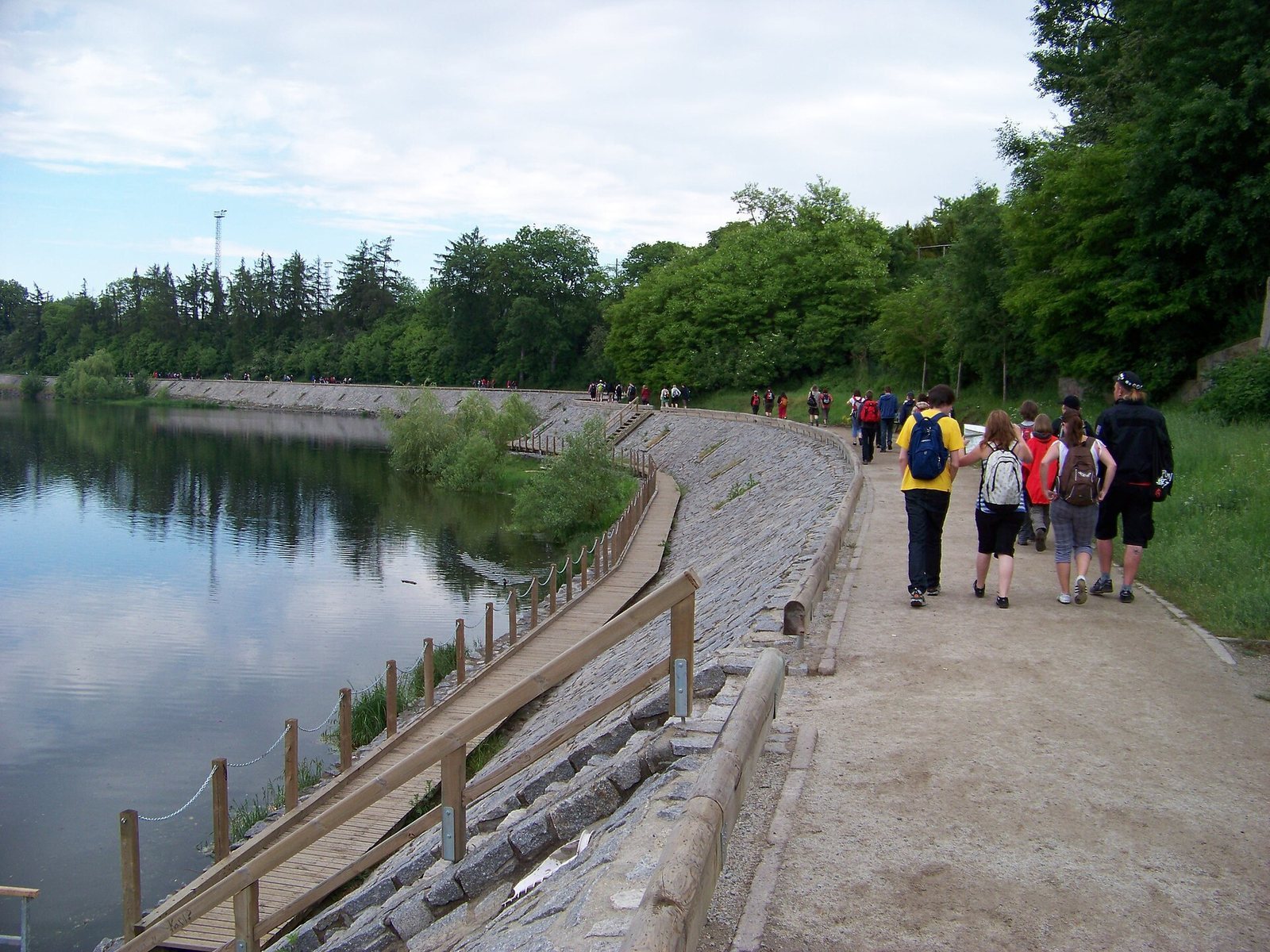
An earthfill dam, made mainly from compacted earth and fill, closes the reservoir at its southwest end. It is 284 metres long and 20 metres high. The new bottom outlet, a low-level channel for releasing reservoir water, lies on the dam’s right bank. A shaft contains a sluice gate, a movable barrier controlling the flow. The outlet tunnel runs 148 metres beneath U Stadionu Míru Street and discharges below the waterfall; its cross-section measures 2.5 by 2.4 metres. It was excavated in May 2012, and a 40-metre pressure tunnel, which carries water under pressure, was excavated that October.
Waterfall and outflow
The Jordán Waterfall drops 18 metres just below the dam. Its spillway, a channel that carries excess water away from the reservoir, passes under a road and over rock before falling into a pool. The flow then continues along the Tismenický Brook toward the Lužnice River.
Bridge and treatment plant
The road bridge is suspended from a single 77-metre pylon by 26 cables arranged to evoke a pair of harps. It is about 210 metres long and 23 metres wide, with the roadway 10.5 metres above the water. The reservoir’s treatment and filtration plant is known as U rytíře.