Holt Church: A Medieval Parish Church in Tvedestrand, Norway
Site at a Glance
- Popularity
- Low
- Country
- Norway
- Primary era
- Medieval
- Eras represented
- Medieval, Early Modern, Modern
- Civilizations
- Denmark–Norway, Norwegian
- Site type
- Religious
- Remains
- Church
On this page13 sections
History
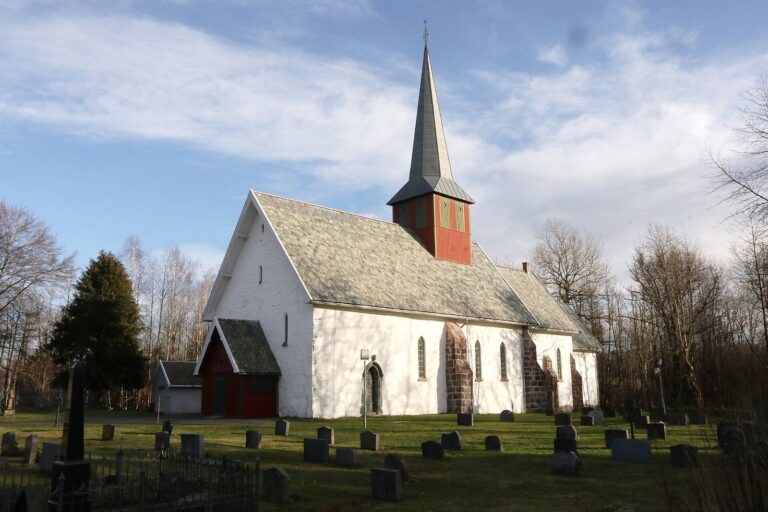
Holt Church is a medieval Romanesque church in Tvedestrand, Norway, probably built and consecrated around 1100. Romanesque churches are associated with medieval masonry construction. The earliest surviving written record of Holt Church dates to 1374. Formerly Roman Catholic, it now serves as an active Evangelical Lutheran parish church in the Church of Norway, the country’s national Lutheran church.
Medieval foundation and parish
Holt parish once covered a much larger area than it does today. Until 1742, it also included Austre Moland, Tromøy, Barbu, Stokken, Dypvåg, and Flosta. In the Middle Ages, its boundary with Øyestad parish ran near the center of Arendal. A municipal boundary between Øyestad and Moland remained in that area until 1992.
Rebuilding in the eighteenth century
The church was restored in 1621, 1682, and 1737. In 1753, it was rebuilt from a long church into a cross-shaped one. The medieval choir, the area around the altar, was demolished and replaced, and transepts, the crosswise arms of the building, were added. Local master builder Lars Albretsen Øvernes led the work.
Civic and ecclesiastical roles
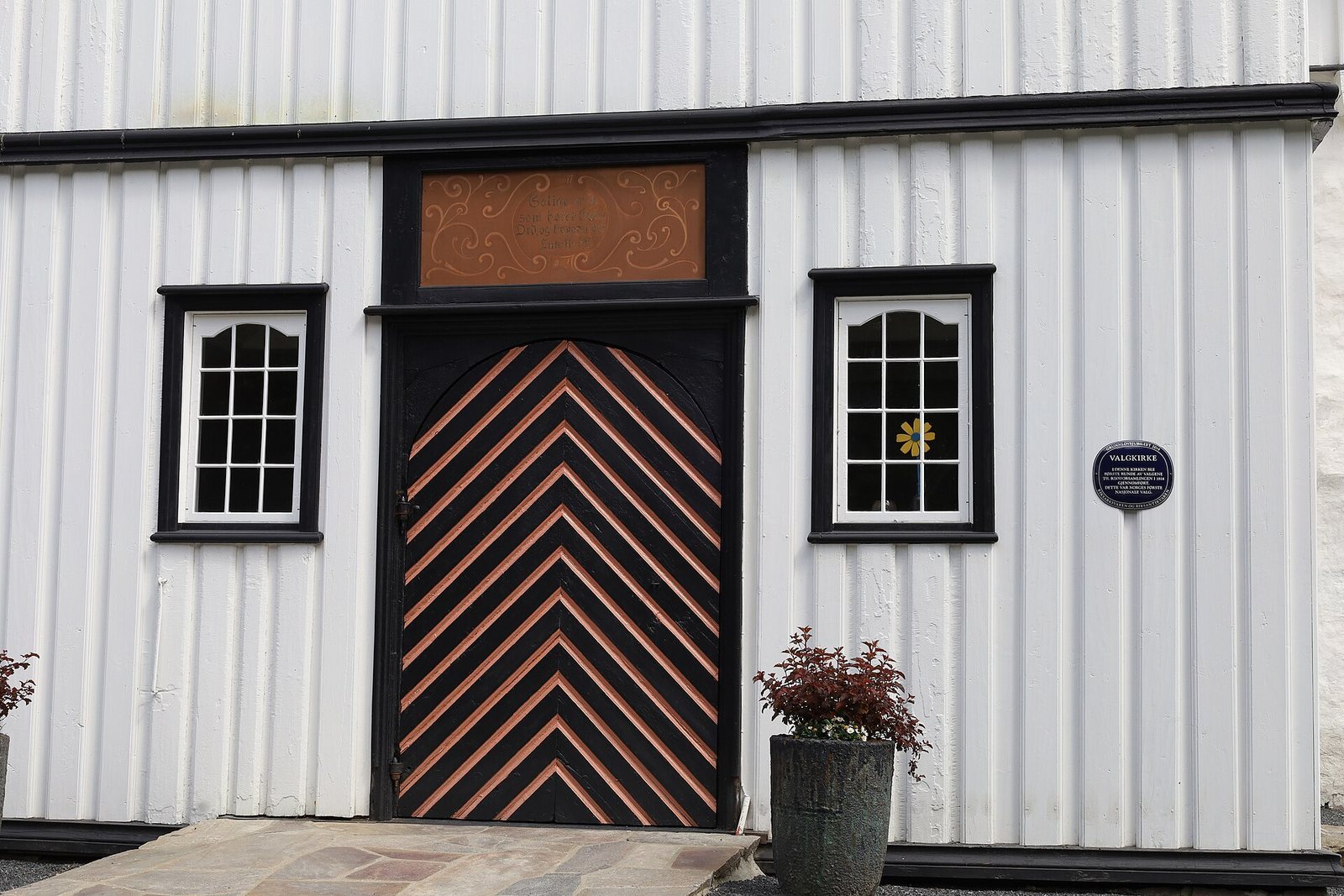
In 1814, Holt Church served as a polling place. Parish electors chosen there later selected representatives to Norway’s Constituent Assembly at Eidsvoll, which met to draft the constitution. Holt Seminar, described as Norway’s first teacher-training seminary, was established at the rectory in 1839. Almuestua, between the church and rectory, served as a meeting place for Holt municipal council during the municipality’s existence from 1838 to 1960.
Holt Church is now the seat of the dean of Aust-Nedenes deanery, an administrative district overseen by a dean. The district covers the municipalities of Åmli, Risør, Gjerstad, Tvedestrand, and Vegårshei, and the parishes of Holt, Tvedestrand, Dypvåg, Risør, Søndeled, Gjerstad, Vegårshei, Åmli, Tovdal, and Gjøvdal. The church has automatic protection as a Norwegian cultural heritage site.
Remains
Church building and plan
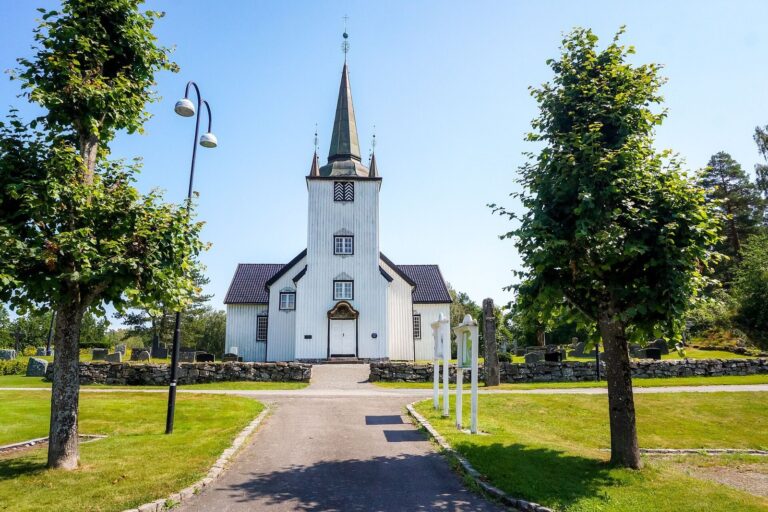
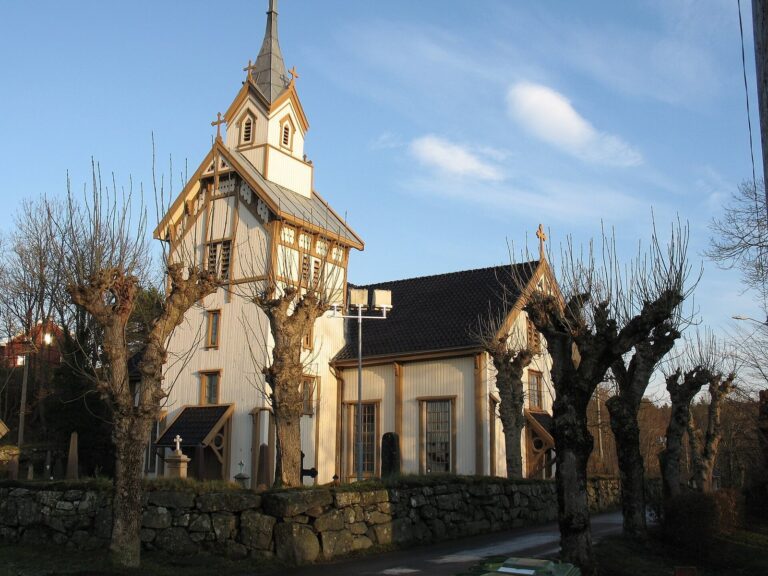
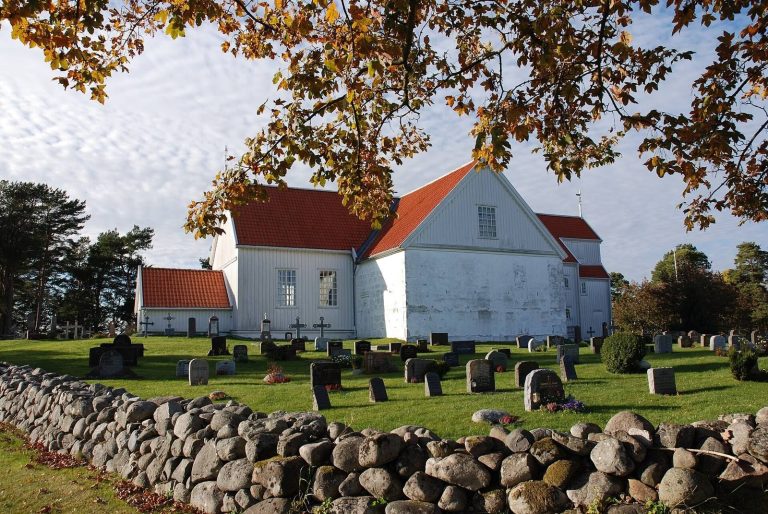
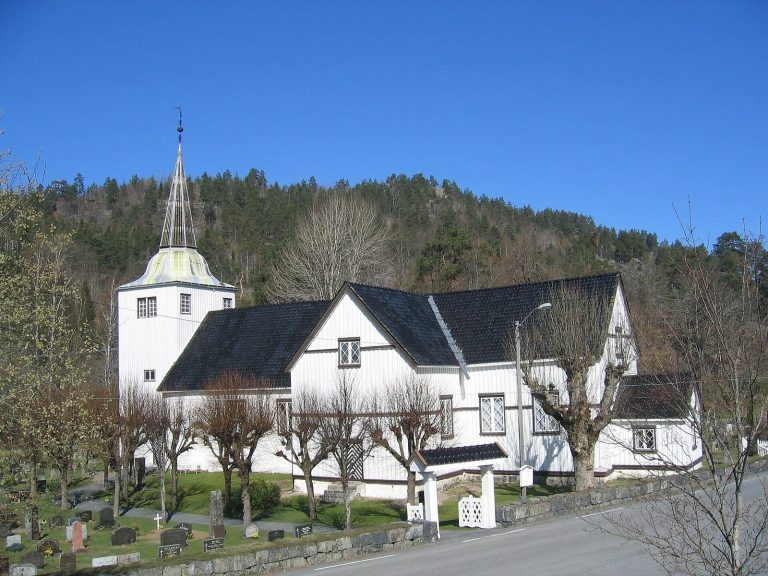
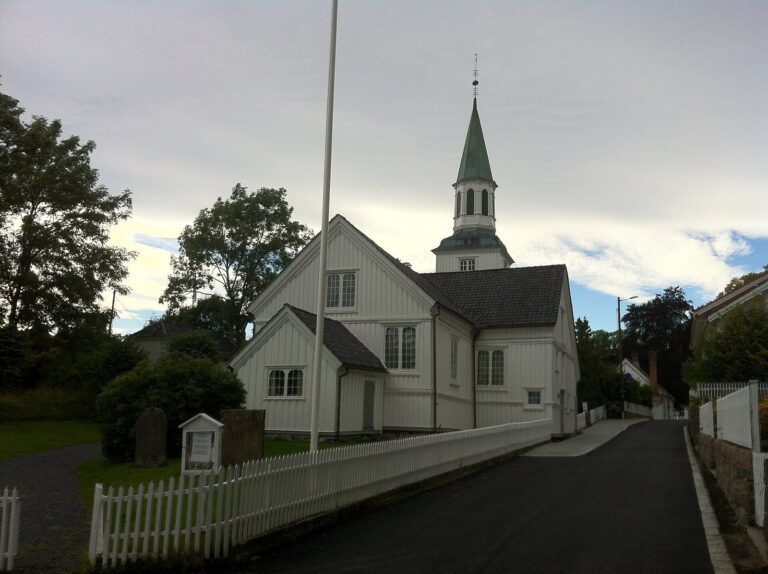
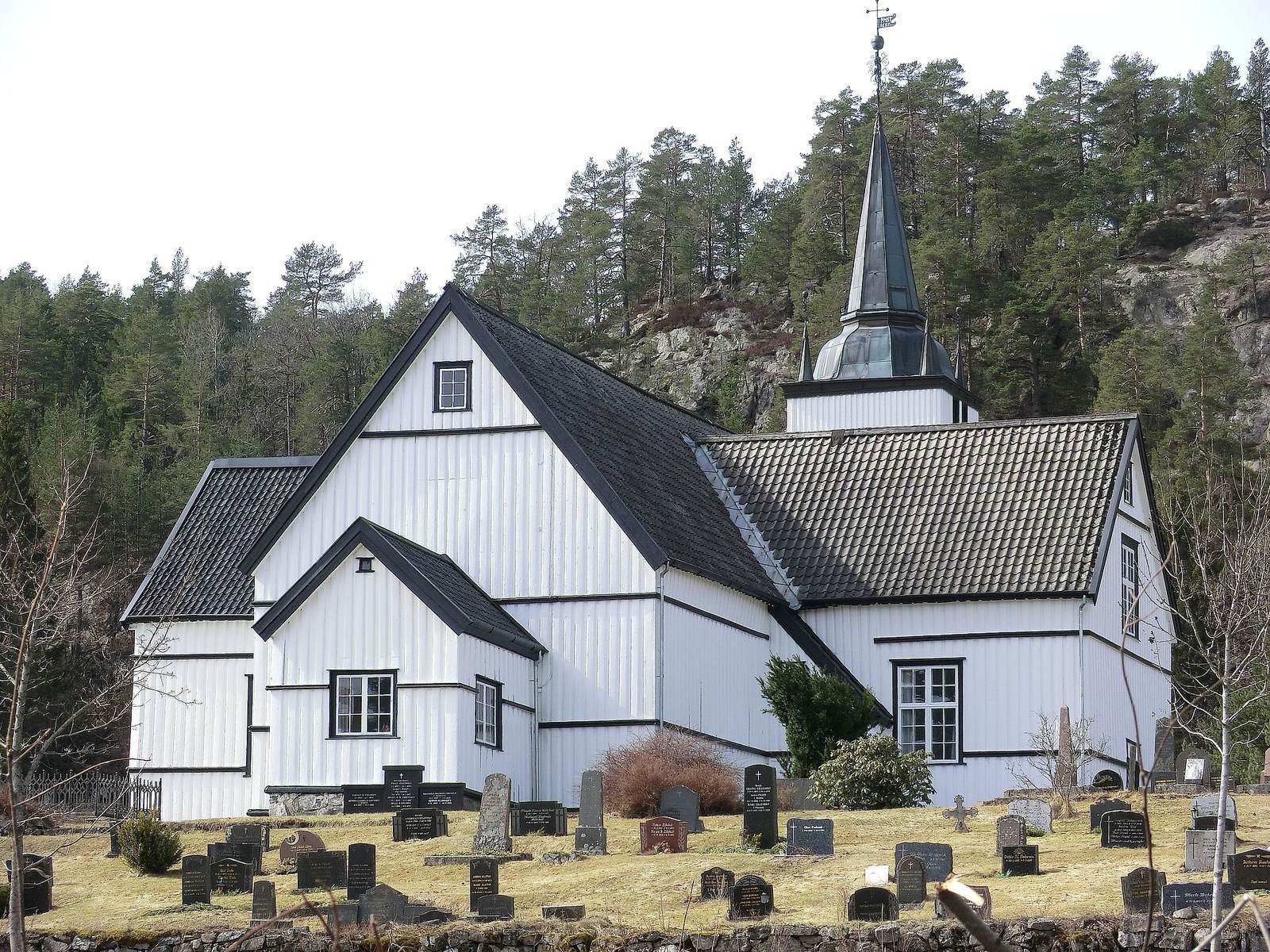
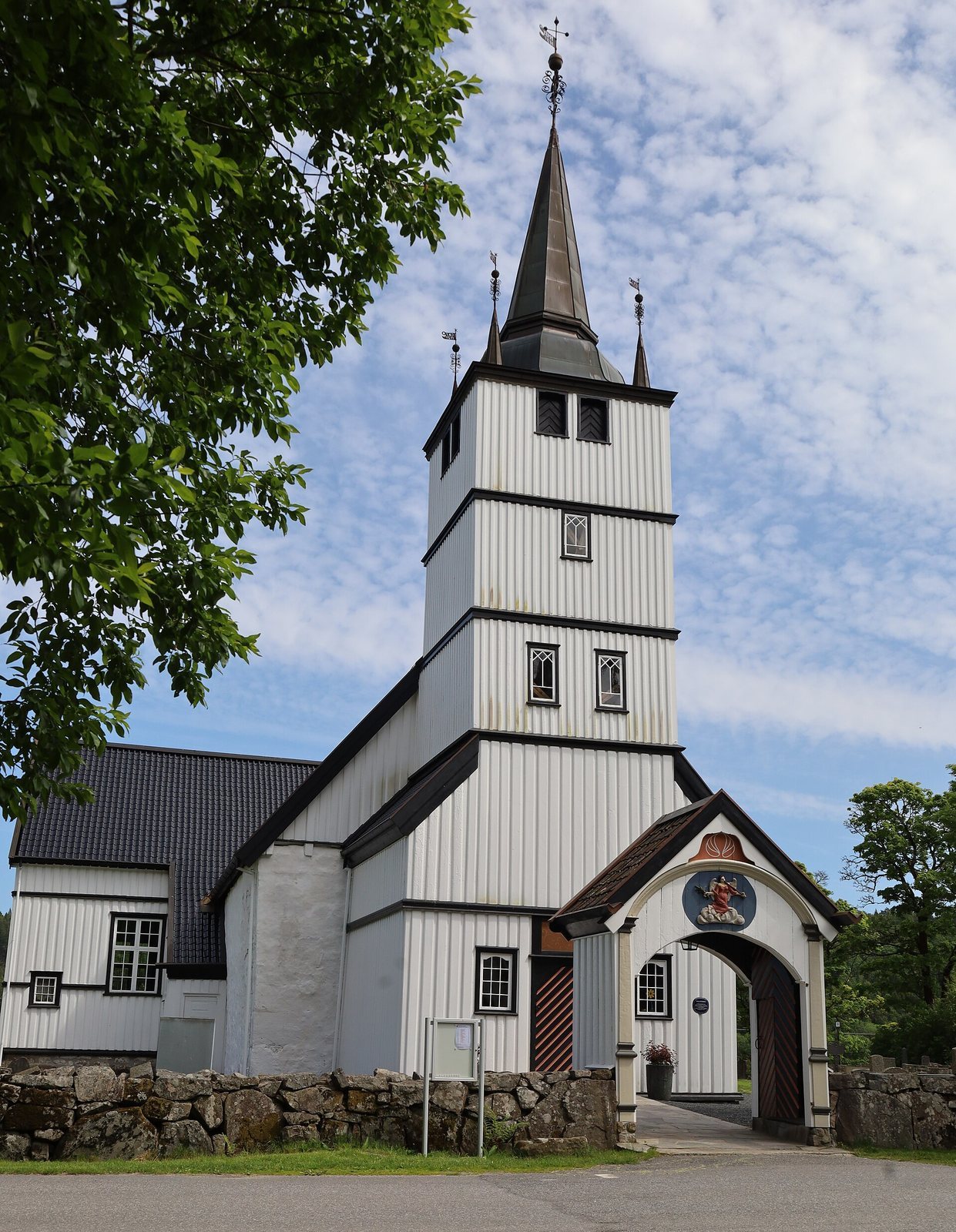
The church stands just south of Fiane, beside the Old Western Main Road, with a churchyard alongside it. It is a white stone-and-wood building with seating for about 430. The original long plan had a rectangular nave, the main area for the congregation, and a narrower rectangular choir. The present building has a cross-shaped plan, with a medieval stone core and log-built choir and transepts. Its overall appearance is Baroque, a later European style, while the choir arch has lighter, more elaborate Rococo ornament. The tower carries five weather vanes, and the building has a principal entrance.
Interior furnishings
Baptismal font and altar cabinet
A 12th-century baptismal font carved from soapstone survives from the medieval church. Its Gothic design belongs to a medieval style associated with pointed forms. A 16th-century altar cabinet, a cabinet-shaped devotional furnishing, stands on the north wall of the west transept. It predates the Reformation.
Altarpiece and choir fittings
Carpenter Christen Paulsen made the altarpiece in Christiania, the historical name for Oslo, in 1732. Its carved decoration may be the work of Torsten Ottersen Hoff. In 1837, Danish painter Adam Müller’s painting of Jesus in Gethsemane was added; ironworks owner Jacob Aall donated it for the Reformation jubilee that year. Danish woodcarver Christian Suchow carved the choir-screen decoration and baptismal enclosure in 1758.
Donated furnishings and organs
A votive ship, a model ship given to a church as a devotional offering, hangs from the ceiling. Peder Ellingsen Strengereid donated it in 1768. The enclosed pew known as Aallekoret was built for Ulrich Schnell, an owner of Næs Ironworks, and bears the coats of arms of Schnell and his wife. The church’s oldest organ, made in 1840 by Peter Adolph Albrechtsen of Trondheim, remains at the west end in its original position. A newer, larger organ stands in the south transept.
Churchyard and adjoining buildings
Churchyard
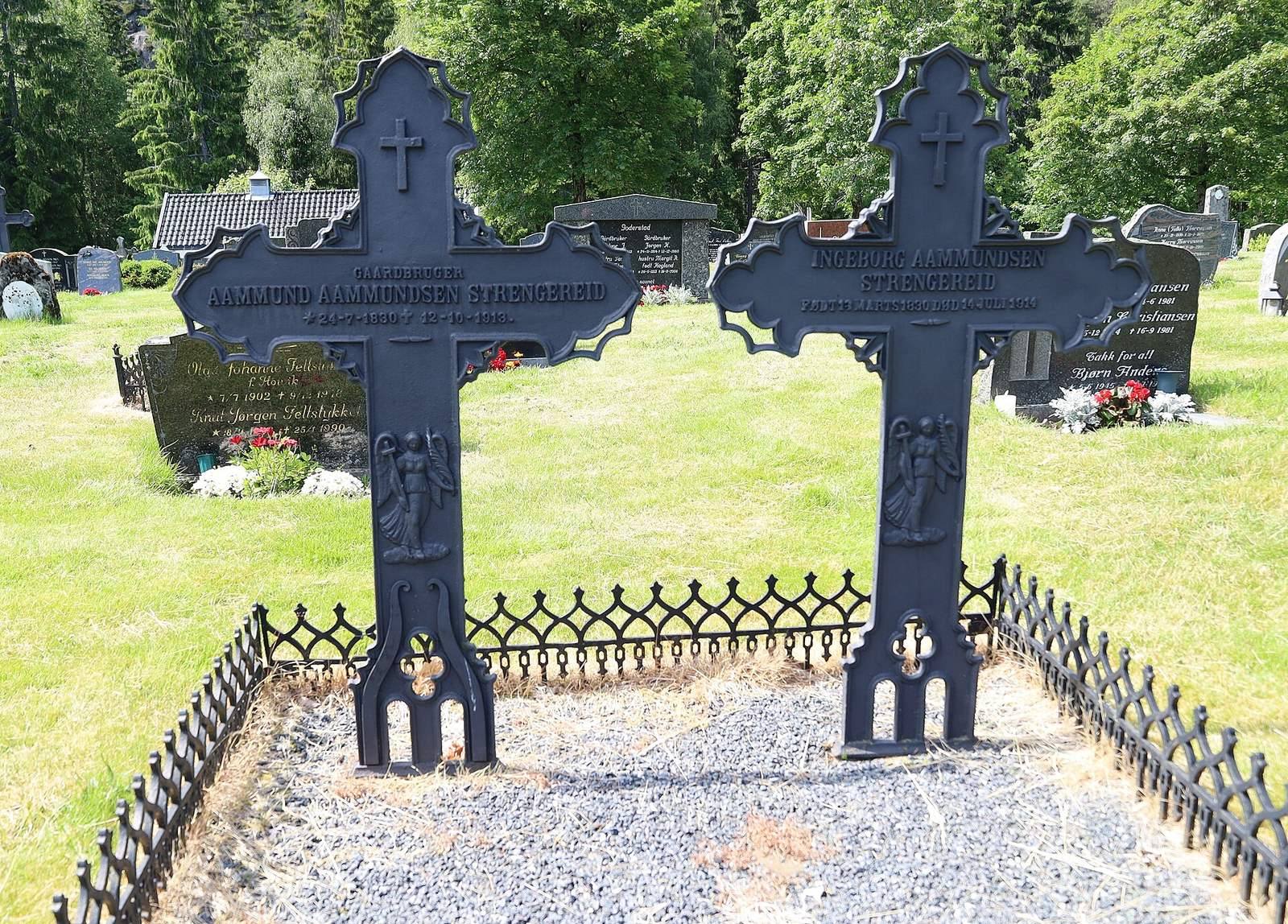
The churchyard contains English war graves, an iron grave cross dated 1913-1914, and a memorial to Knud Knudsen, a Norwegian educator and language reformer.
Almuestua
Almuestua stands between the church and the rectory, forming part of the group of buildings around the church.