Flosta Church: A Historic Parish and Votive Church in Norway
Site at a Glance
- Popularity
- Low
- Country
- Norway
- Primary era
- Early Modern
- Eras represented
- Early Modern, Modern
- Civilizations
- Denmark–Norway, Norwegian
- Site type
- Religious
- Remains
- Church
On this page10 sections
History
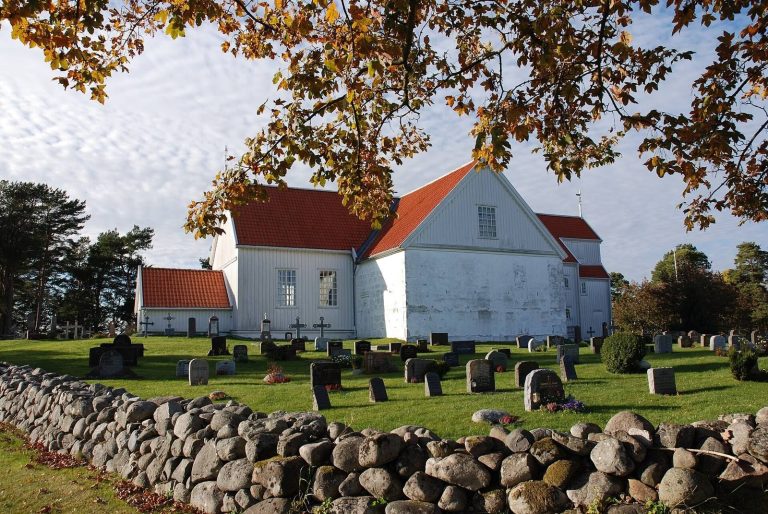
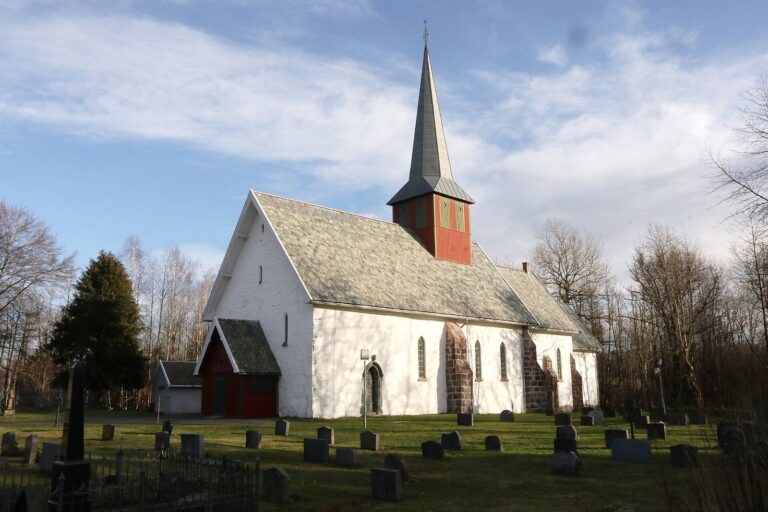
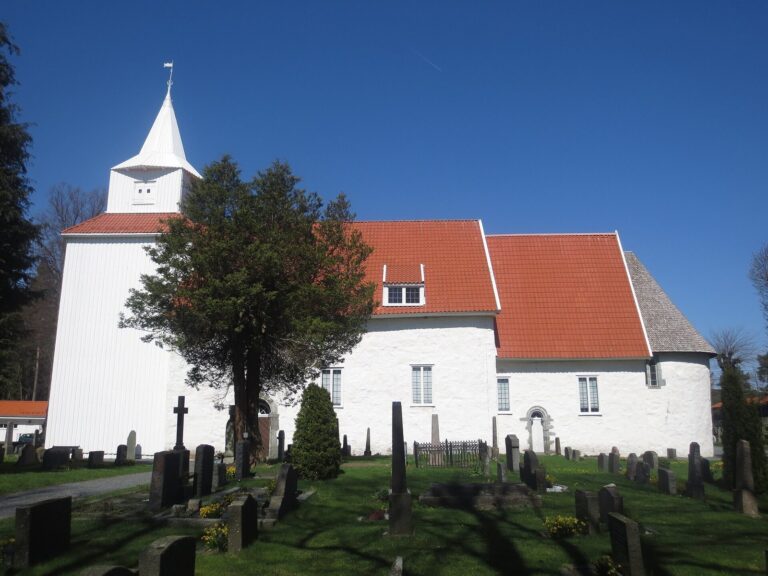
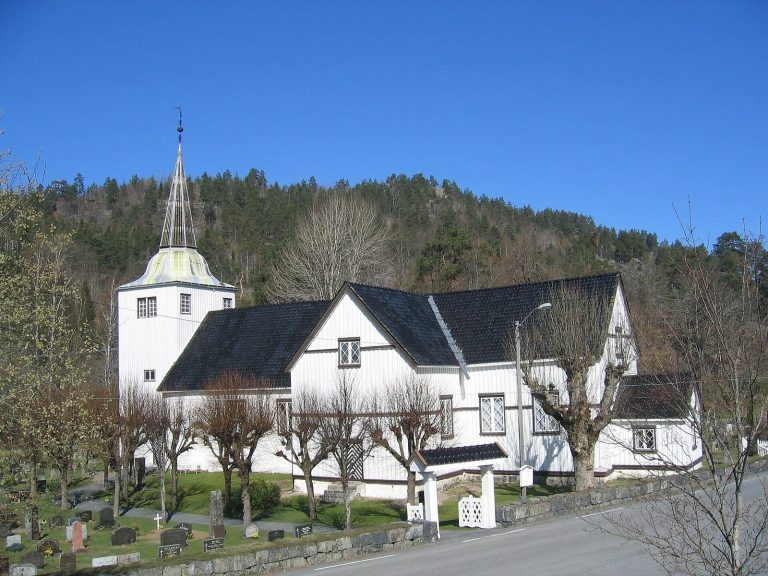
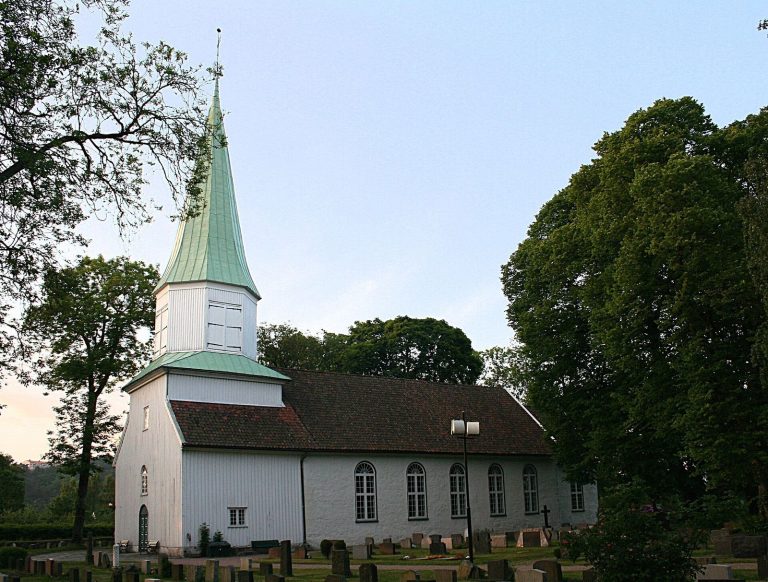
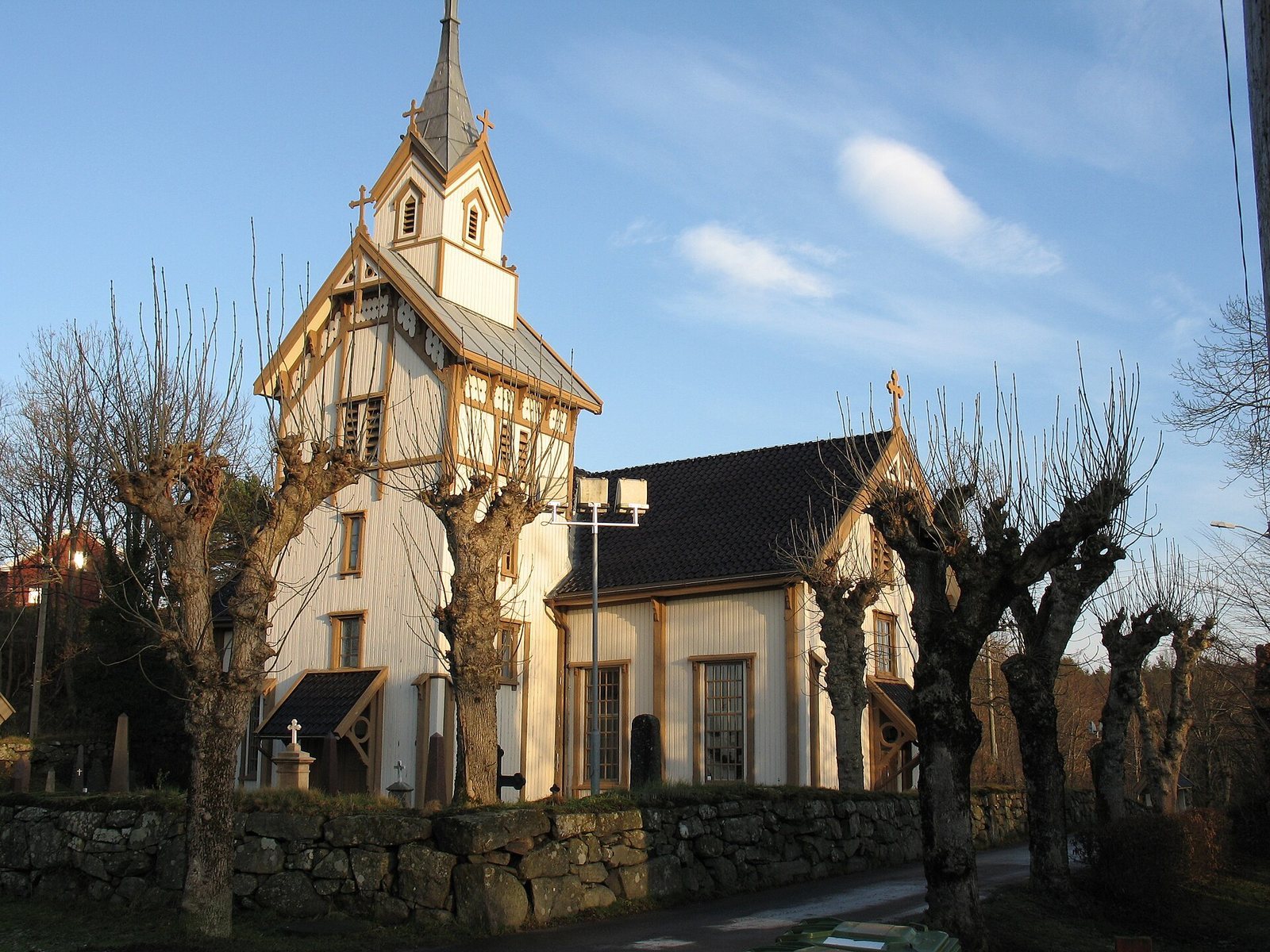
Flosta Church is a church on Flosta Island, just north of Narestø, in Norway. First documented in 1467, it may have originated around 1300. The building was later converted to a Neo-Gothic design, a revival of forms associated with medieval Gothic architecture, in 1864. It is a votive church, supported by gifts from sailors in distress, including offerings made in response to danger or to fulfill a vow.
Early church and rebuilding
The earlier church was described as dilapidated in 1628. A timber church stood by 1632, although it is uncertain whether this resulted from a complete replacement or repairs to the existing building.
Expansion in the eighteenth century
Around 1700, the church was lengthened and a choir added at the east end. A bell tower followed at the west end in 1735–1736. Small fires in 1739 and 1824 caused little damage. In 1747, Ole Nielsen Weierholt led an enlargement that added wings to the north and south.
Election and nineteenth-century changes
In 1814, Flosta Church was a polling place in Norway’s first national election. Parish voters selected electors, who then chose representatives to the Constituent Assembly at Eidsvoll, where Norway’s constitution was drafted.
In 1864, builder Anders Thorbjørnsen oversaw another enlargement and the conversion to a Neo-Gothic design. The roof was raised, the building extended eastward, and the choir moved into the new eastern addition.
Restoration and present role
During the 1970s, the church was restored in consultation with the Directorate for Cultural Heritage. The work brought the interior back toward its 1747 appearance and restored older furnishings that had been overpainted or replaced.
Flosta Church remains an active parish church in the Church of Norway’s Evangelical Lutheran Protestant tradition; it formerly belonged to the Catholic Church. It serves Flosta parish in the Arendal deanery, a group of parishes, within the Diocese of Agder and Telemark, a regional church district. The church is automatically protected as a Norwegian cultural heritage site.
Remains
Church building and interior
Plan and spaces
The church is built of timber logs. Its exterior has a cross-shaped plan, while the main interior spaces are arranged along a lengthwise axis. The choir is at the north end, the parish hall occupies the east, and the tower stands at the west. The building accommodates about 290 people; the parish hall was described as seating 150.
Furnishings and fittings
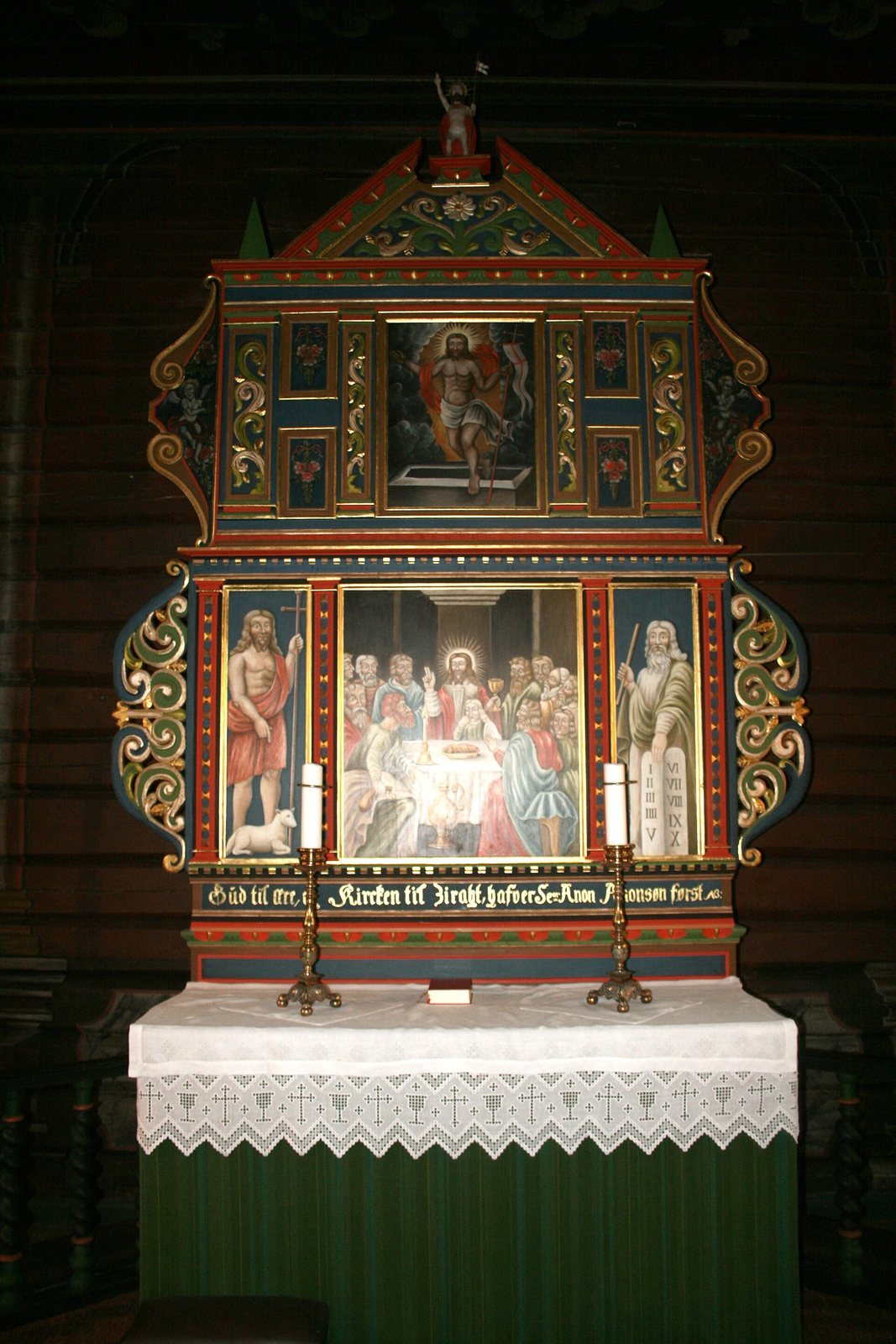
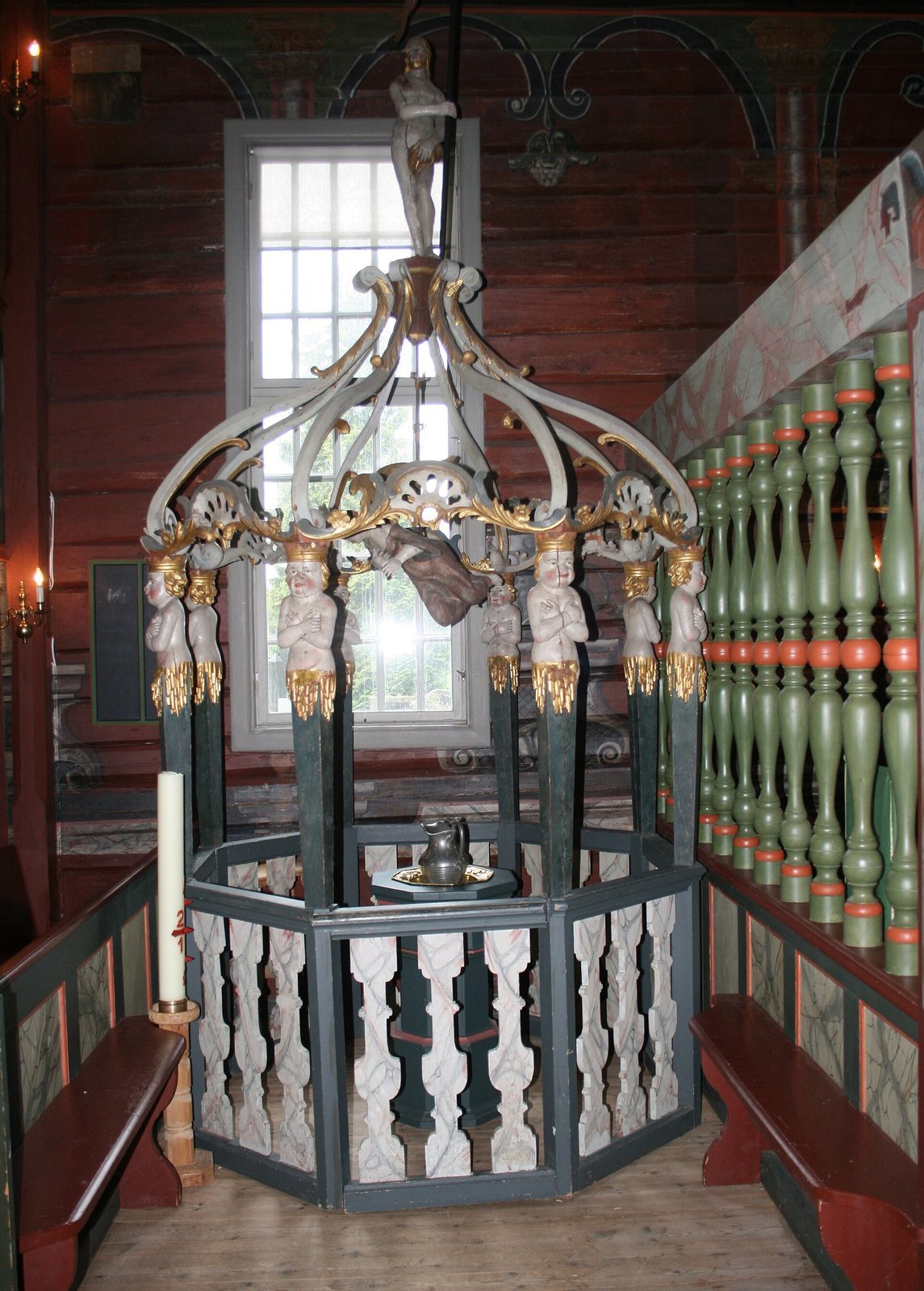
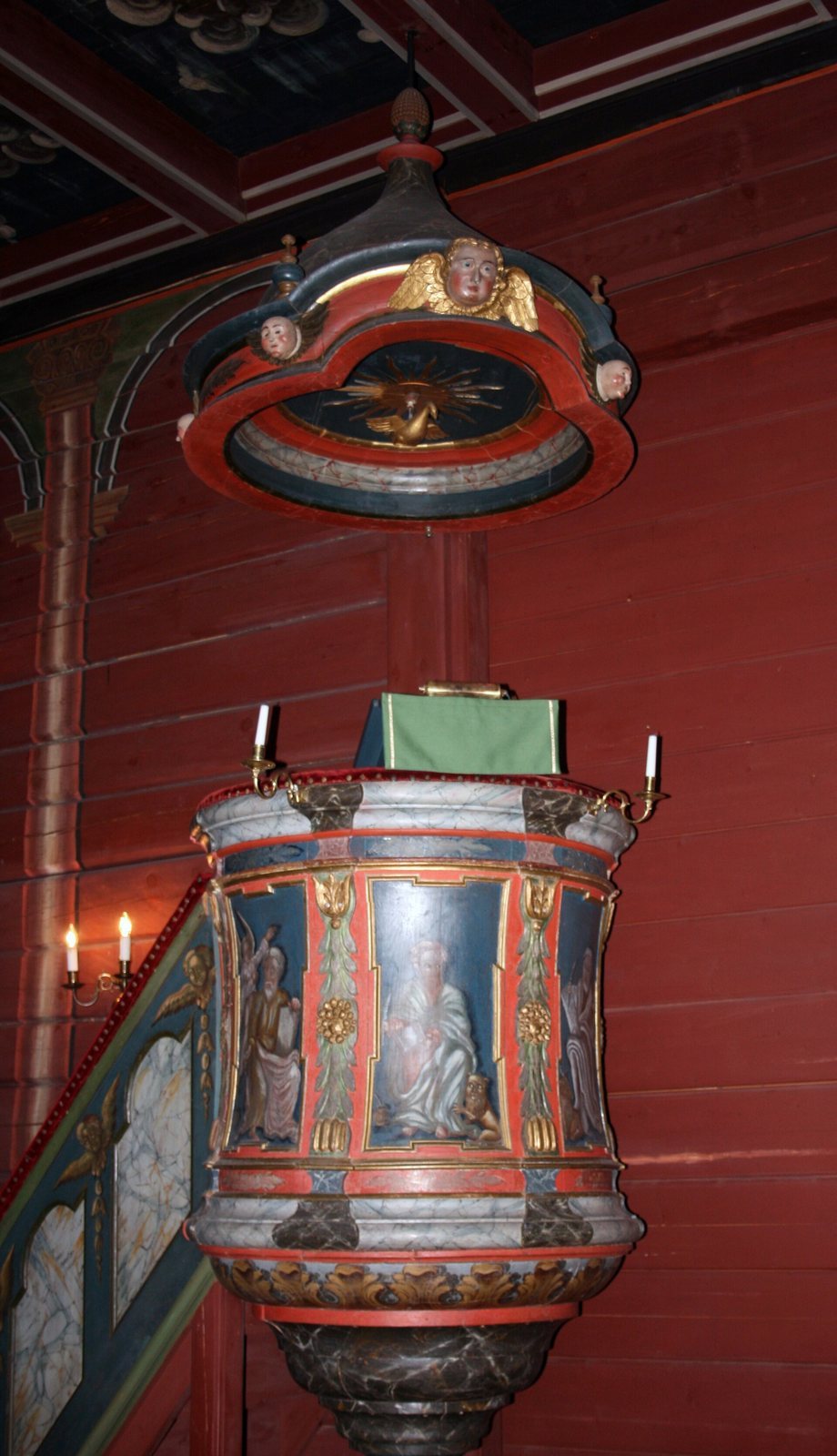
One bell bears the date 1506 and an inscription stating that it was cast in Holland. Parts of the altarpiece date to the seventeenth century, and Samuel Dorn painted it in 1706. Ole Nielsen Weierholt made the pulpit in 1750 in the Rococo style, an eighteenth-century decorative style with elaborate, often curving ornament. Jørgen Schultz painted the pulpit and decorated the baptismal enclosure he made in 1758; he also painted the church interior between 1749 and 1759. The baptismal font, the vessel used in baptism, probably dates to around 1864. The church also has an organ made by Peter Collins in 1991 and a reconstructed confessional chair, a furnishing used in connection with confession.
Church grounds and memorials
A cemetery lies beside the church, and a newer cemetery is at Brekka, southwest of it. West of the church, a memorial commemorates 42 people from Flosta who died in the First and Second World Wars. A gravestone there honors Even Thorsen, a member of the 1814 Norwegian Constituent Assembly.