Budeliai Hillfort: A Fortified Archaeological Site in Lithuania
Site at a Glance
- Popularity
- Very Low
- Country
- Lithuania
- Primary era
- Medieval
- Eras represented
- Classical, Medieval
- Civilizations
- Unclassified
- Site type
- Military
- Remains
- Fort
On this page6 sections
History
Budeliai hillfort is an elevated defended archaeological site south of Budeliai, in Žasliai Eldership within Kaišiadorys District Municipality, Lithuania. A hillfort is a raised site whose defenses may include earthen banks and ditches. Budeliai dates from the first millennium through the beginning of the second millennium.
The hillfort and settlement are also known as Skarbo Kalnas, meaning “Treasure Hill.” Local tradition says a treasure is hidden inside the hillfort. Lithuanian archaeologist and writer Petras Tarasenka surveyed the site in 1921, followed by a survey from the Institute of History in 1971. A Lithuanian government resolution declared it a cultural monument on 19 May 1998.
Remains
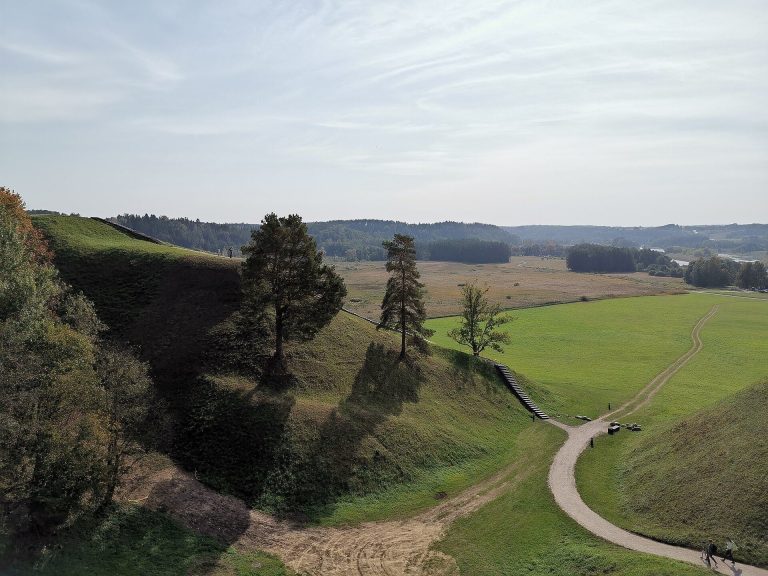
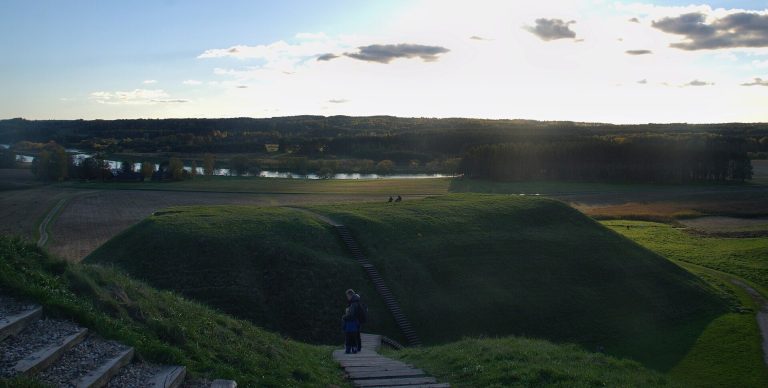
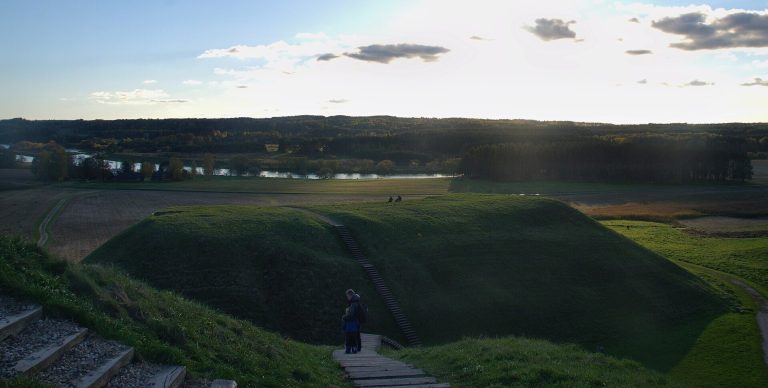
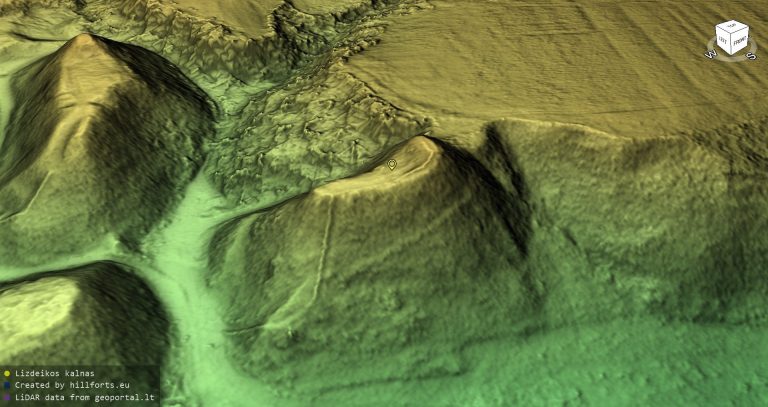
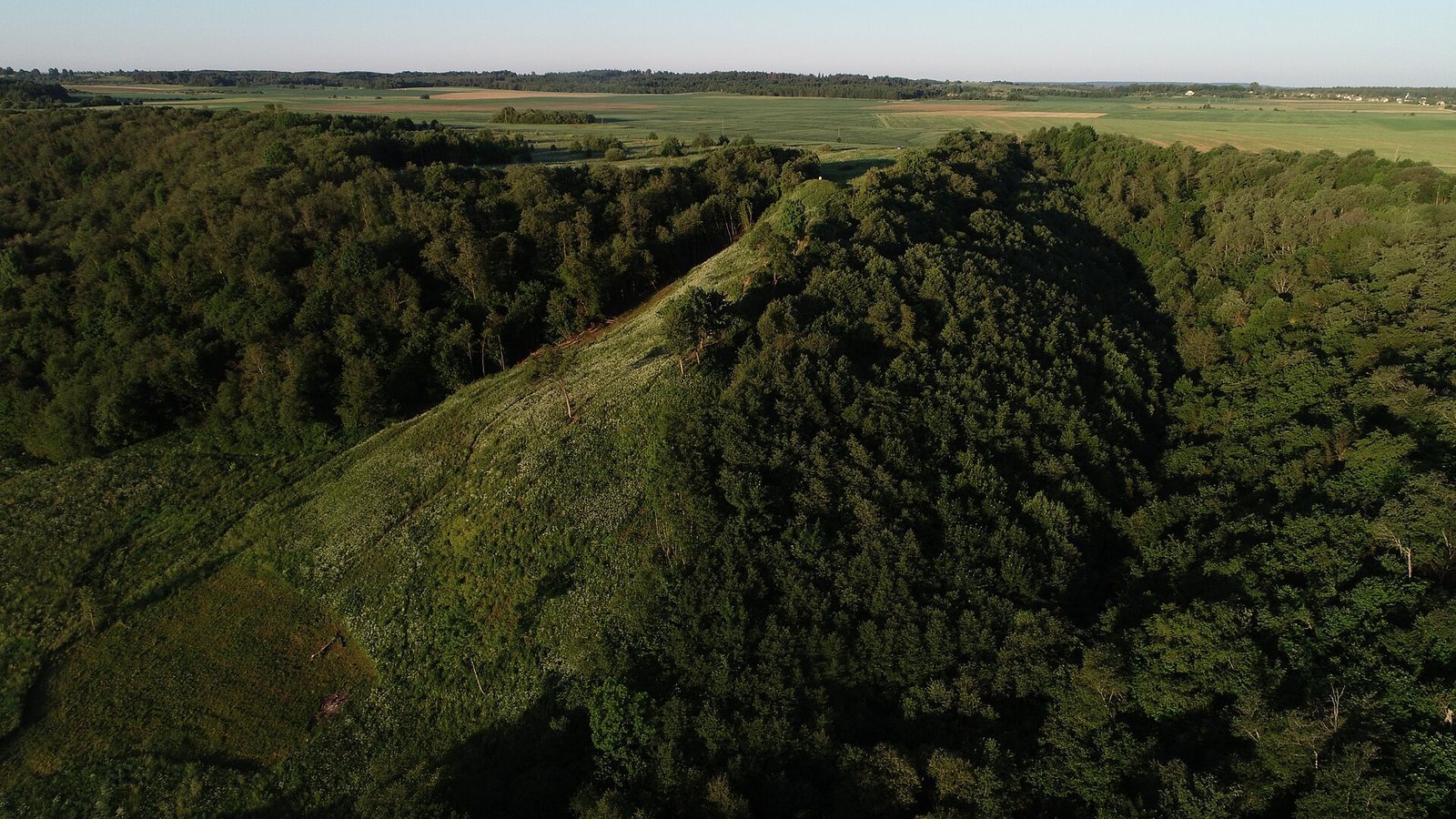
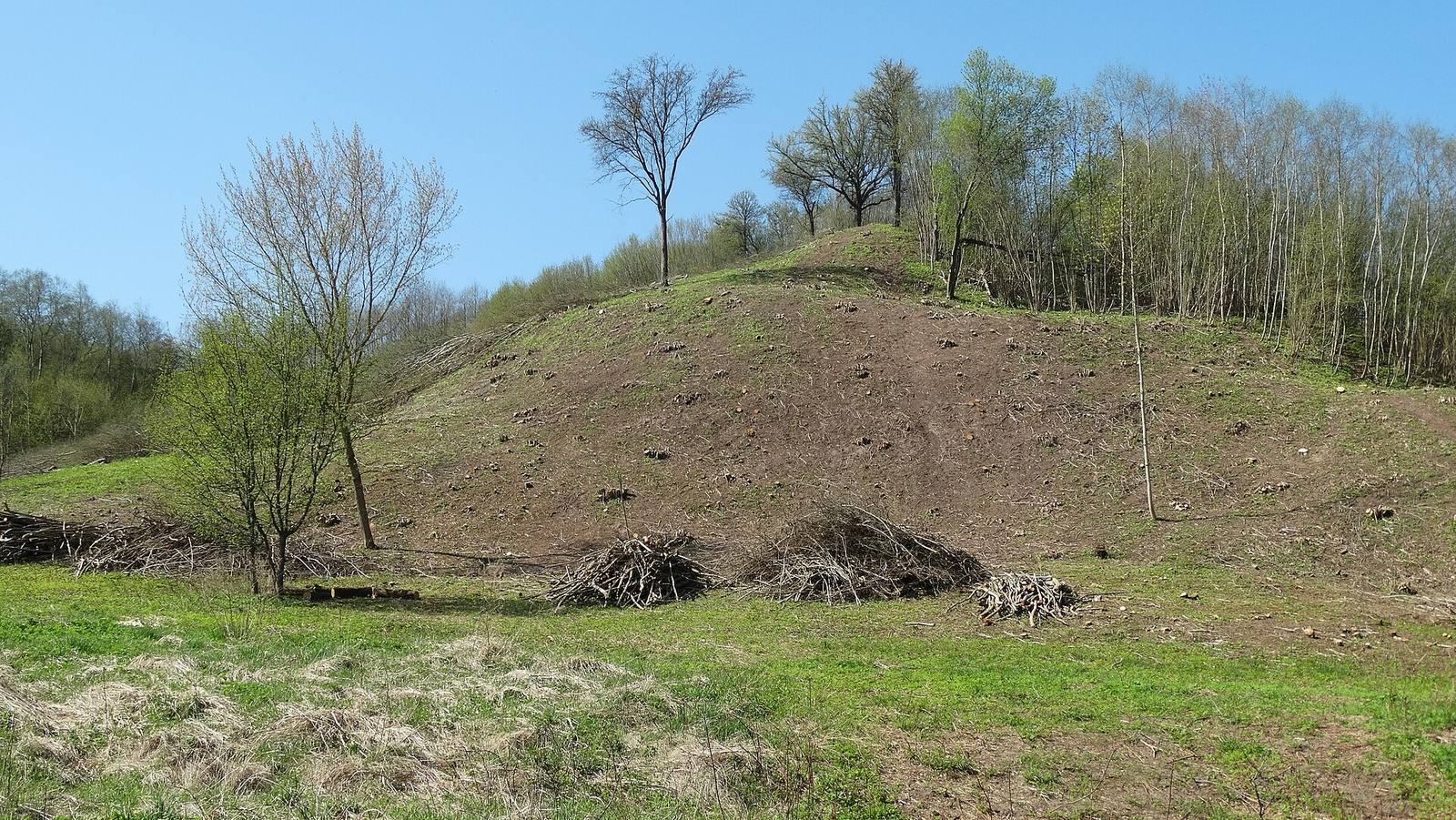
The hillfort stands on a promontory on the left bank of the Neris River, formed by two deep ravines. The Ravo stream runs through the northwestern ravine, and a smaller stream flows into the Neris near the hill’s approaches. The rectangular platform measures 24 by 13 metres and is aligned east to west. Its side slopes reach 25 to 26 metres in height.
Hilltop defenses
Western edge
A conical earthen bank marks the platform’s western edge. It is 6 metres high and 30 metres wide, with an outer slope 9.5 metres high. A ditch at its base measures 11 metres across and 0.5 metres deep.
Eastern end
At the platform’s eastern end, a bank 0.7 metres high and 15 metres wide is followed by a ditch 6 metres wide and 2 metres deep. Beyond it stands a second bank, 1.5 metres high and 11 metres wide. Its 1.8-metre-high outer slope descends to another ditch, 4 metres wide and 0.5 metres deep; a third bank beyond that ditch is 0.5 metres high and 4 metres wide.
Settlement and surroundings
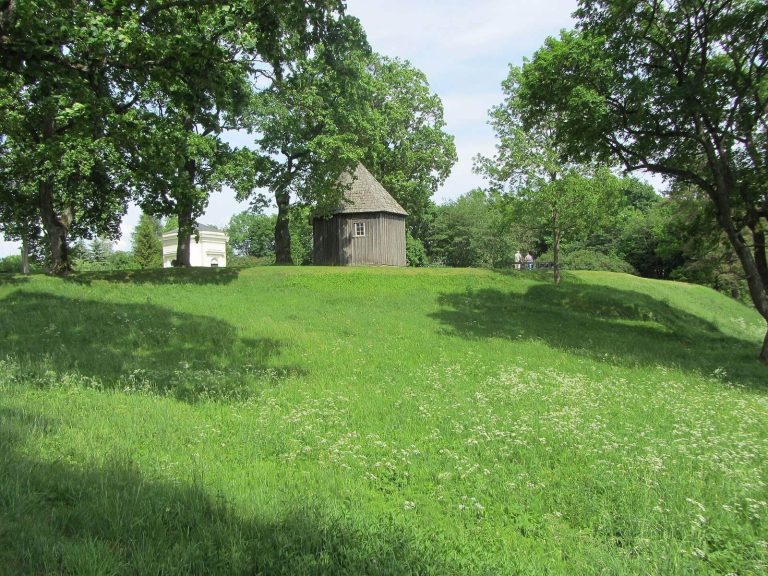
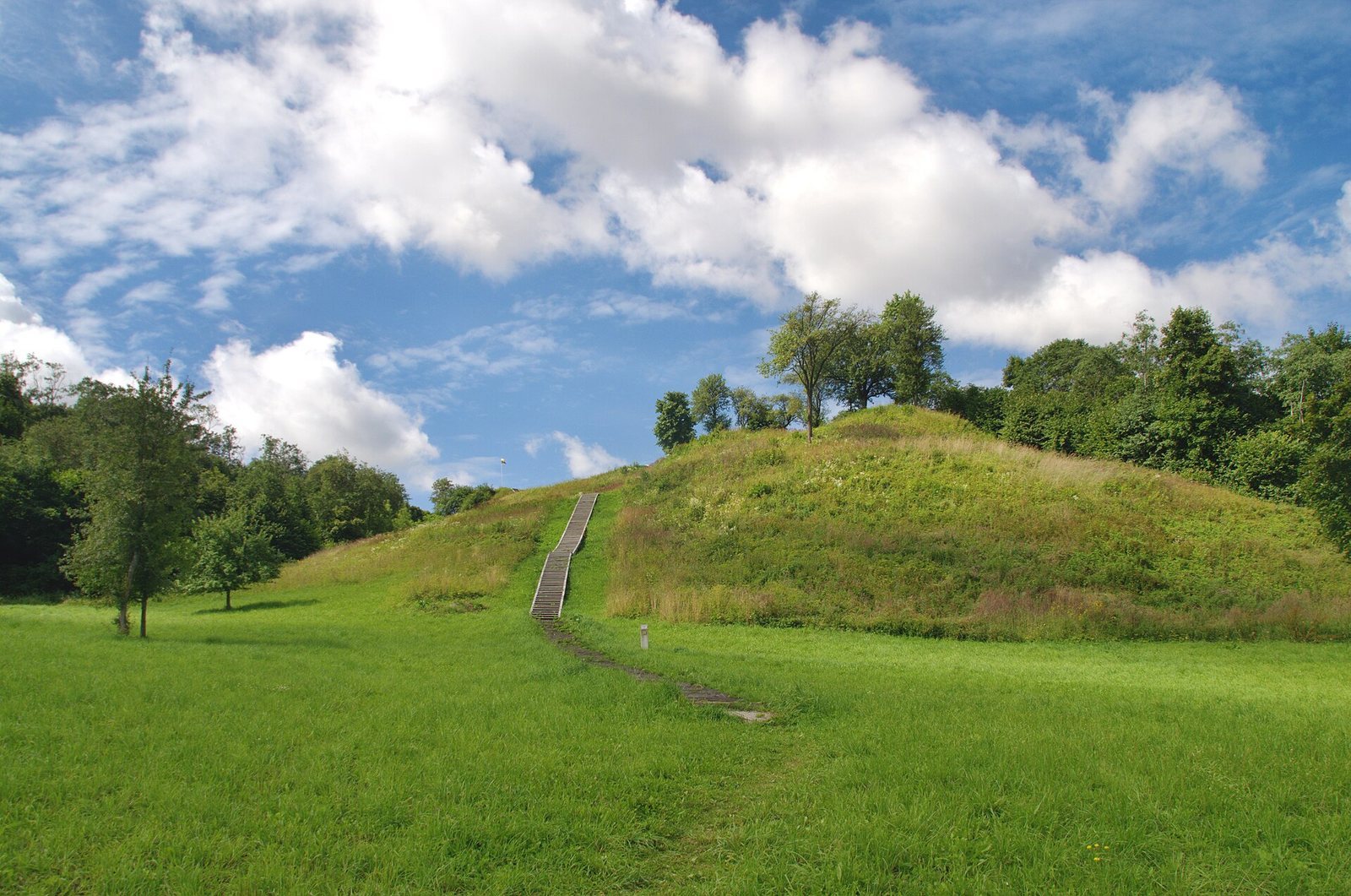
A settlement covering 3 hectares lies at the hillfort’s western foot. Brushed and rough-surfaced pottery, along with slag, has been found there. Finds from the hillfort are held by the Lithuanian National Museum. The platform is grass-covered, shrubs are regrowing over the slopes, and the monument territory covers 105,993 square metres. A memorial marker stands beside the hillfort.