Slangerup Church: A Gothic Church with Renaissance Features in Denmark
Site at a Glance
- Popularity
- Low
- Country
- Denmark
- Primary era
- Early Modern
- Eras represented
- Medieval, Early Modern
- Civilizations
- Danish, Denmark–Norway
- Site type
- Religious
- Remains
- Church
On this page23 sections
History
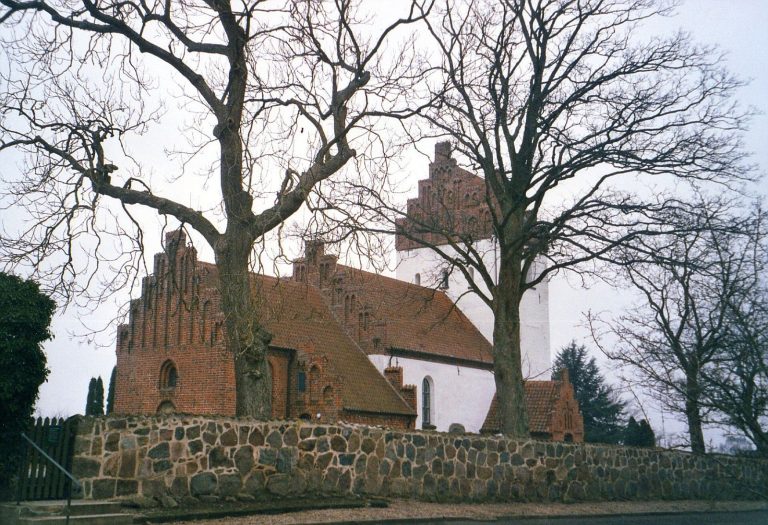
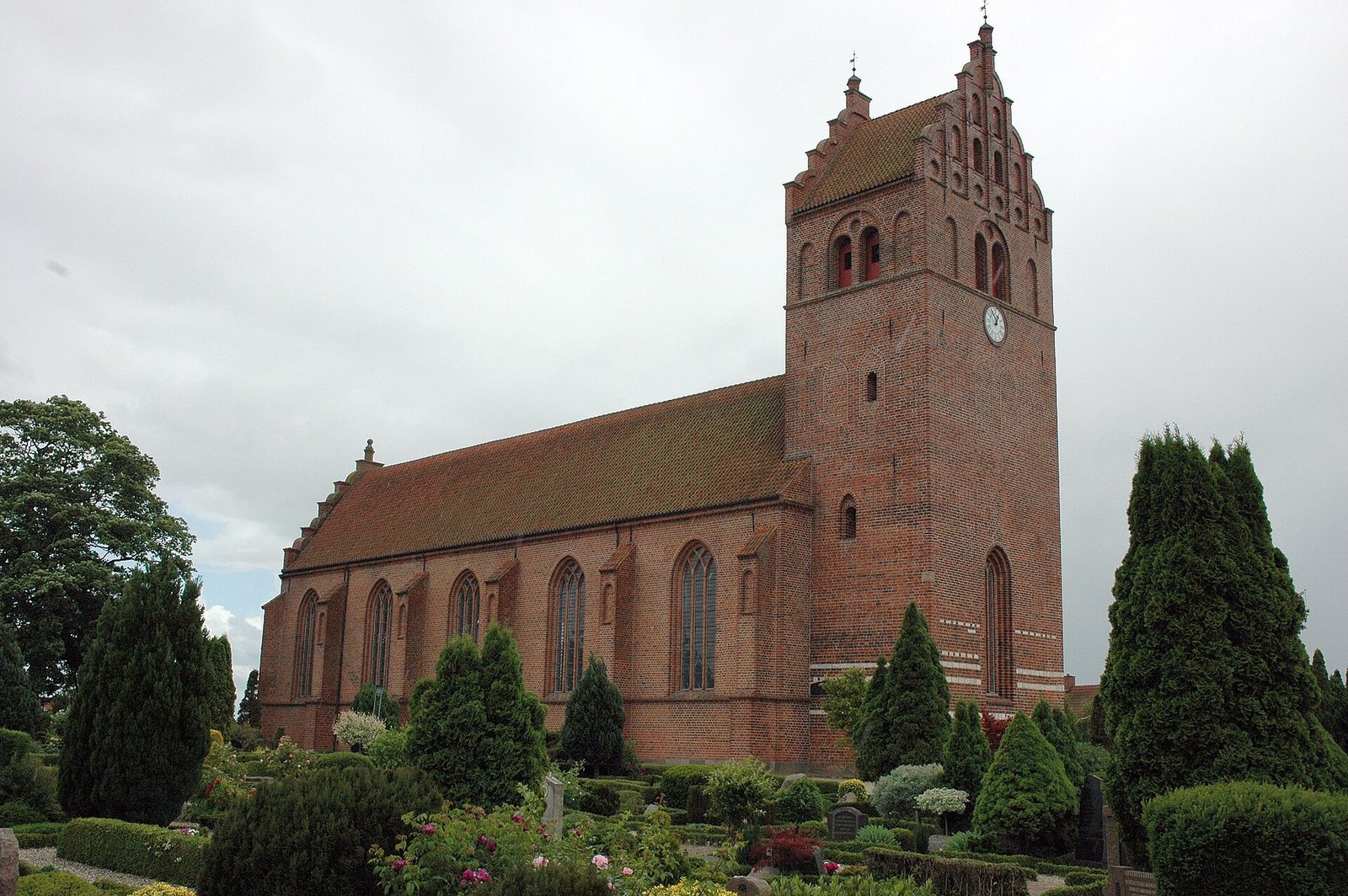
Slangerup Church is a parish church in Slangerup, Denmark. Its present building was erected between 1586 and 1588, combining Gothic, a medieval European architectural tradition, with Renaissance features on its façades, associated with a later European architectural tradition. The large church reflects Slangerup’s former importance as a royal town.
Early churches and the royal town
The earliest church at Slangerup may have been a wooden chapel on a royal estate north of the Græse River, west of present-day Brobæksgade. It may date to around 826, when the ninth-century Danish king Horik I permitted the Christian missionary monk Ansgar to travel through his lands. Another possibility is that it was built by 848, the date of Ansgar’s second journey through the area.
In the second half of the eleventh century, the chapel is thought to have moved to the town’s central trading place and become a small timber stave church, built around a frame of upright posts. Its dedication to St Michael was believed to have moved with it from the royal estate, reflecting the archangel’s association with centers of power. The timber building was later replaced by a more costly brick church on the hill where the present church stands.
Slangerup was a royal town from which northern Zealand was governed, and it had a royal stud farm in the sixteenth century. After major repairs and the construction of a new tower, the church was reconsecrated on 13 November 1411. In time, its income declined and the building fell into disrepair.
The rebuilding of 1586 to 1588
In 1562, the congregation complained that the church was overcrowded. Additional pews eased the pressure for a time, but the congregation eventually needed a larger building. In 1587, the town borrowed 1,000 dalers, a historical Scandinavian currency unit, from King Frederik II to pay for the project.
The new church was completed in 1588. Hans van Steenwinckel the Elder, a Danish-Flemish architect associated with Renaissance architecture, designed it, and Jørgen van Friborg carried out the building work. After its completion, the eleven-year-old Christian IV travelled to Slangerup and reconsecrated the church. Slangerup later lost its royal-town status to Frederikssund in 1809.
Kingo and the church today
Thomas Kingo was minister at Slangerup Church from 1668 to 1677. He later became bishop of Odense and was known as a writer of Danish hymns; his hymns are still used at the church.
The church is dedicated to St Michael and belongs to the Evangelical Lutheran Church of Denmark. It is part of the Diocese of Helsingør, Frederikssund Deanery, and Slangerup Parish.
Remains
The church stands on Slangerup’s highest point, a hill described as 55 metres high. It is a large, richly furnished building of travertine, a limestone formed by mineral deposits. The overall design is Gothic, while Renaissance details appear on the façades.
Architecture and exterior
South portal
The south portal bears the arms of Frederik II, Queen Sophie, and their alliance. An inscription below the king’s arms translates as My hope is in God alone; the one below the queen’s arms means God does not forsake his own.
Tower
The lower section of the present tower dates to 1411, the year the church was reconsecrated after major repairs.
Altar, choir, and baptism
Altarpiece and altar furnishings
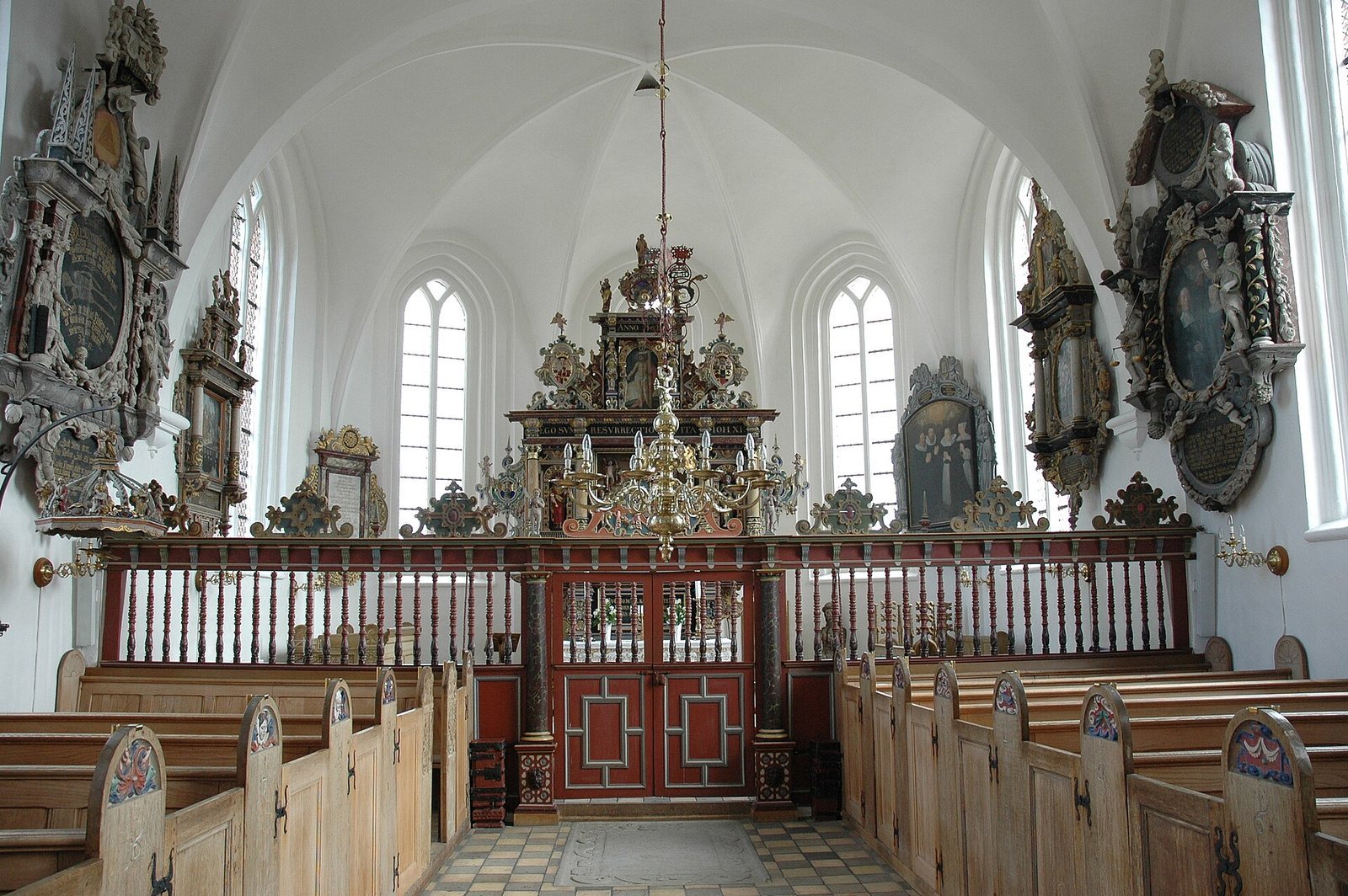
The Renaissance altarpiece, made by Statius Otto in the early seventeenth century, incorporates medieval depictions of the Crucifixion and the Man of Sorrows, an image of Christ in connection with the suffering of the Passion. Candlesticks placed before the altar were donated in 1621.
Choir screen
A wooden screen dating to about 1600 separates the choir, the area around the altar, from the nave, the main area for the congregation. Its doors are framed by Ionic columns with scroll-shaped capitals.
Baptismal fonts
The church has two baptismal fonts, vessels used in Christian baptism. One is a Romanesque font, in an early medieval European style, from the older parish church. The other, made of wood, dates to 1675 and was given by Mayor Hans Atke and his wife. It is decorated with eight hybrid figures, each combining features of a land animal and a sea creature; its cover dates to 1676.
Seating and pulpit
Pews
The oldest pew ends bear the date 1562, when the congregation raised concerns about overcrowding. Most of the other pew ends date to 1588, the year the larger church was completed.
Pulpit
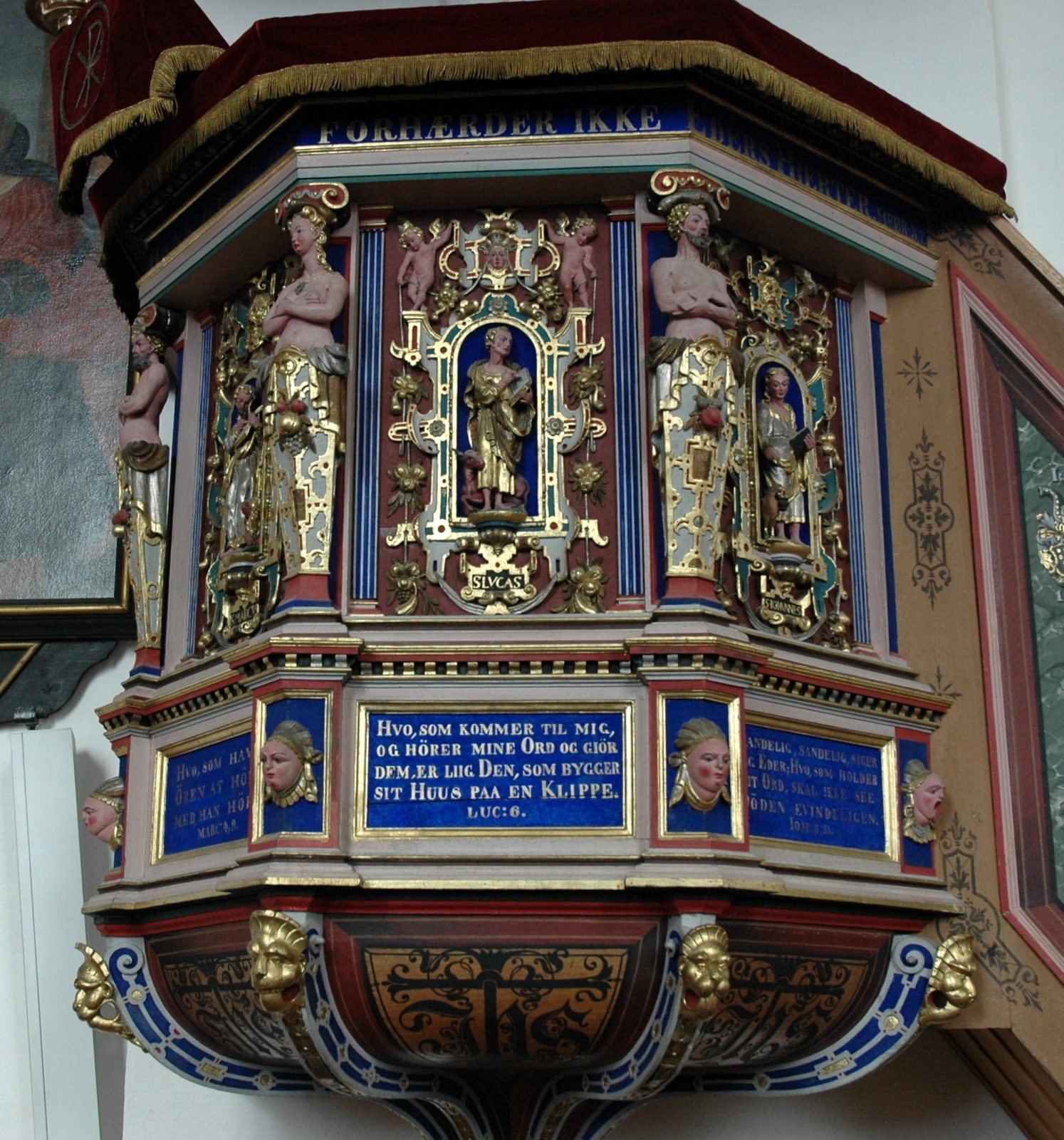
The seventeenth-century pulpit displays figures of the Evangelists, the four traditionally identified authors of the Gospels. Its carved woodwork, including the canopy, is attributed to Mogens Henrichsen.
Sculpture and carved furnishings
Man of Sorrows image
A large figure of Christ as the Man of Sorrows, probably from an older side altar, dates to about 1475. It is approximately 180 centimetres high.
Late-Gothic crucifix
A fifteenth-century crucifix hangs on the south wall above an exit and measures about 3.5 metres high. Christ wears a large crown of thorns shaped almost like a turban, and the ends of the cross arms carry symbols of the Evangelists.
Sandstone cross
A separate sandstone cross from the sixteenth century carries an 82-centimetre figure of Christ on a T-shaped cross, known as a St Anthony’s cross. Beneath Christ is a depiction of Golgotha, the place associated with the crucifixion, with a skull above it.
Eagle lectern
The Gothic eagle lectern, a book stand supported by an eagle figure, rests on a closed book. It probably came from a monastery church demolished shortly after 1588. Some other church furnishings also came from that monastery, while others were transferred from a smaller predecessor church.
Organ, paintings, and memorial furnishings
Organ and the Friis family
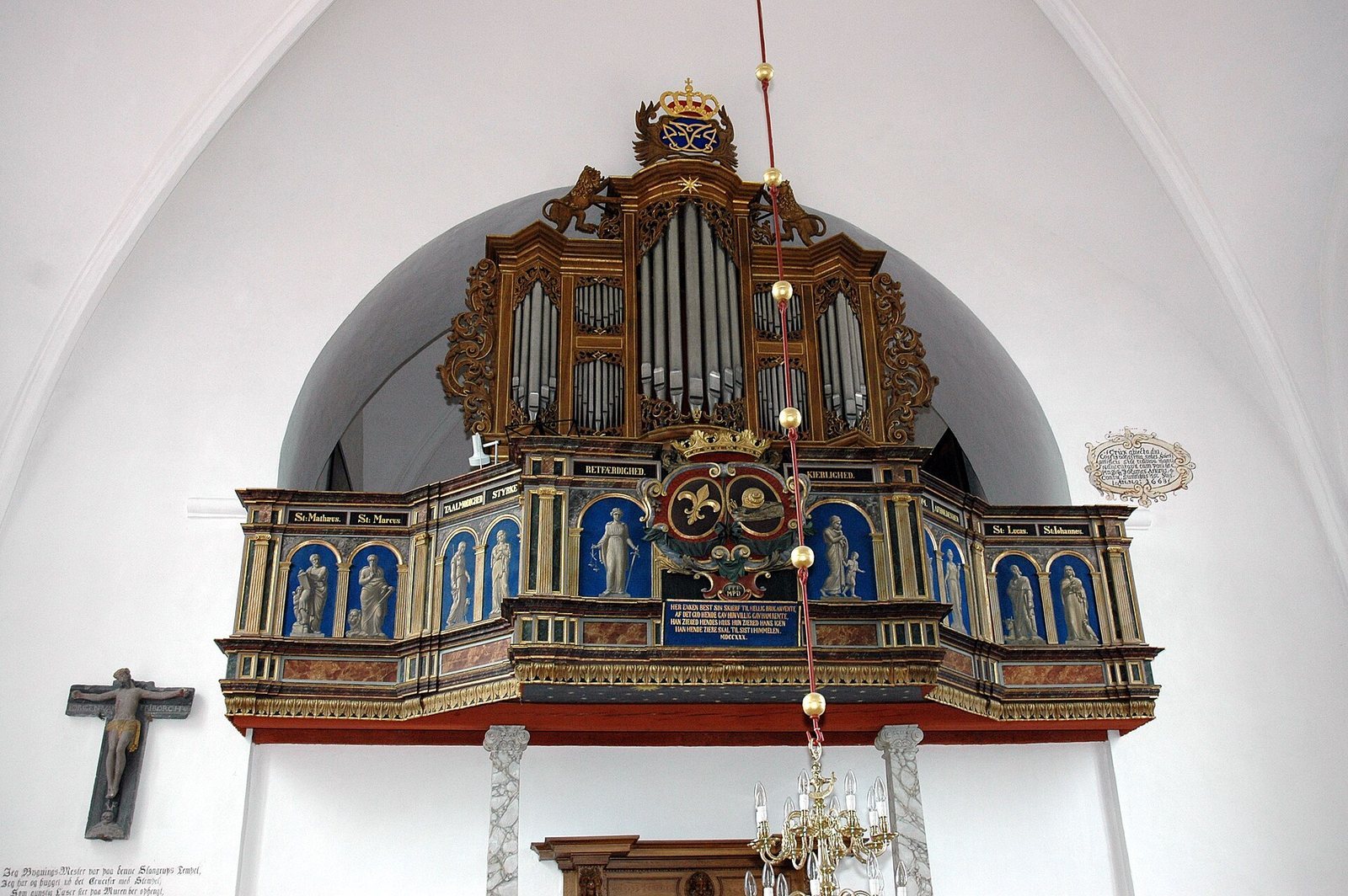
Lambert Daniel Kasten made the organ case in the eighteenth century. Maren Pedersdatter Friis, a minister’s widow, donated it and also left the church a chandelier, several books, and a Bible for the altar table. Her family was buried beneath the choir, where an epitaph is also located.
Paintings and other furnishings
Five large oil paintings with captions were hung on the church walls. The oldest dates to 1711, and the other four to 1731. Other seventeenth-century furnishings include two alms boxes, a chest, three chandeliers, and several epitaphs.