Foz do Rio Frio Dolmen: A Neolithic Tomb in Portugal
Site at a Glance
- Popularity
- Very Low
- Country
- Portugal
- Primary era
- Stone Age
- Eras represented
- Stone Age
- Civilizations
- Unclassified
- Site type
- Burial
- Remains
- Tomb
On this page8 sections
History
Neolithic construction and later reuse
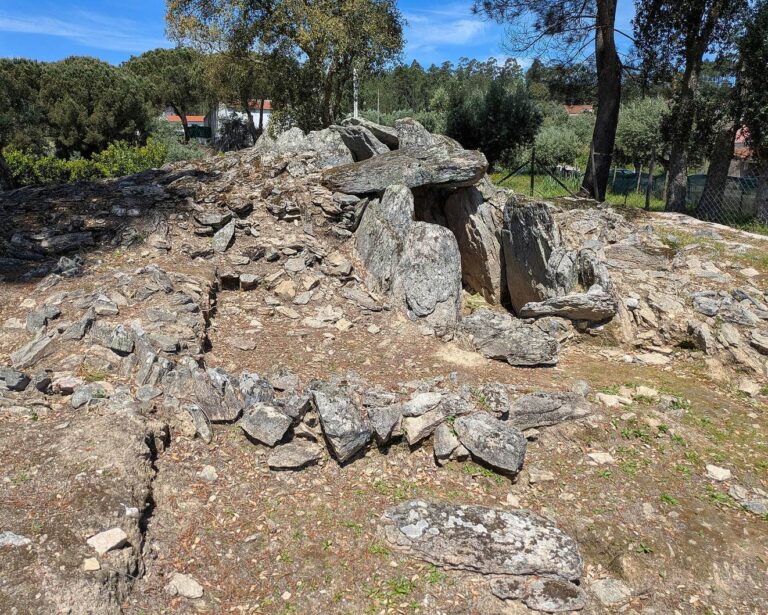
The Foz do Rio Frio dolmen is a megalithic tomb at Ortiga, in the municipality of Mação, Portugal. Its construction dates to the transition between the Middle and Late Neolithic, a prehistoric period associated with farming and stone tools. The tomb was later reused during the Bell Beaker culture, named for its distinctive bell-shaped pottery, in the Late Chalcolithic, or Copper Age, when copper was used alongside stone tools. This reuse dates to around 2000–1700 BCE.
Identification and excavation
Archaeologists Maria Amélia Horta Pereira and Thomas Bubner identified the monument in the early 1970s. They excavated it in 1982 with a group of young assistants, and the finds helped establish its construction date and later reuse. During that work, fallen upright stones were reset and the surrounding area was reinforced with earth, clay, and cement. The dolmen received heritage protection in 1977.
Remains
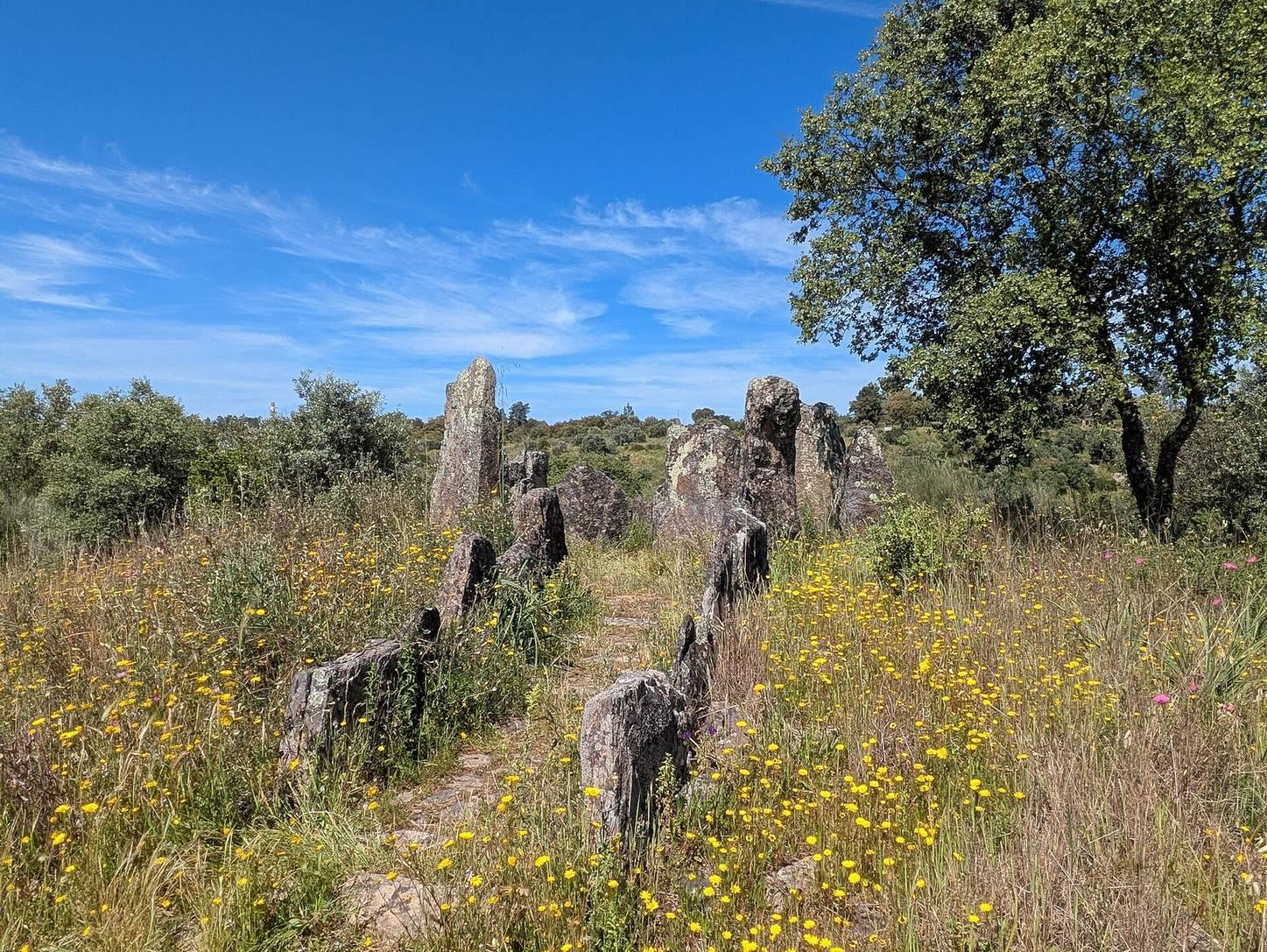
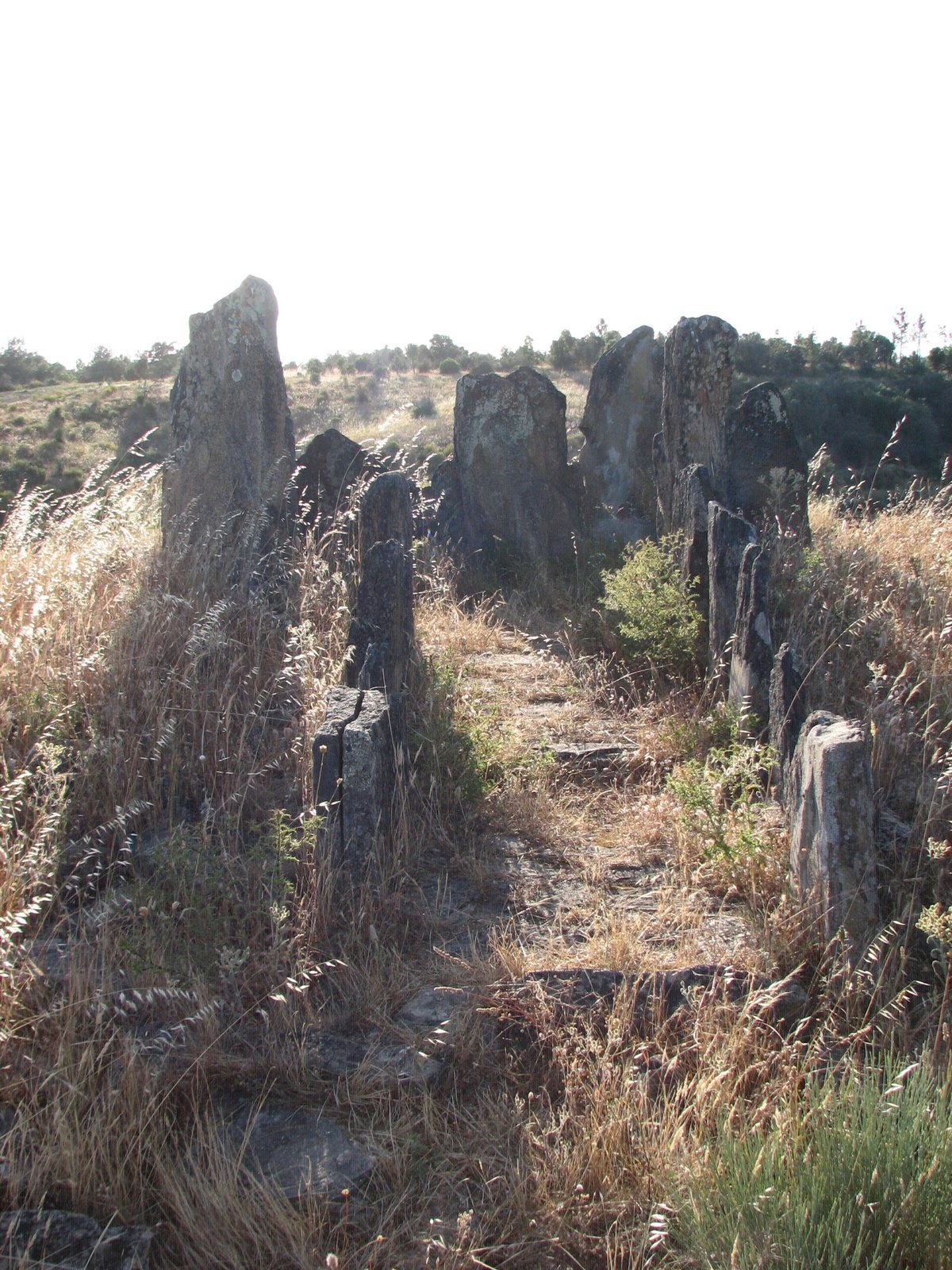
The east-facing tomb stands on a plateau overlooking the River Tagus, on the last hill along the river’s left bank before the River Frio joins it. Its overall dimensions are 6.4 metres long and 2.9 metres wide. The surviving upright stones and paved floor are in good condition, and it is the only dolmen in the municipality that remains standing.
Burial structure
Chamber and entrance corridor
The polygonal burial chamber is about 2.9 metres across and consists of eleven irregular granite uprights, reaching roughly 3 metres in height. Many are broken, while the chamber floor retains its paving. An entrance corridor about 3.5 metres long and 1 metre wide leads into the chamber. Five upright stones line each side of the passage.
Covering mound
A tumulus, a mound covering a burial structure, originally extended over the whole tomb. Traces of it remain, including part of a stone ring compacted with clay taken from the banks of the River Frio.
Excavated finds
Excavations recovered stone and schist tools, a copper dagger, pottery fragments, arrowheads with convex bases, an archer’s armband, and small stone tools known as microliths. Most of these objects came from the entrance corridor and the mound. An undecorated slate slab was also found in excavations beneath the mound and in the entrance area. Most of the artifacts are now held at the Dr. João Calado Rodrigues Municipal Museum in Mação.