Ketting Church: A Medieval Church on Als, Denmark
Site at a Glance
- Popularity
- Very Low
- Country
- Denmark
- Primary era
- Early Modern
- Eras represented
- Medieval, Early Modern, Modern
- Civilizations
- Danish, German
- Site type
- Religious
- Remains
- Fortified Church
On this page19 sections
History
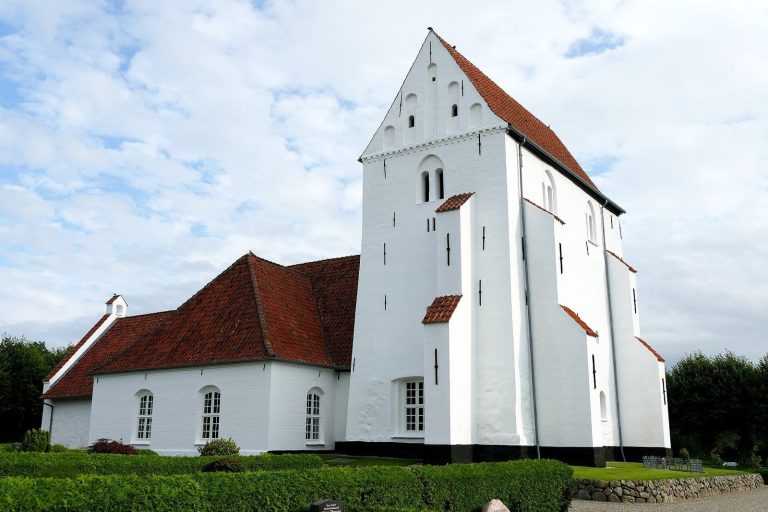
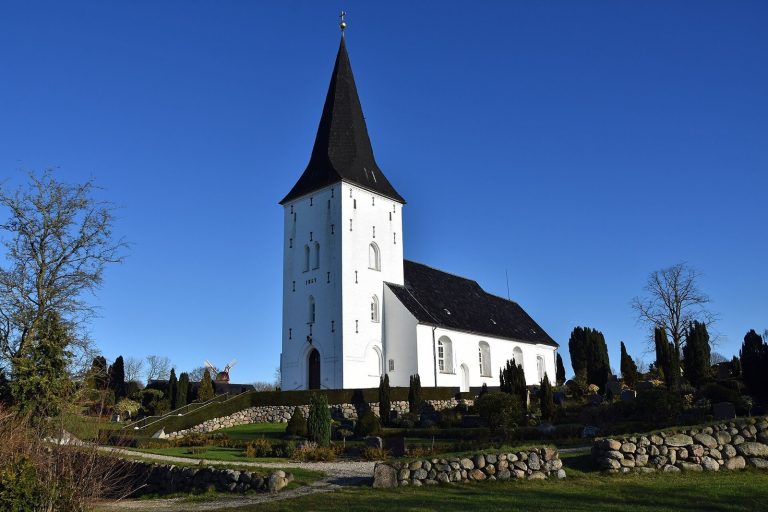
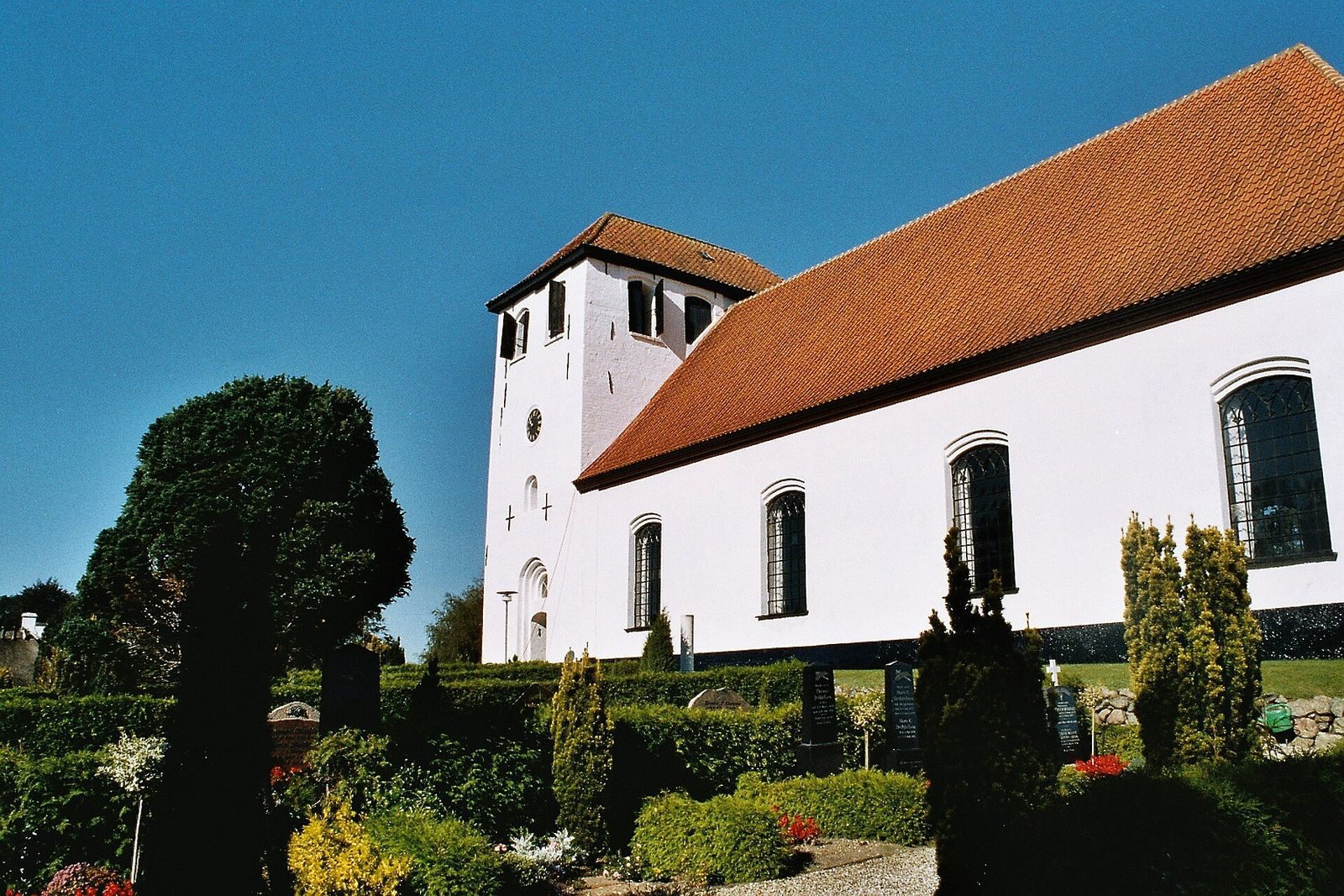
Ketting Church is a Lutheran church in Ketting, Denmark, on the island of Als. Its Romanesque tower, built around 1160, predates the church itself, which dates to about 1200. Romanesque is a medieval European style often marked by heavy masonry and rounded arches. The church was originally dedicated to St Lawrence, an early Christian martyr honored as a saint. It belongs to the Church of Denmark, the country’s established Lutheran church, and serves Ketting Parish in Haderslev Diocese.
Medieval origins
The tower initially served as a refuge and defensive structure during raids by the Wends, a historical term for Slavic peoples of the southern Baltic region. The raids devastated the area, and many people were taken away as slaves.
Rebuilding and later changes
The church’s original nave, the main body of the building, was replaced in 1773 by the present one. From 1851 to 1854, the church was used to store gunpowder. It was restored afterward, and the nave’s small windows were replaced with larger iron windows.
The building was plastered and whitewashed in 1867. Its nave roof was renewed in 2000.
Remains
Ketting Church stands on a natural hill in the middle of Ketting village. Its surviving structure brings together the Romanesque tower and a long, rectangular nave with a flat wooden-beam ceiling. A porch forms the entrance area, while the church’s interior preserves furnishings and artworks from several centuries.
The building
Tower
The Romanesque tower is 17 metres high and 13 metres wide. Its scale and medieval architectural style distinguish it within the church’s present form.
Nave
The present nave is a long rectangular space with a flat ceiling formed by wooden beams. Its small windows were replaced with larger iron windows during the restoration that followed the church’s use as a gunpowder store in 1851–1854.
Porch and entrance
A closed pew on the west side of the porch dates to 1773. It was probably used by women awaiting churching, a Christian rite welcoming a woman back to church after childbirth. The entrance door dates to between 1600 and 1700 and has a large wooden lock in a medieval Gothic style.
Altar and artworks
Altar and its figures
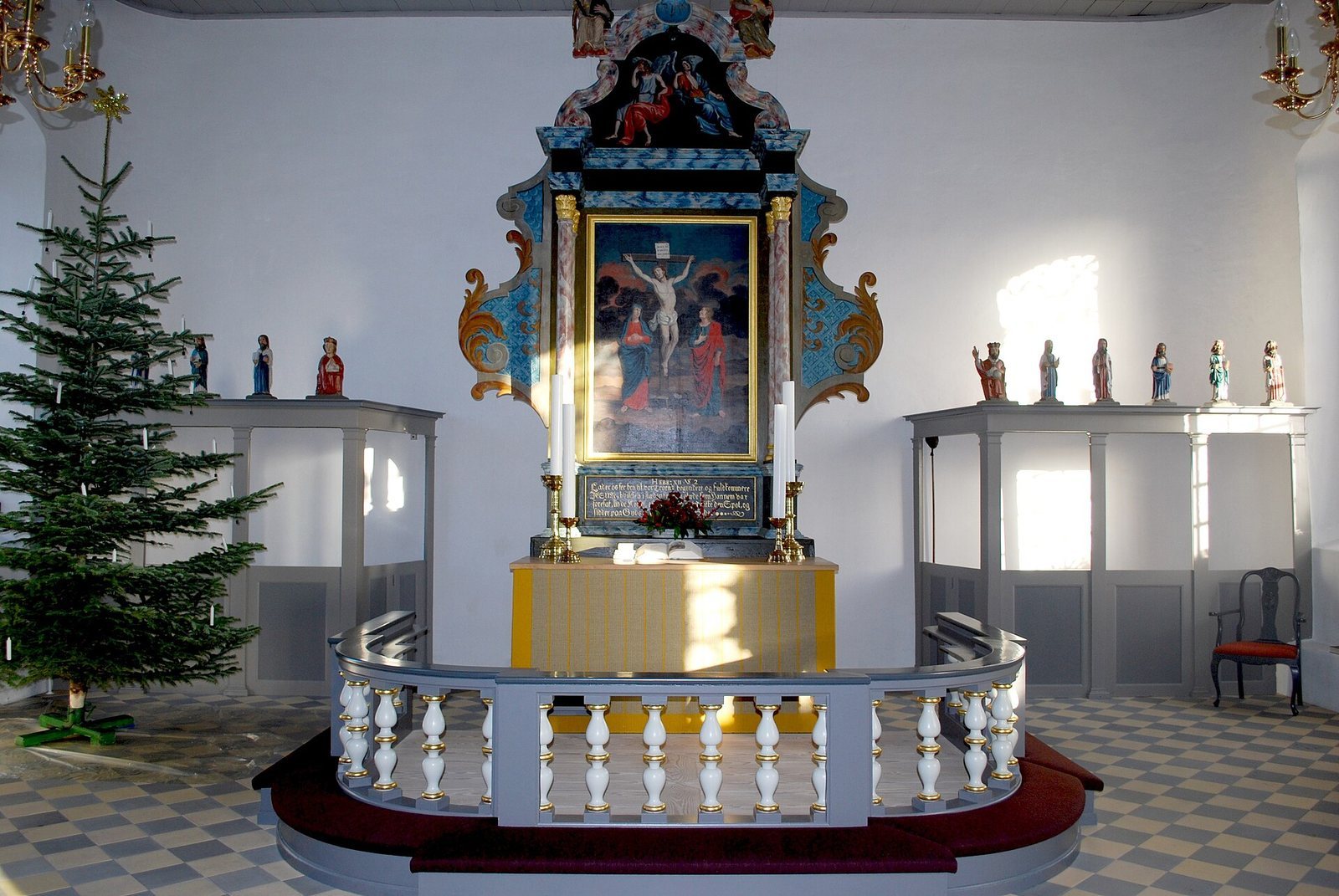
The altar was probably built of masonry in 1773 and is clad in wood on three sides. At the back is a built-in cupboard with an iron door. Its 1743 altarpiece, an artwork placed above an altar, now carries a Crucifixion painting that replaced a painting of Jacob’s dream in 1788. The earlier painting hangs on the south wall. Figures representing Faith and Hope crown the altar. Mary and four disciples stand to its left; to its right are a crowned Christ and five disciples. Nine disciple figures remain: two disappeared in 1773, and another was stolen in 1991. The altar’s side wings and crowning figures, which had been kept in the attic, were returned during the 1991 restoration. Panels on either side came from earlier confessionals, enclosed spaces used for private confession.
North-wall altarpiece
An early-16th-century altarpiece from the church’s Catholic period hangs on the north wall. It depicts Mary and the infant Jesus within a halo. The work was restored in 1948, then restored and cleaned in 1991.
Other interior furnishings
Pulpit
The pulpit dates to 1571 and is an early Renaissance work, from a distinct period in European art and architecture. Its raised carvings show the creation of woman, the Fall, the Crucifixion and the Resurrection. The same woodcarver made the pulpit at Notmark Church.
Baptismal furnishings
Carpenter Peter Hansen made the baptismal font in 1772. Its basin is a South German work dating to about 1575, donated to the church in 1669 by Munk of Gammelgaard, a court steward. A granite font mentioned in earlier records probably corresponds to the one found in the rectory garden in 1909. It is now in the museum at Sønderborg Castle.
Crucifix and side figures
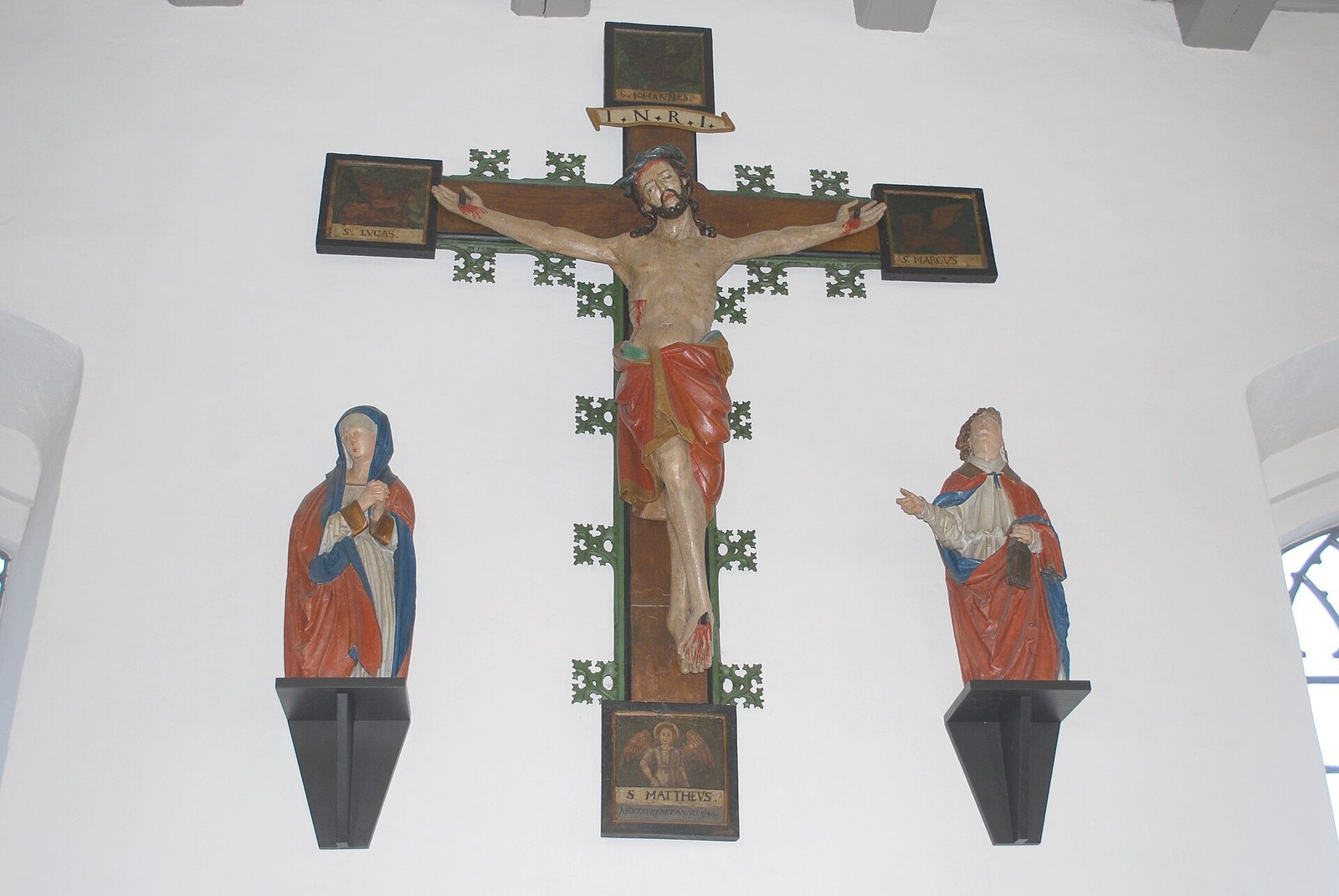
The north wall also holds an early-Gothic crucifix, a cross depicting Jesus, dating to around 1300. Early Gothic refers to an early phase of the Gothic style. The church received the crucifix in 1668, on the death of Duchess Anna. Figures of Mary and John the Baptist, dating to the 15th century, were placed on either side of it after the 1991 restoration.
Votive ship
A votive ship is a model placed in a church as a devotional offering. Christian Thomsen of Ketting built this one between 1770 and 1780; it is believed to represent the 1666 warship Norske Løve. After two restorations in the 19th century, it was rehung in 1855. Poor maintenance led to its removal around 1980 and storage in the attic. Its condition prevented a straightforward repair, so a reconstruction began in 2000 using some original parts. The ship returned to the church in 2007.
Benches and organ
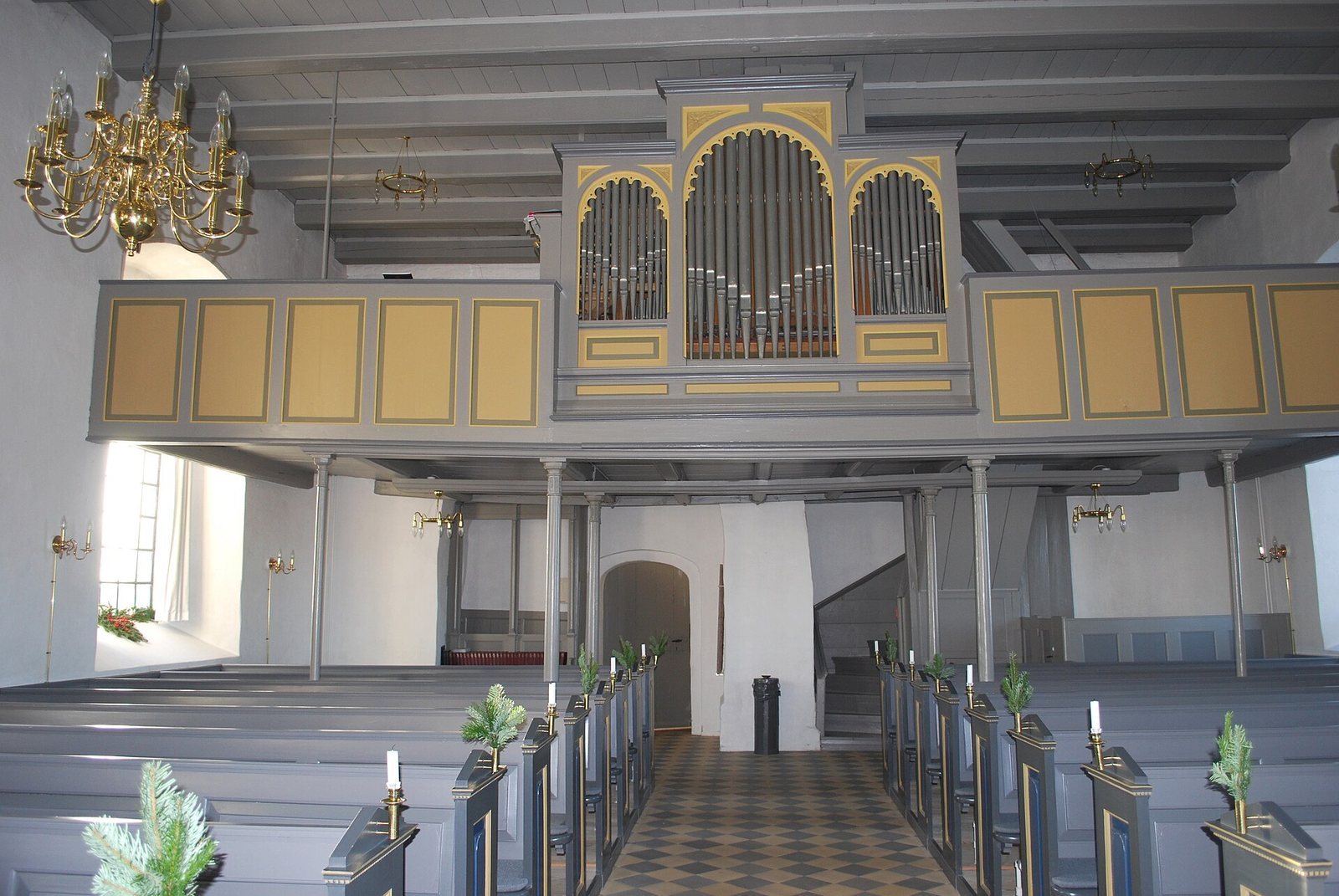
The church benches were installed in 1927 and designed by the Sønderborg architects Dall & Mundt. The organ was built in 1878 by Ph. Furthwägler & Söhne of Elze, near Hannover, and rebuilt by Marcussen & Søn in 1958.
Bells
The smaller bell, 90 centimetres in diameter, dates to around the middle of the 14th century. German authorities seized it during the First World War for the weapons industry, but it was returned to Ketting after reaching Sønderborg. Its painted words, Ketting Kirche (“Ketting Church”), recall that episode. The larger bell was cast in 1554 by Gert van Mervelt. It is 126 centimetres in diameter, weighs one tonne, and bears an inscription meaning “God’s word remains forever.” The bell shutters open automatically, and ropes from the porch are used to ring the bells.
Gravestone
A gravestone found near the entrance during restoration in 2004 had once covered a child’s grave. It commemorates Dorothea Louise Peters, born in 1683 and deceased in 1684. Its inscription reads, “Died in the year 1684, Dorothea Louise Peters, born in the year 1683.”