Santi Giovanni Evangelista e Petronio: A Bolognese Regional Church in Rome
Site at a Glance
- Popularity
- Low
- Country
- Italy
- Primary era
- Early Modern
- Eras represented
- Medieval, Early Modern
- Civilizations
- Papal States
- Site type
- Religious
- Remains
- Church
On this page13 sections
History
Santi Giovanni Evangelista e Petronio is a Roman Catholic church in Rome, Italy. Its medieval parish was attached to San Lorenzo in Damaso, and a papal bull of 1186 identifies it. The church belongs to the Diocese of Rome and follows the Roman Rite, the principal liturgical tradition of the Latin Church. It serves as a regional church for Bolognese residents in Rome and is also identified with Emilia-Romagna.
Medieval parish and changing names
In the 12th century, the church was known by a name meaning Saint Thomas of the Spaniards, reflecting the Spanish priests who cared for it. Cencio Camerario’s late-12th-century catalogue lists it under a Latin form of that name as entry 159. By the late 15th century it was called San Tommaso dei Muratori. Later names included San Tommaso della Catena and San Tommaso dei Frati, the latter associated with penitential friars who lived there for a time.
The Bolognese confraternity
In 1581, Pope Gregory XIII entrusted the church to the Archconfraternity of the Stigmata of Bologna, a Catholic confraternity with special status granted by church authorities. Founded in 1575, the organization restored the church and commissioned work from architect Ottaviano Mascherino in 1582. It dedicated the church to Bologna’s patron saints, John the Evangelist and Petronius, and made it the national church of Bolognese residents in Rome.
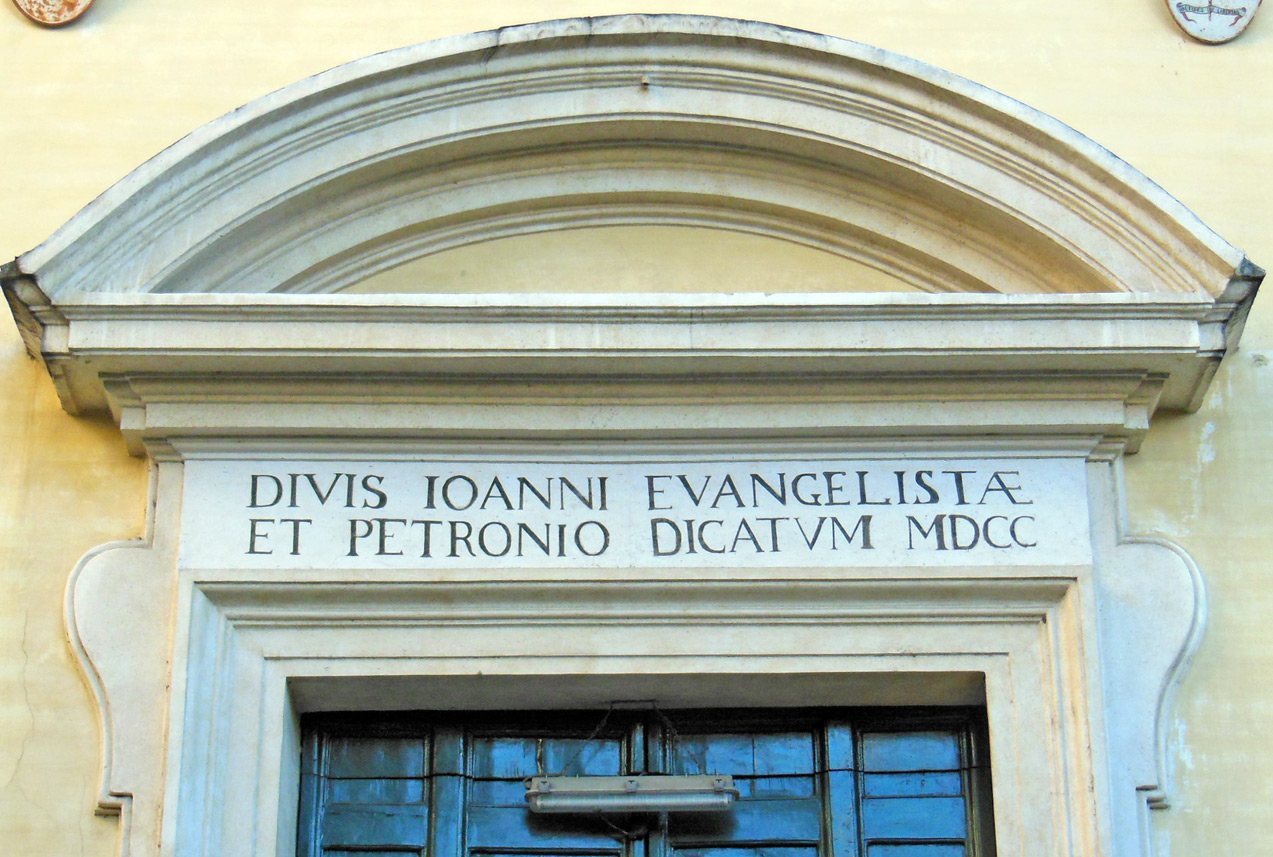
A neighboring oratory, also designed by Mascherino, was built in 1601 and demolished in the 19th century. The church’s formal dedication dates to 1700.
State control and titular status
Following the post-unification laws that confiscated church property, the Italian state seized the church. A royal decree returned it to ecclesiastical authority on 16 October 1940. In 1985 it became a titular church, meaning it was assigned to a cardinal as an ecclesiastical title in Rome. Giacomo Biffi held the title from 1985 to 2015. Baltazar Enrique Porras Cardozo became its holder on 19 November 2016.
Remains
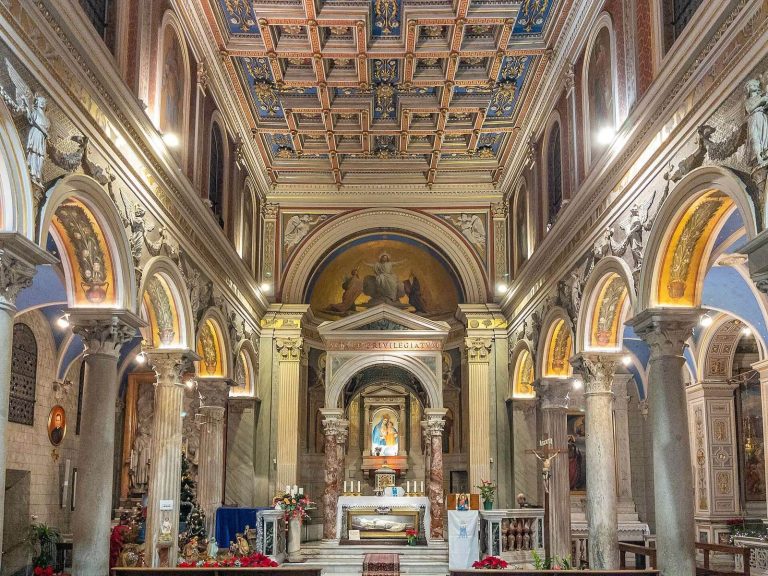
The surviving church combines a Baroque exterior with an interior organized around a central crossing. Its layout and furnishings include the main altar, two side altars, a choir gallery, and memorials connected with the Bolognese community.
Plan, façade, and vault
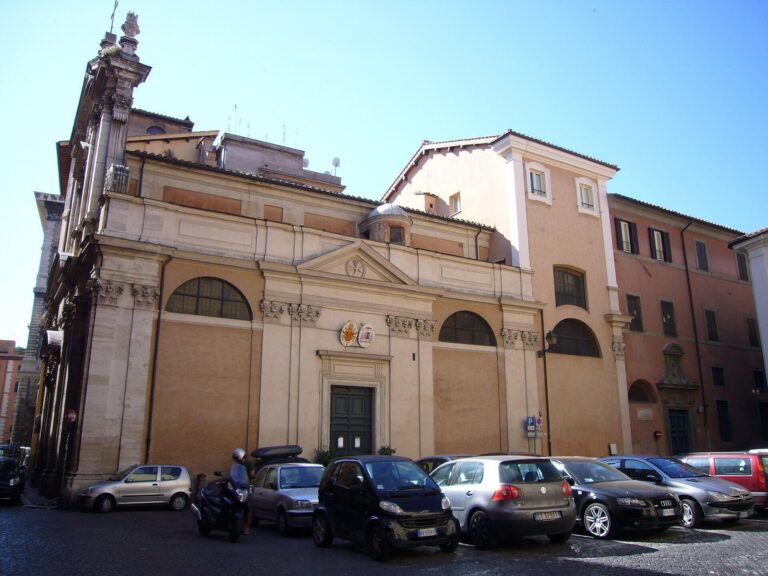
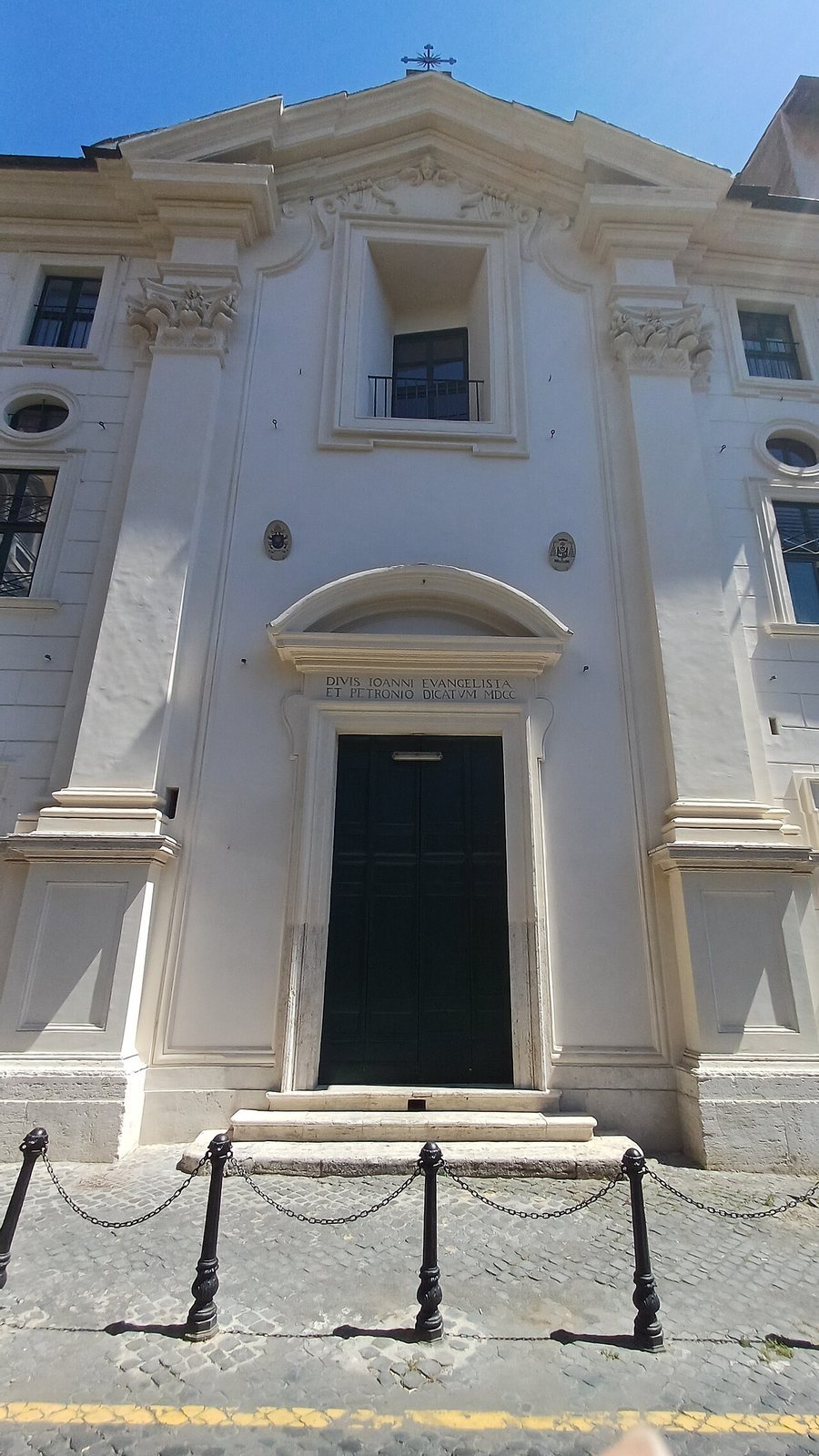
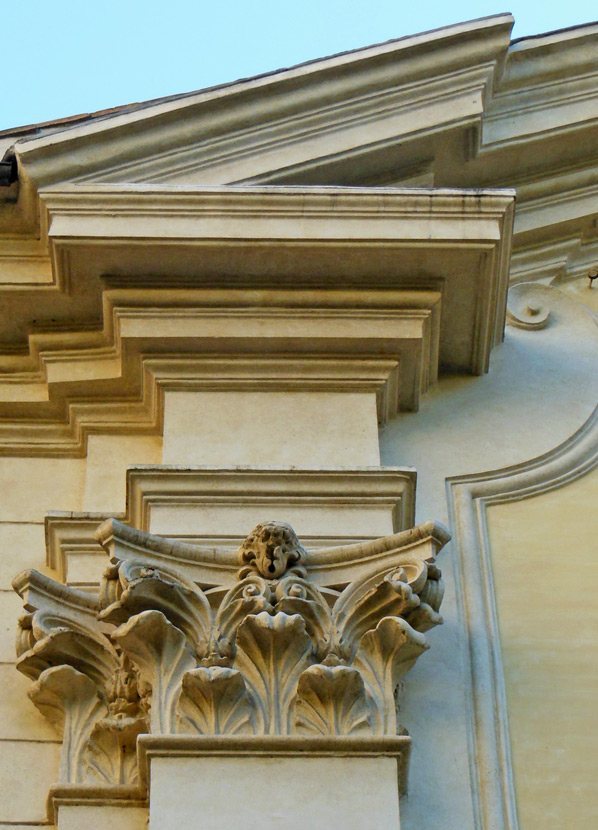
The interior has a Greek-cross plan, with four arms meeting at the center and one extending toward the apse, the curved sanctuary end. The earlier church had three naves. The late-17th-century Baroque façade is divided into three sections by pilasters, flat supports attached to the wall, with Corinthian capitals, classical column tops. A triangular pediment, or gable-shaped crown, rises above it, with a large window interrupting its lower part. Paintings of the Cardinal Virtues, prudence, justice, fortitude, and temperance, occupy the vault’s curved triangular supports.
Altars
Right side altar
The right altar contains Francesco Gessi’s painting of the Death of Saint Joseph.
Left side altar
The left altar is dedicated to Catherine of Bologna. Its painting, by an unknown artist, shows the saint’s mummified body enthroned.
High altar
The high altar and its decorations were completed in 1696. Domenichino’s painting Virgin among the Titular Saints was in Milan’s Brera gallery until 1953 and is now in the National Gallery of Ancient Art at Palazzo Barberini in Rome. A painting of the Virgin and Child with Saints by an unknown artist was installed in its place around the mid-19th century.
Counterfaçade and memorials
Choir gallery and Pasi monument
The counterfaçade, the interior face of the entrance wall, carries a decorated wooden choir gallery dating to the 17th century. It also holds the funerary monument to Bolognese patrician Bonifacio Pasi and his son Pietro, who died in 1571 at the Battle of Lepanto, a major naval clash between Ottoman forces and a Christian alliance. The monument was brought here from the archconfraternity’s former headquarters at San Giovanni Calibita on Tiber Island.
Commemorative plaques
Funerary plaques for Bolognese notables and members of the archconfraternity are distributed through the church. Those named include Bishop Taddeo Sarti, Alfonso Ercolani, Silvio Antonio Ranuzzi, and Galeazzo Sforza Volta.