Dolmen Düwelsteene: A Funnel Beaker Passage Grave in Germany
Site at a Glance
- Popularity
- Medium
- Country
- Germany
- Primary era
- Stone Age
- Eras represented
- Stone Age
- Civilizations
- Unclassified
- Site type
- Burial
- Remains
- Tomb
On this page7 sections
History
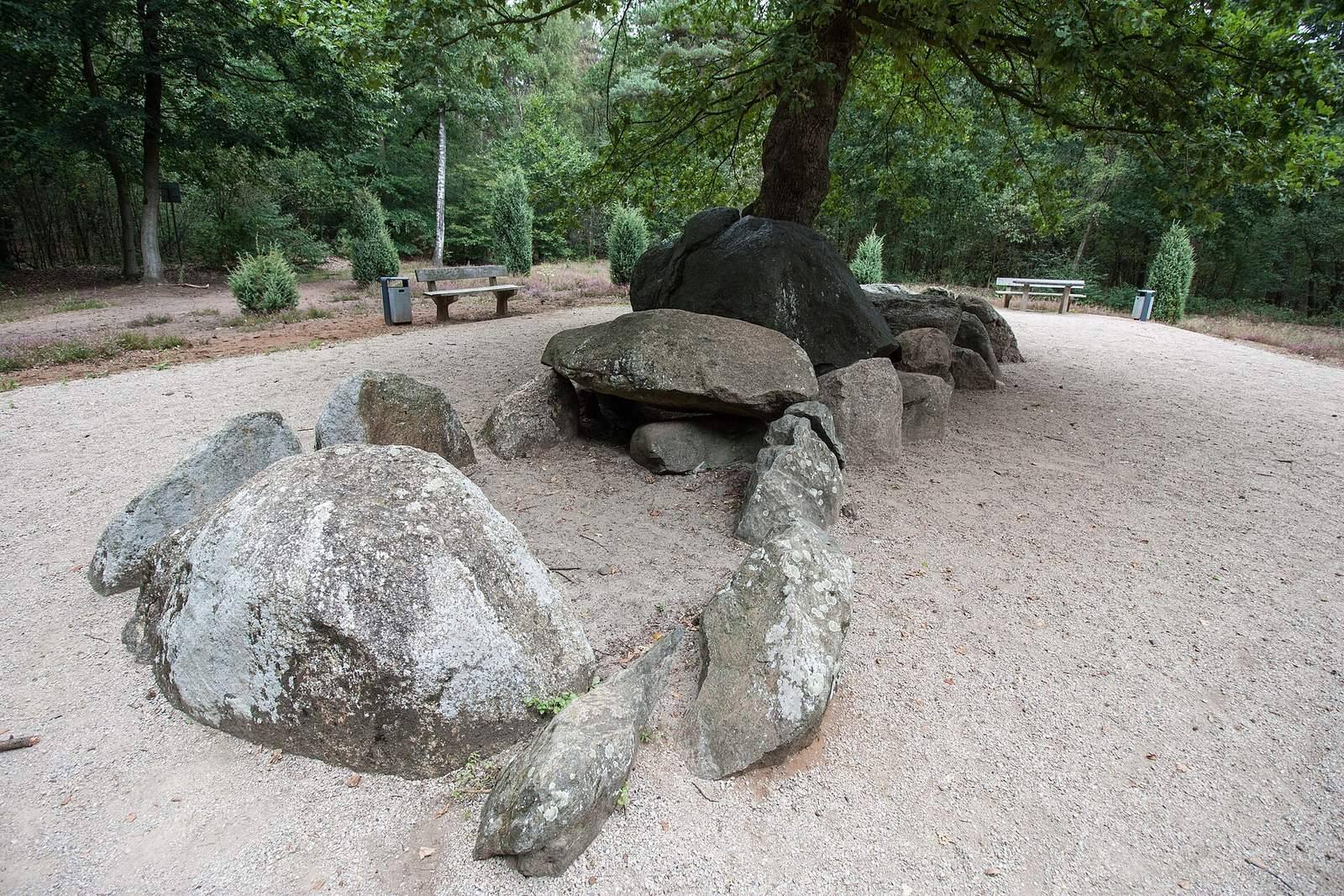
Dolmen Düwelsteene is a megalithic passage grave, a burial chamber reached through a passage, near Heiden, Germany. Communities of the Funnel Beaker culture built it around 3470–2760 BC. This prehistoric culture of northern and central Europe takes its name from its characteristic funnel-shaped pottery. The tomb served for collective burials over an extended period. Finds at nearby megalithic graves indicate that Funnel Beaker communities farmed, raised livestock, grew wheat and barley, and lived in rectangular houses built on posts. Düwelsteene is the southwesternmost megalithic complex of this culture preserved in its core area. It is entry 985 in Ernst Sprockhoff’s inventory of German megalithic tombs.
Investigation and later history
Jodocus Hermann Nünning (1675–1763), a Westphalian historian of antiquities, investigated the tomb in detail in the early eighteenth century. It was later plundered for building materials and badly damaged. An undocumented rebuilding in the eighteenth century left the present arrangement of its stones uncertain. In 1932, local-history associations from Ramsdorf and Borken excavated and restored the site.
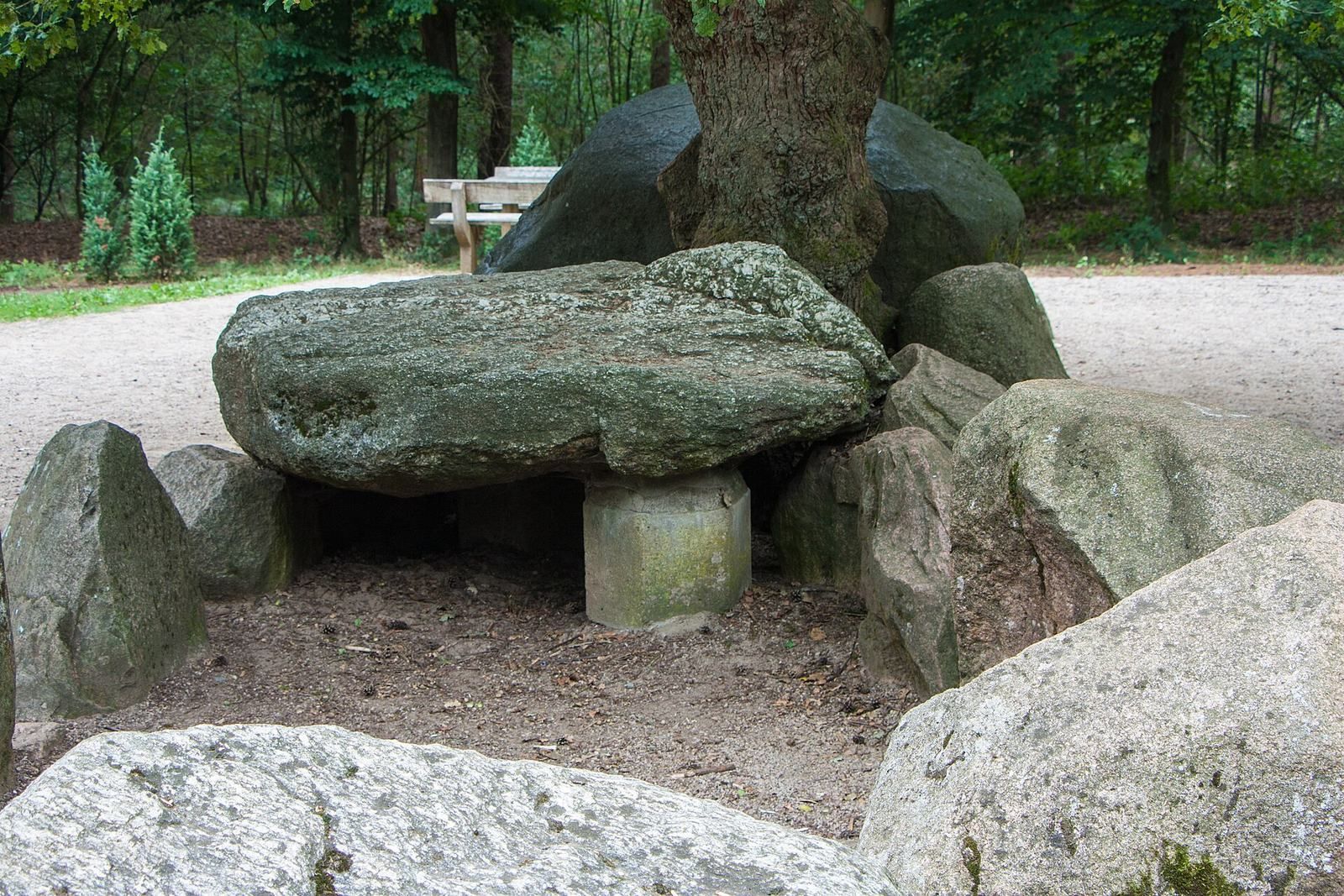
Cracks that developed in the largest stone were stabilized with concrete bollards. The grounds around the tomb were redesigned in 2005–2006. Düwelsteene is a landmark of Heiden and appears on the municipality’s coat of arms.
Local traditions
The name Düwelsteene means Devil’s Stones. In a local legend, the Devil carried the stones toward Aachen to destroy its cathedral. A shoemaker’s boy from Heiden, carrying twelve pairs of worn-out shoes, persuaded the Devil that the journey from Aachen had worn them all out. Discouraged, the Devil dropped the stones and left.
A local custom invites children to count the stones and then count them again, when the Devil is said to have added or removed one. Another tale warns against taking or breaking a stone. In it, a farmer took a flat capstone for a new oven, but after a night of turmoil among the household and animals, the oven had collapsed and the stone had returned to the tomb.
Remains
The passage grave
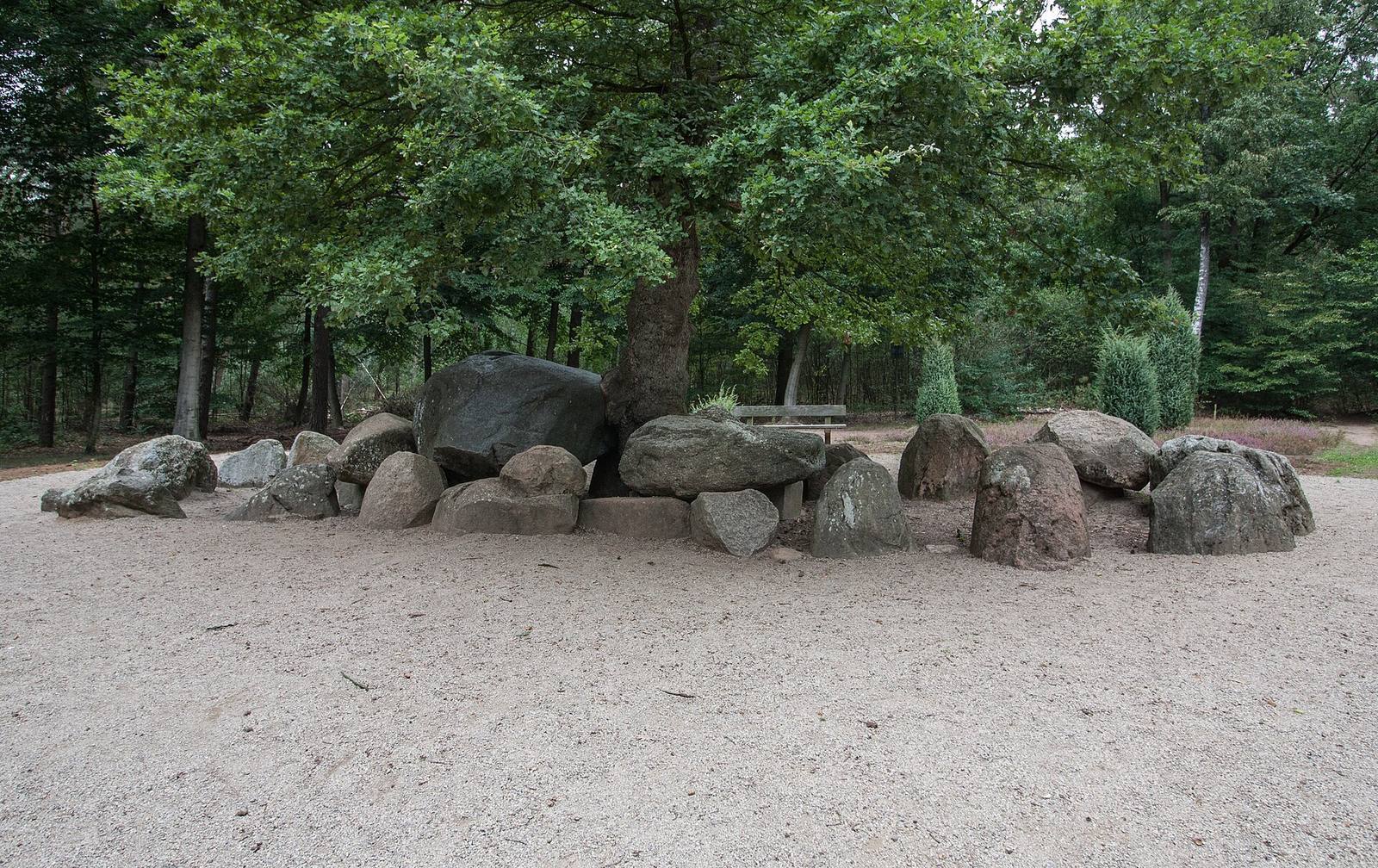
The passage grave measures about 11.5 metres long and 1.7 metres wide. Its chamber was assembled from glacially polished erratic stones, some weighing up to seven tonnes, which the builders raised with levers and human strength. Stones with a flat side formed the roof over an interior space of about 1.5 metres, and stone slabs paved the floor. The number of capstones is estimated at seven to nine. The entrance is thought to have been between the second and third wall stones on the southeast side. The supporting stones may be original or may include additions from the eighteenth-century rebuilding. A stone ring once surrounded the tomb and held a round mound in place. The 1932 excavation recovered human remains and pottery fragments. The dead were provided with food in elaborately shaped and decorated pottery vessels.
Landscape and glacial setting
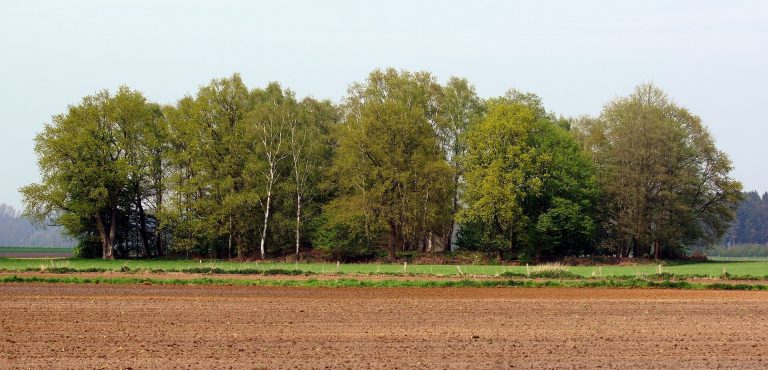
The tomb stands in pine-covered dunes in Die Uhlen woodland, about three kilometres east of Heiden. It lies on the southern slope of the Rekener Berge, in the western Hülsten-Rekener Kuppen and within the Hohe Mark natural region. The dunes formed around 50,000 years ago, during the last glacial period, when northern Germany was no longer covered by ice but cold conditions left loose sand without vegetation to hold it in place. Ice transported the tomb’s stones from Scandinavia to Westphalia during the Saale glaciation, a major glacial episode of the Pleistocene that affected northern Europe.
Other burials and finds
Elsewhere in Die Uhlen, a burial in a hollowed tree trunk lay beneath a grave with a keyhole-shaped plan. A steep-necked vessel dating to the later Bronze Age was recovered from that grave in 1898. A stone dagger was found about 300 metres south of Düwelsteene in 1969, and a stone axe was found in the same area in 1970.