Church of Santa María la Real y Antigua de Gamonal: A Gothic Pilgrimage Church in Burgos
Site at a Glance
- Popularity
- Very Low
- Country
- Spain
- Primary era
- Medieval
- Eras represented
- Medieval, Early Modern
- Civilizations
- Crown of Castile, Spanish
- Site type
- Religious
- Remains
- Church
On this page6 sections
History
Origins and medieval development
The Church of Santa María la Real y Antigua de Gamonal is a Roman Catholic church in Burgos, Spain, built in the 14th century in the Gothic style. Tradition links its beginnings to the miraculous appearance of an image of the Virgin Mary at the site. The earliest historical evidence for the church dates to the 11th century, when Alfonso VI, king of León and Castile, transferred the bishop’s official seat from the destroyed city of Oca in 1075. Gamonal, where the church was built, is now part of the municipality of Burgos.
Pilgrimage and later recognition
Set at a crossroads on a required route for pilgrims travelling to Santiago de Compostela, the church became a local landmark. It attracted devotees among Burgos’s influential elite, including members of the Pérez Giralte lineage. The church belongs to the Diocese of Burgos, the ecclesiastical district under the bishop’s authority. On 3 June 1931, it received Spain’s protected cultural-heritage designation in the monument category.
Remains
Plan and interior
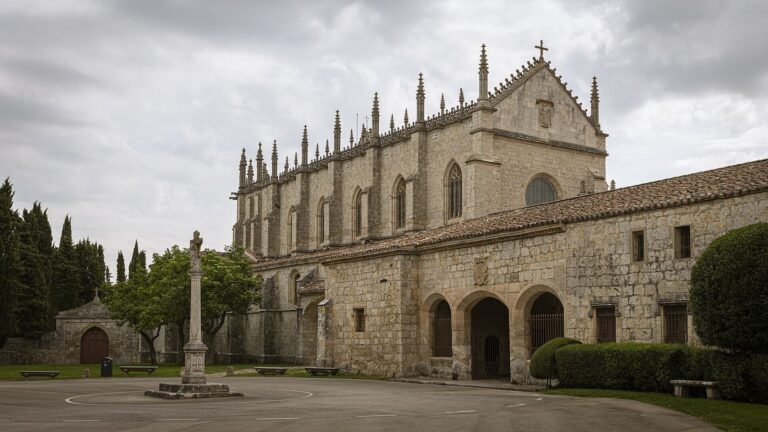
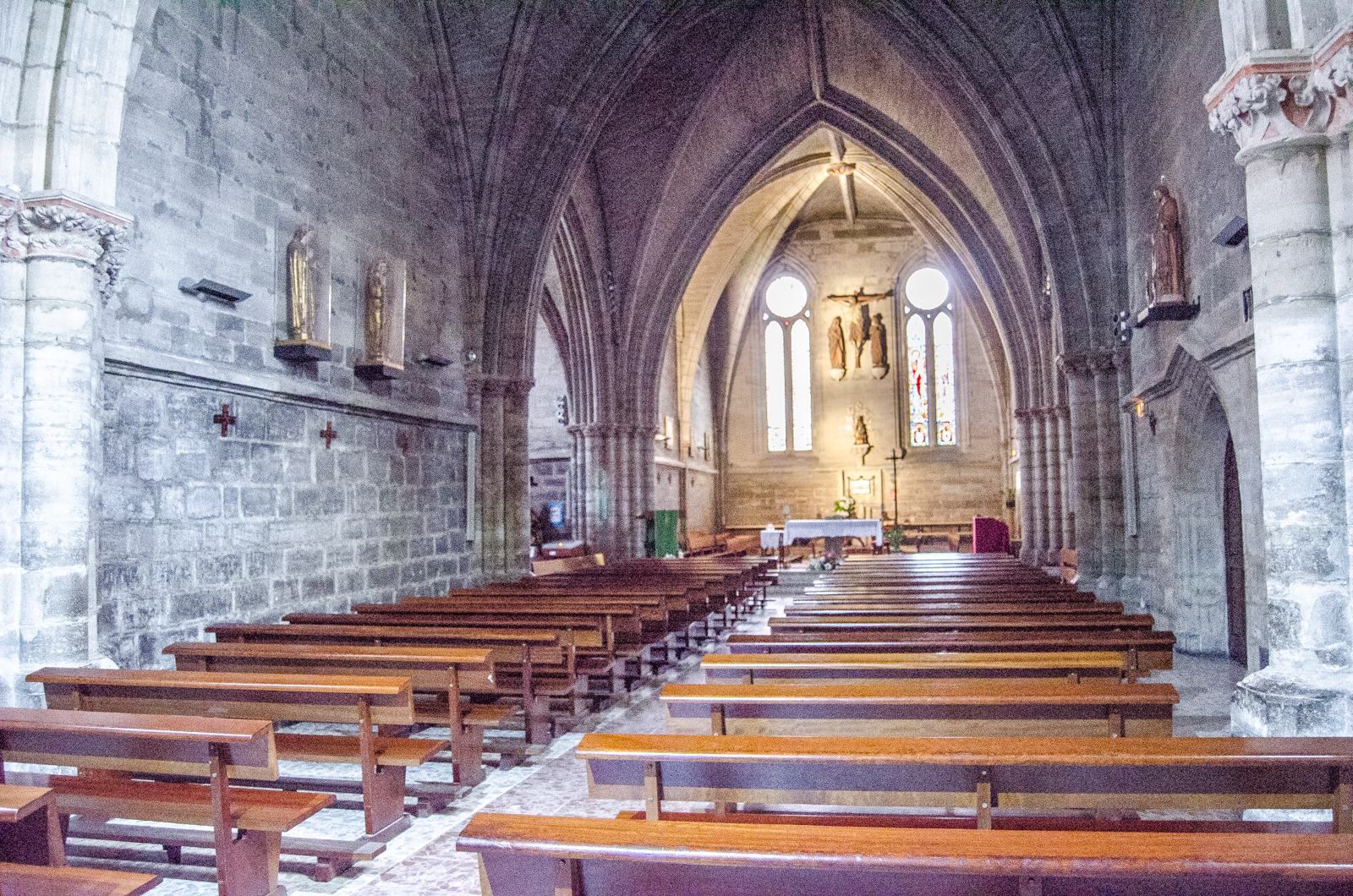
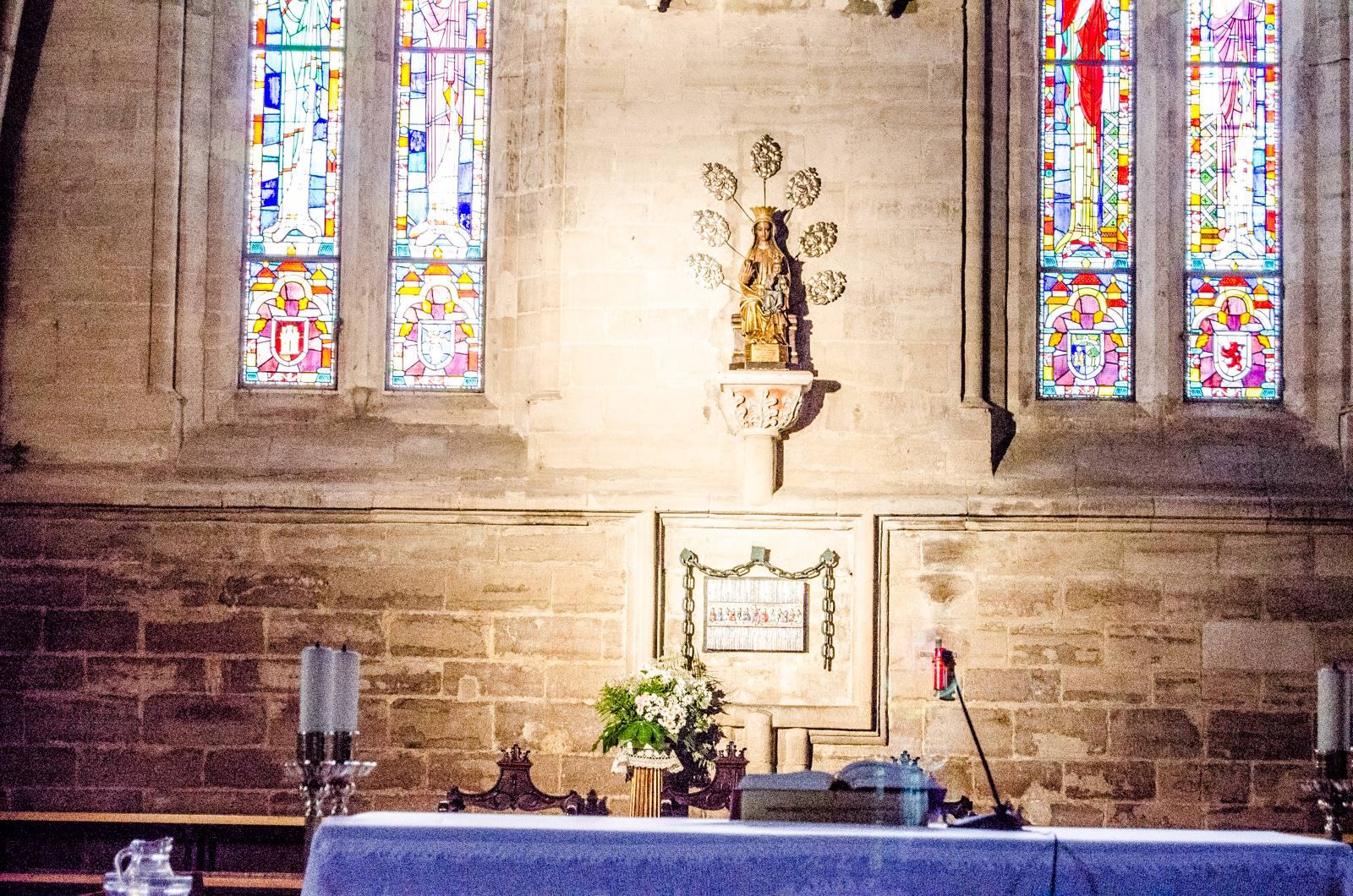
The church has a long main body crossed by a shorter arm, forming a Latin-cross plan. Its single nave, the main body of the church, meets the crosswise transept. The vaults are generally divided into four sections and have a rib running along their length. Around the altar area, the straight-ended apse, the church’s terminal section, has a six-part vault. The design follows the model of Burgos Cathedral. Sculptural decoration includes a Calvary, a depiction of Christ’s crucifixion, and imagery associated with Saint James. A Romanesque capital, the carved upper part of a column, was found in the filling of the church’s vaults.
Entrances and exterior features
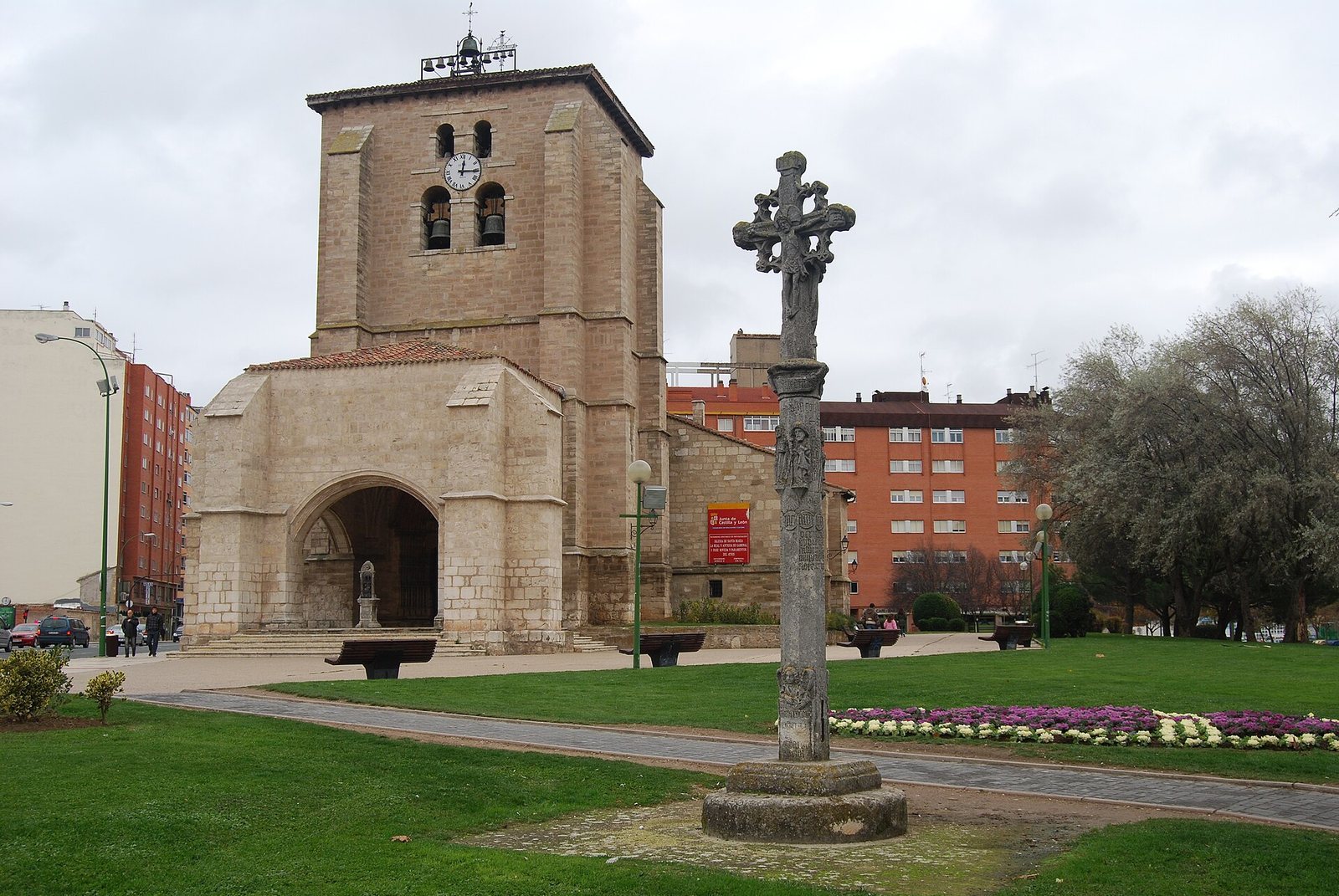
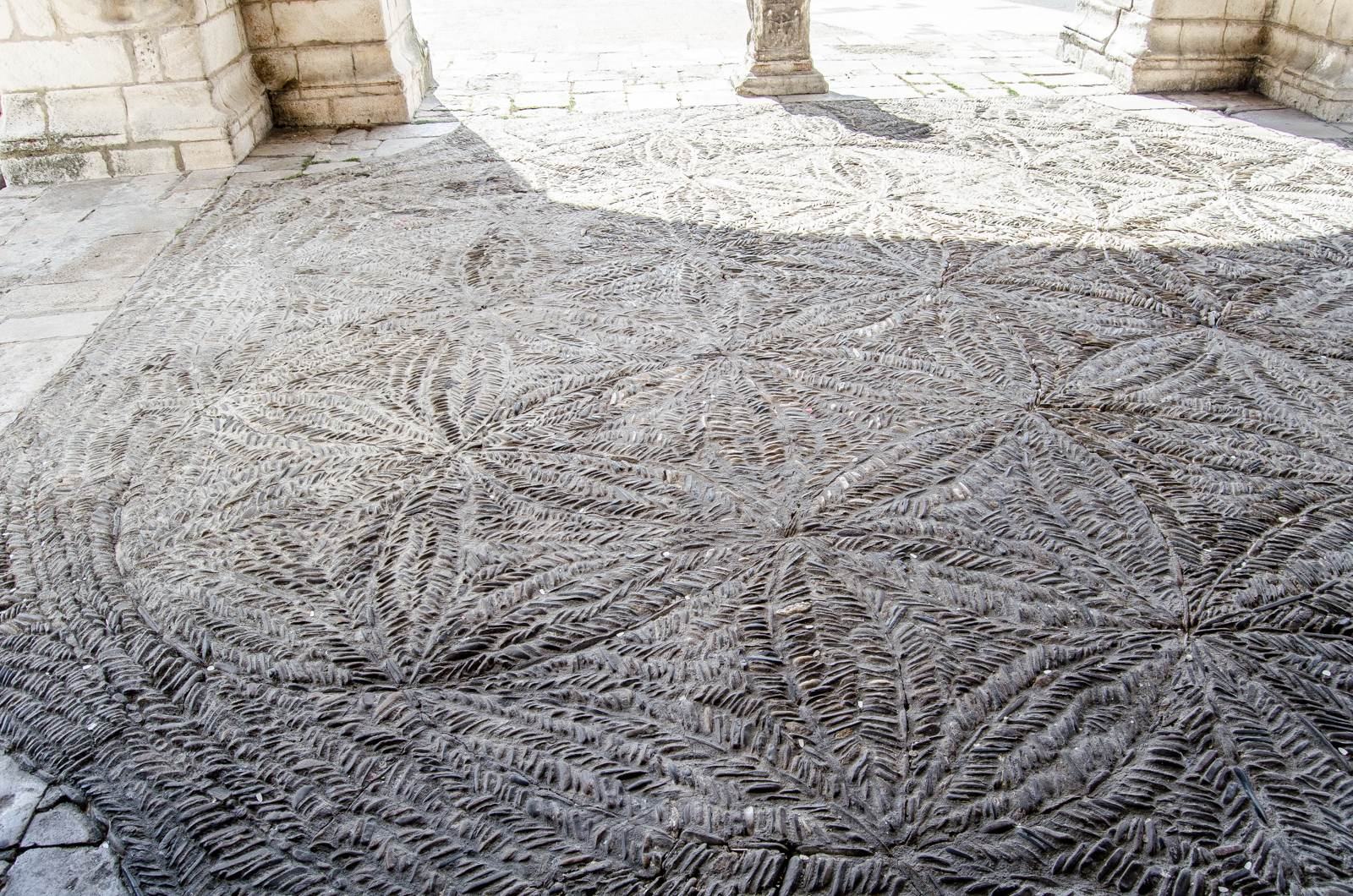
A portico shelters the entrance at the foot of the church, and a substantial bell tower rises as part of the building. The 15th-century Mudejar entrance door bears the arms of the Pérez Giralte lineage. Its smaller inset door has leaves decorated with eight-pointed interlace stars and figures of plants, animals, and warriors; this work dates to the early 15th century. A stone cross from the 16th century once stood in the adjoining cemetery and was later moved to gardens near the portico.