Hailes Abbey: A Cistercian Monastery in the United Kingdom
Site at a Glance
- Popularity
- High
- Country
- United Kingdom
- Primary era
- Medieval
- Eras represented
- Medieval
- Civilizations
- English
- Site type
- Religious
- Remains
- Monastery
On this page13 sections
History
Foundation and princely patronage
Hailes Abbey was a Cistercian monastery in the United Kingdom, founded around 1245–1246 by Richard of Cornwall as a dependent house of Beaulieu Abbey. Beaulieu, in turn, had been established from Cîteaux, the founding monastery of the Cistercian order. Hailes was among the last Cistercian monasteries established in England.
Richard probably founded the abbey in fulfilment of a vow made after surviving danger at sea in 1242. Henry III granted him the manor of Hailes, including the site of an older castle on the Cotswolds’ edge. Twenty monks and ten lay brothers, who undertook manual work within the community, came from Beaulieu under Prior Jordan. They set out on 15 June 1246, and the first building campaign ran from 1246 to 1251. The abbey was inaugurated in November 1251 at a ceremony attended by Henry III, Queen Eleanor of Provence and bishops.
Richard had been elected King of the Romans by German princes, a title held by the elected German king before coronation as Holy Roman Emperor. Pope Alexander IV did not accept Richard as emperor. Richard, his second wife Sanchia of Provence and three of their children were buried at Hailes. Among the children were Edmund, 2nd Earl of Cornwall, and Henry of Almain. Outside the abbey precinct, Hailes Church had been consecrated in 1175 and later served as a chapel for the community until the Dissolution in 1539.
Pilgrimage and expansion
In 1268, Richard’s son Edmund acquired a small vessel said to contain Christ’s blood while in Germany. He gave part of the relic to Hailes in 1270, and it arrived on 14 September, the Feast of the Holy Cross. Pilgrims travelled to the abbey from across England, and their gifts supported substantial rebuilding. The relic’s reputation also found its way into The Canterbury Tales.
From around 1270, the monks enlarged the eastern part of the abbey to accommodate the increase in pilgrimage. Work on the eastern range was finished in 1277. A prior also established a guesthouse for pilgrims. After Edmund died in 1300, Hailes lost its principal financial benefactor. In 1325 the monks appealed to the Bishop of Worcester, explaining that unfinished buildings hindered their ability to provide hospitality.
Late medieval hardship and recovery
The plague of 1348–1349 killed about two-thirds of the community, and another outbreak in 1361 caused further deaths. Financial problems persisted. Thieves plundered the tabernacle, the shrine holding the relic, on the night of 16 December 1402. An abbot was executed as a rebel after the Battle of Bramham Moor in 1408. In 1412, Henry Alcestre, who had become abbot in 1397, was blamed for the deteriorated buildings and debts of more than £600. The community then numbered 22 monks and had an annual income of about £100, too little to support them.
Donations and privileges granted by the antipope John XXIII, a rival claimant to the papacy not recognized by the established Church, benefited the monks and pilgrims. Pilgrim gifts also paid for the cloister’s 15th-century rebuilding. Hailes later prospered, and members of the Tudor elite joined its confraternity, an association whose members shared spiritual benefits with the abbey.
Dissolution and later history
In 1538 the relic was taken away and found to consist of honey coloured with saffron. Abbot Stephen Sagar admitted that it was fraudulent, hoping to preserve the monastery. Hailes was among the last religious houses to surrender during Henry VIII’s dissolution of the monasteries. It closed on Christmas Eve 1539 and was then the twelfth-richest monastery in England. The Crown sold the former abbey in 1542.
After the Dissolution, the west range, which included the abbot’s apartments, was turned into a house. The Tracy family occupied it in the 17th century, and around 1729 the complex became two farms. The church was probably demolished soon after the abbey closed; other buildings came down later. Extensive excavations took place in the late 19th century. In the 1920s, physicist James Kingston Fowler began a museum at the site. The National Trust received the site in 1937, and the Ministry of Works took responsibility for the abbey in 1948. The ruins are owned by the National Trust and managed by English Heritage. The abbey is Grade I listed, while the abbey and ringwork are scheduled monuments; Hailes Church is also Grade I listed.
Remains
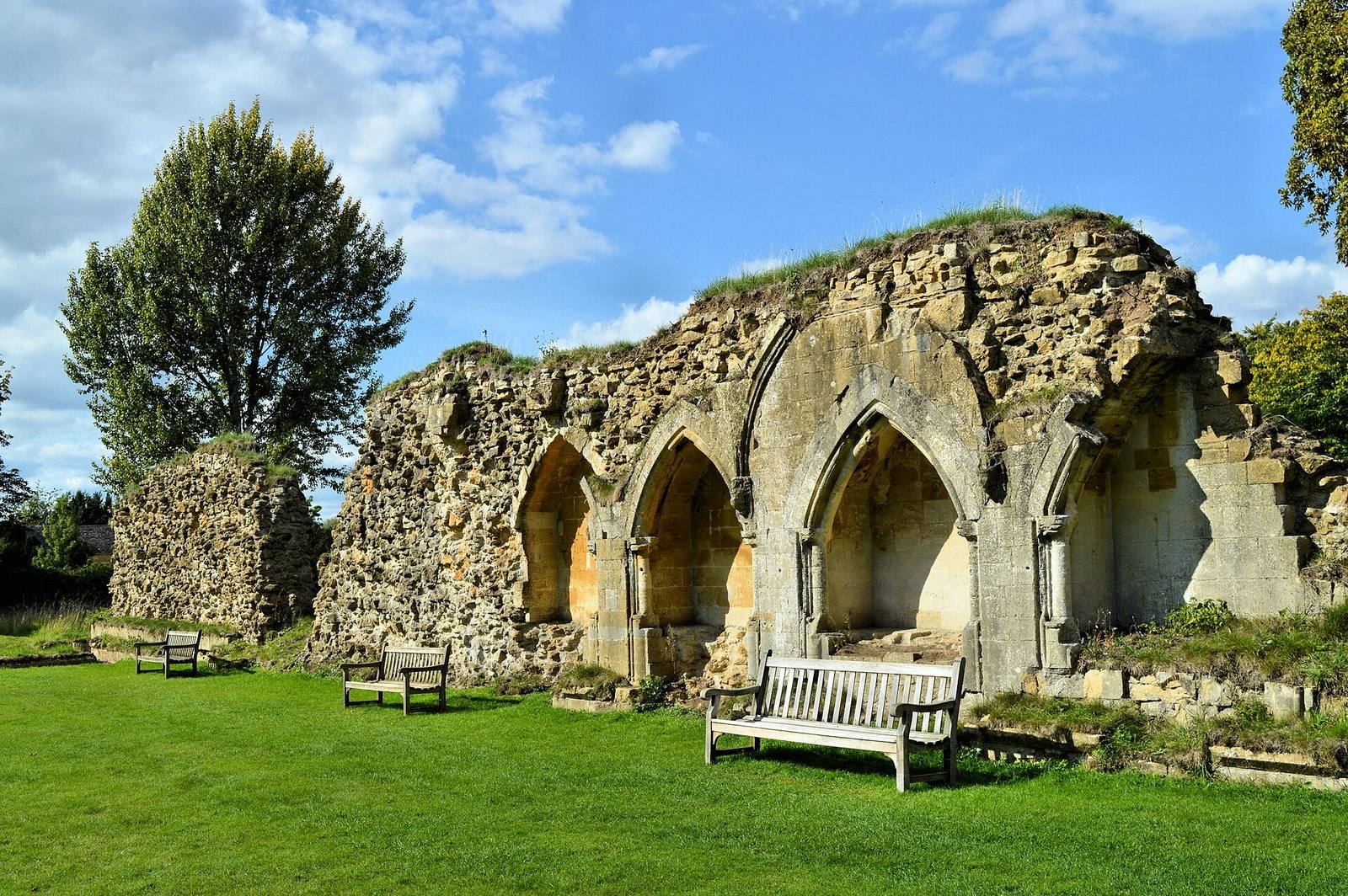
The abbey’s layout combined a rubble-stone church with a cloister to its south and adjoining monastic buildings. The cloister broadly followed Cistercian planning. Artefacts from the abbey are held in the site museum.
Abbey church
The church measured 104 metres long, and its nave, the main body of the building, was 19 metres wide. The nave and each of its two side aisles had eight structural bays. A small porch stood at the western end. The transept, forming the church’s cross-arm, had three chapels along each of its eastern sides. The choir, at the east end, originally had four bays and aisles on either side.
After 1270, five polygonal chapels were probably added in a semicircle around the choir’s eastern end. They were linked by an ambulatory, a passage running around the end of the choir. This arrangement was unusual in England and was thought to follow the example of Croxden Abbey in Staffordshire. The relic of the Holy Blood was kept in a tabernacle, a shrine for a sacred object, behind the church’s main altar.
Monastic buildings
Cloister and chapter house
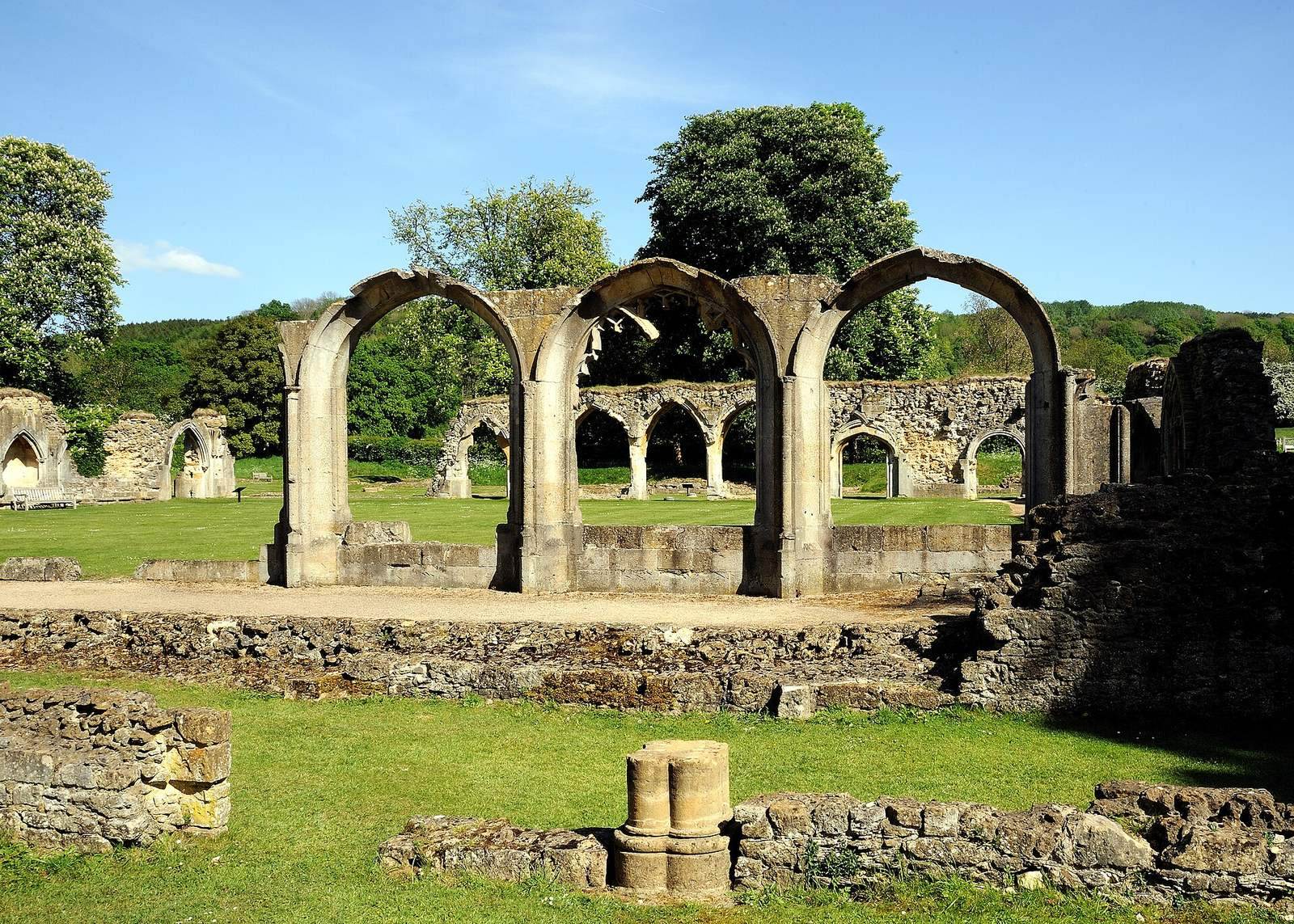
The cloister occupied the area south of the church and was renewed in the 15th century. Its chapter house, where the monastic community met, was divided by four columns and connected to the cloister by a double passage.
Refectory and western range
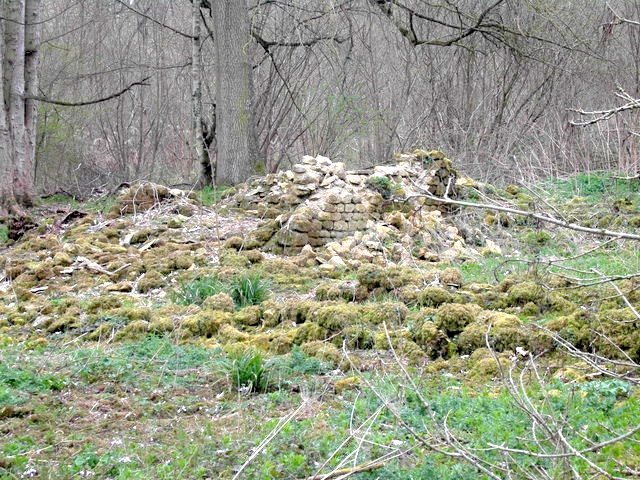
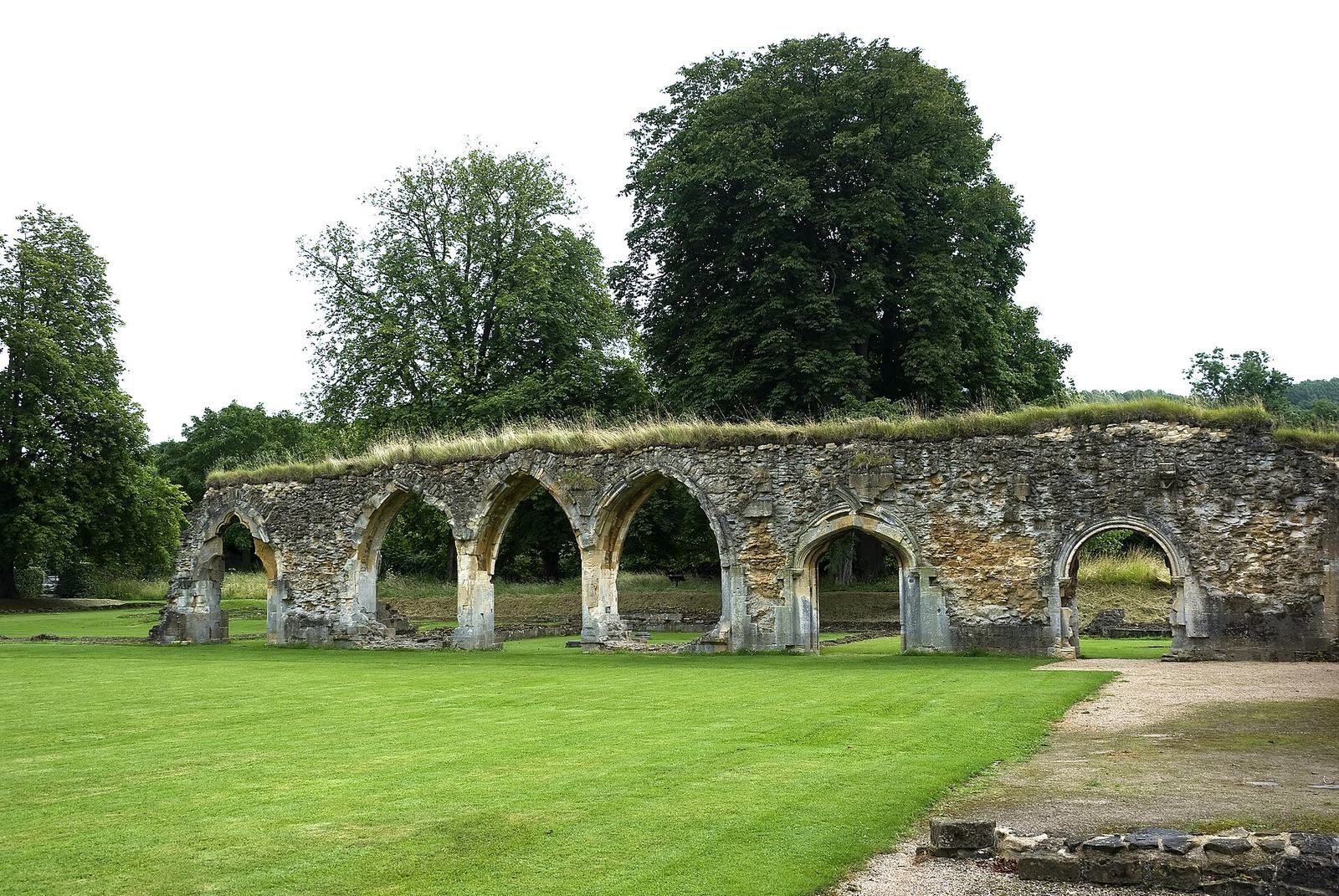
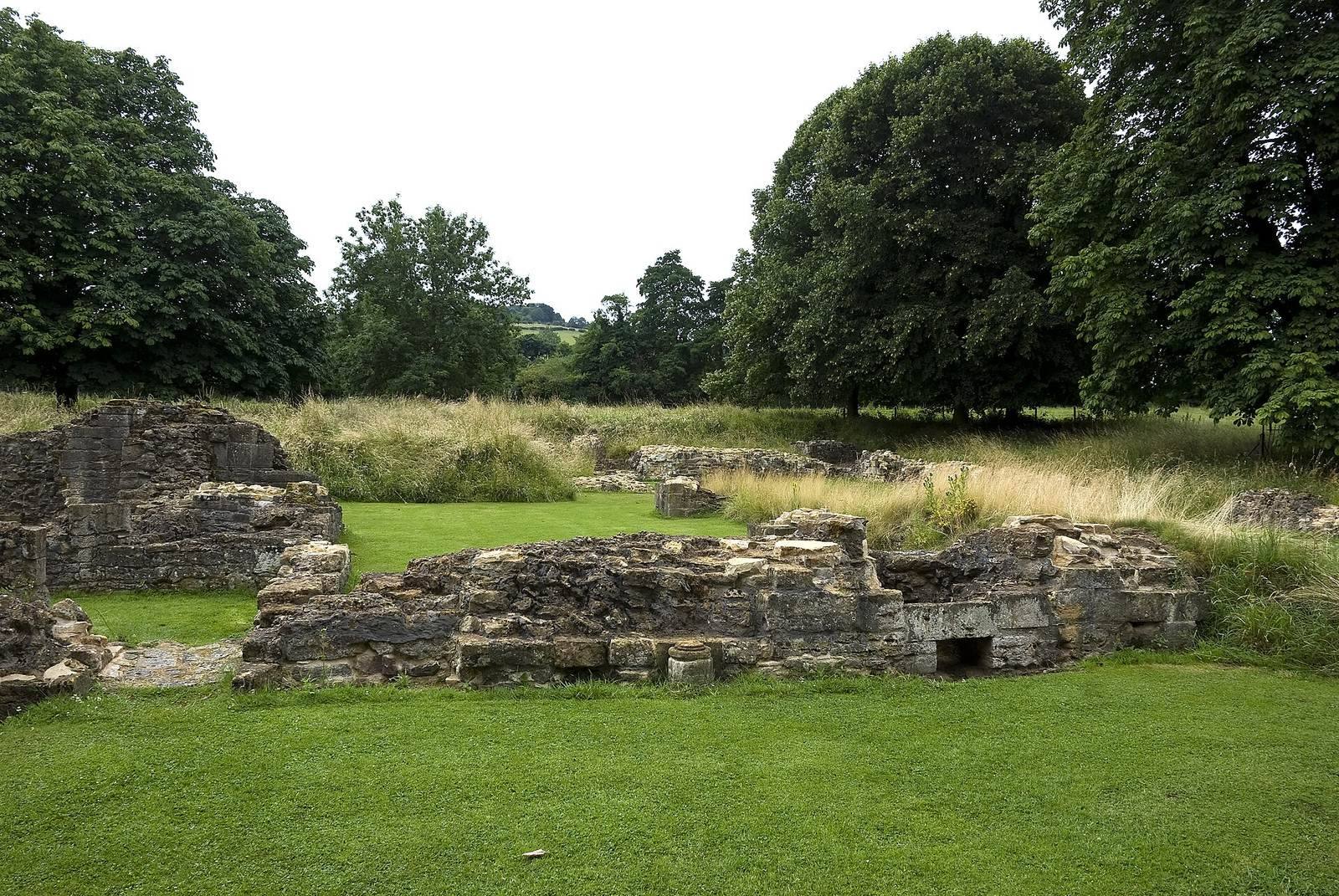
The refectory, or communal dining hall, measured 35 by 9 metres. Parts of its northern wall remain. The former west range was later demolished; low arches survive in a meadow, and traces of the buildings can be seen in the grass.
Grounds and Hailes Church
Older castle site and ringwork
The abbey grounds occupy the site of an older castle. The scheduled area also includes a ringwork, a circular or oval earthwork enclosure.
Hailes Church
Hailes Church stands beyond the abbey remains. Its 14th-century wall paintings show St Catherine and St Christopher on the north wall, and St Margaret alongside coursing scenes on the south wall. The medieval paintings remain unrestored.