Pieve di Sant’Andrea in Sarzana: A Medieval Parish Church and Baptistery
Site at a Glance
- Popularity
- Medium
- Country
- Italy
- Primary era
- Medieval
- Eras represented
- Medieval, Early Modern
- Civilizations
- Genoese, Holy Roman Empire
- Site type
- Religious
- Remains
- Church
On this page15 sections
History
Pieve di Sant’Andrea is a Roman Catholic parish church in Sarzana, Italy. The word pieve is a historical Italian term for a parish church, sometimes with baptismal rights. The church’s construction is dated to the 10th–11th centuries, and its foundation to 1001. Its architecture includes Romanesque and Gothic elements, and it is identified as Sarzana’s oldest building. It belongs to the Diocese of La Spezia-Sarzana-Brugnato, a church district overseen by a bishop.
Medieval foundation and civic use
The church stands over an earlier medieval religious building whose date is uncertain. Its first known written mention dates to 1128. In 1137, Bishop Gottifredo II of Luni held a synod there, a formal assembly of church leaders. Papal documents and privileges also refer to the church in 1148, 1149 and 1153–1154.
From 1204, the church served as Sarzana’s baptistery, a place set aside for baptism, and as the town government’s judicial seat. It retained the judicial role until the 14th century. Statutes enacted in 1330 led to alterations that included moving a church wall and removing columns, other walls and interior vaults.
A local tradition places the miraculous appearance of the image of Our Lady of Grace in 1480, on a wall beside the former convent of St Dominic. That site is now occupied by the Teatro Impavidi.
Sixteenth-century renovation
Bishop Benedetto Lomellini made a pastoral visit in 1568, an official visit to oversee church life. A major renovation began in 1579 under a master builder. The work affected the baptismal area, entrance, altar end, ceiling over the main body of the church and dome. Cardinal Angelo Peruzzi visited in 1584 while the renovation was still under way. Giovanni Battista Salvago, bishop of Luni-Sarzana, consecrated the renovated church on 23 September 1590.
Modern intervention
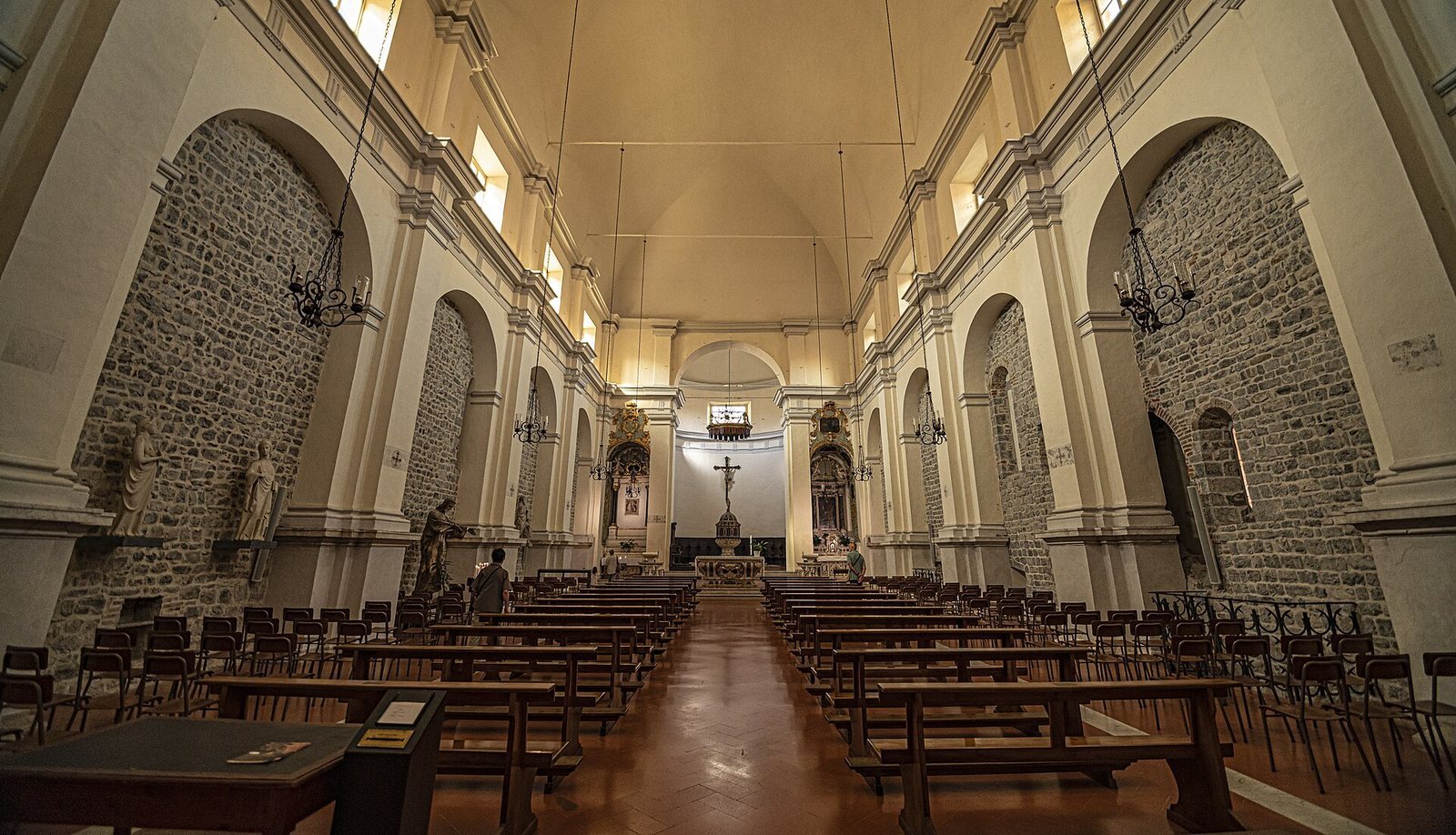
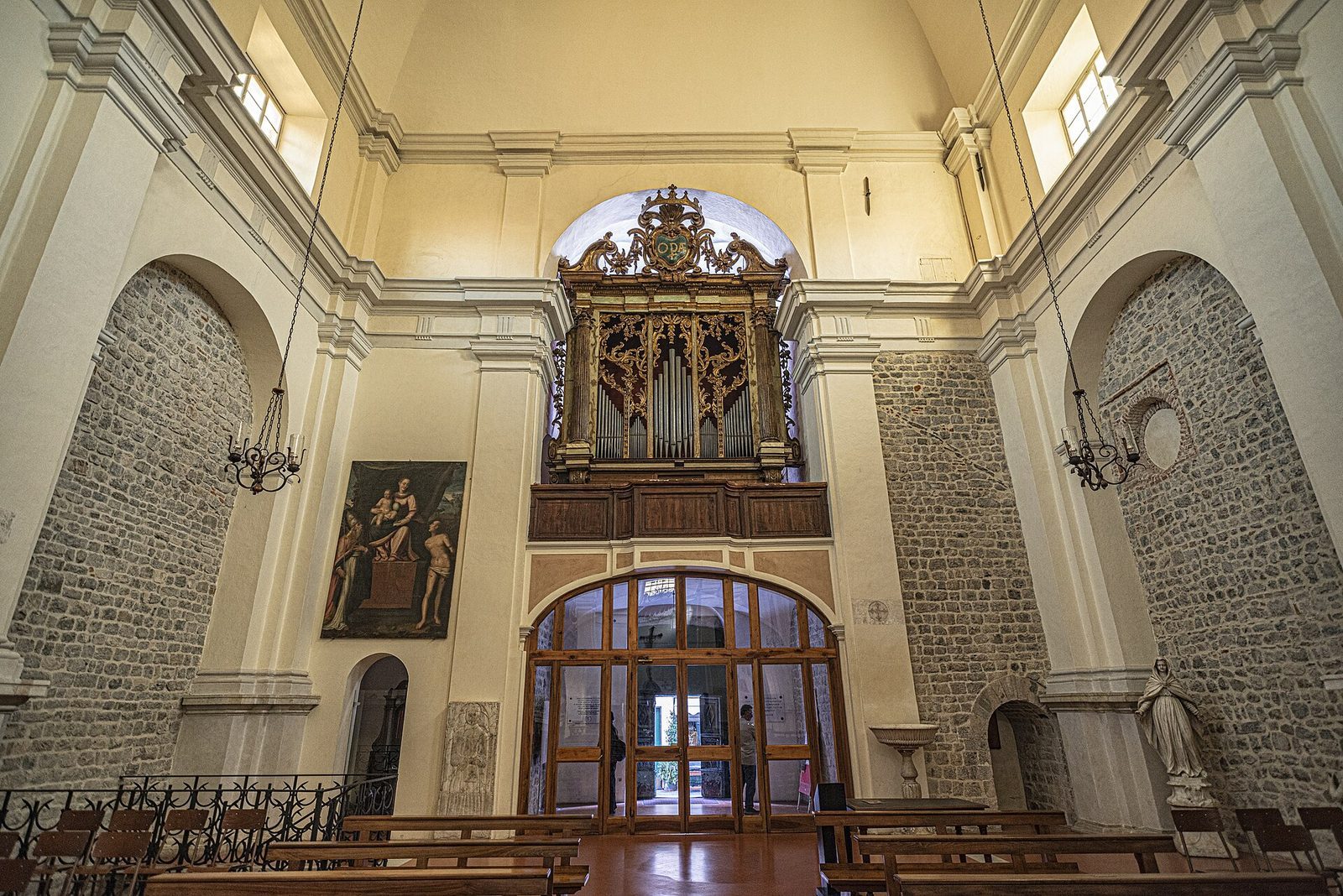
In 1928–1929, workers removed part of the plaster, exposing medieval masonry.
Remains
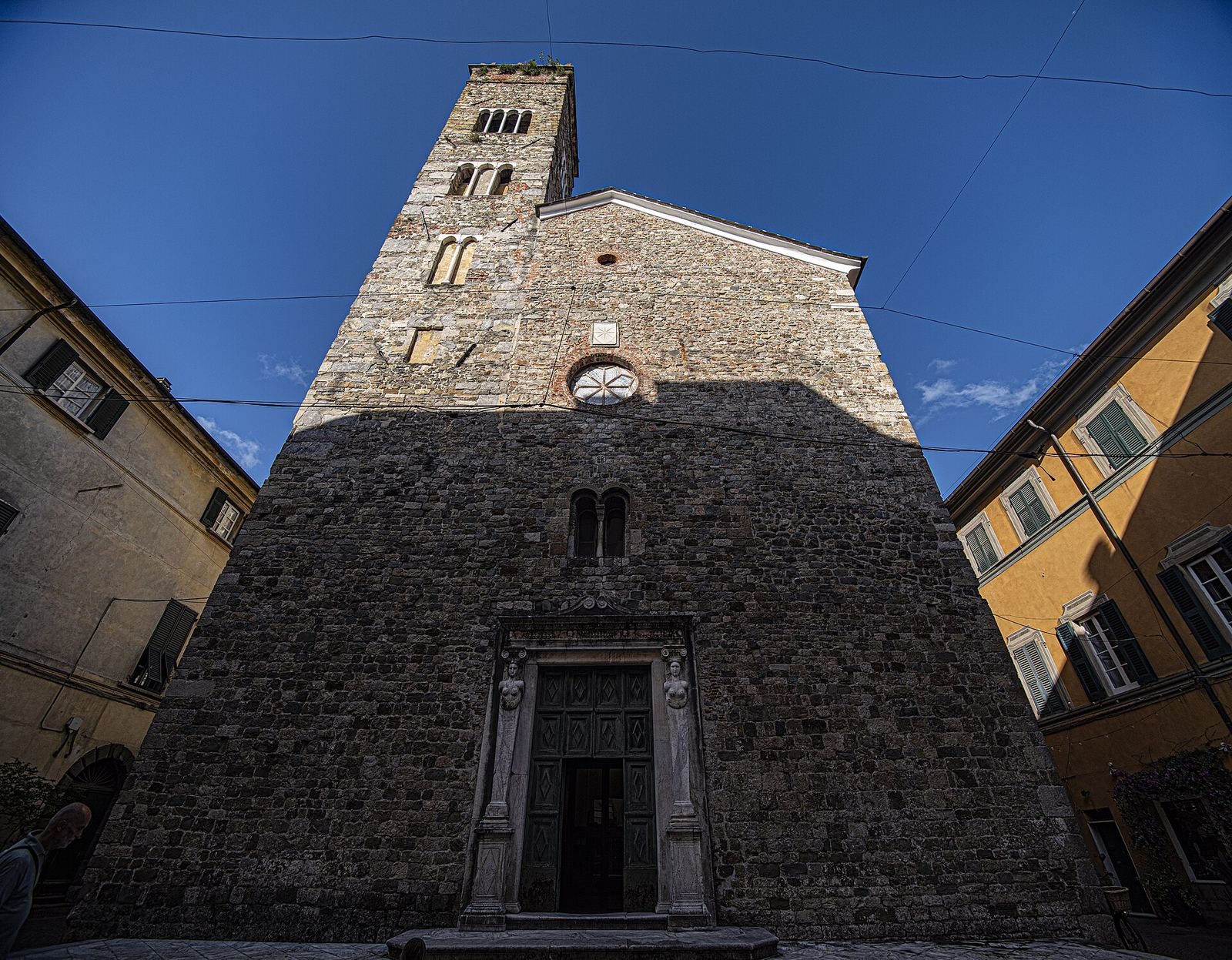
The surviving fabric brings together medieval masonry and later alterations. Its principal elements include a raised facade, a square bell tower and a single-hall interior.
Exterior
Facade and entrance
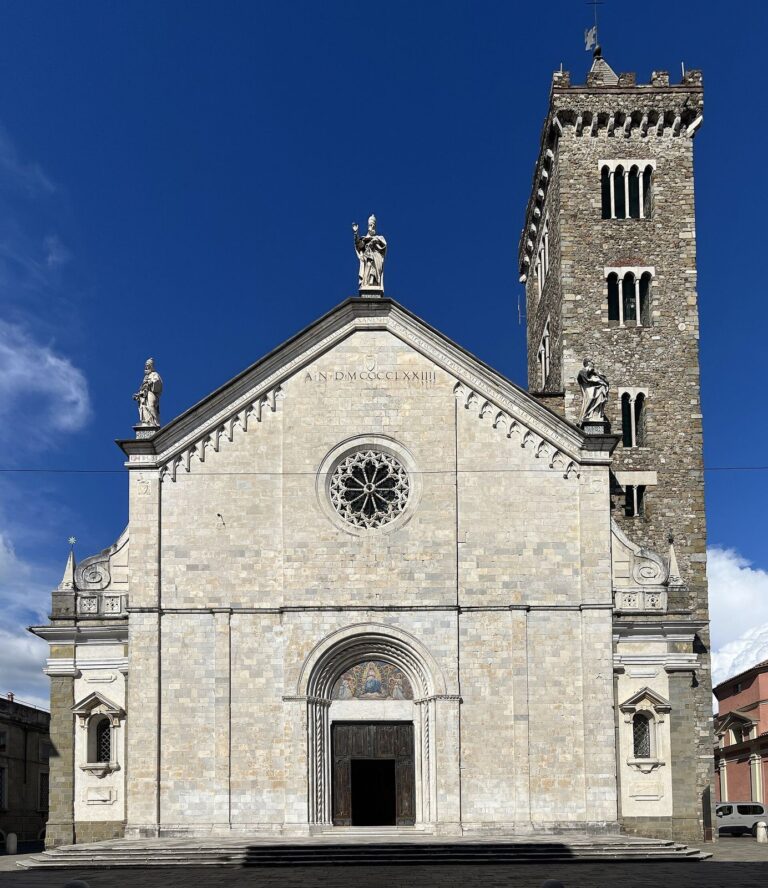
Part of the facade of the earlier medieval building survives. The present facade rises higher and is largely bare stone. Its entrance has a 16th-century portal made from white Carrara marble. Two bare-breasted caryatids, sculpted human figures used as architectural supports, decorate the sides. Angels and fruit garlands are carved across a horizontal marble band. The portal also includes a mullioned window, divided into sections by vertical bars, and three arches topped by small busts.
Civic emblems
An eight-pointed star above the entrance, called the sidus, or star, was the emblem of Sarzana’s municipal elders, the town’s civic governing officials. A carved stone seal on the facade shows a shield and eight-pointed stars and refers to the town’s 1330 statutes.
Bell tower
The square Romanesque bell tower dates to the period of the 14th-century alterations. Its arches are divided by vertical supports and arranged in tiers that rise up the tower.
Interior and furnishings
Interior layout
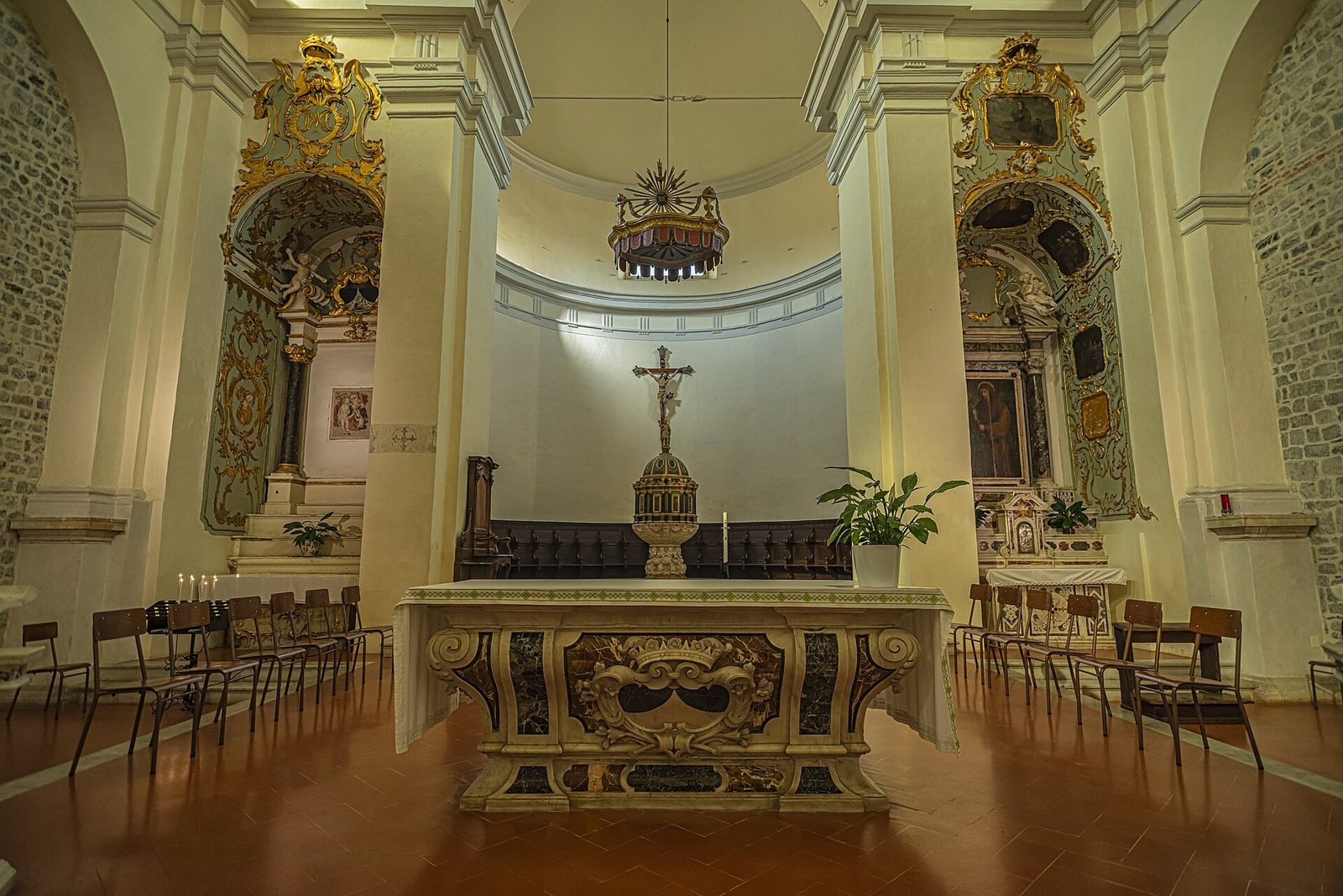
The earlier medieval church had three lengthwise aisles. The interior was later changed into a single hall, and larger windows were opened during alterations. Monuments and chapels were also added.
Baptismal font and sculptures
In the presbytery, the area around the altar reserved for clergy, stands the marble base of the baptismal font. Carrara artist Giovanni Morelli made it in the late 16th century. Marble sculptures from the 14th and 15th centuries depict Andrew, Peter and Paul. Three 15th-century statues of these apostles, originally placed on the portal, were later moved inside.
Paintings and altarpieces
Painted works include The Calling of Saints James and John, attributed to Domenico Fiasella, and an anonymous fresco of the Madonna and Child. Altarpieces, works placed behind or above altars, include a Madonna and Child with Saints Fabian and Sebastian associated with Giovanni Andrea Bogianus, and a Calling of Saint Clare associated with Fiasella’s studio. The altarpieces date broadly to the 14th and 15th centuries.
Image of Our Lady of Grace
The image of Our Lady of Grace is displayed on the left altar.
Organ
The church’s 18th-century organ was built by German organ maker Giorgio Steiniger and later transferred from Sarzana Cathedral.