Saint-Colomban Fountain: A 16th-Century Devotional Fountain in France
Site at a Glance
- Popularity
- Very Low
- Country
- France
- Primary era
- Early Modern
- Eras represented
- Medieval, Early Modern
- Civilizations
- Duchy of Brittany
- Site type
- Civic
- Remains
- Fountain
On this page5 sections
History
The Saint-Colomban Fountain is a spring fountain on the coast of the Anse du Pô in France. Its origins date to the 15th century, while the structure was built in the 16th. Saint Columbanus of Luxeuil, an Irish monk and missionary who founded monasteries in Gaul in the late sixth and early seventh centuries, was traditionally invoked here to cure madness. The reliability of this healing tradition is uncertain.
The parcel containing the fountain has been within a classified natural site since 24 May 1966. A decree of 1 February 1978 classified the fountain itself as a historic monument.
Remains
Layout and water features
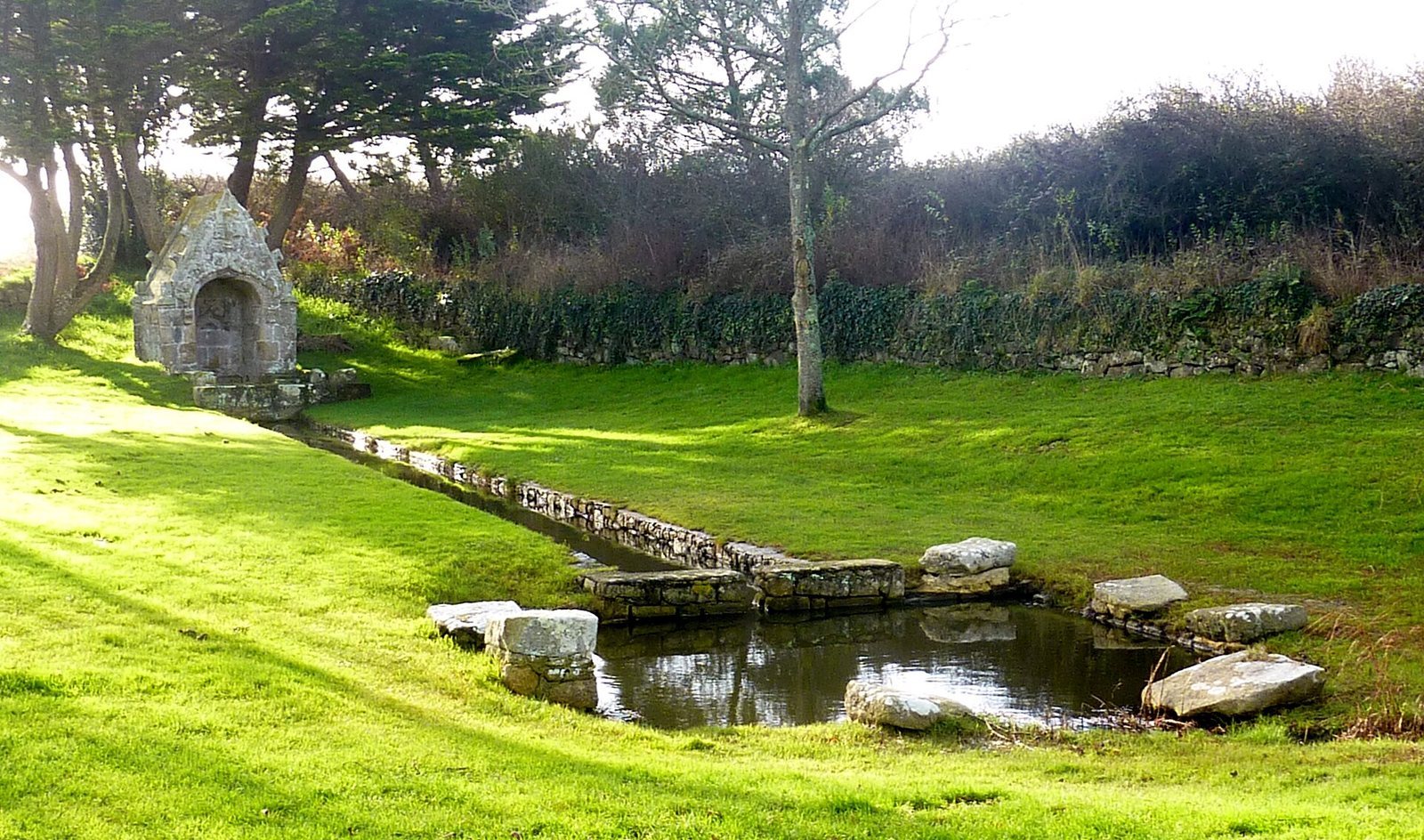
The complex stands on the coast of the Anse du Pô, within Plouharnel Bay, near the bay’s southern end. It is about 320 metres east in a straight line from the hamlet of Saint-Colomban and its chapel. The structure extends for about 31 metres, with a rectangular basin and a granite niche followed by three further basins.
Spring niche
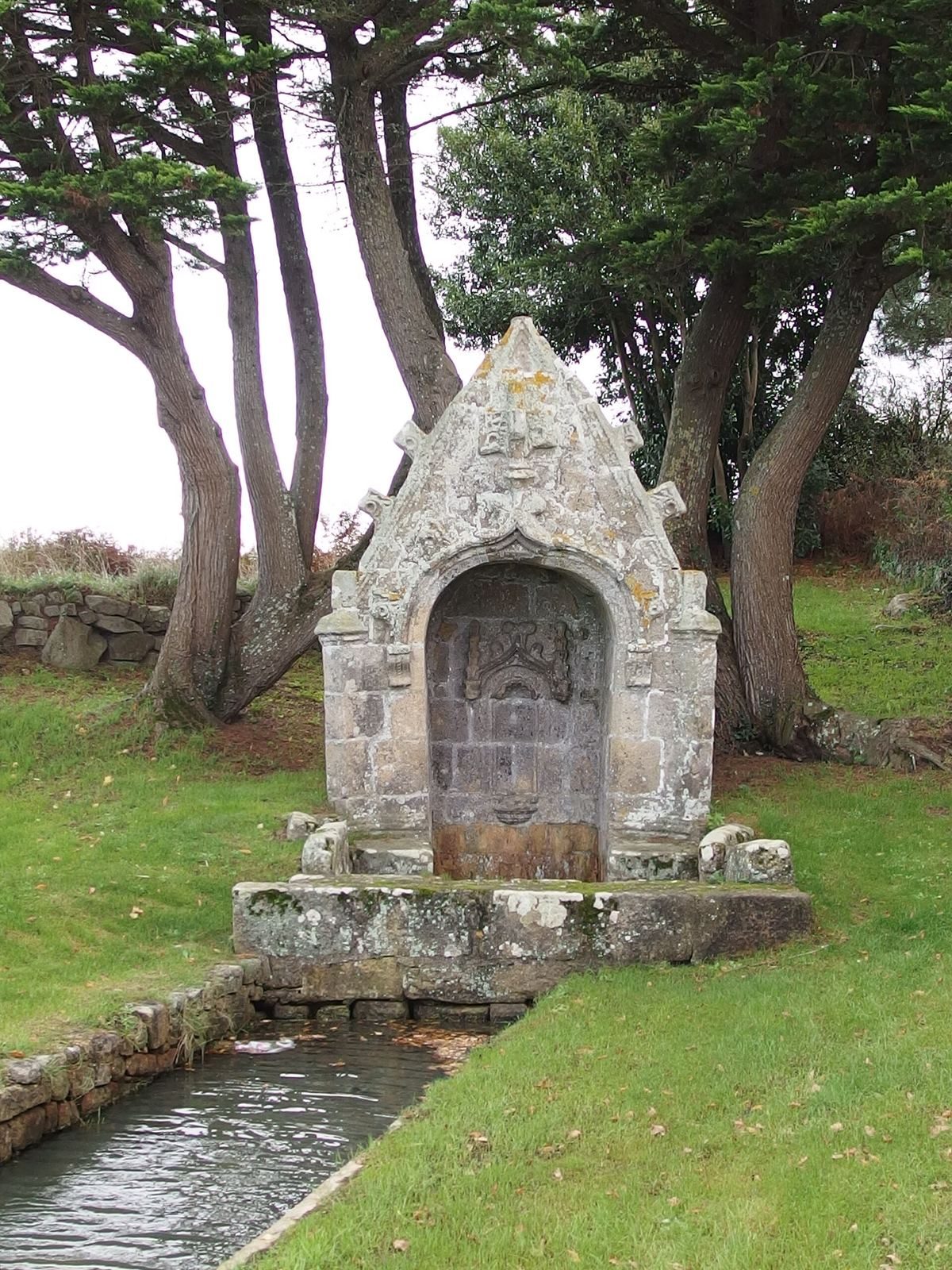
The niche captures the spring and was originally intended to hold a statue of Saint Columbanus. Its Gothic design, a medieval European architectural style, has a façade opening beneath a flattened arch framed by archivolts, moulded bands that follow an arch’s curve. Above the arch, a gable, the triangular upper part of a wall, bears a carved ogee motif, a double-curved decorative form. Flowers and carved crockets, ornaments along a sloping edge, embellish the gable. The niche’s other three sides are solid, and a buttress marks each of its four corners.
Basins
Beyond the niche, a front basin is bordered by two raised rims and enclosed by a low wall. It probably served worshippers for washing. A second rectangular basin may have functioned as a drinking trough, while the final, square basin may have been used for washing.