Krinkberg: A Prehistoric Burial Mound and Proposed Carolingian Marker
Site at a Glance
- Popularity
- Very Low
- Country
- Germany
- Primary era
- Bronze Age
- Eras represented
- Bronze Age
- Civilizations
- Unclassified
- Site type
- Burial
- Remains
- Burial Mound
On this page12 sections
History
Stone and Bronze Age burials
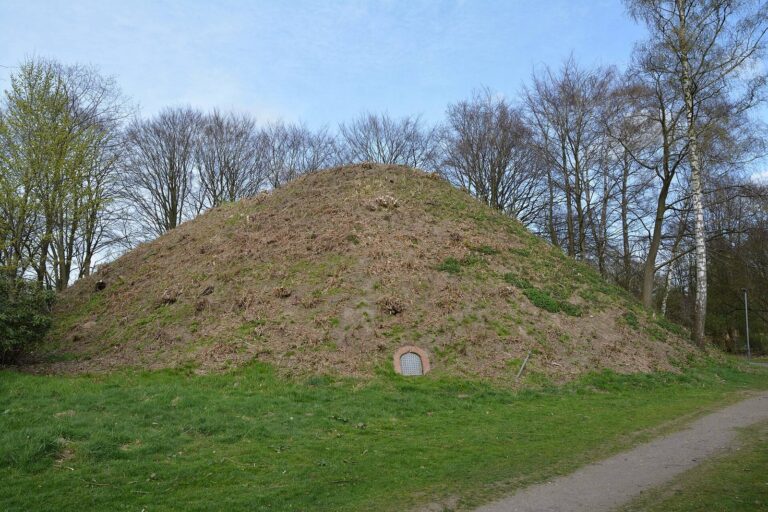
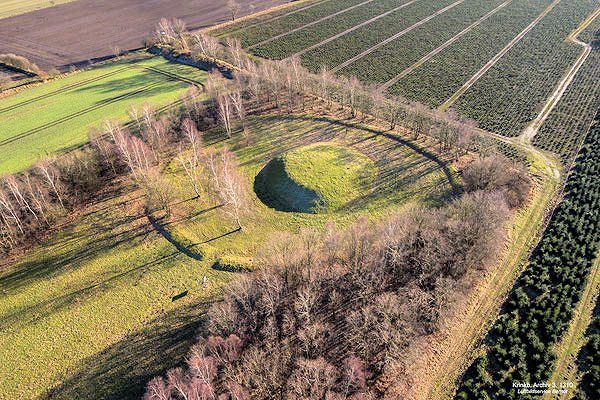
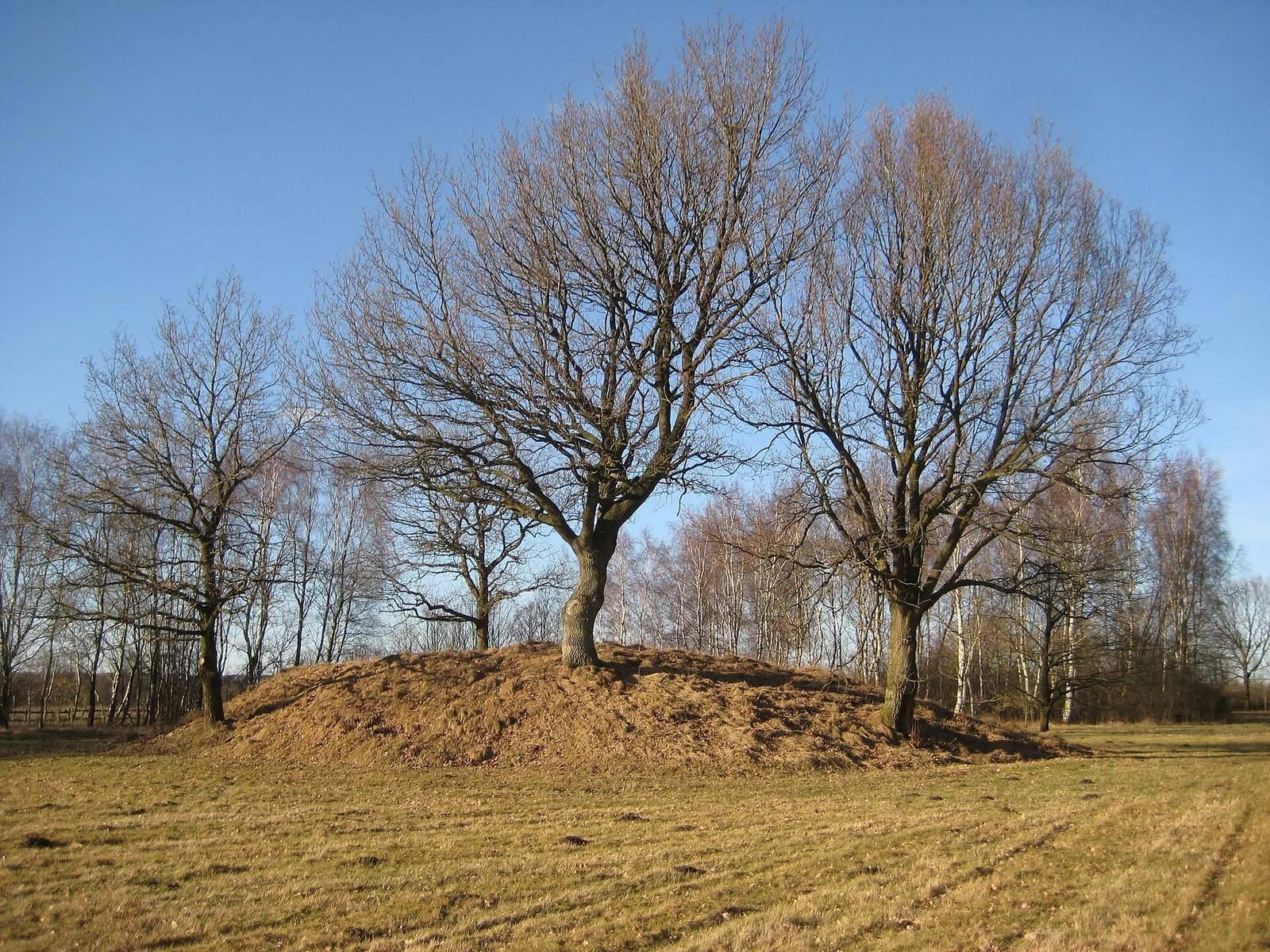
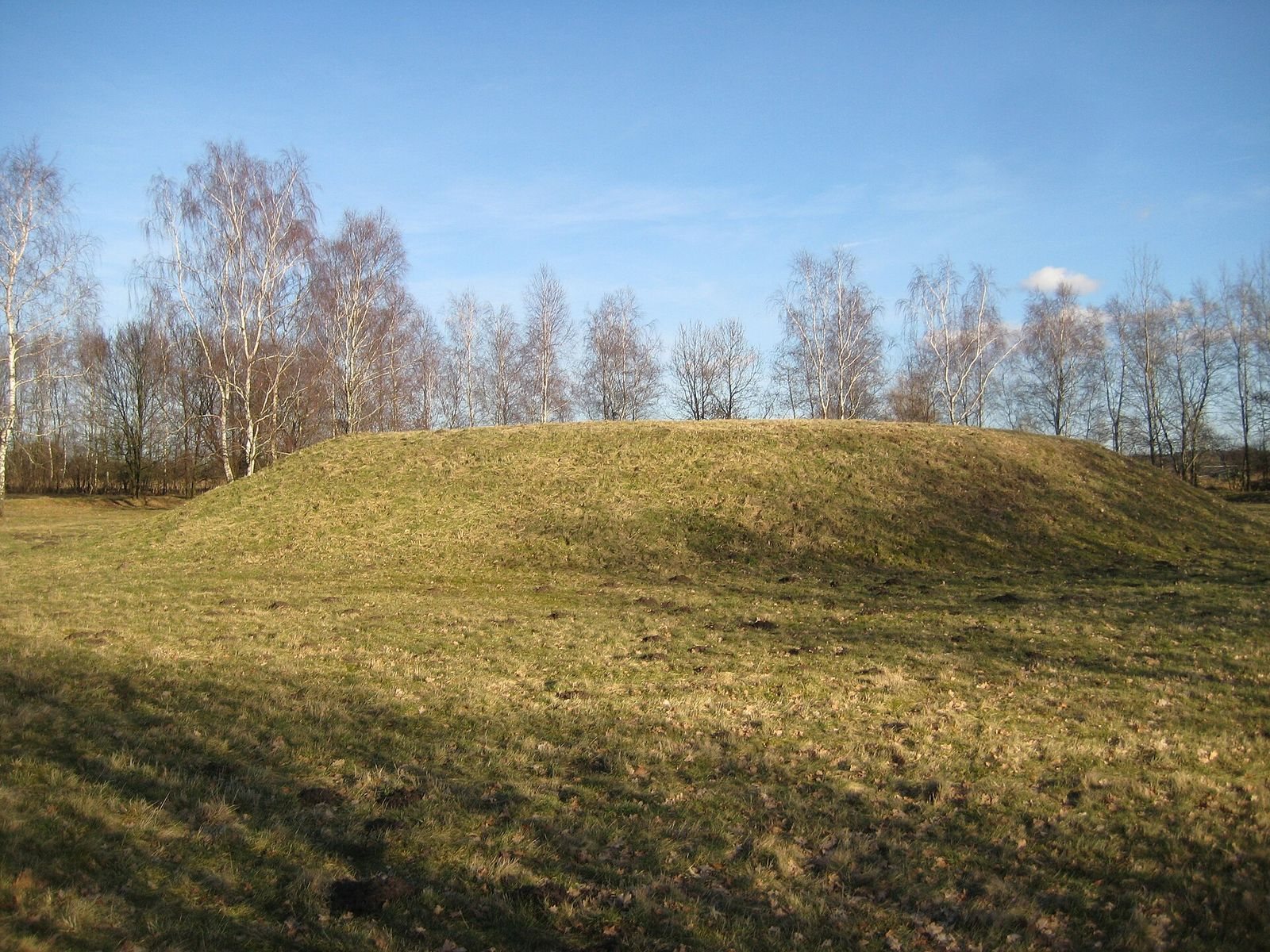
Krinkberg is an archaeological burial mound at Breitenfelde in the municipality of Pöschendorf, Germany, in the Schenefeld area. Its earliest phase, dated to about 2800–2300 BC, is attributed to the Corded Ware culture, a prehistoric European culture named for cord-impressed pottery. A later burial phase, around 1550–1330 BC, was formed by covering the earlier mound. The name’s Low German form, Krinkbarg, means “ring hill.”
A proposed Carolingian project
One interpretation connects Krinkberg with an early medieval plan to establish a Frankish city beyond the Elbe. The Carolingians were the Frankish ruling dynasty that included Charlemagne and his son Louis the Pious. In his annals, the Frankish writer Einhard describes Charlemagne’s proposed city as part of bringing North Elbia, the region north of the Elbe, into the Frankish realm.
Around 15 March 809, Count Egbert and Saxon counts took possession of Esesfelth on the Stör and began fortifying it. Egbert built a Frankish castle there, made peace with the Danes and moved the Frankish boundary to the Eider. The Krinkberg interpretation places the planned city’s center at the older mound and suggests that scouts set up a marker there for workers who would follow. It also treats a deposit in the flattened mound as a supply cache, including coins intended to signal Frankish claims. In this reconstruction, the scouts travelled from Esesfelth past the tidal Bekau and through the Holstengau, a historic district in Holstein, by way of Hohenaspe, Hadenfeld, Stech and Scanafeld (Schenefeld), before reaching Breitenfelde.
The Saxon capitularies of Paderborn, royal decrees arranged in chapters, required North Elbian inhabitants to become Christians and attend church on Sundays. Around 811–814, Egbert had a church built at Heiligenstedten for troops connected with Esesfelth and a principal church for the new Holstein subjects at Scanafeld. The proposed city was never established. Charlemagne died in 814, and Louis the Pious made Hamburg the region’s main center. In this interpretation, the project’s abandonment helps explain the marker’s long survival.
Damage and investigation
Between 1852 and 1854, Staack of Breitenfelde removed most of the mound for agricultural use. Treasure hunters also repeatedly disturbed it, and in 1879 landowner Claus Boie had the encircling wall pushed into the ditch. Heinrich Holm excavated part of the mound in June 1885; that year, ploughing began on the surrounding heath and brought further archaeological material to light.
In 1978, construction of a deep well and pumping station threatened the monument. Gottfried Schäfer secured a police-backed halt to the work, and the project was abandoned. The Krinkberg Foundation was established on 26 January 1983 by the Nühs family and others interested in investigating and repairing the remains. Student excavations took place in 1983–1984, and a visually restored monument was presented in 1986.
Remains
The site consists of a flattened burial mound enclosed by a ring wall, with a V-shaped ditch outside it. Excavation revealed two mound layers, while finds from the mound and surrounding ground include Bronze Age material, early medieval coins and other objects.
Mound and enclosure
Burial mound
The mound’s two phases are separated throughout their profiles by a layer of iron oxide. The earlier mound is made of grey-brown earth; the later covering is homogeneous reddish-brown loam with little internal structure. The central grave associated with the later phase was lost during earth removal, so it could not be examined archaeologically. Bronze Age pottery sherds recovered in the 1984 excavation came from the later mound’s fill.
Ring wall and ditch
The ring wall surrounds the flattened mound, and an outer ditch with a V-shaped profile marks the enclosure. The wall was pushed into the ditch in 1879. The surviving layout preserves the relationship between the mound, its encircling wall and the external ditch.
Objects and deposits
Finds from disturbed ground
A well-preserved bronze sword with a decorated, solid hilt was found at the mound’s center during the 1852–1854 earth removal. Children broke it and discarded the pieces. In June 1885, Holm excavated a depression after a woman found a gilded bronze sword-hilt fitting. At about 40 centimetres deep, he found a sceatta, iron and bronze objects, and two modern glass marbles among charcoal in disturbed soil. Ploughing that year exposed iron objects scattered east and south of the mound, including swords, spearheads, axes, knives and a stirrup.
Silver hoard
The ploughing also exposed a hoard of 91 coins, mostly Carolingian denarii, alongside hacksilver, meaning silver broken into pieces and valued by weight, and silver jewelry. Erwin Nöbbe’s catalogue listed 88 coins; the difference is thought to reflect fragments being joined to form complete specimens. A Frisian sceatta, a small early medieval silver coin of the Wodan Monster type, bears an animal head on its reverse and dates to about 720–750. A denarius of Charlemagne, minted at Dinant or Dorestad, belongs to the period 770–793. Individual denarii appear to have entered Hamburg’s coin trade after 1885.
Roman coins of uncertain association
In 2019, descendants of Peperkorn, whose family had ploughed up the hoard, donated 19 Roman coins to the Schleswig-Holstein Museums Foundation. Their family tradition associated the coins with Krinkberg, but that connection remains uncertain. The coins are associated with dates around 260/268, 337/341, 347/348 and 364/375. Reinhard Heesch proposed that Hamburg dealers may have exchanged the Roman coins for Carolingian coins from Krinkberg, perhaps because the Roman pieces were valued for their age. He noted that Holm’s letters do not mention the Roman coins.