Von-Halfern-Park: An English Landscape Park and Arboretum in Aachen
Site at a Glance
- Popularity
- Medium
- Country
- Germany
- Primary era
- Modern
- Eras represented
- Modern
- Civilizations
- German, Kingdom of Prussia
- Site type
- Domestic
- Remains
- Park
On this page8 sections
History
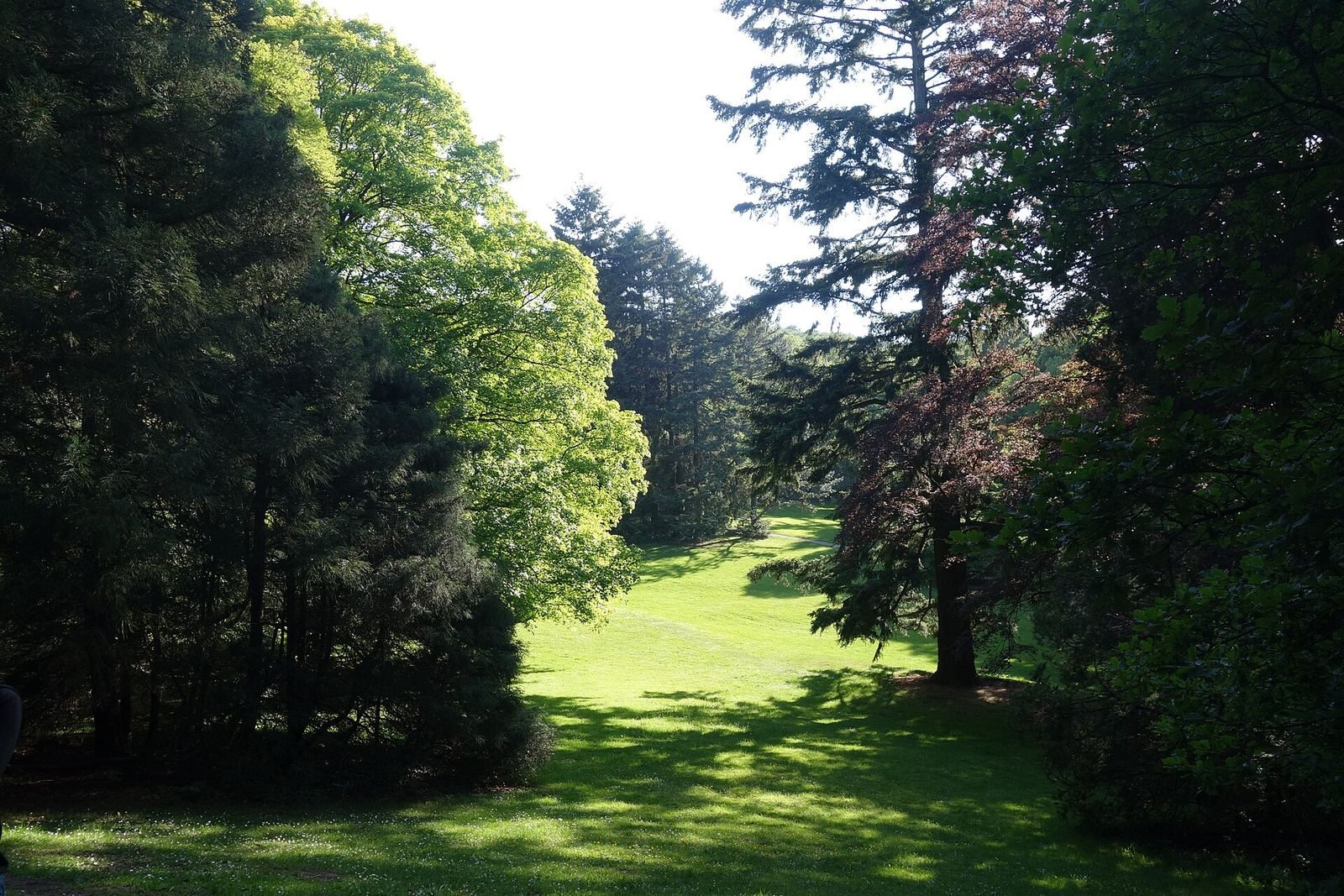
Von-Halfern-Park is an arboretum and landscape park in southwestern Aachen, Germany, laid out in the English landscape style. It began as a family estate and opened to the public in 1925.
Creation of the family estate
Aachen textile manufacturer Gustav von Halfern planned a weekend house for his family, with gardens beside the Groutenhof estate, later called Grundhaus. He added a meadow and small wooded plots before his death on 25 July 1875.
Afterward, his son Friedrich commissioned city garden director Heinrich Grube to create a park. Friedrich, also a textile manufacturer, bank director and municipal councillor in Burtscheid, was known for his study of trees. He acquired further woodland and farmland and developed the estate. He also commissioned Cologne architect Hermann Joseph Hürth to enlarge the family residence into a baroque villa.
Storm damage and public ownership
A severe storm uprooted trees in 1902. Rather than replace them, Friedrich converted the damaged areas into open spaces for walking and picnics, bordered by woodland meadows.
Friedrich died in 1908, and his son Carl inherited the estate. Carl’s mother managed it during his absences. Belgian forces took over the villa and park during the First World War; after the war, a Belgian intelligence office occupied the villa. Neglect during this period contributed to the park’s decline.
In 1925, after becoming regional president in Hildesheim, Carl sold the land to the city of Aachen and gave the Hochgrundhaus to the city for social use. The house became a day sanatorium for young people with lung disease or needing recuperation, and the park opened to the public that year.
War damage and later uses
The park declined further during the Second World War. In 1950, the city garden department resumed its professional upkeep. The manor house became a smallpox ward in 1963 and a women’s shelter in the late 1970s. In 1982, the Association for the Promotion of Waldorf Education leased the house and established a kindergarten based on Rudolf Steiner’s educational approach for young children. It continues in that use.
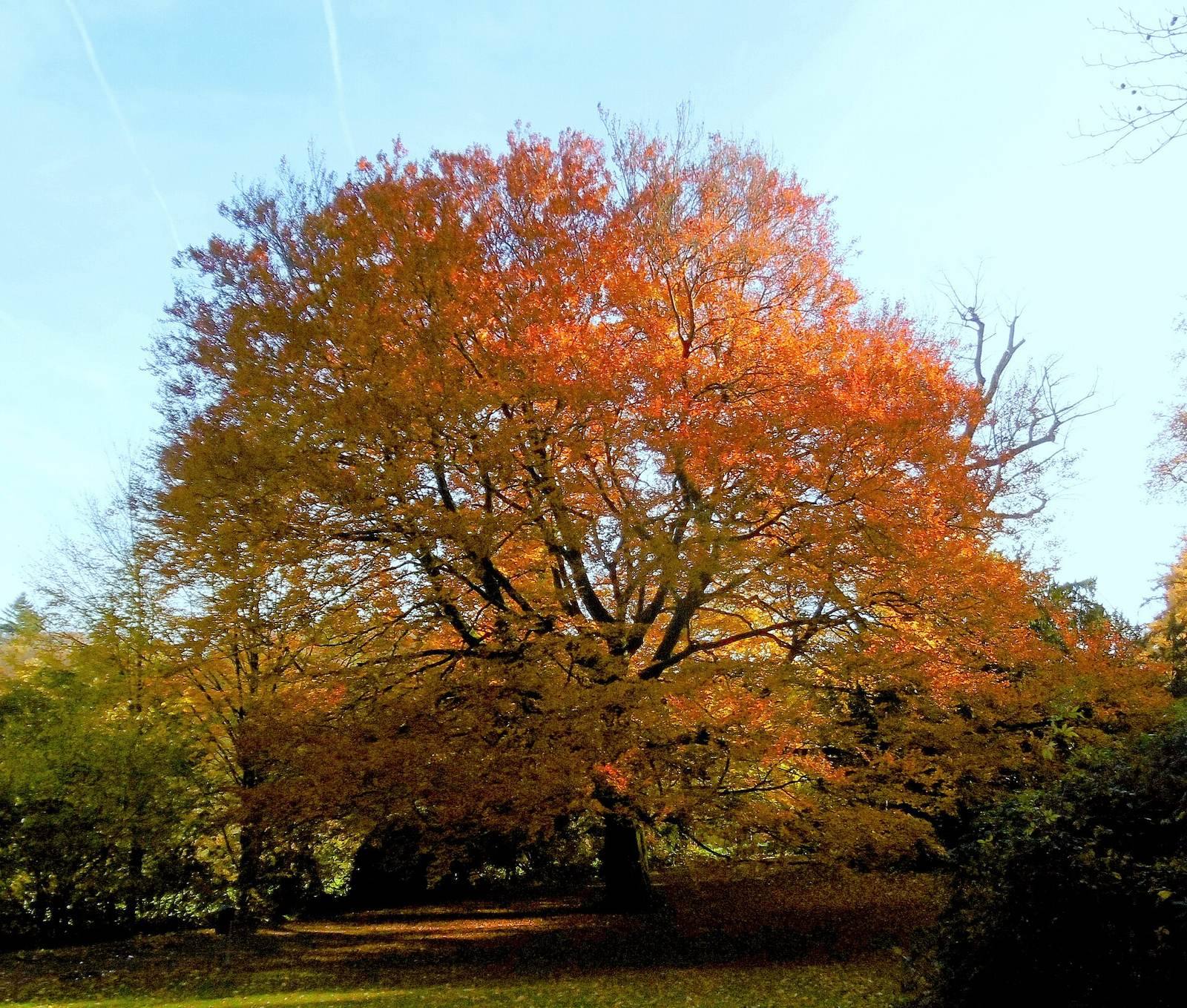
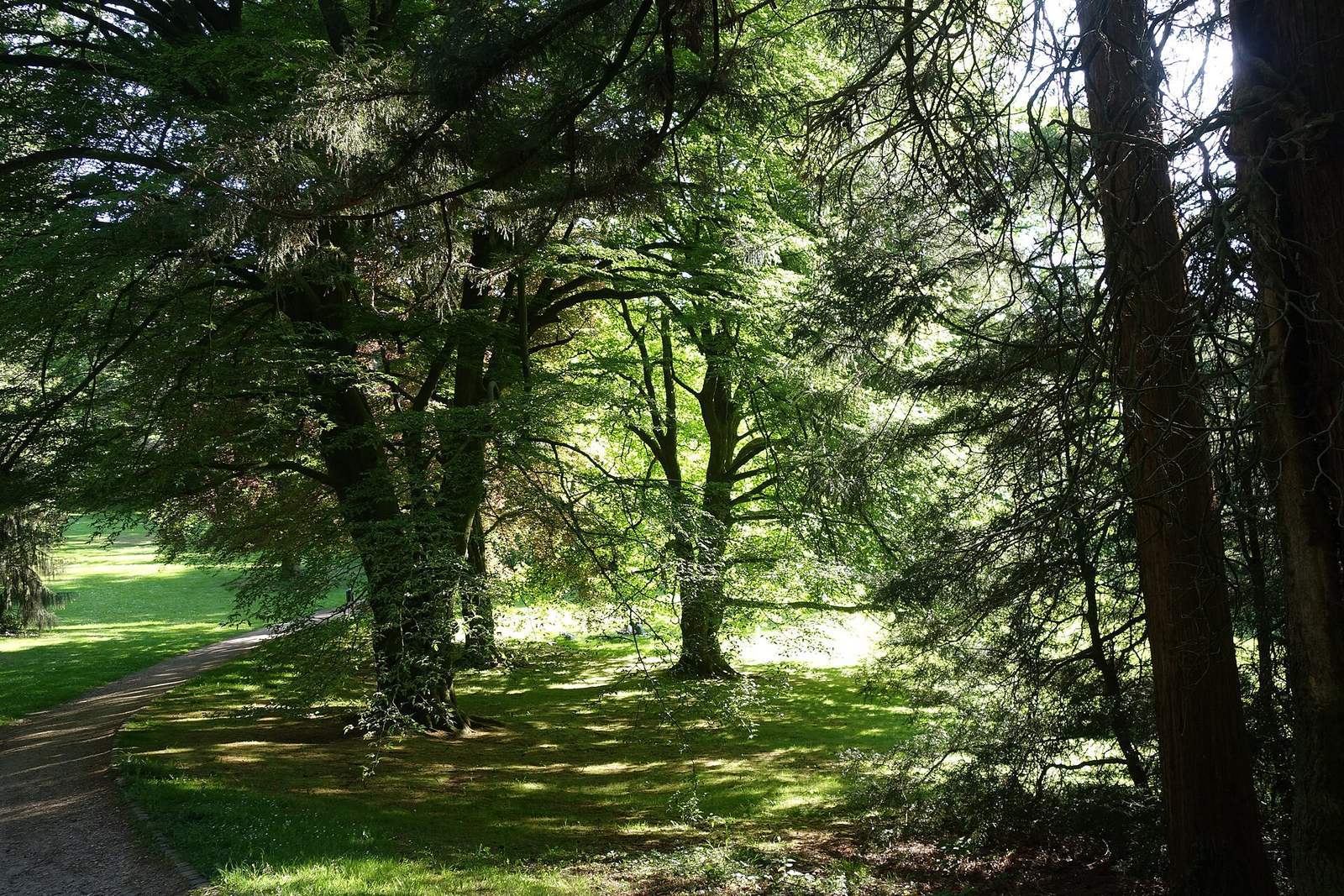
Most trees that survived the storms and wars, including some more than 150 years old, received special protection as natural monuments. This protection allowed them to grow to great size and form.
Remains
The grounds extend along Lütticher Straße and meet the northern edge of Aachen City Forest without a break. The park combines tree collections with open areas and woodland margins.
Grounds and tree collection
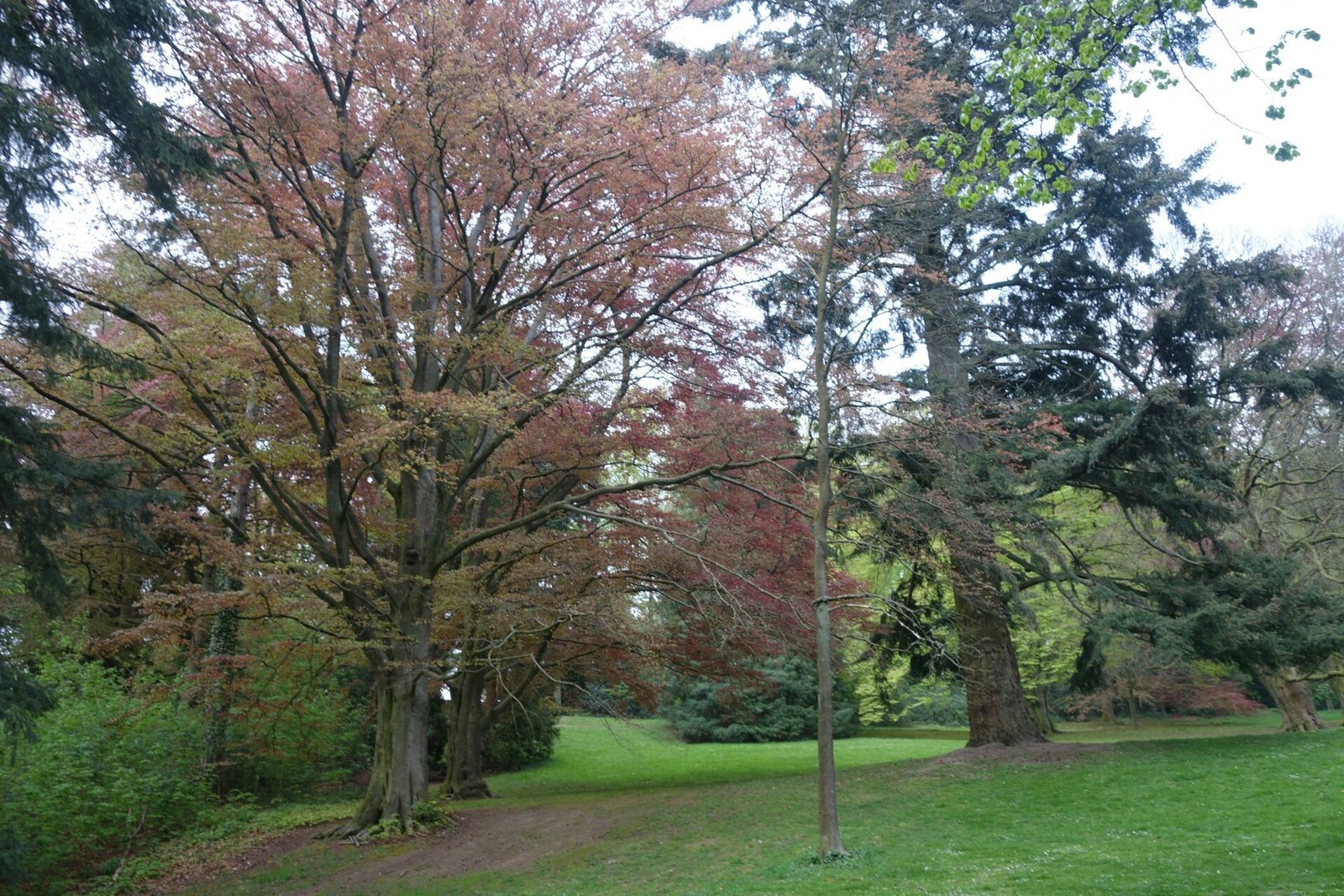
Open walking and picnic areas are edged by woodland meadows. The arboretum includes trees from North America, Europe and Asia, with some specimens reaching about 200 years of age. Friedrich assembled more than 80 deciduous trees and 50 conifers, including sweetgums, araucarias, Engelmann spruces, trees of heaven, pyramidal oaks, dawn redwoods and a Lebanon cedar. He also tried, with limited success, to recreate Yggdrasil, the world tree described as an ash in Norse mythology.
Water and recreation features
The designed grounds included artificial watercourses, grottoes, small temples and towers. Recreational features included a woodland skittle alley, a bocce court, an archery ground and a small riding ring.
House and garden buildings
The estate’s manor house was known as the Hochgrundhaus, and a gardener’s dwelling also stood on the grounds. Near the residence were winter gardens, palm houses and orangeries, along with coach houses, stables and gardeners’ homes.