Monastery of the Descent of the Holy Spirit: A Greek Catholic Basilian Monastery in Slovakia
Site at a Glance
- Popularity
- Low
- Country
- Slovakia
- Primary era
- Early Modern
- Eras represented
- Early Modern, Modern
- Civilizations
- Habsburg, Hungarian
- Site type
- Religious
- Remains
- Monastery
On this page16 sections
History
The Monastery of the Descent of the Holy Spirit is a Greek Catholic monastery in the Order of Saint Basil the Great, located in Krásny Brod, Slovakia, and founded in the fourteenth century. Greek Catholics are in communion with Rome while retaining Eastern liturgical traditions; the Basilian order follows an Eastern Christian monastic tradition associated with Basil of Caesarea. The monastery is regarded as one of Slovakia’s oldest and most important Greek Catholic monasteries, and as a bearer of the Cyril-Methodian heritage, the Christian and literary tradition linked to Cyril and Methodius and the spread of Christianity among Slavic peoples.
Origins and pilgrimage
A foundation story tells of a blind beggar who recovered his sight after washing his eyes with water from a spring and praying to the Virgin Mary before the feast of the Descent of the Holy Spirit, or Pentecost. A chapel was built at the spring, and an icon of the Mother of God, said to have come from Podolia, was placed inside.
In the late fourteenth century, the Podolian nobleman Teodor Koriatovič funded a larger wooden church dedicated to Saint Catherine and cells for monks. He endowed the monastery with the villages of Čabiny, Sukov, and Krásny Brod. Basilian monks settled there, and the monastery later became a center for Orthodox Christianity, the Eastern Orthodox tradition.
For centuries, Rusyns, an East Slavic people associated with the Carpathian region, gathered at the monastery as pilgrims three times each year. Many couples married in its church. Authorities objected to the gatherings, which they characterized as events for young women to meet prospective husbands, and tried unsuccessfully to ban them by royal decrees in 1520 and 1552.
Rebuilding and church union
In 1603, Protestant Count Valentín I Druget, chief official of Zemplín County, ordered the monastery burned. The monks escaped, but valuable records and old icons were lost. Tradition holds that the principal miraculous icon survived. Valentín is credited with ordering the monastery’s reconstruction; rebuilding after 1614 is also associated with Juraj III Druget and Bishop Atanáz Krupecký, including the establishment of a new church.
In 1613, Juraj III Druget invited Krupecký, a Greek Catholic bishop from Przemyśl, to seek local clergy’s agreement to communion with the Roman Church while retaining their Eastern rite. The union was to be concluded at the monastery in 1614, when Krupecký was also invited to consecrate a new church. Opponents stirred unrest among the pilgrims, and Druget’s troops intervened to protect the bishop from being killed. Krupecký consecrated the church the following day, but the union was not made there. Ruthenian clergy entered communion with Rome through the Union of Uzhhorod in 1646.
The monastery served as a bishop’s residence from 1651 to 1664. In 1708, it was destroyed during the uprising led by Francis II Rákóczi against Habsburg rule from 1703 to 1711. The site lay in ruins for about two decades before partial rebuilding began.
Recovery, education, and religious life
By order of the bishop, wooden buildings were restored between 1729 and 1759, and a stone church was built during this period. The monastery’s school, founded earlier, was fully established from 1759. It taught humanities, philosophy, and theology, and may also have included icon painting. It maintained links with brotherhood schools in Sanok, Lviv, and other Ukrainian cities. Teachers taught Latin, Hungarian, German, and Slavonic. The philosopher Arsenij Kocák studied there and later taught at the school.
An icon-painting department operated from 1809 to 1814. Its head produced paintings titled Krásny Brod Fair of Brides and Zemplin Wedding. The monastery also had a novitiate, a training community for people preparing to join a religious order, and a philosophy school during the eighteenth and nineteenth centuries.
On 11 June 1806, Pope Pius VII granted the monastery plenary indulgences, a Catholic remission of temporal punishment associated with sin. They became linked to the annual feast of the Descent of the Holy Spirit, observed according to the Julian calendar.
Diocesan life and wartime destruction
On 17 June 1821, Bishop Alexej Povčij of Mukachevo consecrated Gregor Tarkovič as the first bishop of the Greek Catholic Diocese of Prešov. Tarkovič gave part of his library to the monastery school, and Alexander Duchnovich donated books in 1859. By 1891, the monastery library held about 2,000 volumes.
During the First World War, the monastery and church were hit by Austrian artillery shells amid fighting between Russian and Austrian forces. In early 1915, the monks withdrew from the ruins to the Basilian monastery at Máriapócs. The monastery’s bells were melted down to make cannons, and some library books were taken to Hungary.
Recovery and renewal
The Krásny Brod icon was hidden during the 1915 destruction and concealed again in 1950, when the Communist government suppressed the Greek Catholic Church and transferred its property. After the church was restored in 1968, the icon returned to the Greek Catholic community. Painter Mikuláš Jordán restored it between 1970 and 1979.
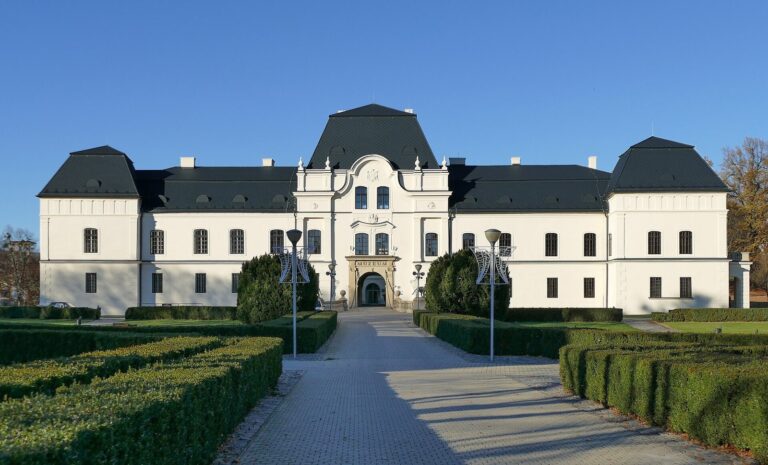
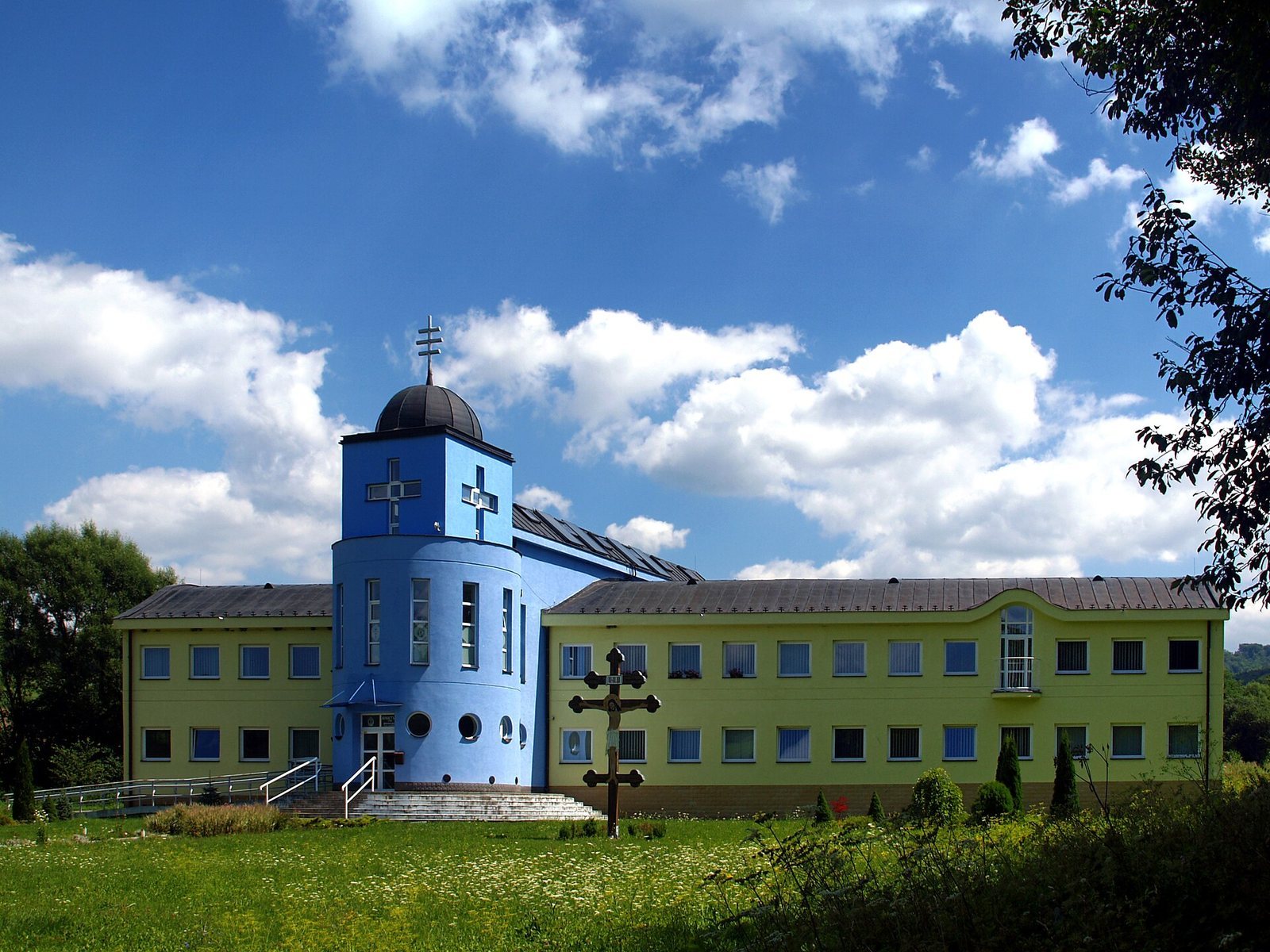
The historic Chapel of the Protection of the Mother of God, dating from 1759, was restored and consecrated secretly in 1974. After the Velvet Revolution and the end of Communist rule, the Basilians returned to care for the site. A new monastery was built near the old ruins between 1998 and 2002 and consecrated in 2002, when a novitiate opened there. The icon was kept in the historic chapel from 1998, and a later church dedicated to the Protection of the Mother of God is also identified as its shrine.
Remains
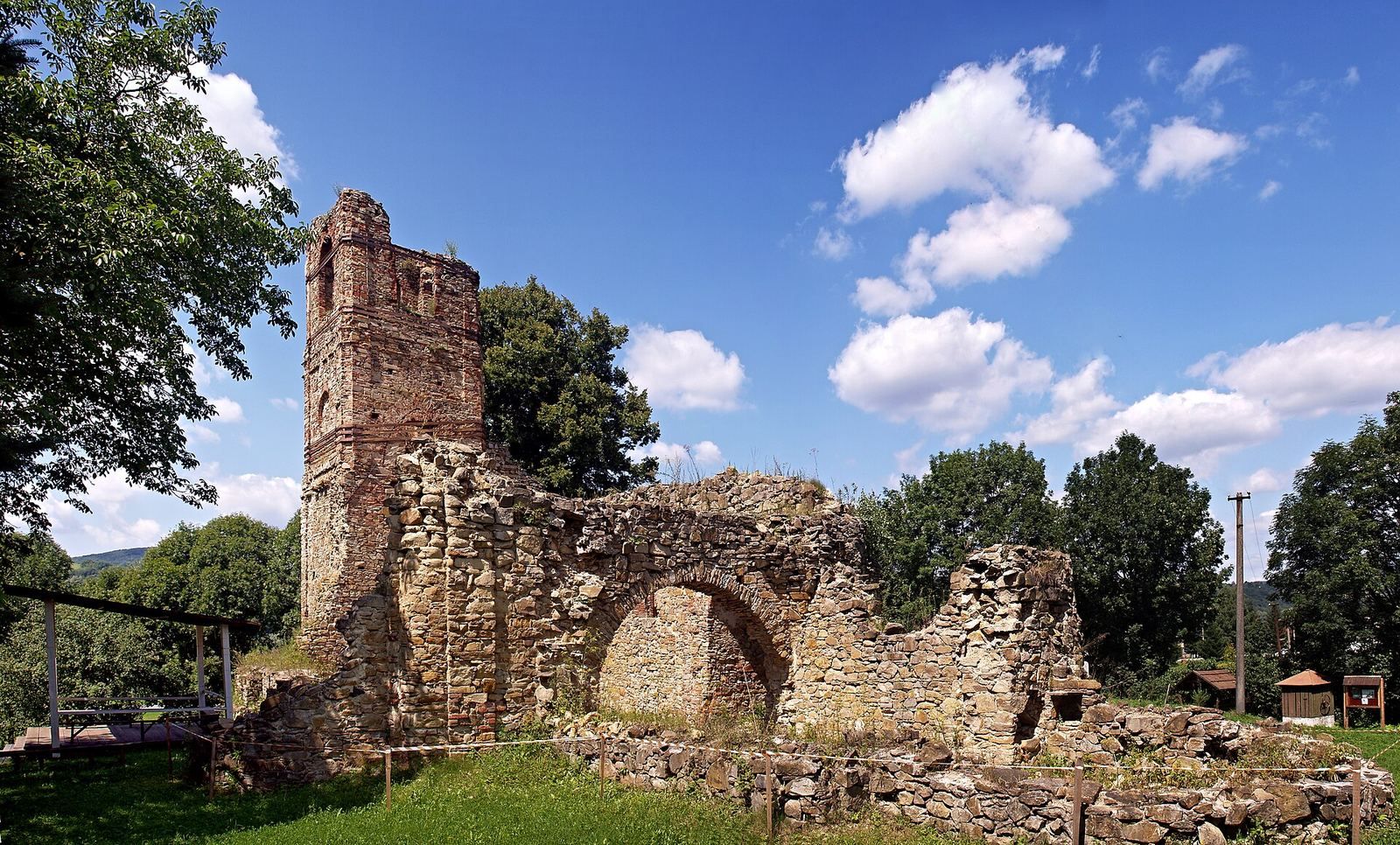
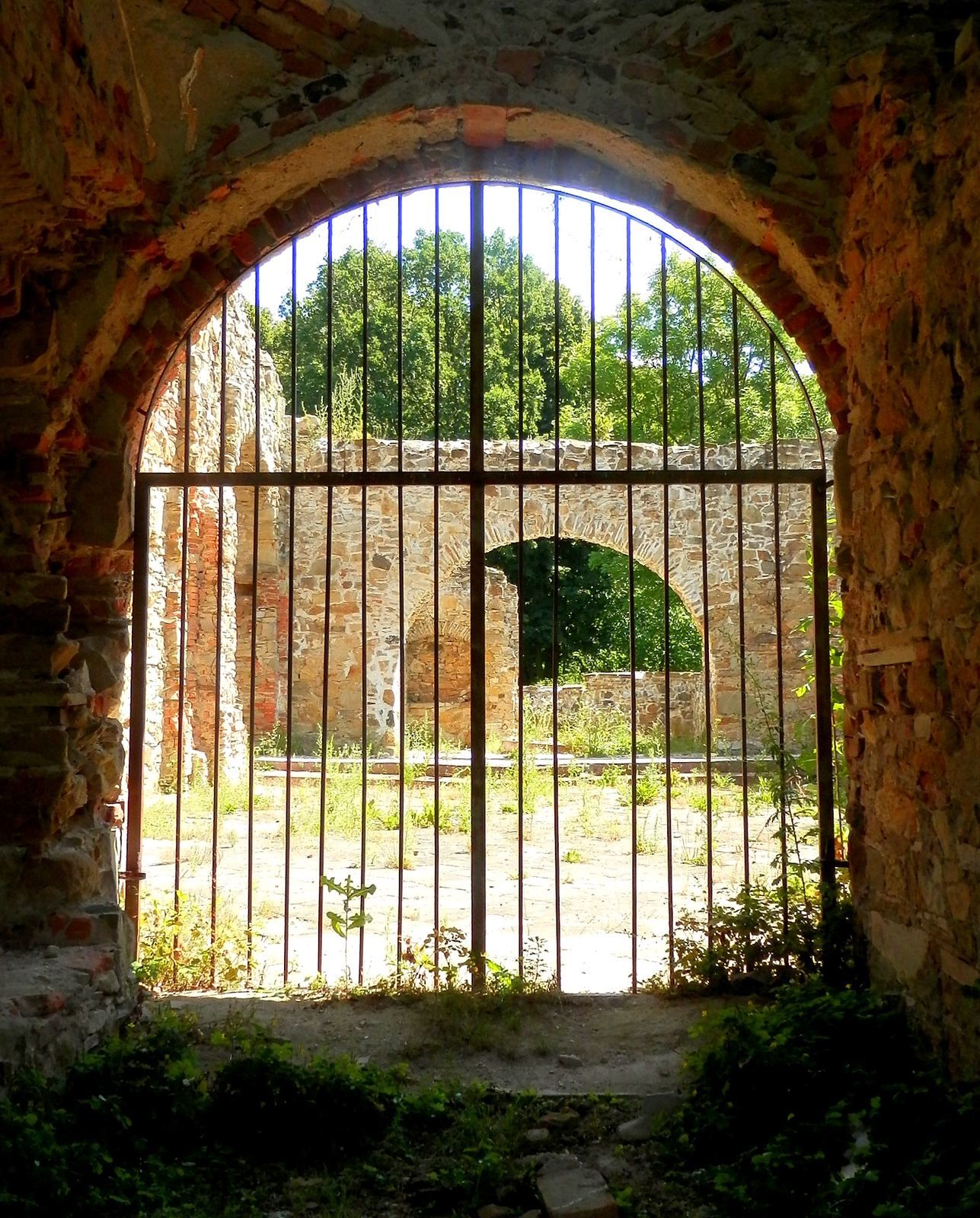
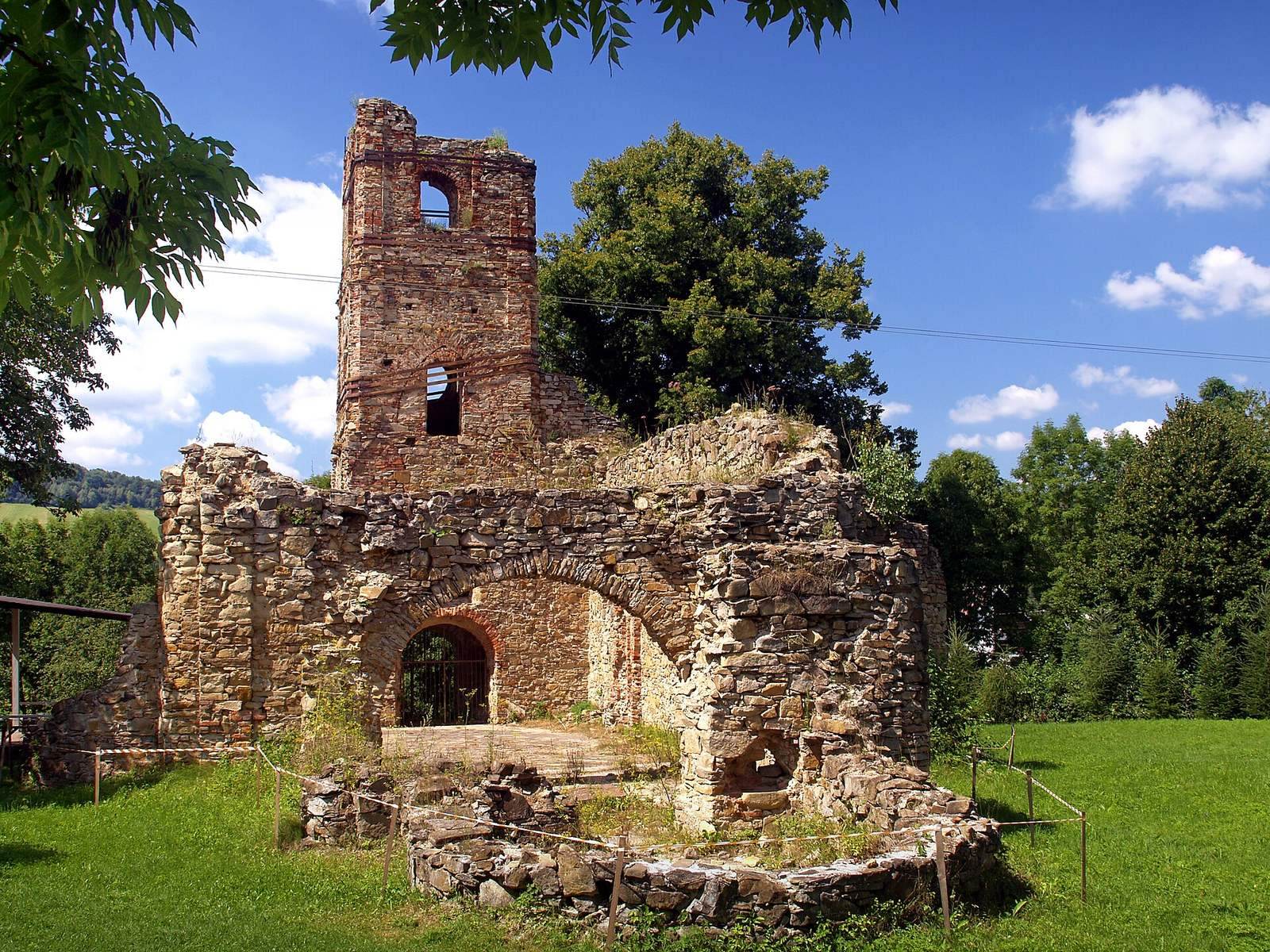
The old monastery and its church now stand in ruins, while the historic Chapel of the Protection of the Mother of God remains in good condition. The original complex included wooden buildings, followed by a stone church. A First World War cemetery lies near the ruins of the original church, and the new monastery stands several dozen metres from the old remains.
Historic monastery and church
Monastery buildings
An inventory covering 1759 to 1782 describes a complex with 23 cells, a refectory, or communal dining room, a cellar, a farm building, a granary, an enclosing wall, and two areas used for blacksmithing. The monastery also held land and a house with two rooms, a stable, and a cellar.
Stone church
The stone church was built between 1743 and 1752. An inscription carved into the main nave gives the year as 7260 from the creation of the world and 1752 from the birth of Christ.
Chapel of the Protection of the Mother of God
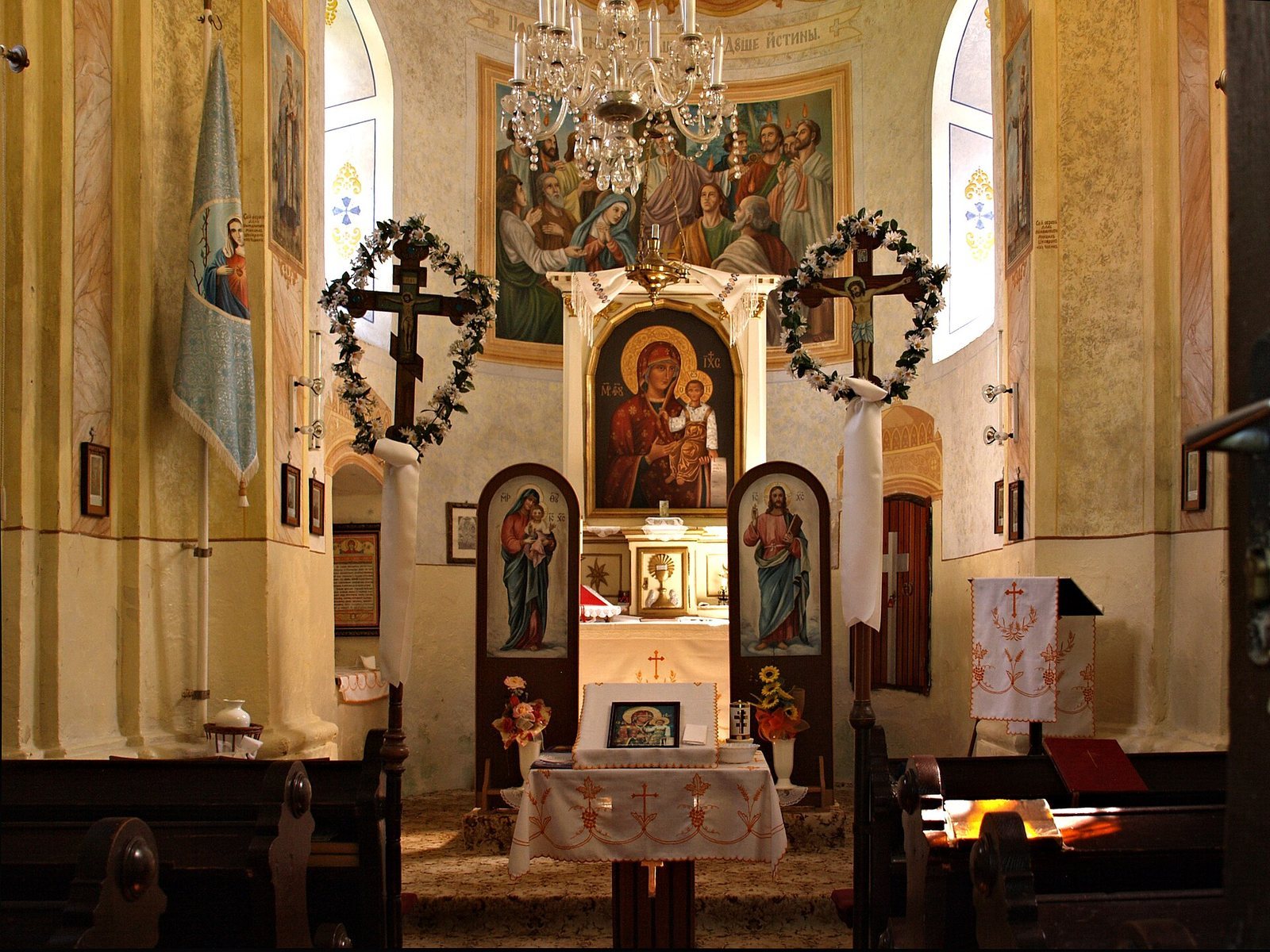
The historic chapel dates to 1759 and was restored and consecrated in 1974. It is in good condition and served as a home for the monastery’s icon from 1998.
Krásny Brod icon
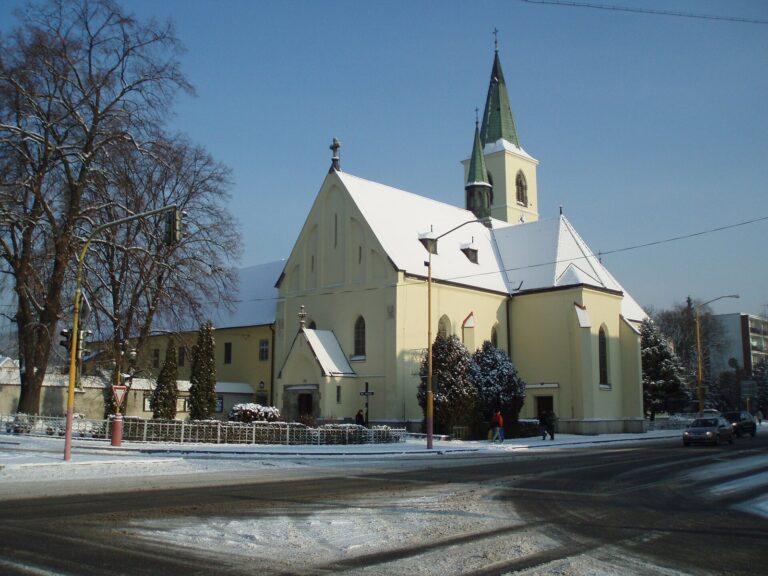
The icon of the Mother of God is attributed to the fourteenth century and is regarded as a rare work in Slovak icon painting. Its recorded locations include the historic chapel, the south wall of the Church of Saint John the Baptist in Krásny Brod, and the later Church of the Protection of the Mother of God.
First World War cemetery
The cemetery near the old church has a square plan with a Latin cross at its center. It contains 10 mass graves with an unknown number of soldiers and 90 individual graves of unidentified soldiers. About 1,006 unidentified soldiers from the Austro-Hungarian and Russian imperial armies are buried there.
Library and later buildings
Library holdings
The monastery library’s holdings included a Czech chronicle dated 1541, a legal text from 1569, an Ostroh Bible from 1581, and dictionaries from the sixteenth century. A service and prayer book printed in Lviv in 1644 was taken to Hungary and is now held by the University Library in Debrecen.
New monastery and church
The new monastery, built several dozen metres from the old ruins, includes a chapel dedicated to Blessed Pavol Gojdič, a Slovak Greek Catholic bishop venerated as a blessed. A later Church of the Protection of the Mother of God was built there and is identified as the place where the Krásny Brod icon was deposited.