San Bartolomeo: Parish Church in Zuccarello, Italy
Site at a Glance
- Popularity
- Very Low
- Country
- Italy
- Primary era
- Medieval
- Eras represented
- Medieval, Early Modern
- Civilizations
- Unclassified
- Site type
- Religious
- Remains
- Church
On this page9 sections
History
San Bartolomeo is a Roman Catholic parish church in Zuccarello, in Italy’s province of Savona, dedicated to the apostle Bartholomew, traditionally counted among the Twelve Apostles and revered as a Christian martyr. The church is generally associated with the village’s establishment in the thirteenth century, although an earlier foundation in the eleventh or twelfth century has also been proposed. It serves as a parish in the Diocese of Albenga-Imperia.
Parish and ecclesiastical role
In 1318, San Bartolomeo was under the care of a chaplain. In 1554, it became the seat of an ecclesiastical district serving communities in the marquisate, including Onzo, Aquila, Gavenola, and settlements in the Neva and Pennavaire valleys. This arrangement appears to have grown from the earlier responsibilities of the Church of the Assumption at Castelvecchio and St John the Baptist at Nasino, which served the two valleys respectively.
Visitation and rebuilding
Alterations in the fifteenth century reduced the church’s original structure. During an apostolic visitation, a formal ecclesiastical inspection, in 1583, Monsignor Mascardi of the Diocese of Albenga listed the altars and ordered repairs to the floor, coverings for the bell openings, and whitewashing in the sacristy. Work on the choir followed in 1599.
Seventeenth-century rebuilding brought changes to the interior and added a bell stage in the Baroque style, a later European architectural style. In a mid-century description in the Sacro e Vago Giardinello, Giuàn Bröxu Paneru also noted a statue of St Ursula, traditionally venerated as a virgin martyr. The church’s four original smaller side altars were dedicated to St Anthony, St Catherine, St Mary, and the Annunciation, which commemorates the angel Gabriel’s announcement to Mary that she would bear Jesus. Some altars were later removed and others added; the altar of Our Lady of the Snow was transferred from a church near the cemetery.
Conservation
Work between 2000 and 2003 secured the roof and exterior walls and repainted the exterior. From 2007 to 2011, further work addressed the floor beside the organ, the bell tower’s interior, the counterfacade, and other features on the first floor.
Remains
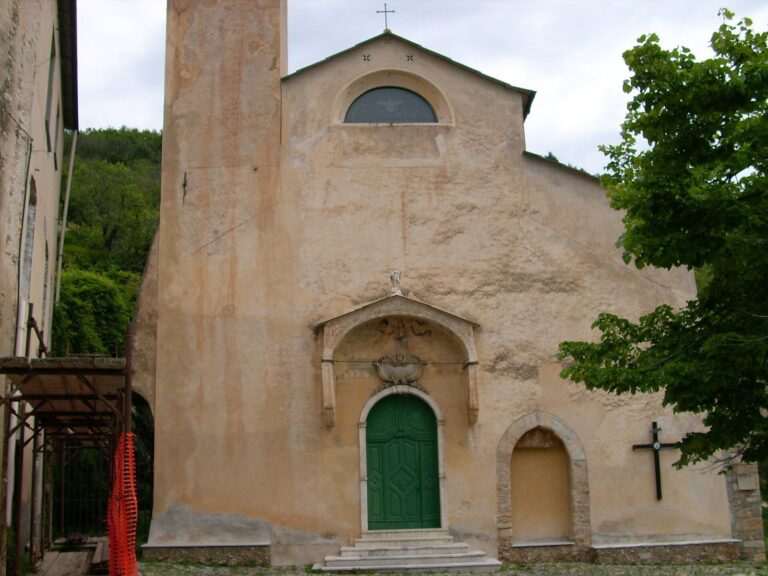
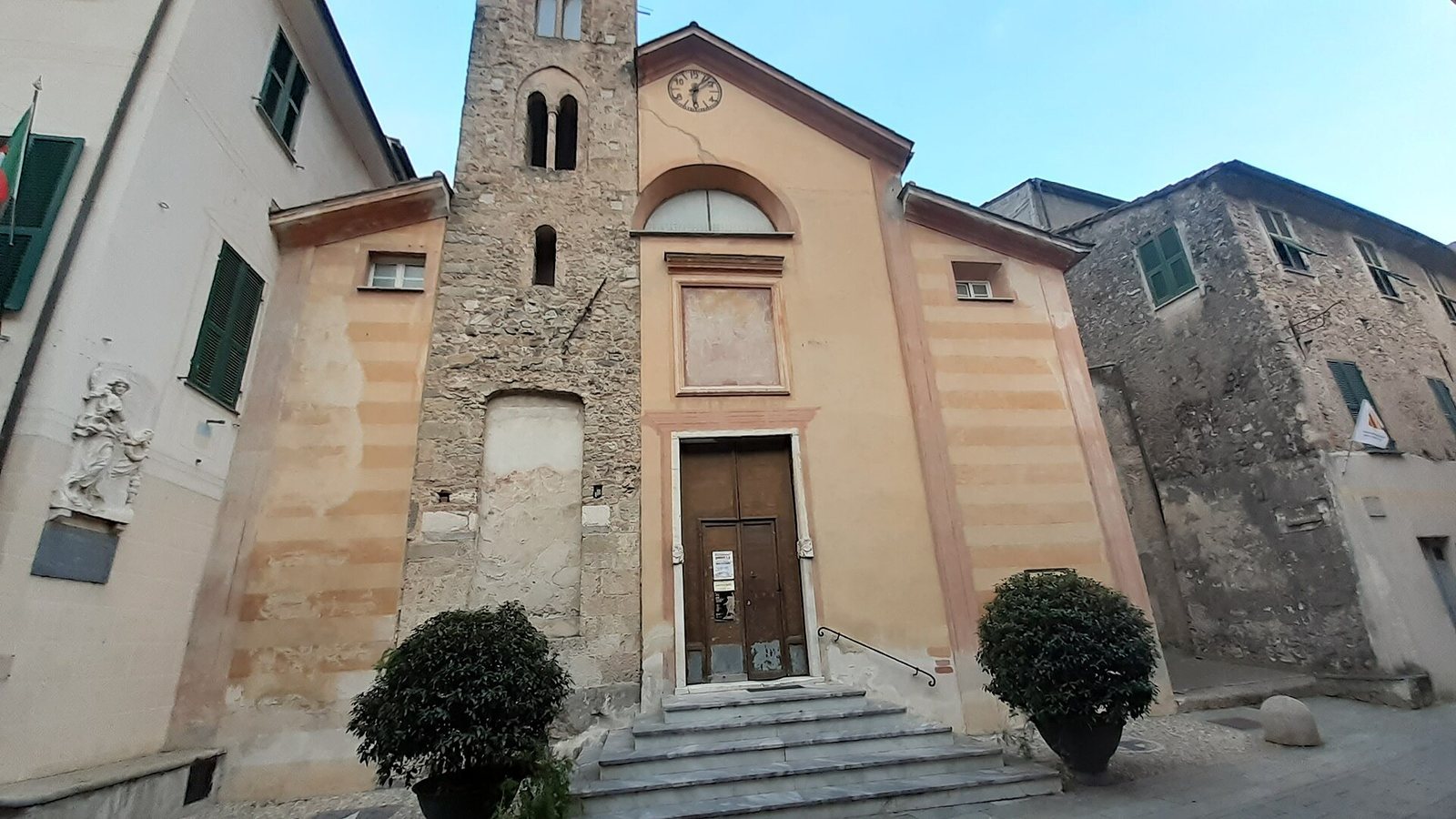
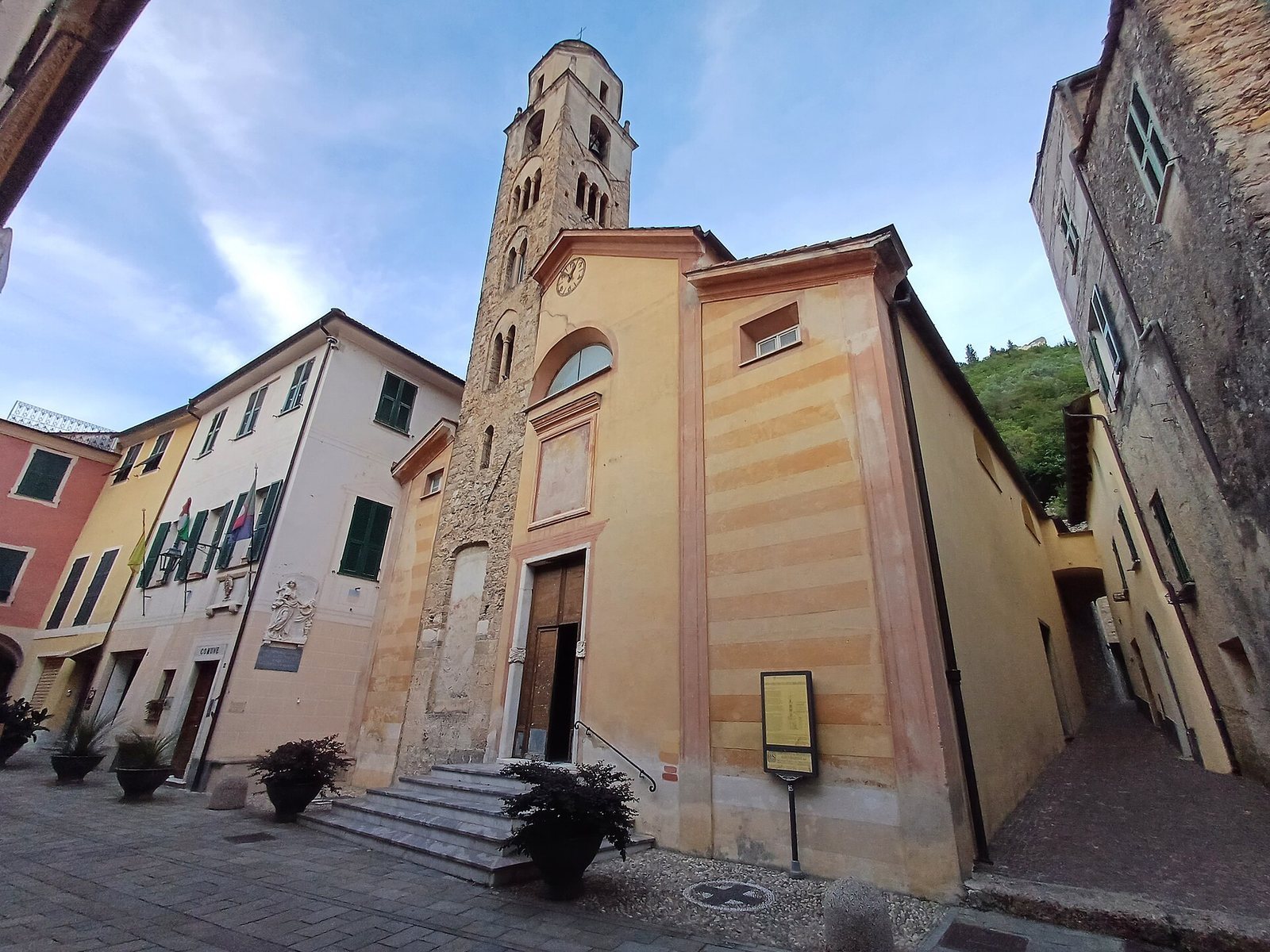
The church has a rectangular basilican plan, with a central nave, or main hall, flanked by two side aisles. Its facade has a distinctive truncated-gable outline, emphasized during restoration.
Interior arrangement
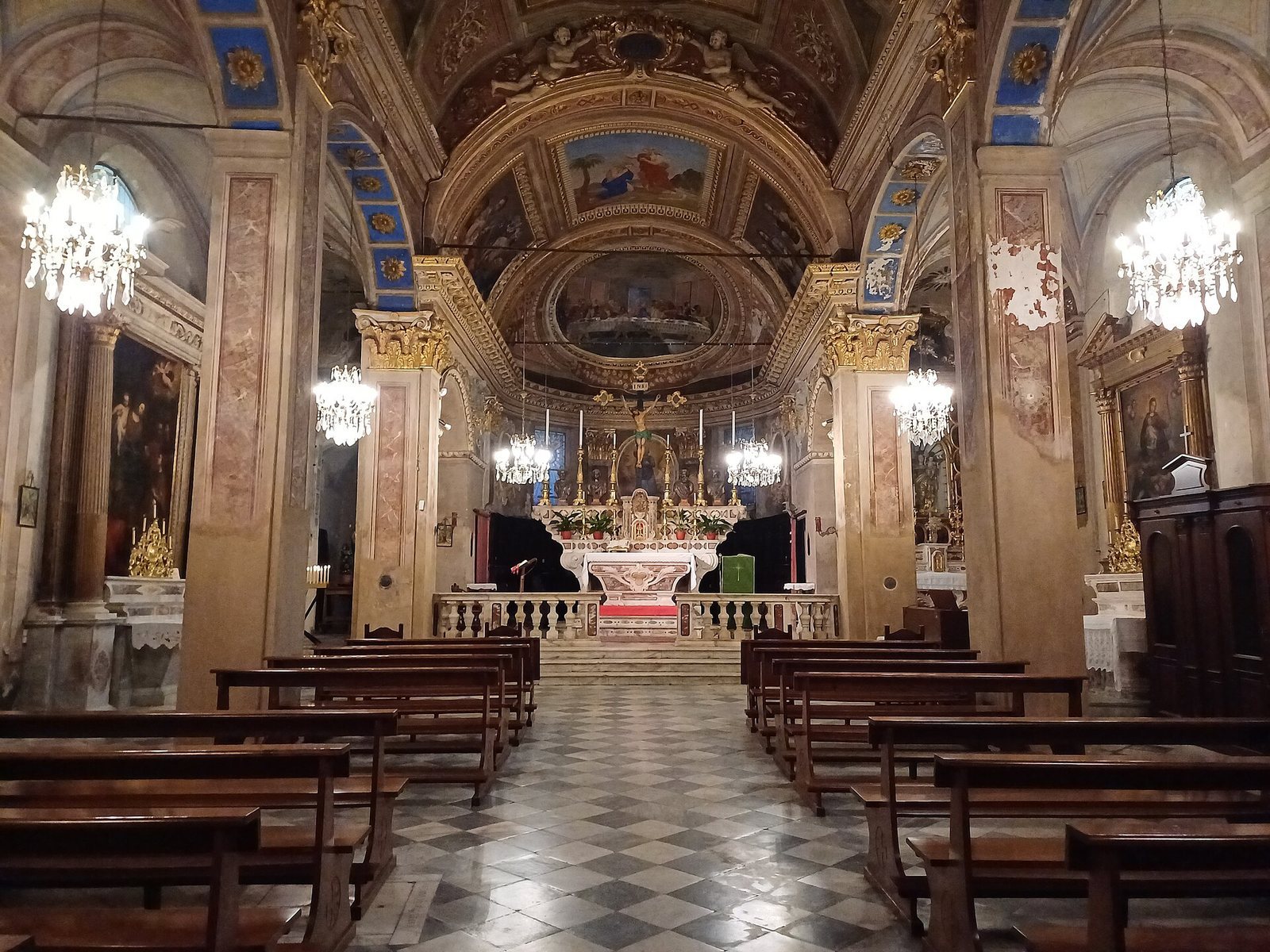
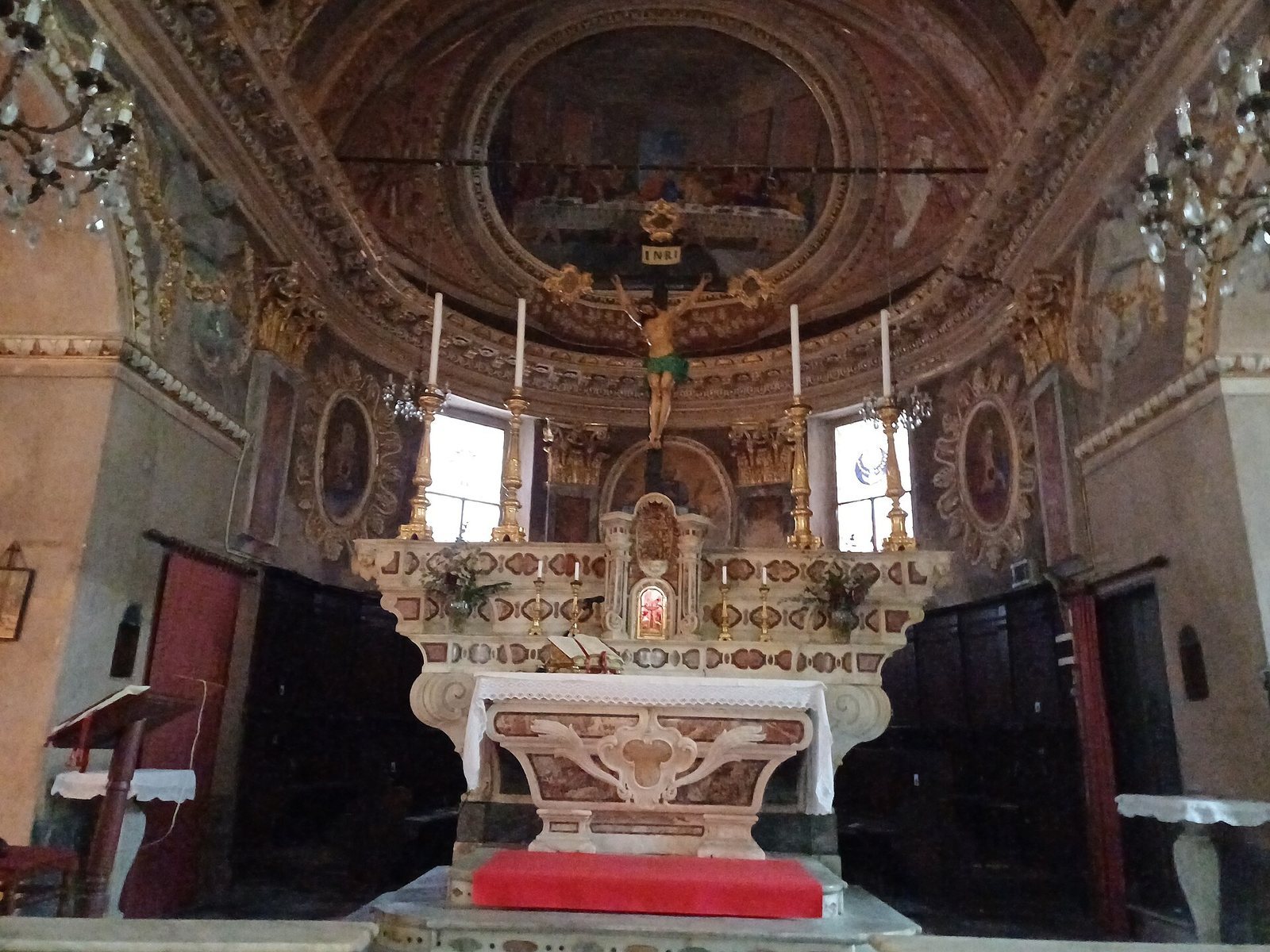
Pillars with attached decorative half-columns support semicircular arches. The columns use the Composite style of classical columns toward the center and the Doric style along the aisles; the undersides of the arches are painted to imitate recessed ceiling panels. Plaster covers the central nave, which has a lowered barrel vault, or continuous curved ceiling, with lunettes, curved sections formed where openings meet the vault. The side aisles have cross vaults made from intersecting vaulted sections. At the far end, a semicircular apse, a rounded recess, adjoins the presbytery, the area around the main altar. Steps and a marble railing set off the presbytery, whose vault sits at a different height from that over the nave. The entrance portal stands above street level.
Bell tower
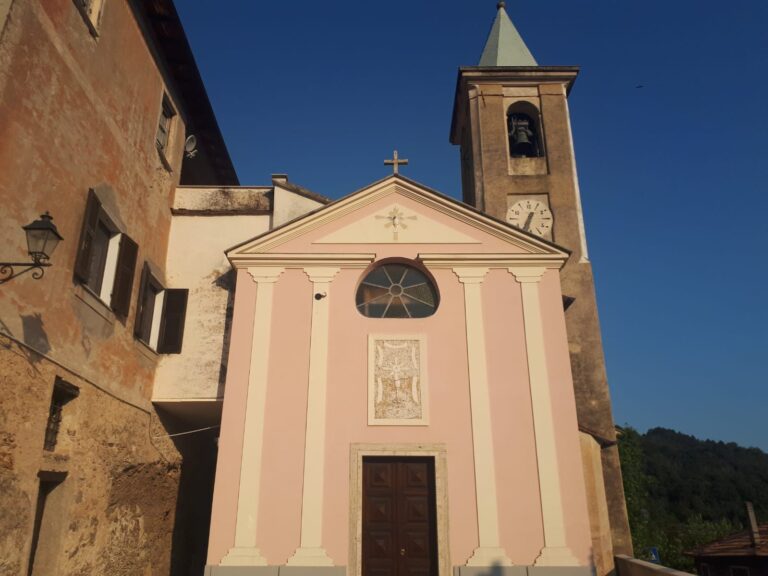
The adjacent tower has a Romanesque lower section, an early medieval European architectural style, whose base is thought to date from between the eleventh and thirteenth centuries. Its upper section is built of tuff, rock formed from compacted volcanic ash, and has Gothic openings, in a later medieval style. A single-section opening sits low on the tower, with two-section windows above and a three-section opening higher up; these divisions are known as two-light and three-light openings. The bell openings have flattened arches. The upper bell openings may reflect Baroque-era work, and a crowning stage was added in the seventeenth century. The medieval tower is thought to have been much lower, with a pyramidal spire that was later replaced by the present dome.
Altars and sculpture
Among the later altars are those dedicated to St Joseph, Our Lady of the Snow, St Sebastian, and Our Lady of the Rosary, the last dated 1608. The St Joseph altar has a wooden statue carved by Pietro Olivari and an image of the dead Christ. St Joseph is traditionally regarded as Mary’s husband and Jesus’s earthly guardian. Olivari also carved the statue at the St Sebastian altar; Sebastian is venerated as a Christian martyr.
Paintings and furnishings
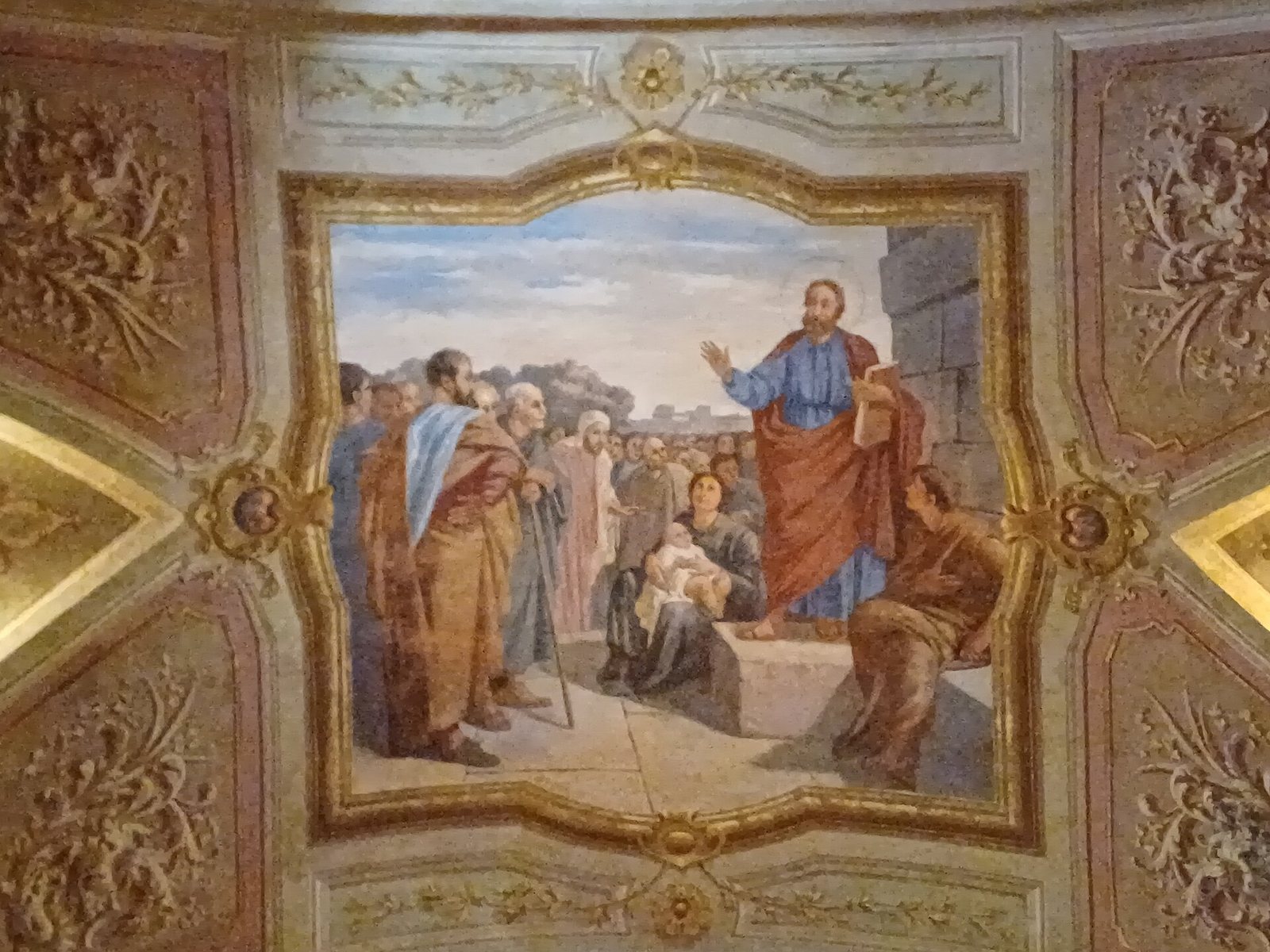
Frescoes, wall paintings made on plaster, in the central part of the church depict the martyrdom and glory of St Bartholomew. They are attributed to Gerolamo Graffigna, a pupil of the Genoese painter Nicolò Barabino. A painting on the right depicts the Madonna and Child with St Dominic and St Catherine; it is signed by Giacomo Rodi and dated 1624. Dominic was the medieval founder of the Order of Preachers, commonly known as the Dominicans. On the left, a painting by Orazio de Ferrari shows the Madonna and Child with St Catherine, St John the Evangelist, St Charles, and St Anthony. The church also preserves a fourteenth-century canvas of the dead Christ and a wooden chest associated with St Bartholomew. A choir loft on the counterfacade, the interior wall opposite the main altar, contains a pipe organ of uncertain date.