Nøtterøy Church: A Medieval Parish Church in Norway
Site at a Glance
- Popularity
- Low
- Country
- Norway
- Primary era
- Medieval
- Eras represented
- Medieval, Early Modern, Modern
- Civilizations
- Denmark–Norway, Norwegian
- Site type
- Religious
- Remains
- Church
On this page13 sections
History
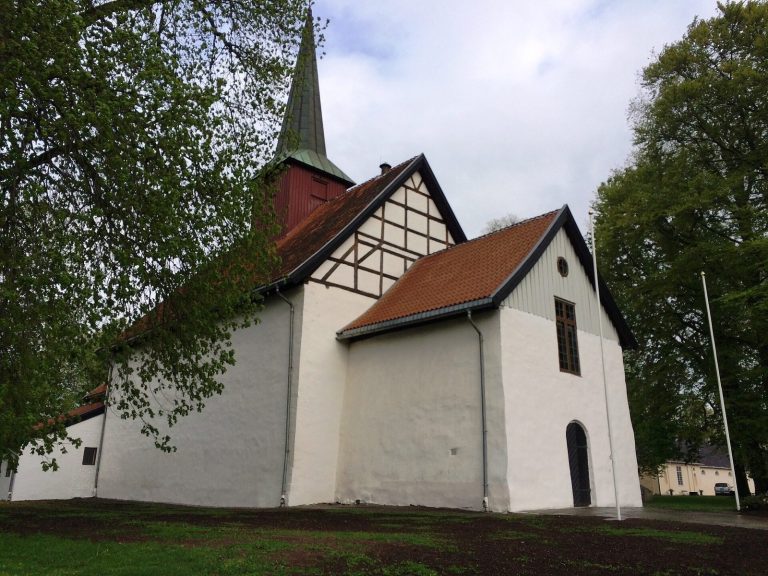
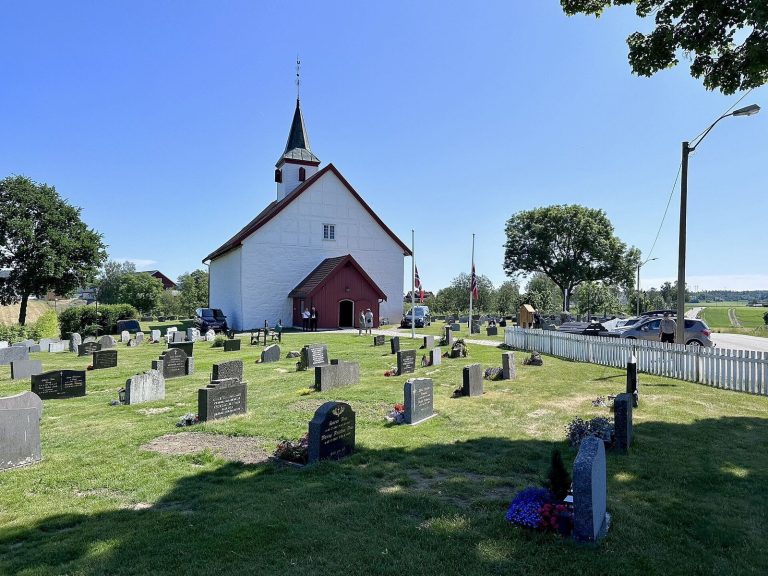
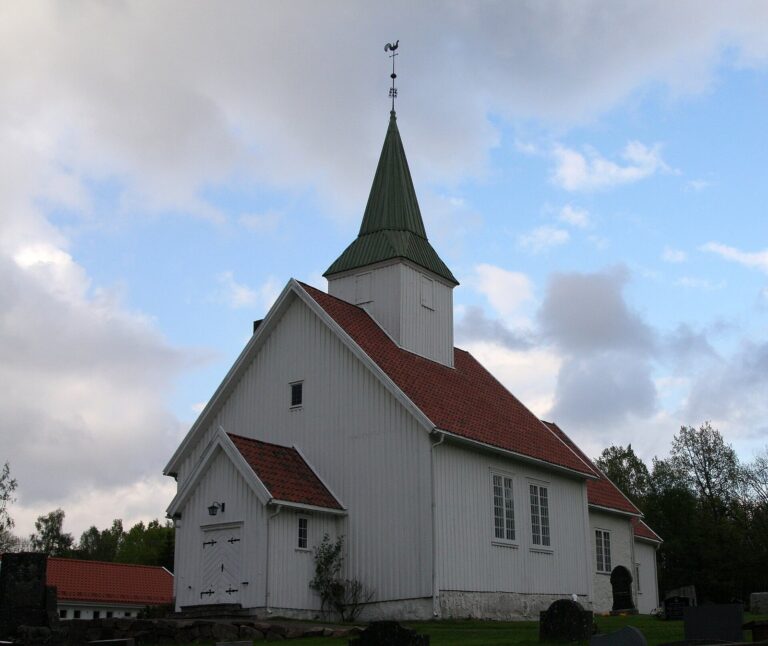
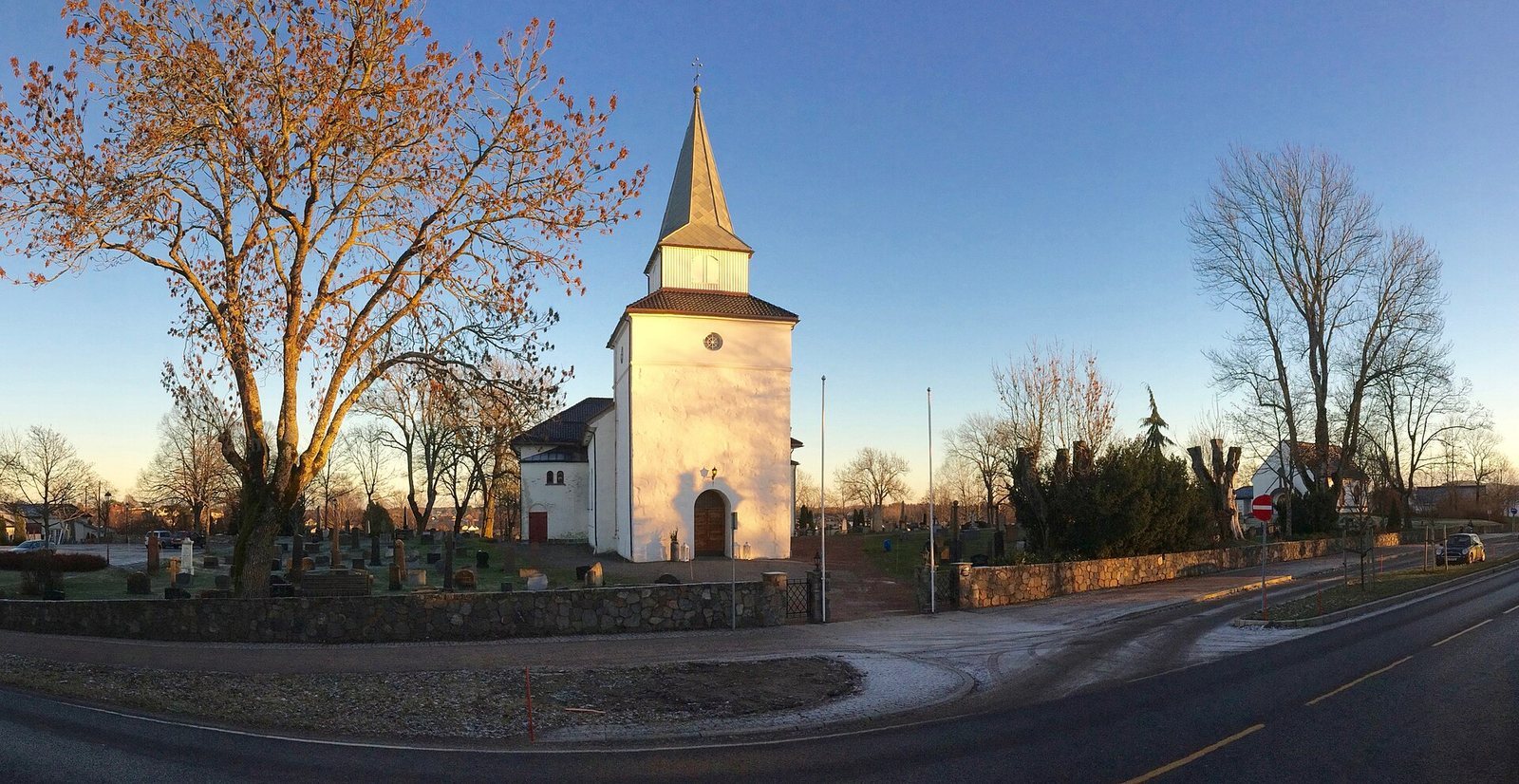
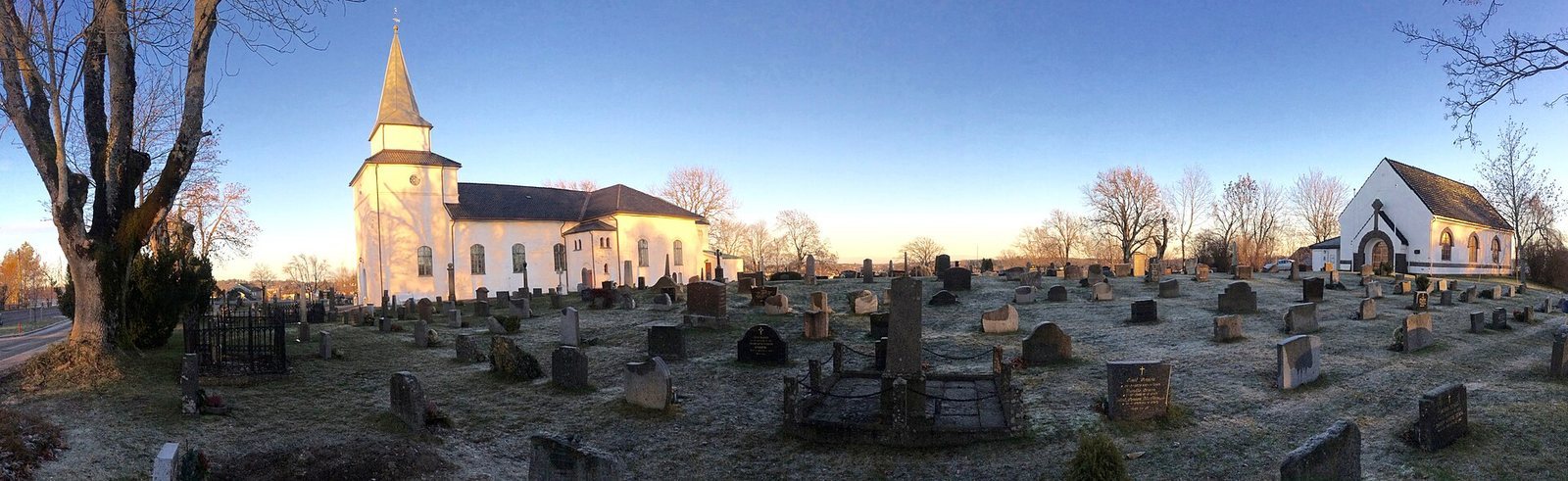
Nøtterøy Church is a medieval church in Borgheim, on the island of Nøtterøy in Norway, built around 1100, probably in the early 12th century, and consecrated during that century. It began as a Catholic church dedicated to the Virgin Mary and is now an active Evangelical Lutheran church, part of the Protestant tradition, serving the local parish of Nøtterøy. It was the principal church of the former Nøtterøy clerical district, an earlier church-administration area.
Medieval dedication
The earliest known notice of the church is a letter issued at Avignon in 1323 by Pope John XXII, who led the Catholic Church from 1316 to 1334. The letter describes the church as dedicated to the Virgin Mary. Bishop Eystein’s land register of 1398 also names Mary as its dedicatee, and the church’s feast day fell on 16 August.
Ownership and civic life
The Count of Jarlsberg owned the church from 1673 until 1770, when it passed to local farmers. In 1814, it served as a polling place for Norway’s first national elections. Parish voters chose electors, who in turn selected representatives for the Constituent Assembly that drafted the Norwegian Constitution.
Nineteenth-century changes
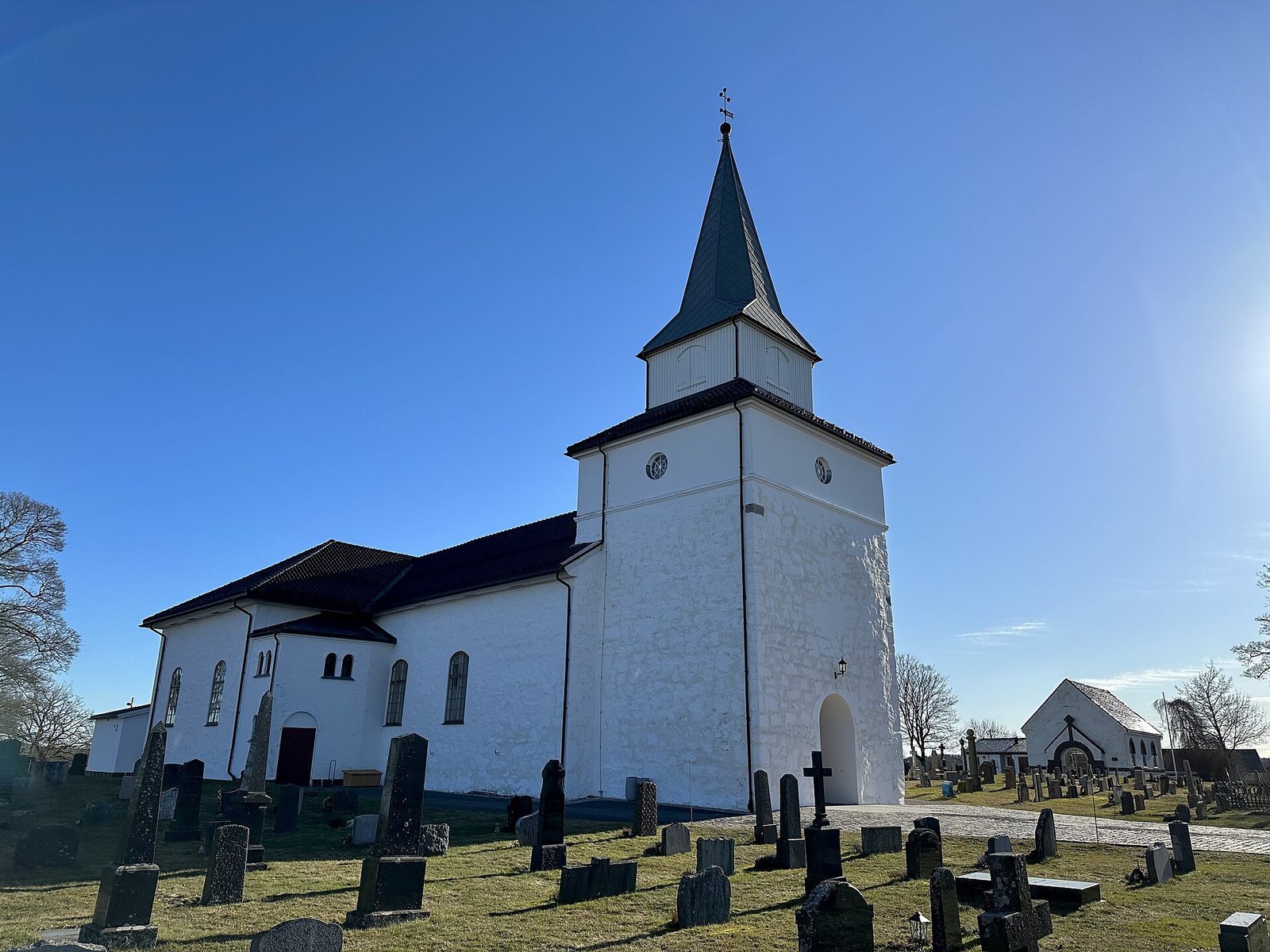
The municipality acquired the church in 1837 and began considering an enlargement. Transepts, the crosswise arms of a church, were added in 1839, giving the building a cross-shaped plan; workers also repaired the nave and tower. In 1862, the tower’s wooden section was removed, and the rebuilt tower rose about 2.5 metres higher. An eastward extension followed in 1883. The church has automatic protection as a Norwegian cultural heritage site.
Remains
Church fabric and plan
Plan and construction
The whitewashed building is made of gray stone and brick, with walls combining brickwork and rubble stone. The original structure measured about 33 by 11.5 metres, with the main worship space and choir arranged along one axis and ending in a curved apse, a rounded sanctuary end. Parts of the original western nave and the base of the tower survive within the building. Its present cross-shaped layout includes a tower at the west entrance and an eastern sanctuary surrounded by vestries, rooms used by clergy to prepare and store worship items. Stairways at the north and south corners of the transepts lead to second-floor seating galleries. The enlarged church measures about 46 by 23 metres and has seating for around 500.
Stone reliefs
Reliefs carved into individual stones are set into the church walls. They may have been brought from the original building; if so, they date to the second half of the 12th century.
Interior furnishings and artworks
Baptismal font and pulpit
The baptismal font, a basin used for baptism, combines a sandstone foot from Gotland dating to around 1150 with an upper section made of soapstone in 1920. The pulpit dates to 1883.
Altarpiece
The Rococo altarpiece, an artwork placed behind or above an altar, was painted by Jakob Lindegaard around 1770. Its central scene shows Jesus on the cross, with the Virgin Mary and Mary Magdalene kneeling below and John standing to the right. On the wings, an anchor represents hope and a cross represents faith. The upper part bears the name of God, Jahwe, in gold.
Donated objects and lighting
A model of a corvette, a small warship, was given by Johannes Pedersen Bruu and hung in the church in 1817. Nøtterøy shipowners donated the large prism chandelier in the centre of the church in 1868.
Churchyard and nearby features
The church stands at the centre of a churchyard and cemetery complex. A burial chapel is located to its south, while a nearby small park contains a war memorial by sculptor Carl E. Paulsen dedicated to Norwegian war veterans. In the church porch, Paulsen also made a relief beside a plaque commemorating those killed in the Second World War. The 19th-century Nøtterøy parsonage, the parish minister’s residence, lies west of the church in Prestegårdsskogen.