Pietra d’Amico Castle: A Medieval Fortification in Sicily
Site at a Glance
- Rating
- 5
- Popularity
- Very Low
- Country
- Italy
- Primary era
- Medieval
- Eras represented
- Medieval
- Civilizations
- Kingdom of Sicily
- Site type
- Military
- Remains
- Castle
On this page9 sections
History
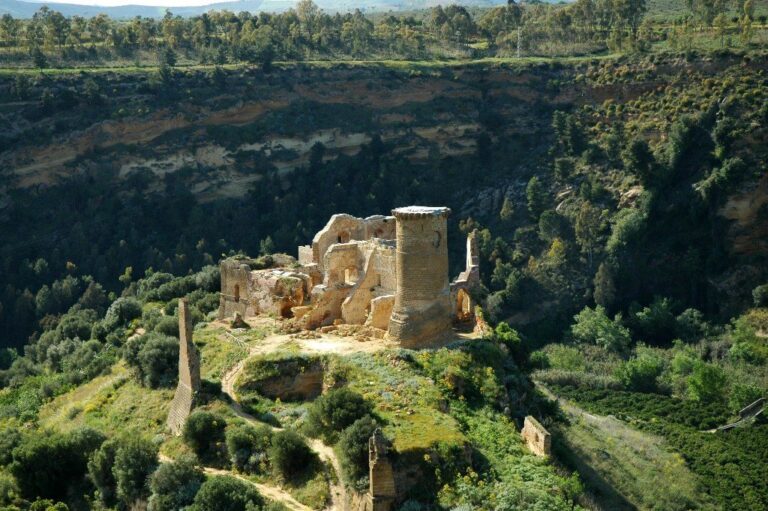
Pietra d’Amico Castle is a medieval fortification on a rocky outcrop near Alessandria della Rocca in Sicily, Italy. Local baron Pietro D’Amico built the castle in 1355, on a site probably occupied by a fort during the Byzantine period, when the eastern Roman Empire was centered at Constantinople. The earlier stronghold was later embellished in the Romanesque style, characterized by rounded arches and substantial masonry.
Byzantine and Arab periods
A small fort probably stood on the outcrop in the eighth or ninth century. Its layout and objects found there support its early presence, and it was likely intended to resist Arab incursions. After Arab forces conquered Sicily, they continued to use the fort as a lookout. An agricultural settlement grew beside it as families from North Africa were brought to the area and surrounding land was cleared for farming.
Norman rule and the fort’s destruction
During the Norman conquest of Sicily, the Normans, a people of Scandinavian origin who established rule in parts of southern Italy, expelled Arab and Byzantine forces. Roger I, known as the Great Count, granted the fort to his relative Lucia, Lady of Cammarata. The surrounding lordship later became a barony, a feudal territory held by a baron, and the fort was embellished in the Romanesque style.
A 1244 record from the Diocese of Agrigento names Scibene and Chinesi as the area’s only inhabited hamlets. Their parish communities paid tithes to the bishop, a church payment traditionally drawn from produce or income. The settlement beside the fort appears to have been depopulated by this time. The fort was destroyed during the late-thirteenth-century War of the Sicilian Vespers, a conflict between the French-origin Angevin dynasty and the rulers of the Crown of Aragon.
The castle and its feudal owners
In 1355, Pietro D’Amico built a castle on the outcrop and gave it his name. In Latin it was called Castrum Petrae Amici; the place was also known as Rocco d’Amico. The word Pietra derives from the Latin petra, meaning rock. In 1388, the castle passed to the d’Aragona family through Bartolomeo, son of Vinciguerra, a major landowner who acquired many villages and castles in Sicily. A farming settlement formed around the castle again. It and other rocky sites in the area guarded agricultural stores and enabled oversight of farm workers.
Guglielmo Raimondo Moncada, Count of Cammarata, acquired the Pietra d’Amico barony in 1398. In 1431, Giovanni Abatellis bought it for 40,000 gold florins. The Abatellis family’s fief returned to state control in the sixteenth century, then was sold in 1542 to Nicolò Barresi. It passed in 1570 to his grandson Carlo Blasco Barresi.
Village foundation and changing names
In 1570, Carlo Blasco Barresi founded a village near the castle as part of a Spanish policy to increase population and agricultural production. He named it Alessandria della Pietra, combining the name of his vassal Presti Alessandro, the village’s local lord, with the castle’s name. The village had 110 houses and 307 inhabitants, while the castle fell into disrepair.
The village became Alessandria di Sicilia in 1713 and Alessandria della Rocca in 1862. The later name referred to miracles attributed locally to the Virgin Mary under the title Most Holy Virgin of the Rocca.
Collapse and archaeological work
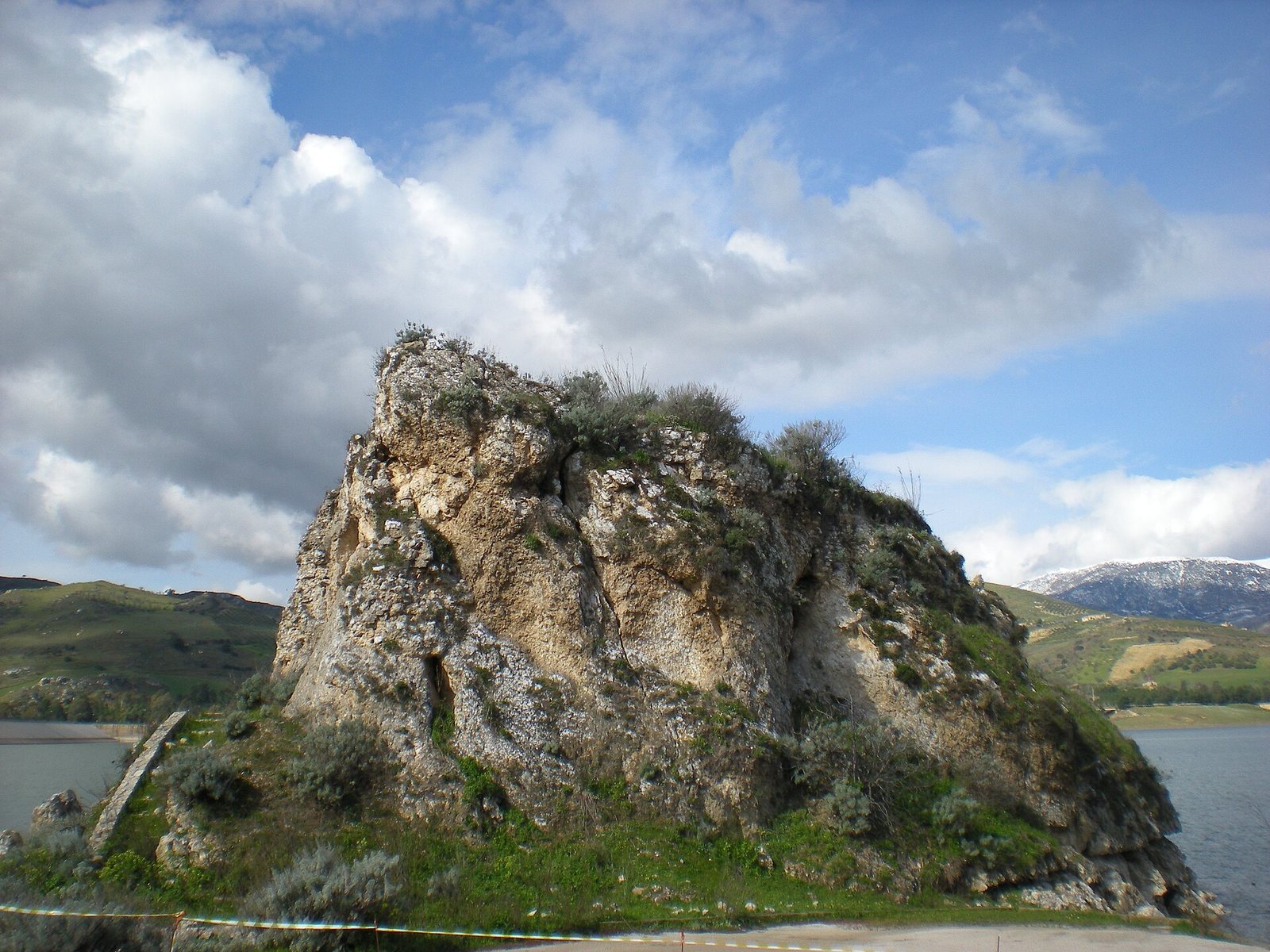
Over time, part of the rocky outcrop collapsed, taking much of the castle with it. From the 1960s to the 1980s, work on the Lago di Magazzolo reservoir and its dams led to excavation around the ruin before flooding. The castle is recognized as Italian national heritage.
Remains
Castle and outcrop
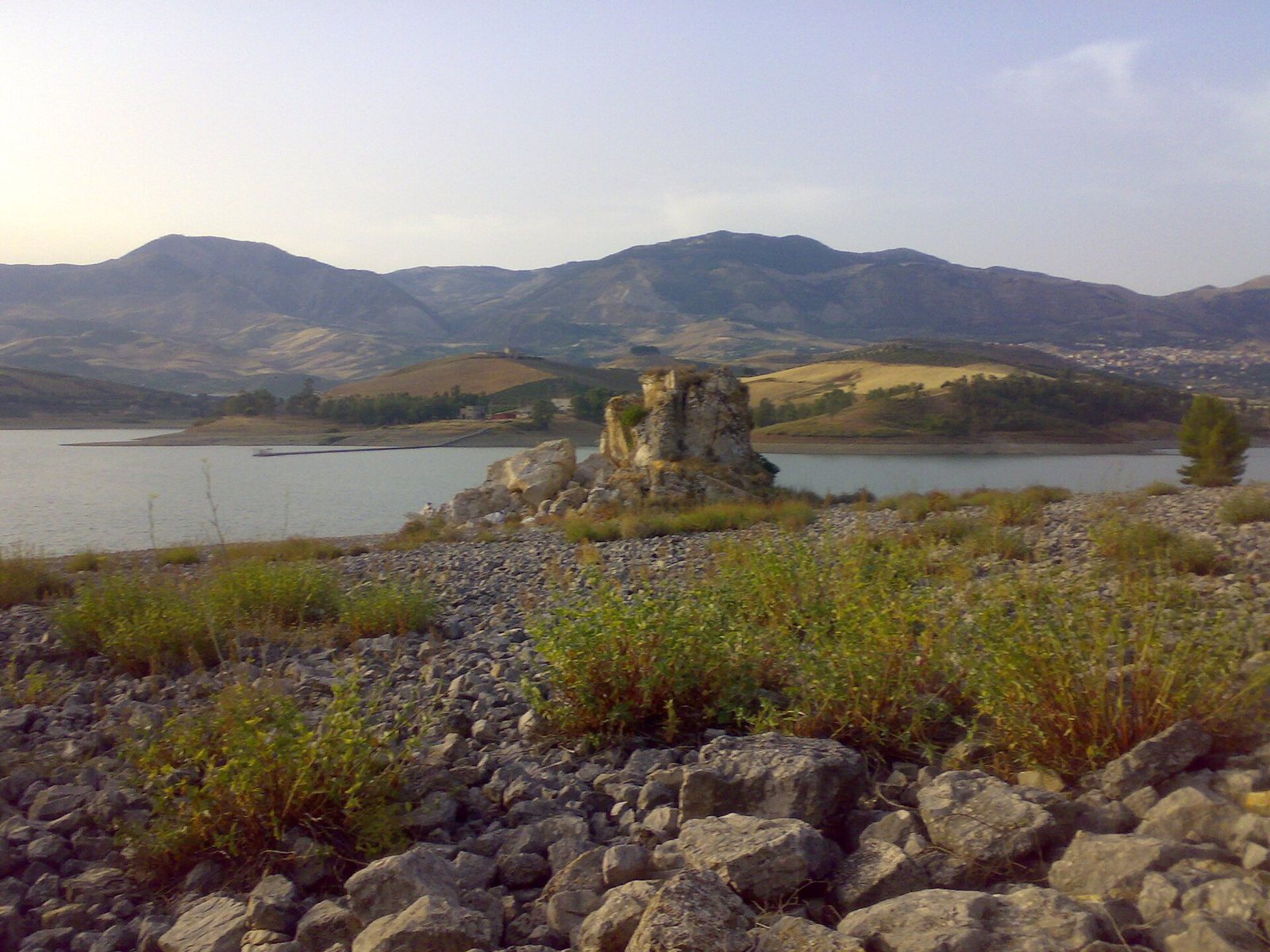
The castle stood on a rocky mass near the Castello dam, close to the boundary with Bivona and about five kilometres from the centre of Alessandria della Rocca. The shore by the ruin is also called Diga Castello, or Castle Dam. At its greatest extent, the complex included a fortified farmstead, a donjon, the castle’s principal fortified tower, and an underground silo cut into the rock; it may also have had a square tower. Wall fragments and parts of a staircase survive with the rock on which the castle was built.
Excavated settlement and reservoir
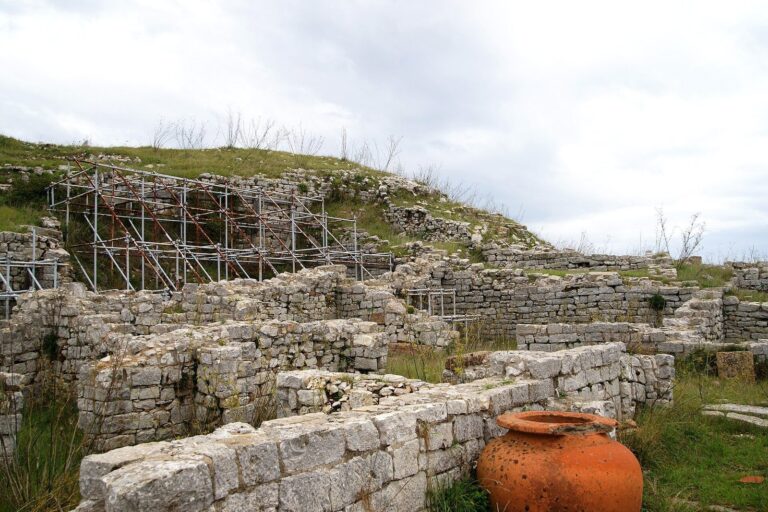
Excavations linked to the dam works uncovered ruins, pottery and sherds, vessels, tools, and medieval objects, including finds from the Byzantine period. Together, these remains point to a settlement beside the castle that was probably defended by it. The reservoir waters cover the ruins of the Mill of Pietra.