Sanctuary of Our Lady of Good Counsel: A Catholic Basilica in Genazzano
Site at a Glance
- Popularity
- High
- Country
- Italy
- Primary era
- Early Modern
- Eras represented
- Medieval, Early Modern, Modern
- Civilizations
- Italian, Papal States
- Site type
- Religious
- Remains
- Basilica
On this page17 sections
History
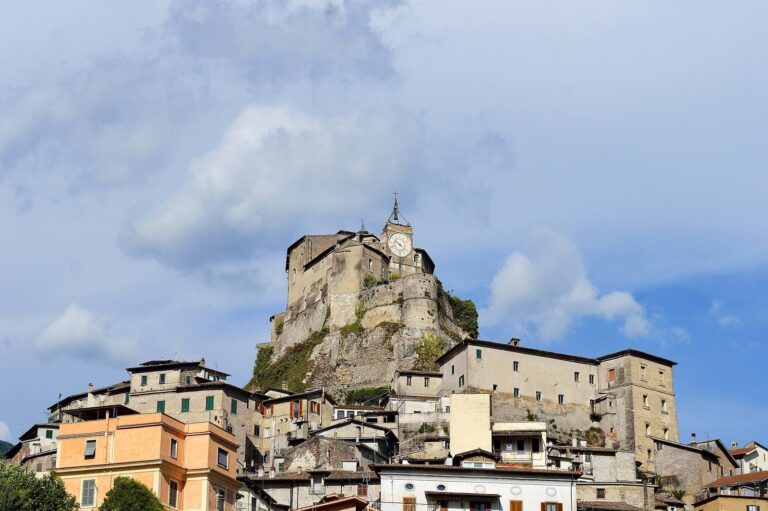
The Sanctuary of Our Lady of Good Counsel is a Roman-rite Catholic church, following the Latin Church’s principal liturgical tradition, in Genazzano, Italy. Dedicated to Mary as the Mother of Good Counsel, it is a parish church in the Diocese of Palestrina, a bishop’s jurisdiction, and is entrusted to the Order of Saint Augustine, a Catholic religious order shaped by Augustine’s spiritual tradition. The present church was built between 1621 and 1629. It holds the title of minor basilica, an honorific designation rather than a cathedral rank.
The early church and the image tradition
The first church on the site dates to 1356. According to tradition, it had fallen into ruin by 1467, when Petruccia di Ienco, a widow and Augustinian tertiary, meaning a laywoman belonging to the order’s associated tradition, paid for its restoration. When her funds ran short, local people mocked her resolve. She declared that Mary and Saint Augustine would complete the church before her death. The restoration campaign is associated with 1467–70. Petruccia was beatified in 1735, a formal Catholic recognition that permits public veneration as blessed.
Tradition places the arrival of the sanctuary’s celebrated image on 25 April 1467. During an Ottoman siege of Scutari, an image of Mary and the infant Jesus was said to have left a church wall there and travelled to Genazzano, supported by angels. Two devotees, Giorgi and De Sclavis, were said to have followed it across the Adriatic Sea on foot at Mary’s request. The image was believed to have come to rest in the church Petruccia was rebuilding.
The image drew pilgrims from across Italy, including from Nepi. Donations helped finish the church and build a convent. The Compendium of Miracles relates that on 27 April 1467 Domenica di Giuliani recovered from a painful illness, Achille of Genazzano was relieved of long-standing sciatica, and Giovanni Gambelotti of Castel Zangati regained his voice and ability to eat after a prolonged illness. It also recounts that Clemente, son of David Ungaro, recovered his sight on 20 June, while Domenico Niccola di Antonio di Receto survived a bite from black snakes despite doctors’ expectation that he would die within a day. Other miracles attributed to the image included freeing people believed to be possessed and bringing a dead person back to life.
Pope Paul II sent two bishops, Gaucerio de Forcalquier of Gap and Nicola de Crucibus of Lesina, to examine reports of the events. Their mission ran from 25 April to 24 July 1467.
The later sanctuary
A separate tradition concerns the image of Jesus on the cross. Between 1541 and 1549, a soldier who had lost money gambling was said to have struck it with his sword, causing it to bleed profusely. Members of the Colonna family reportedly tried to straighten the weapon, but it bent again after being reforged, and further attempts also failed.
The church built from 1621 to 1629 brought together the 1356 building and the church associated with Petruccia’s restoration, while leaving the Madonna’s chapel unchanged. Father Felice Leoncelli promoted the project. The entrance was moved from the east side to the south. Bishop Bartolomeo Rubbini consecrated the church on 17 October 1731.
Stefano Bellesini served as parish priest from 1826 to 1840 and was later beatified. Pope Leo XIII raised the church to the rank of minor basilica on 17 March 1903. On 20 March 2003, the pilgrimage of Genazzano received the privilege of an indulgence, a Catholic remission of temporal punishment associated with sins whose guilt has been forgiven. On 10 May 2025, two days after his election, Pope Leo XIV visited and prayed at the sanctuary. An Augustinian and devotee of its image, he made it his first visit outside the Vatican.
Remains
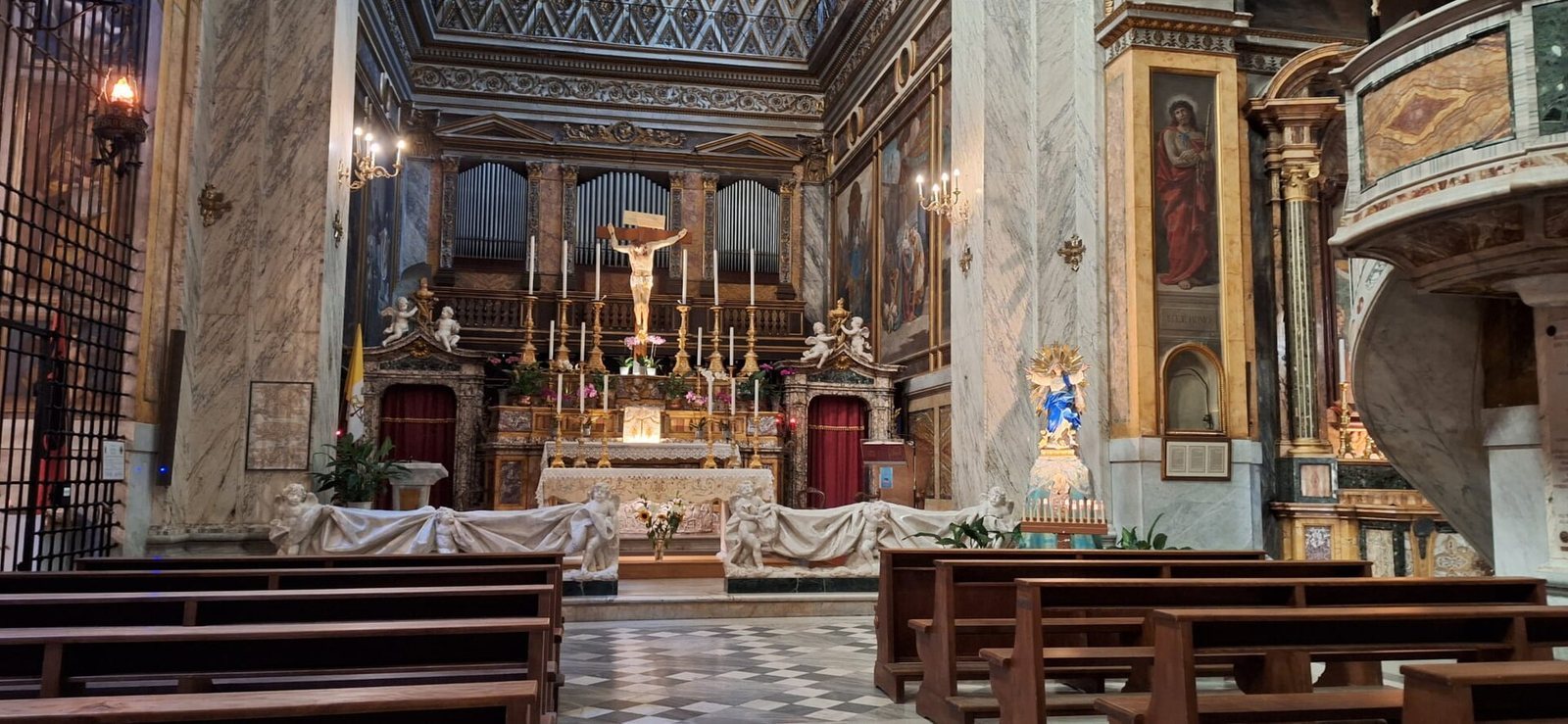
The church is arranged around three naves, the main lengthwise divisions of its interior, which lead toward a large presbytery, the area around the high altar. The Madonna’s chapel stands at the far end of the left aisle. On the south side, five steps rise to three entrance doors. The church’s surviving features include its carved marble portal, painted decoration, altars, and furnishings.
Façade and entrance
Façade
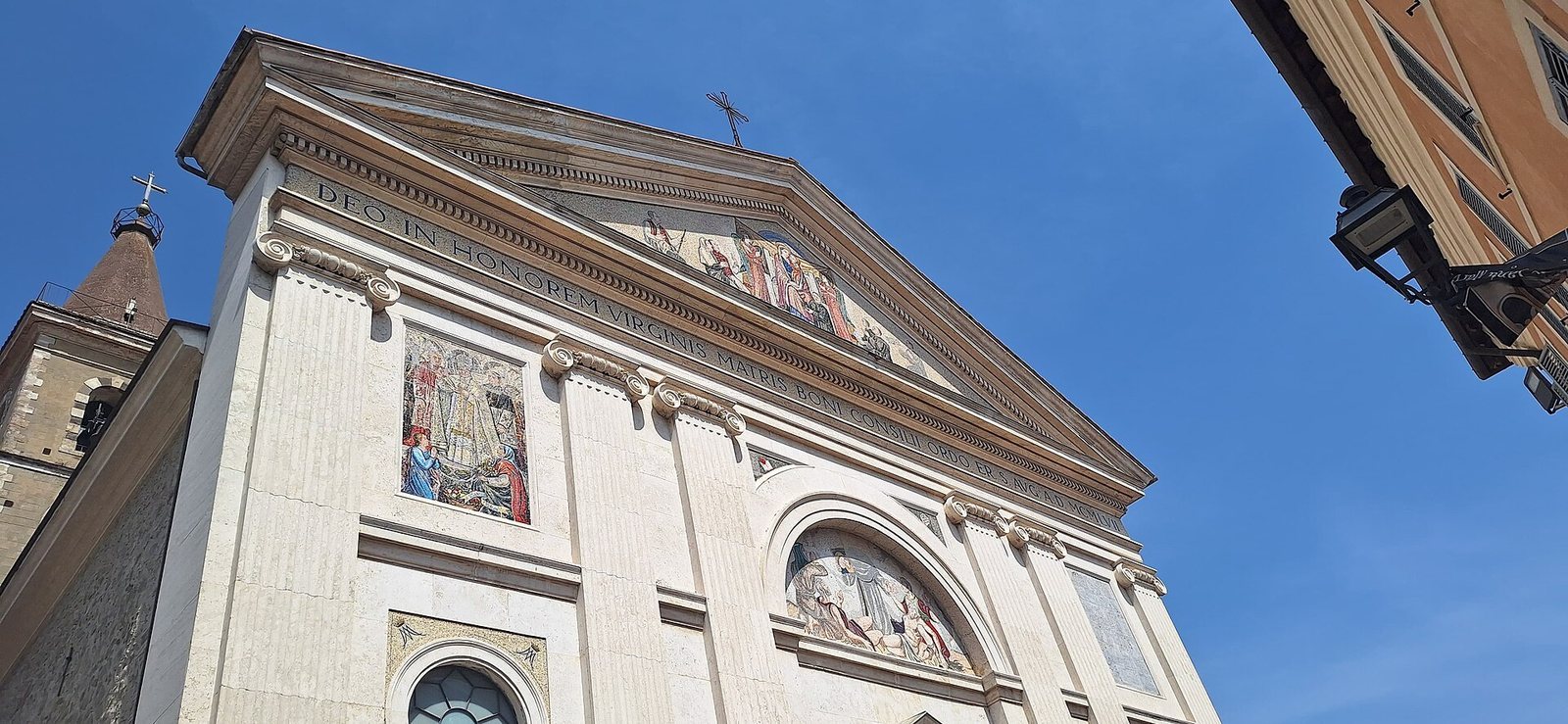
Six fluted Ionic pilasters, shallow wall columns with scroll-shaped capitals, divide the façade. Four mosaics date to 1956 and are associated with F. D’Urso. They include the Mother of Good Counsel with two angels in the central tympanum, the central field of the pediment, and tributes to Popes Pius IX and Leo XIII. A central curved panel, or lunette, depicts Blessed Stefano Bellesini among the sick and is credited to S. Canevari.
Portal and doors
The carved white-marble portal is the only surviving part of the original church. Its tympanum contains a low relief of Mary and the child Jesus, borne by angels above clouds. One of the three entrance doors was replaced in 1966 with a bronze relief door made by G. Niglia.
Main church interior
Nave and wall paintings
The central nave contains a seventeenth-century pulpit made of marble in several colors. Its stairway was carved from a single block of marble. In twelve curved wall panels beside the windows, Tito Troja painted female figures from the Old Testament in 1881–82. The interior face of the entrance wall shows the Coronation of the Assumed Virgin Mary. On the rear wall, Prospero Piatti painted the image’s arrival in Genazzano, its departure from Scutari, and its coronation.
Presbytery, choir, and organ
Six frescoes, paintings made on plaster, decorate the side walls around the presbytery and choir. Their subjects are the Annunciation, the Visitation of Mary to Saint Elizabeth, the Madonna of the Girdle, a devotion associated with Saint Monica’s girdle, the Presentation of Mary, the Nativity of Mary, and Saint Augustine disputing with the Manichaeans and Pelagians, religious movements whose teachings he opposed. The wooden choir has solid, polished walnut stalls made around 1777 by Raffaele Gonella and his son. Behind the high altar, the organ has two manuals, a pedal keyboard, and 29 stops, controls that select sets of organ pipes. It was inaugurated on 25 April 1930.
High altar and balustrade
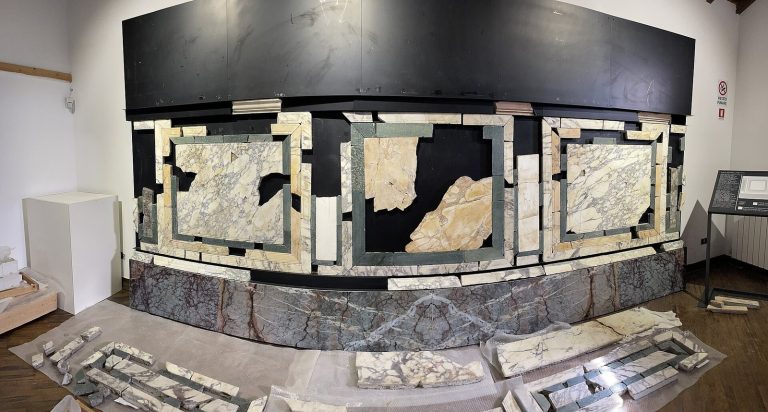
The high altar is decorated with richly colored and precious marbles. In front stands a Carrara-marble balustrade, a rail supported by short posts, attributed to Gian Lorenzo Bernini, the Italian Baroque sculptor and architect. The balustrade came from Santa Maria in Posterula in Rome, then passed to the church of San Pio in Genazzano. Irish Augustinian fathers later donated it to the sanctuary, where it has stood since 1954.
Side altars and Marian chapel
Altar of Saint Nicholas of Tolentino
The altar dedicated to Saint Nicholas of Tolentino, a medieval Italian Augustinian friar and preacher, has a recent mosaic altarpiece. Its curved upper panel contains an 1882 painting by Cesare Caroselli of the saint praying for souls in purgatory.
Altar of the Holy Spirit
The nearby Holy Spirit altar has an oil painting on canvas depicting Pentecost. Made in the first half of the seventeenth century, it is attributed to the Carracci school, the artistic tradition associated with the Carracci family of painters in late-sixteenth- and early-seventeenth-century Italy.
Altar of the Crucifix
The altar of the Crucifix contains a fifteenth-century fresco of Jesus on the cross. The sword associated with the reported miracle is kept in a niche beside it.
Madonna’s chapel and altar
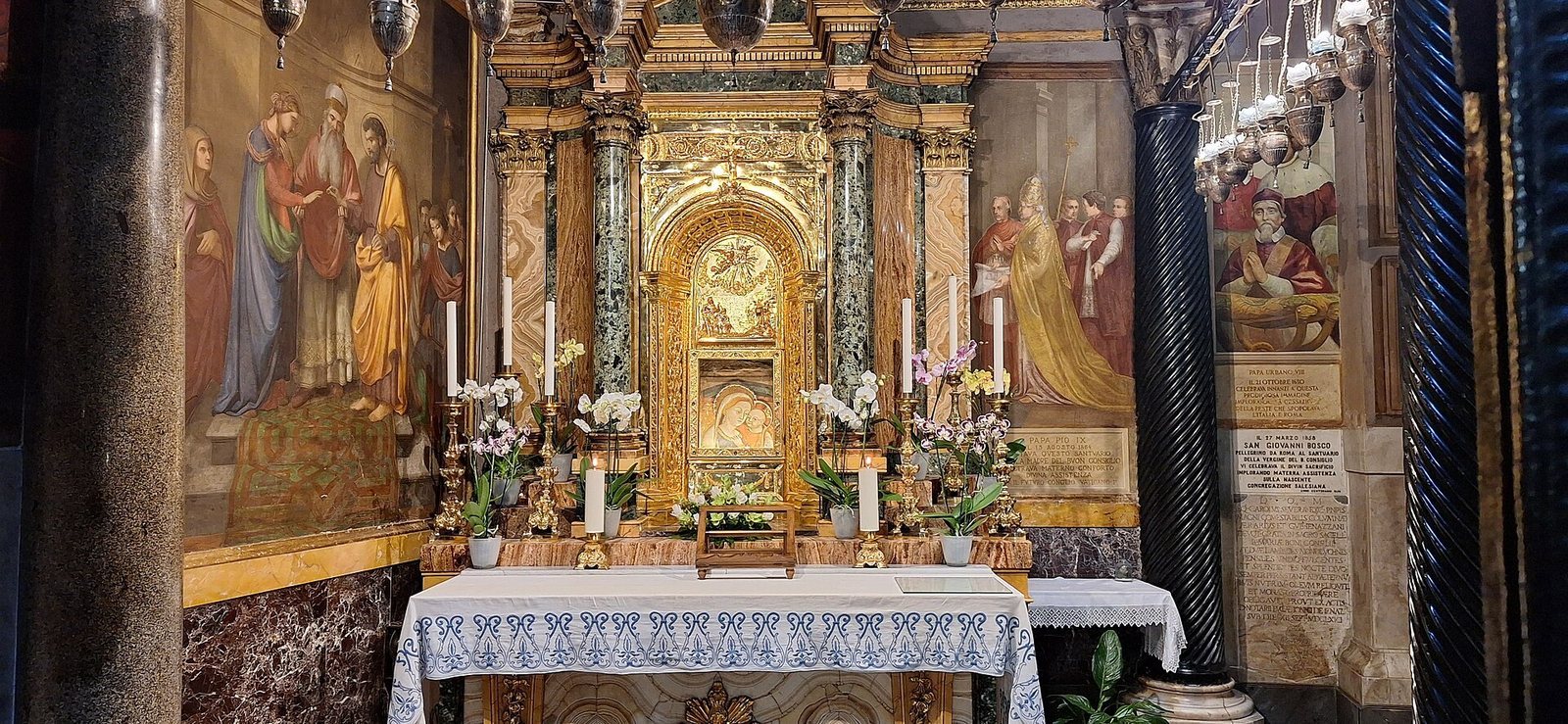
A wrought-iron gate protects the Madonna’s chapel at the end of the left aisle. Cardinal Girolamo Colonna commissioned it in 1630. The chapel’s altar, commissioned by Cardinal Alessandro Albani in 1734, is shaped like a small temple and holds the image of the Mother of Good Counsel in a copper niche. Francesco and Luigi Righetti made the niche in 1819; it was first silvered and later gilded. The altar has a floral-alabaster front, shell-limestone side panels framed in African marble, two small columns of green antique marble, and pillars of oriental alabaster from Portovenere.
Tribune and chapel paintings
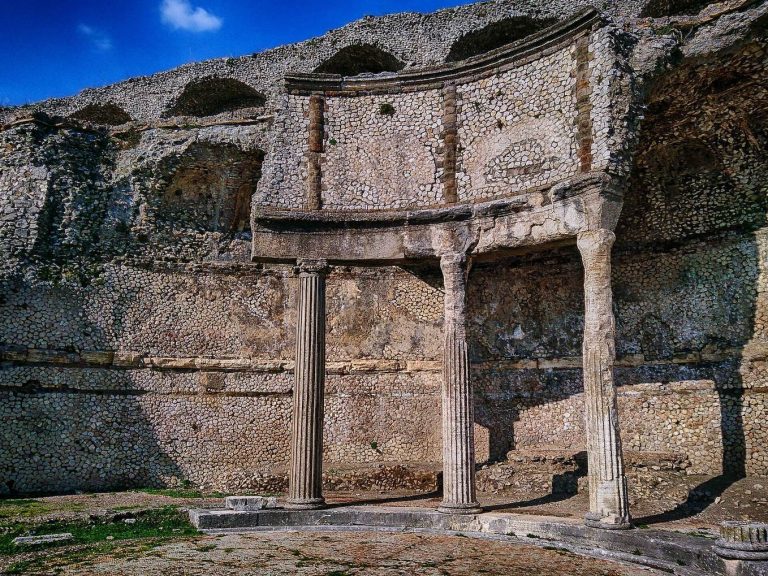
Above the altar is a marble tribune, a raised gallery-like feature, attributed to Andrea Bregno and donated by Prince Antonio Colonna. It rests on three columns that probably came from the villa of Emperor Antoninus Pius. Paintings on the chapel walls commemorate visits by Popes Urban VIII, Pius IX, and John XXIII. They are attributed respectively to Carosi, Rainaldi, and the Eroli brothers.