Church of the Assumption of the Virgin Mary in Poděbrady: The Miners’ Church
Site at a Glance
- Popularity
- Low
- Country
- Czechia
- Primary era
- Early Modern
- Eras represented
- Early Modern, Modern
- Civilizations
- Austria-Hungary, Habsburg, Holy Roman Empire, Kingdom of Bohemia
- Site type
- Religious
- Remains
- Church
On this page17 sections
History
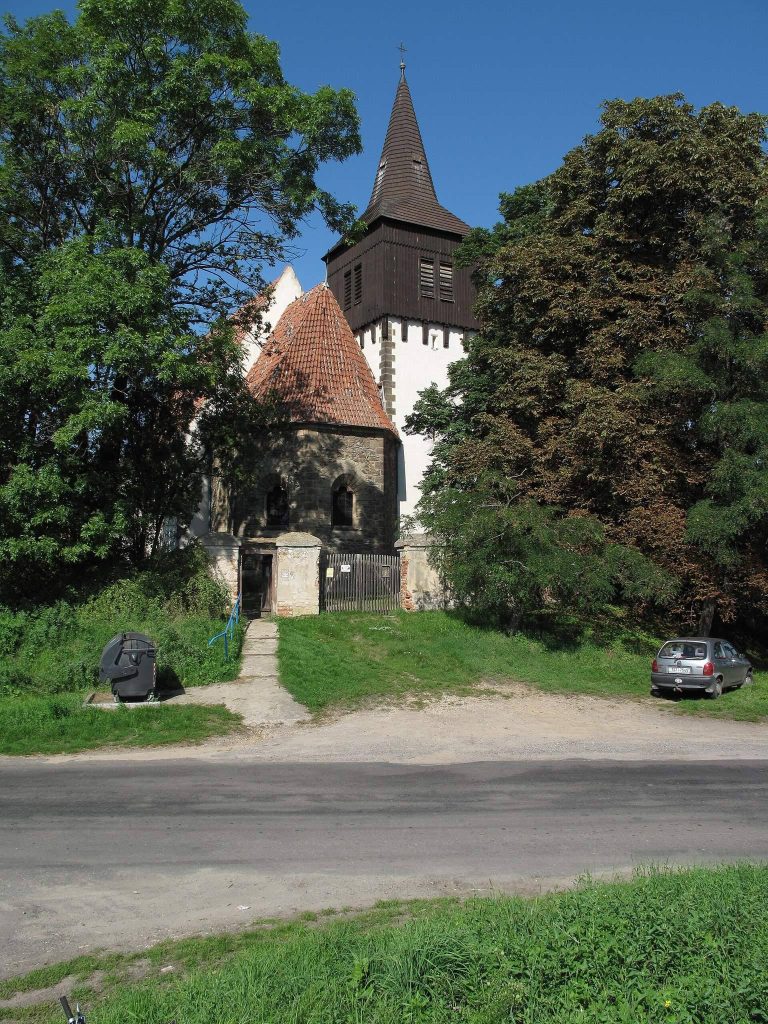
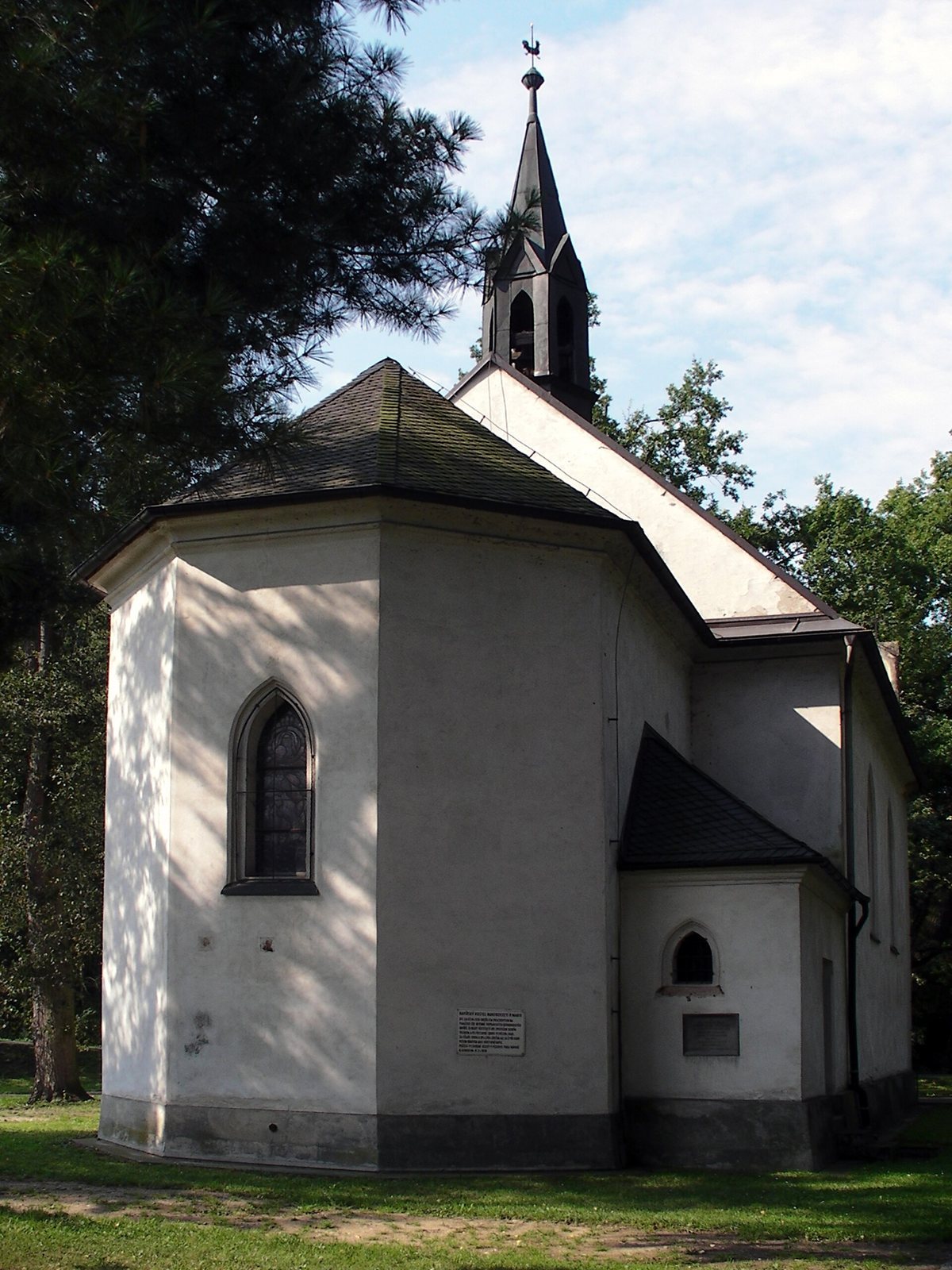
The Church of the Assumption of the Virgin Mary in Poděbrady is a Roman Catholic church in Zámostí, Poděbrady, Czechia, on the left bank of the Elbe and outside the town’s historic centre. Its present early Baroque masonry building dates to 1665–1666 and stands at the site where ten miners from Kutná Hora were executed in 1496. The church is also known as the Miners’ Church.
The 1496 miners’ revolt
Miners in Kutná Hora, a Bohemian town known for silver mining, faced wage cuts imposed by treasurers, increasingly arduous work, and difficulty obtaining justice. A rebellion in 1494 ended in a settlement, but unrest broke out again in 1496 while King Vladislaus Jagiellon, ruler of Bohemia and Hungary, was away. On July 13, about 6,000 armed miners stormed Špimberk Hill near Kaňk. They surrendered after receiving a promise of a fair trial.
Thirteen leaders were arrested and tortured in Poděbrady. The local governor may have been bribed by Kutná Hora’s treasurers. Rather than appeal on behalf of the prisoners, he sent Vladislaus a letter blaming them, and the king ordered their punishment on that basis. On August 5, the leaders were told that they had been condemned to death. Ten were executed in Poděbrady that August after the town executioner refused to behead them and the castle executioner took over.
The other three were taken to Křivoklát because the law limited the number of rebels who could be executed at Poděbrady to ten. One escaped and told the king what had happened. On September 4, Vladislaus sent an order from Hungary for an extraordinary trial to punish those responsible and clear the executed miners. The later court cleared the escapee and punished those responsible for the unauthorized executions.
Church, spring, and spa
In 1516, Prague burgher Ondřej Prachovec arranged for a wooden church to be built at the execution site. Two hermits cared for it. Jan Amos Comenius, a Czech educator and religious thinker, mentioned the nearby spring in 1624. Swedish forces destroyed the wooden church in 1634, and a masonry building was subsequently erected on the same site.
People regarded the spring’s iron-rich water as healing, and a spa using its water began operating in 1722. The church remained Roman Catholic and belonged to the Czech ecclesiastical province and the Diocese of Hradec Králové.
Changing worship and use
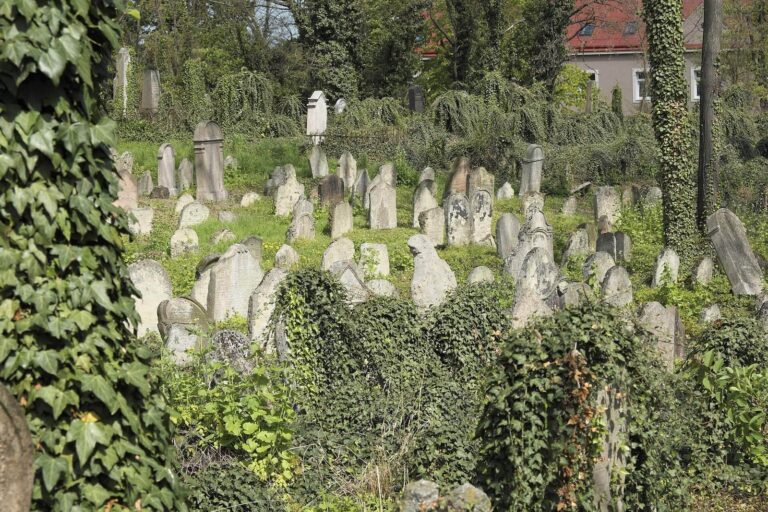
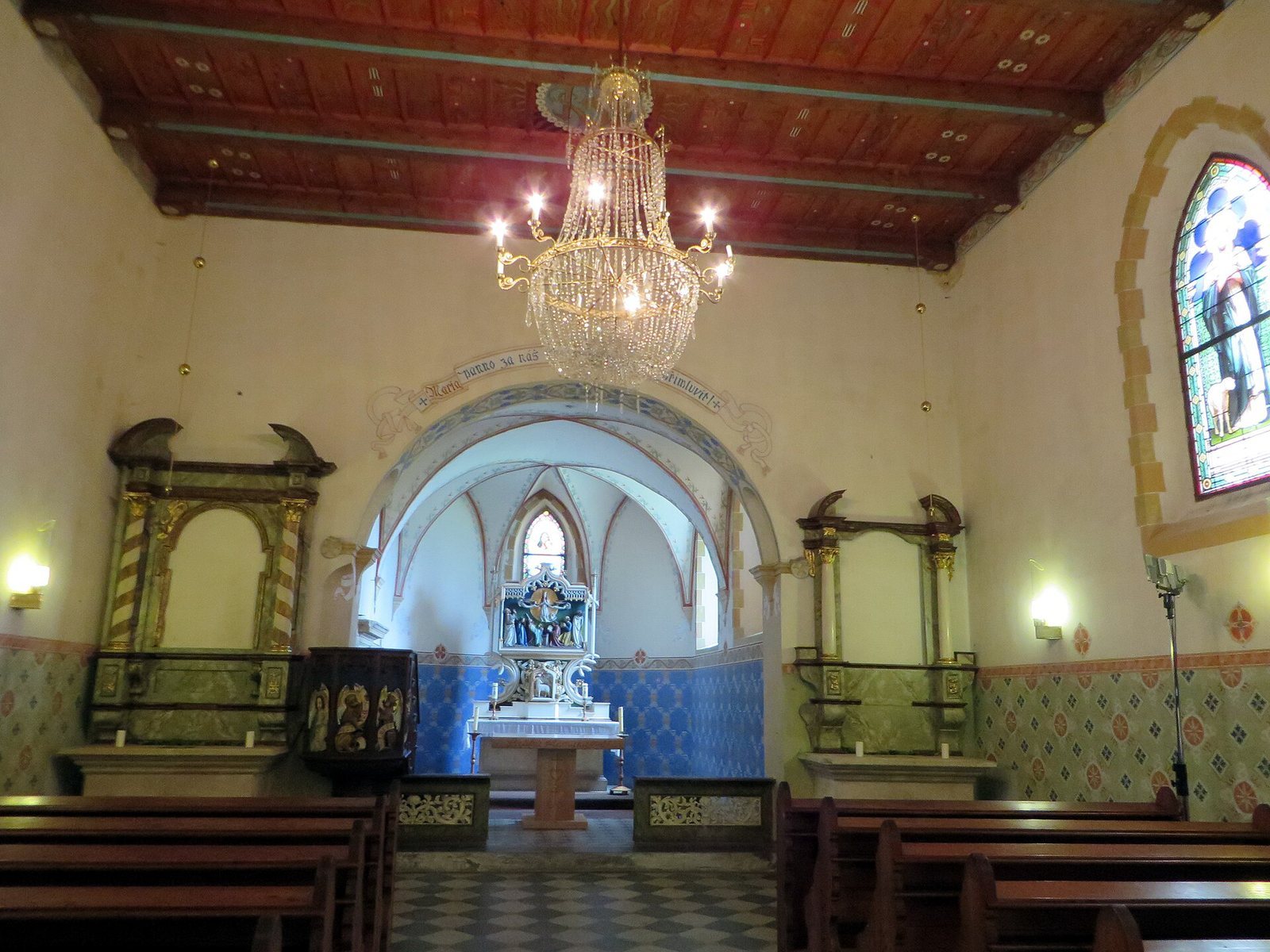
In 1784, the Habsburg ruler and Holy Roman Emperor Joseph II ordered the church closed and its furnishings sold at auction. It returned to use within a few years, but only as a cemetery chapel. During the second half of the nineteenth century, the building and its interior were remodelled in a pseudo-Gothic style, a revival of Gothic forms.
From 1921 to 1937, the church was lent to the Czechoslovak Church, a Christian denomination established in Czechoslovakia. The denomination later moved to a new church nearer Poděbrady’s railway station. The building was deconsecrated in 1964 and transferred to the town; the Polabí Museum took over its furnishings. It is also used for wedding ceremonies.
Remains
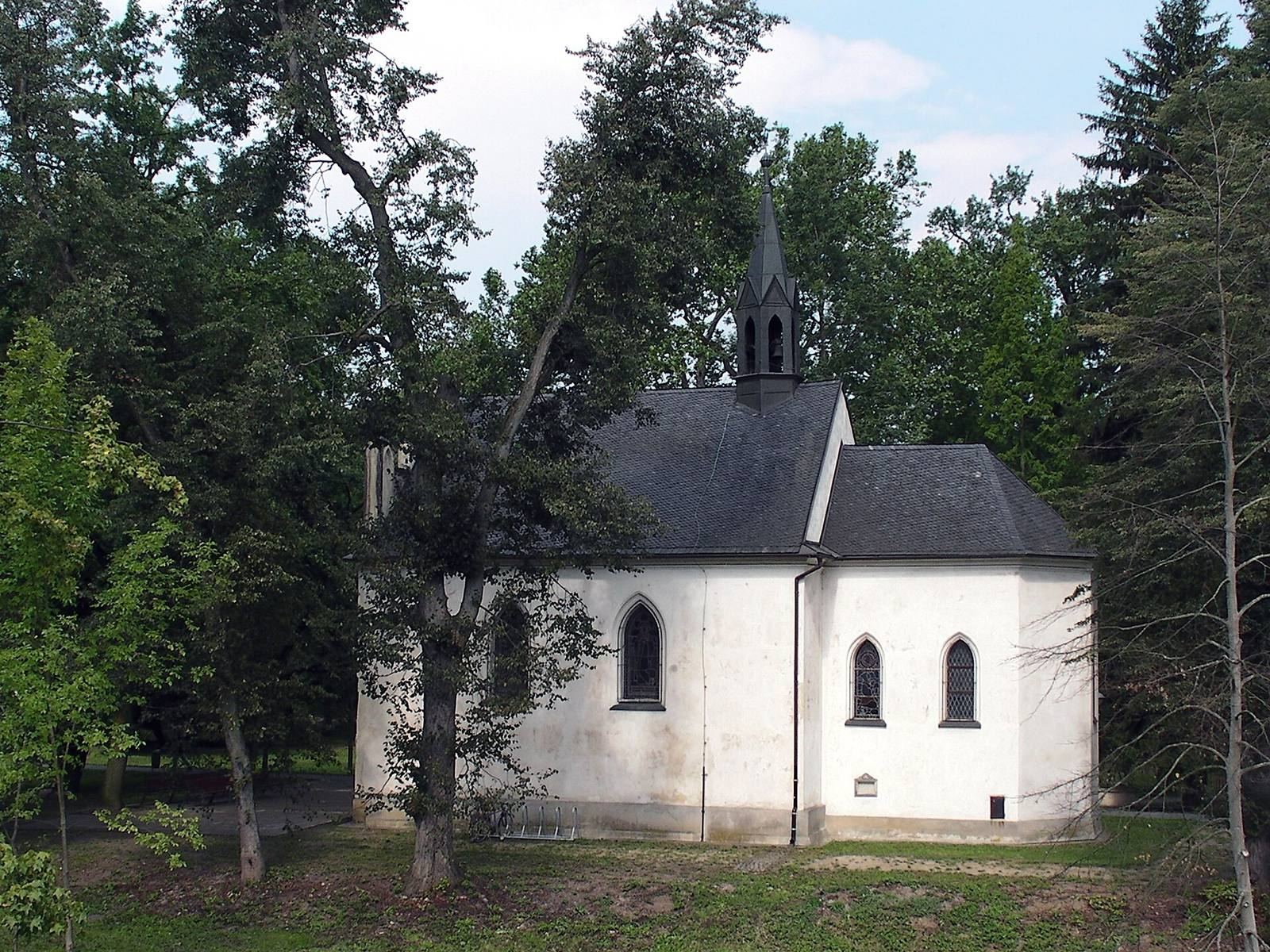
The church has a single nave and masonry construction. Across Esperanto Alley stands a wooden bell tower, with Comenius’s Well beside it and the small Jordan pond on the tower’s other side. A stone marker is near the church’s southeastern edge.
Church and burial place
Church
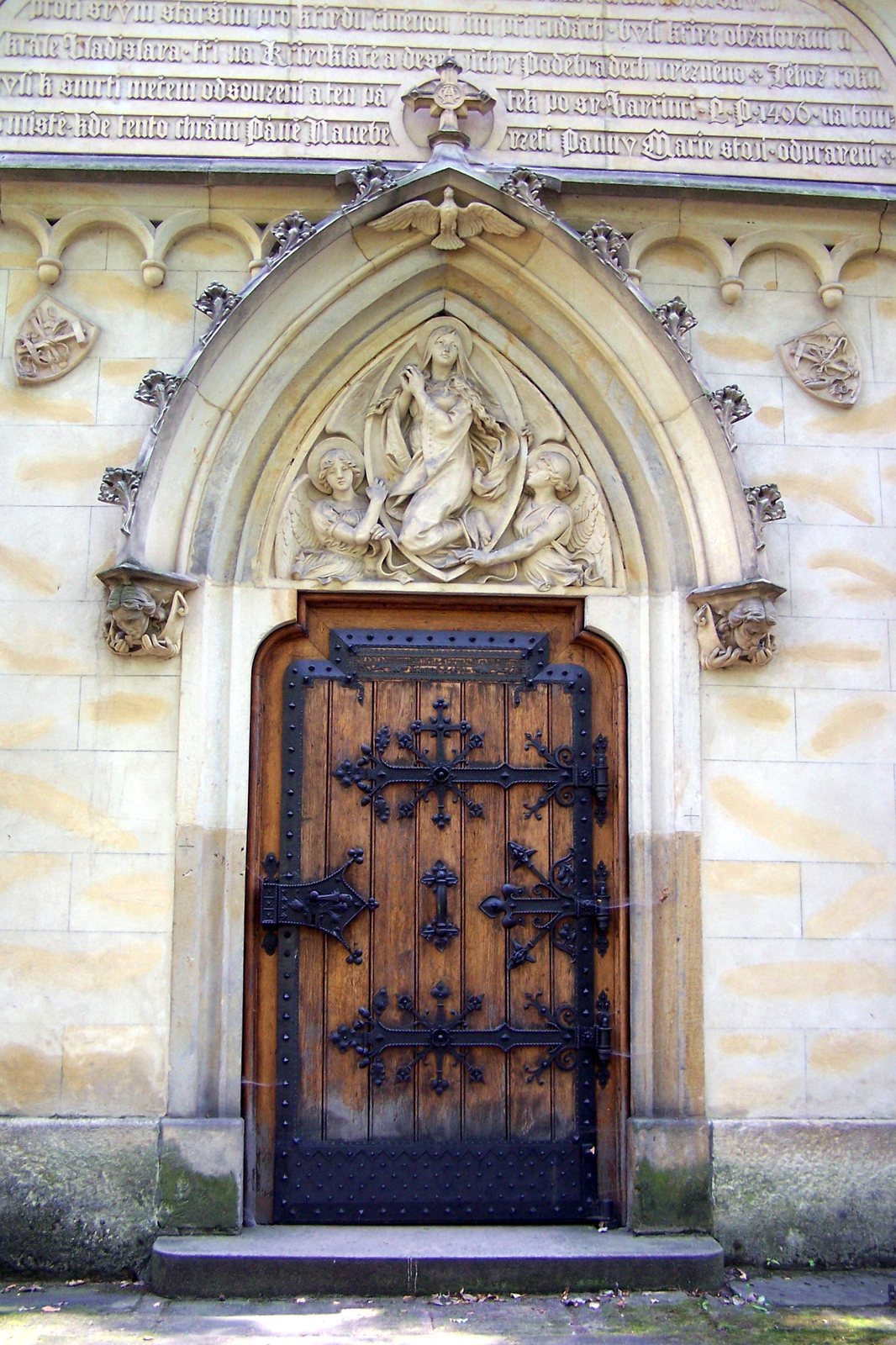
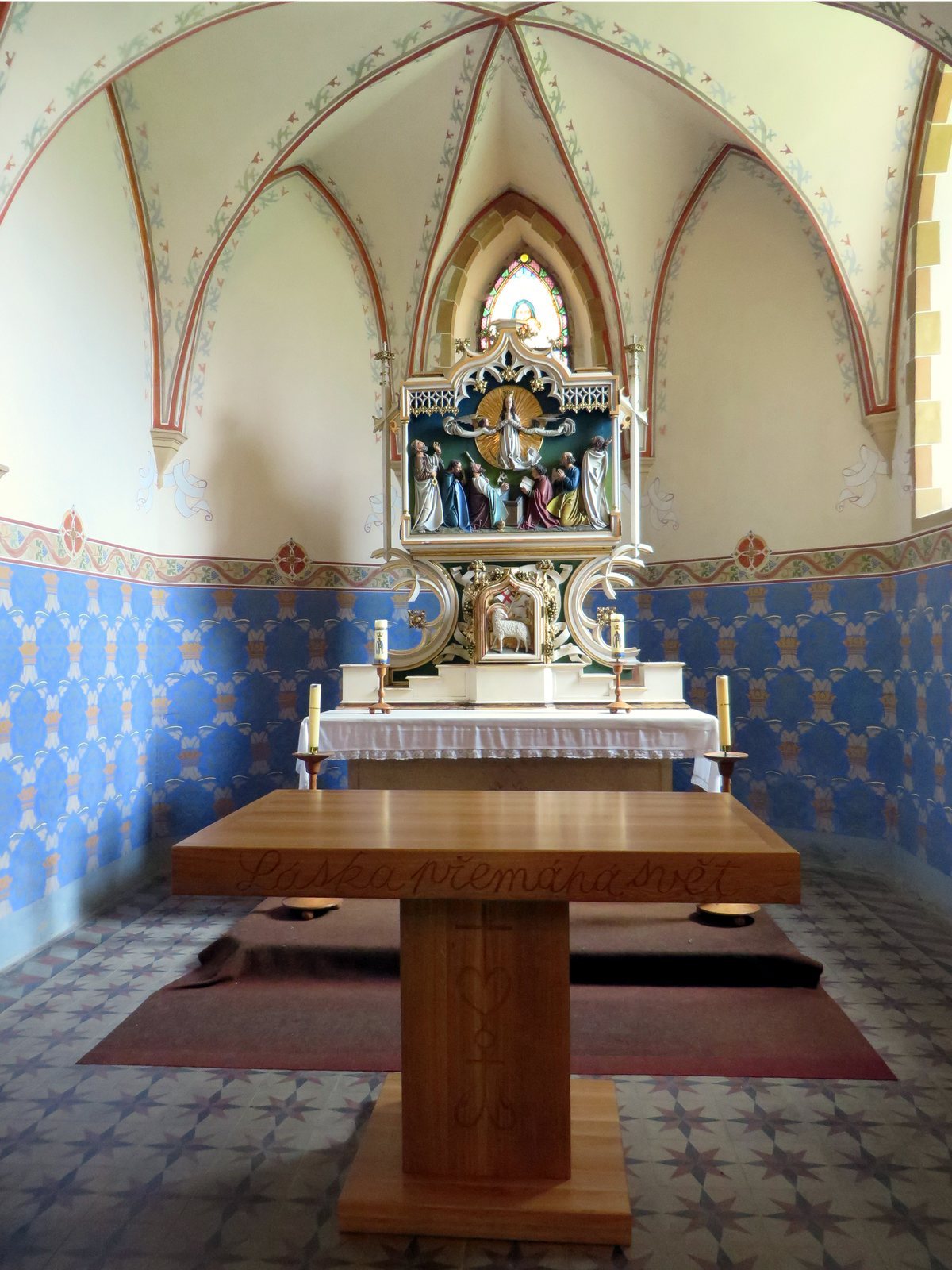
The decorative façade has a pseudo-Gothic entrance portal. Above it, a relief of the Assumption of the Virgin Mary by Czech sculptor Bohuslav Schnirch fills the tympanum, the panel above a doorway. Dated 1898, the relief is part of the church’s later decorative work. The pseudo-Gothic windows contain figurative paintings and stained glass by Czech painter Adolf Liebscher. Sculptor Josef Kastner and his pupils made the Neo-Gothic altar and pulpit, using a nineteenth-century revival of Gothic forms.
Miners’ burial monument
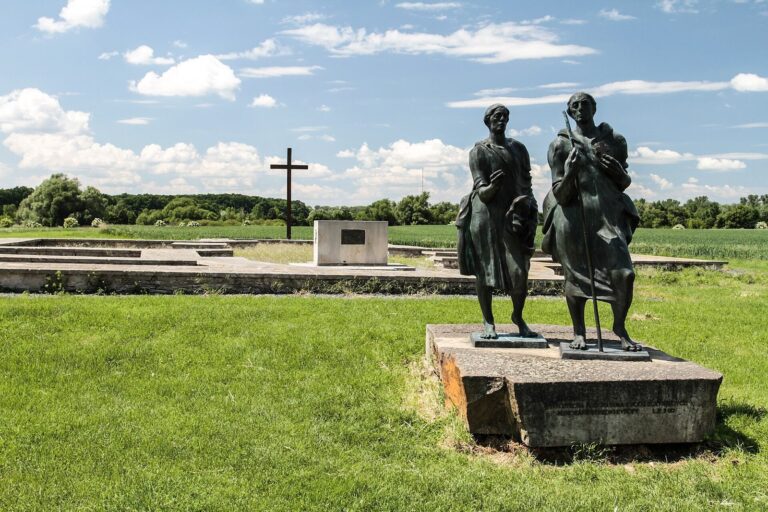
A small stone monument marks the burial place of the ten miners near the church’s southeastern edge.
Bell tower, well, and pond
Bell tower
The square-plan wooden bell tower has a masonry ground floor and a shingle roof. Its earliest mention dates to 1516. After a fire in 1921, it was restored that same year.
Comenius’s Well
The stone well beside the bell tower stands over the site of the historic iron-rich spring. Its water is reddish because of iron hydroxide impurities. The well is more than three metres deep and 150 centimetres in diameter, and it is the sole remaining feature of the former spa.
Jordan pond
The small pond called Jordan lies on the other side of the bell tower and is a remnant of a larger pond. Carp are raised there and caught with nets in autumn.
Nearby features
Bridge
A long bridge beside the church crosses the floodplain. Dating from the early nineteenth century, it carries a first-class road towards Prague.
Game preserve
The grounds of a game preserve begin opposite the church entrance. The Habsburg Holy Roman Emperor Ferdinand I originally established it.
Memorial column
On the church’s side of Esperanto Alley stands a memorial column topped by a statue of the Virgin Mary under the Catholic devotional title Our Lady of the Holy Mountain. Erected in 1758, the column commemorates Poděbrady’s escape from capture by the Prussian army.
Poděbrady Oak
The Poděbrady Oak once stood near the church. Local tradition held that the blood of the executed miners stained its branches, and that its acorns developed unusual horizontal stripes and were kept as talismans. Lightning badly burned the tree in 1777, and it died in 1784. Several of the acorns may be preserved at the Polabí Museum.