Moustoir Tumulus: A Neolithic Burial Mound at Carnac
Site at a Glance
- Popularity
- Very Low
- Country
- France
- Primary era
- Stone Age
- Eras represented
- Stone Age
- Civilizations
- Unclassified
- Site type
- Burial
- Remains
- Burial Mound
On this page9 sections
History
The Moustoir tumulus, also known as Er Mané or Moustoir Er Mané, is an artificial burial mound from the Neolithic, the later part of the Stone Age, at Carnac in Brittany, France.
R. Galles excavated the mound in 1864. The site was classified as a historic monument in 1889, and Zacharie Le Rouzic restored it in 1926–1927. The restoration left the western chamber open to the outside of the mound.
Remains
Mound and buried chambers
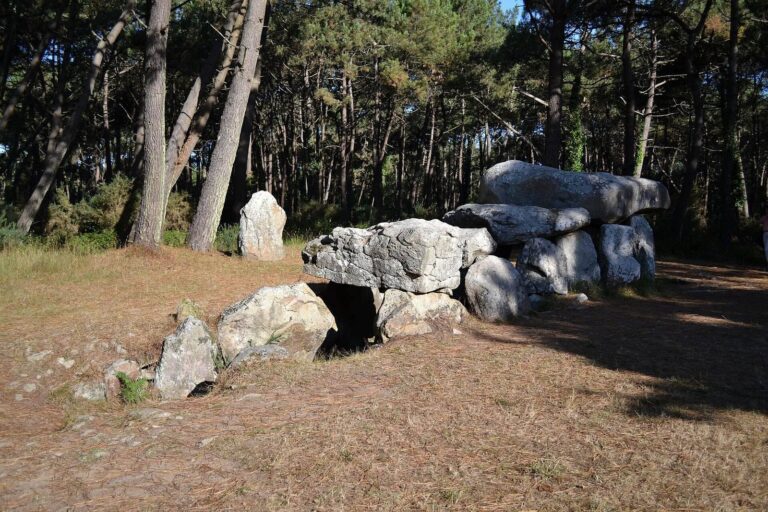
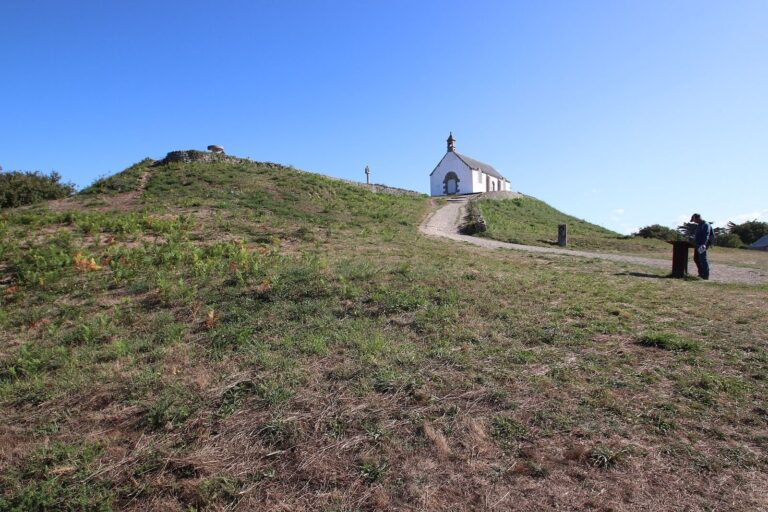
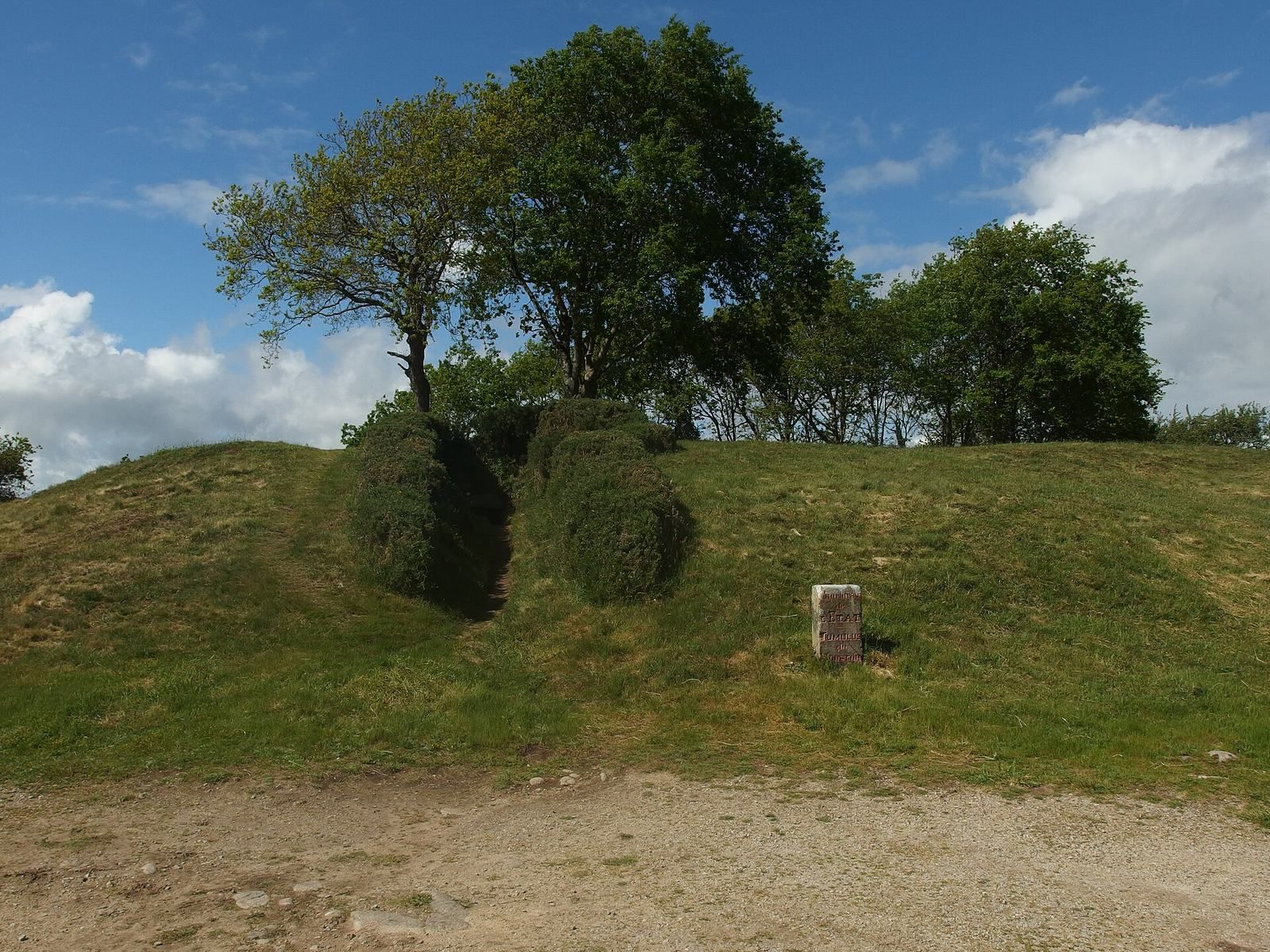
The oval mound runs east to west and measures about 85 m long, 35–36 m wide, and 5–6 m high. It was built over cleared bedrock, using materials that include granite, earth, and stonework laid without mortar. From west to east, it covers a large-stone chamber, a cairn (a mound or structure made of stones), and two further chambers. Remains of a stone circle lie near the center.
Western chamber
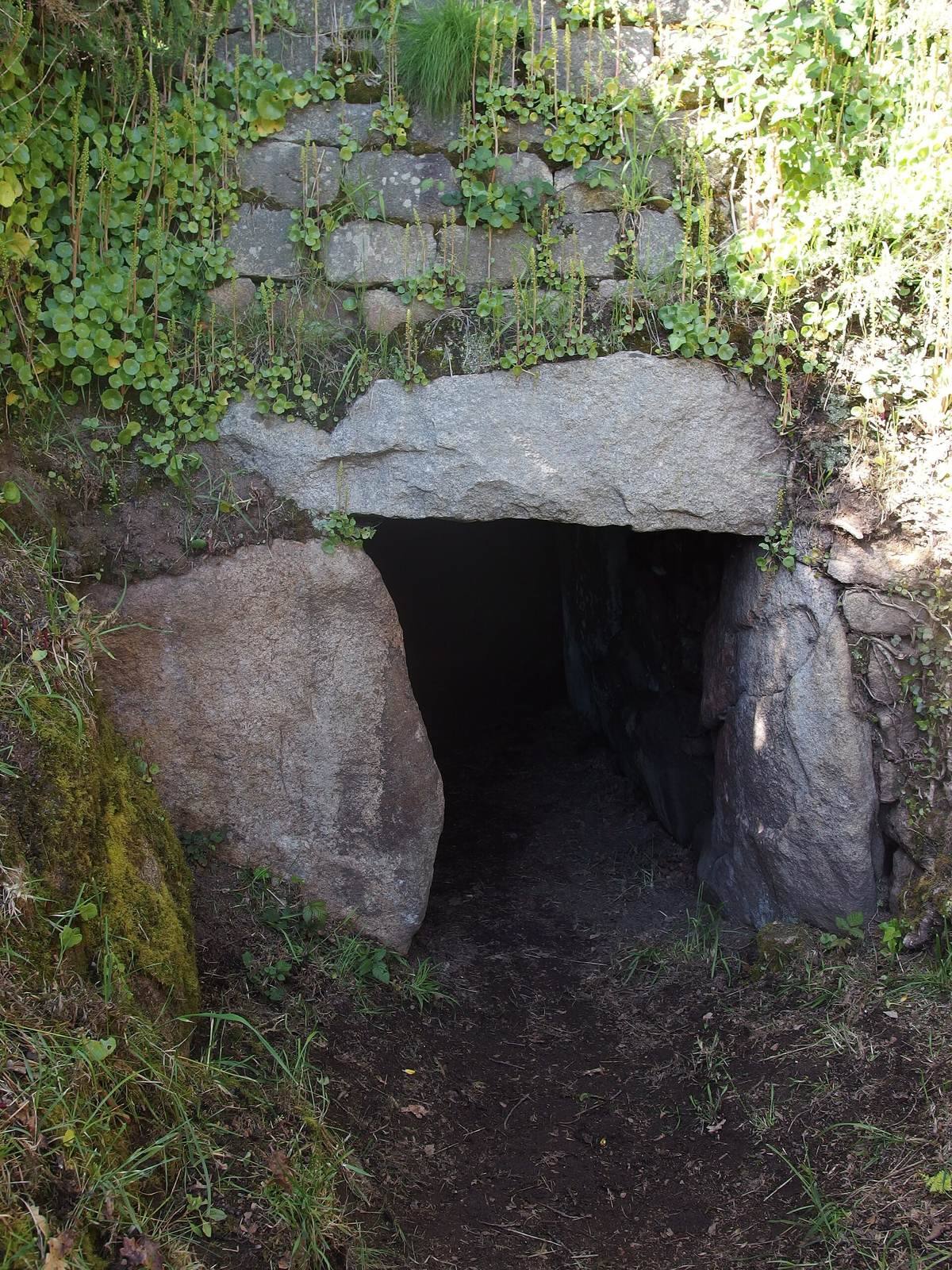
The rectangular western chamber runs north to south and measures about 4 m by 2 m, with 2.30 m of height beneath its roof slabs. Upright stones form its walls, with four on the north side, two on the west, four on the east, and one on the south. Its entrance, about 1 m wide, is at the southeast corner. The chamber has a paved floor and four covering slabs. Accumulated earth caused one slab to collapse, and the chamber was found filled. Finds collected from its paving included five broken pottery vessels, three flint blades, an olive-shaped serpentine bead, a jasper disc, and bone fragments.
Cairn and burial chamber
The circular, truncated-cone cairn is about 7 m wide at its base and 3 m high. It has two levels and is no longer accessible. Within it, a pear-shaped burial chamber has a domed roof formed by stone courses that project inward. Ten slabs line the chamber, and two more form its passage. Excavation recovered a large broken earthenware vessel mixed with animal bones. Reconstructed, the vessel has a small handle, a coarse but fairly well-fired surface, and a capacity of about 12 litres.
Eastern chambers
The first chamber is 5 m long, narrowing from more than 2 m wide at the south to 0.70 m at the north. Upright stones bound its northern part, which is partly covered by a roof slab. A roof made from inward-projecting stone courses may once have completed the chamber before it collapsed. Finds included a sharp flint tool, two broken vessels, and traces of bone.
The second chamber lies 5 m farther east. It is rounded, covers no more than 2 m², and has a roof of flat stones.
Associated stone features
Stone circle
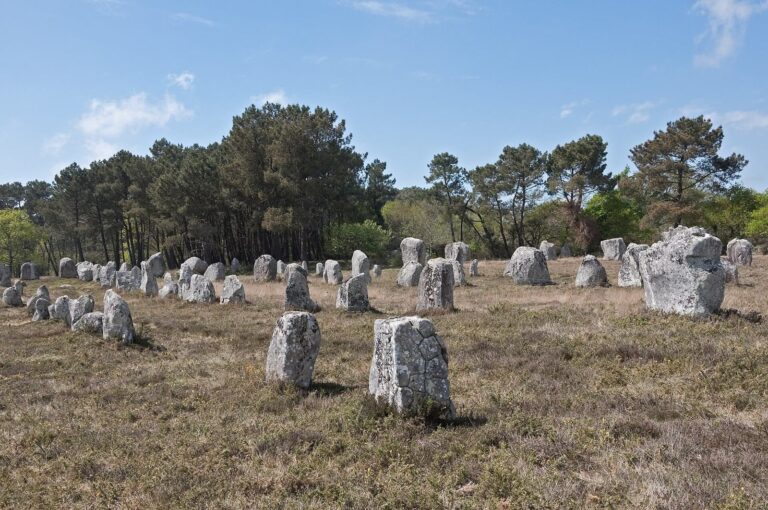
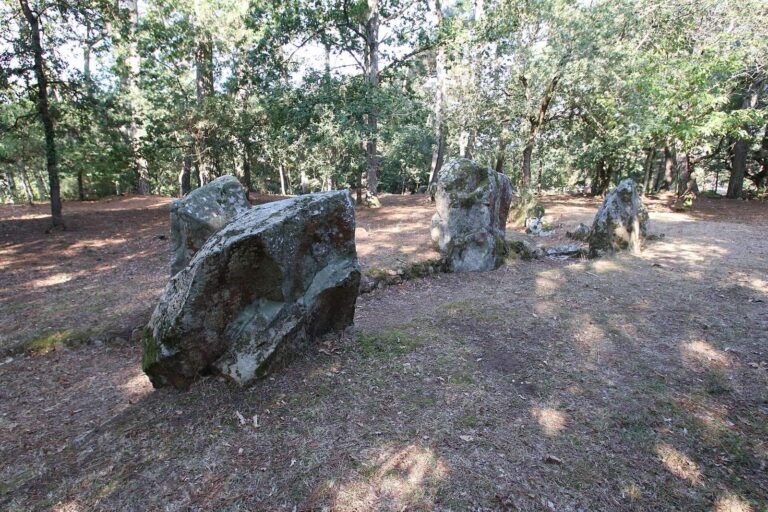
Remains of a stone circle are located near the center of the mound.
Menhirs
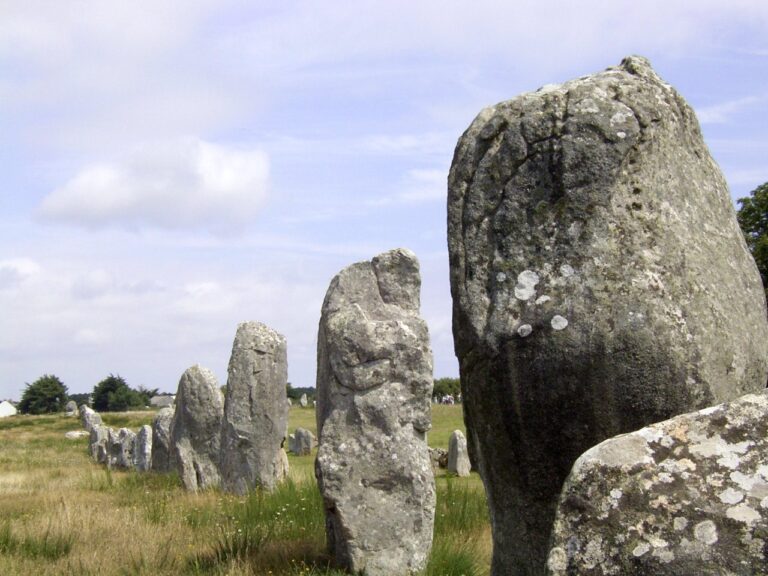
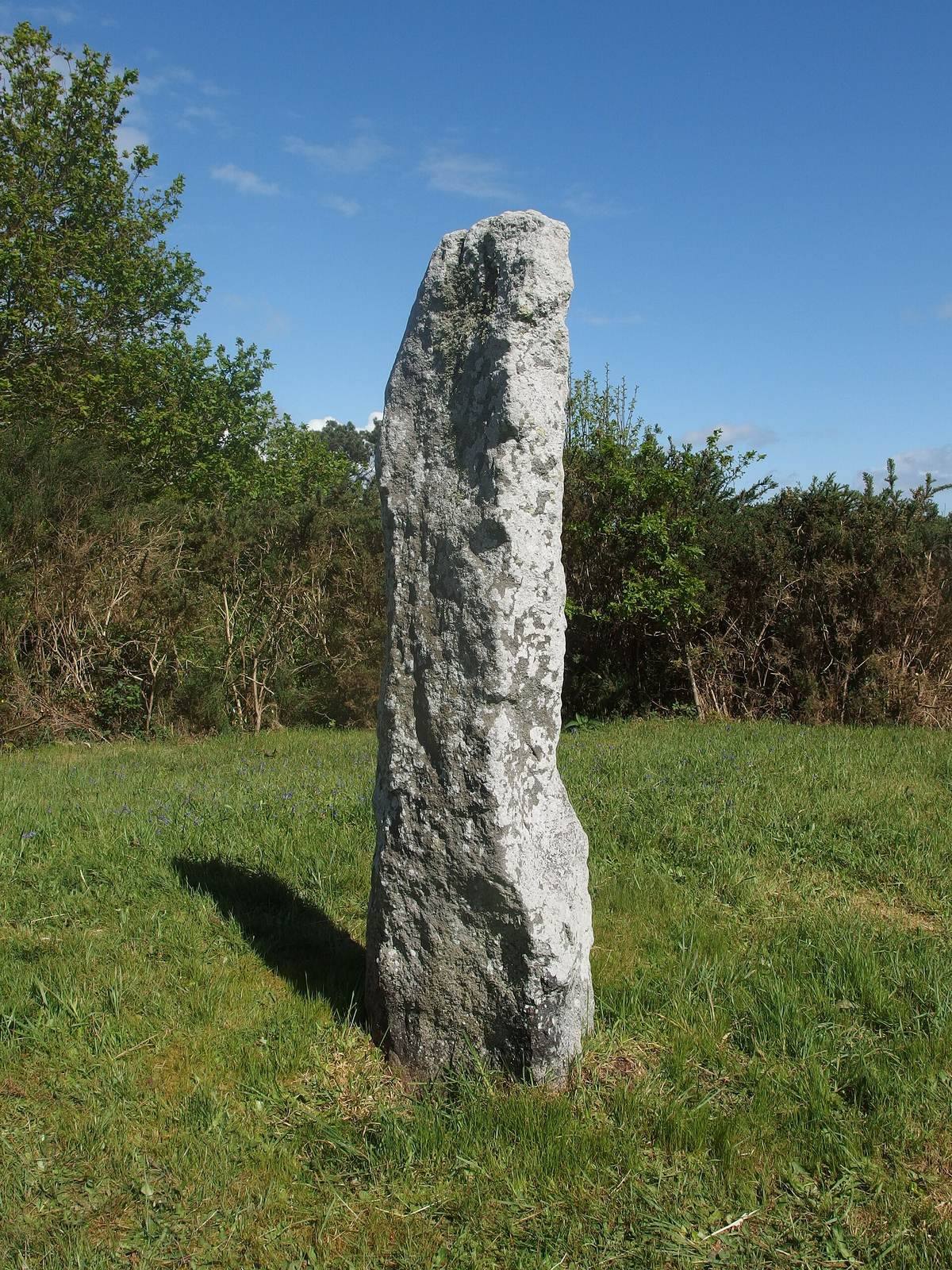
A menhir, or standing stone, on the eastern part of the mound is about 2 m high and 0.50–0.60 m wide; it is set only shallowly in the ground. Another menhir, recorded about 22 m from the mound’s western end, has fallen. It measures 3.25 m long. The Menhir of Moustoir stands nearby.