Church of Madonna Miracolosa and Saints James and Philip: A Baroque Parish Church in Taggia
Site at a Glance
- Popularity
- Medium
- Country
- Italy
- Primary era
- Early Modern
- Eras represented
- Medieval, Early Modern
- Civilizations
- Genoese
- Site type
- Religious
- Remains
- Sanctuary
On this page10 sections
History
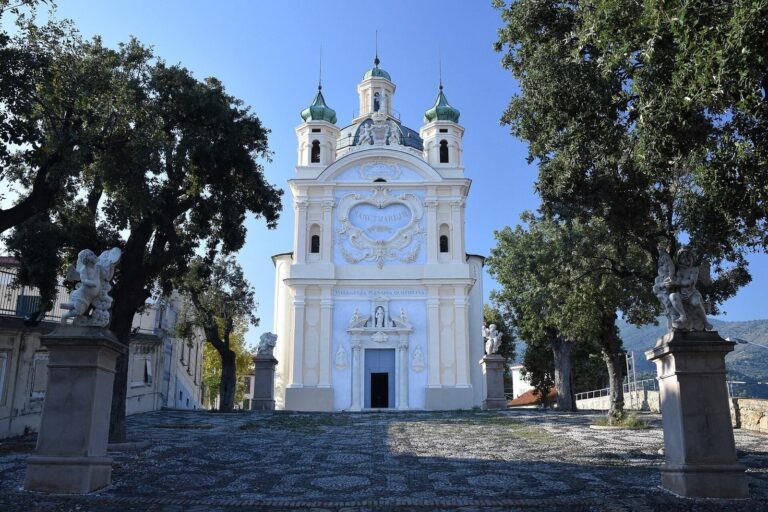
The Church of Madonna Miracolosa and Saints James and Philip is a Roman Catholic parish church and diocesan sanctuary in Taggia, Italy. Dedicated to the apostles James and Philip, it is also a sanctuary of the Virgin Mary under the title Madonna del Sacro Cuore; the statue is known as the Madonna Miracolosa, or “Miraculous Madonna.” The present Baroque church was built between 1675 and 1689 on the site of a Romanesque predecessor. Cardinal Girolamo Gastaldi, a senior Catholic churchman from Taggia, sponsored the rebuilding.
The medieval church
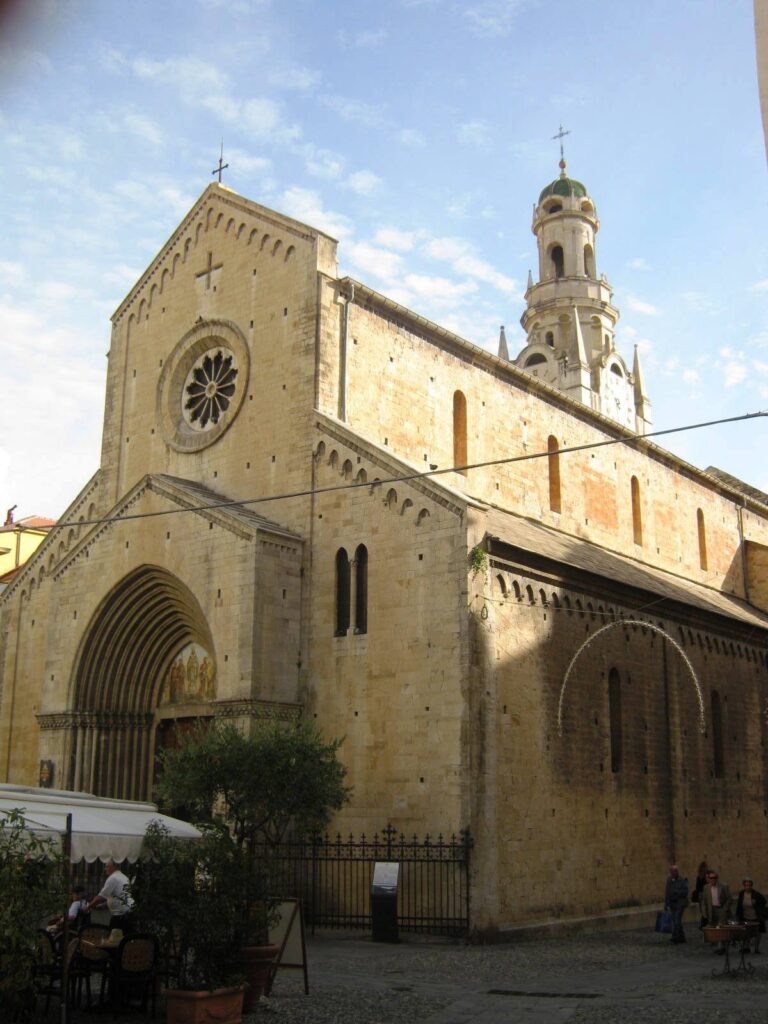
A Romanesque church dedicated to Saints James and Philip stood on the site from the 12th century. Its clergy, known as a college of canons, established Taggia’s Charity Hospital in 1212. Lombard craftsmen probably altered the church in the 15th century. Further changes followed the Council of Trent, a major 16th-century Catholic council that introduced reforms to church practice.
The Baroque rebuilding
In May 1675, Cardinal Gastaldi chose a design by the Roman architect Giuseppe Arcucci for a new church. Girolamo Arlotti, a master builder from Riva Ligure, supervised its construction. The work was completed in November 1689, the year the church was consecrated.
Marian devotion and later history
Devotion to the Madonna del Sacro Cuore grew after worshippers gathered for an eight-day cycle of prayers and reported seeing the statue’s eyes move on 11 March 1855. Religious tradition holds that the event happened again on several occasions, including in later times. The bishop of Ventimiglia conducted a formal Church investigation, and its findings were sent to Pope Pius IX with a request from the community to crown the statue. On 1 June, Pius IX declared the event miraculous and authorized the coronation. The church’s annual celebrations recall the reported first event on 11 March and the coronation on the first Sunday in June.
During the Second World War, local tradition credited the Madonna Miracolosa with protecting Taggia’s population. In December 1942, Pope Pius XII granted the church the honorific rank of minor basilica. It was formerly known as the Basilica of Saints James and Philip. The church underwent a complete restoration between 1990 and 1996, and Bishop Alberto Maria Careggio designated it a diocesan sanctuary on 13 June 2010.
Remains
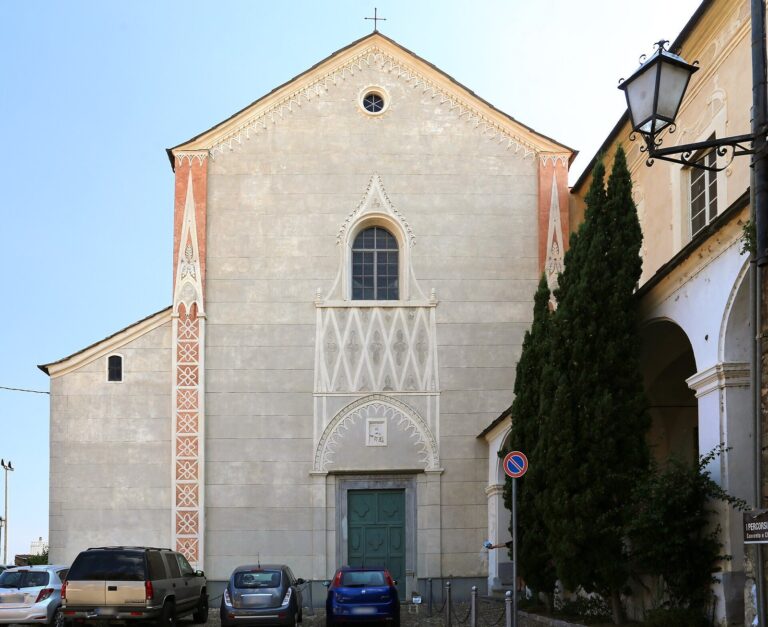
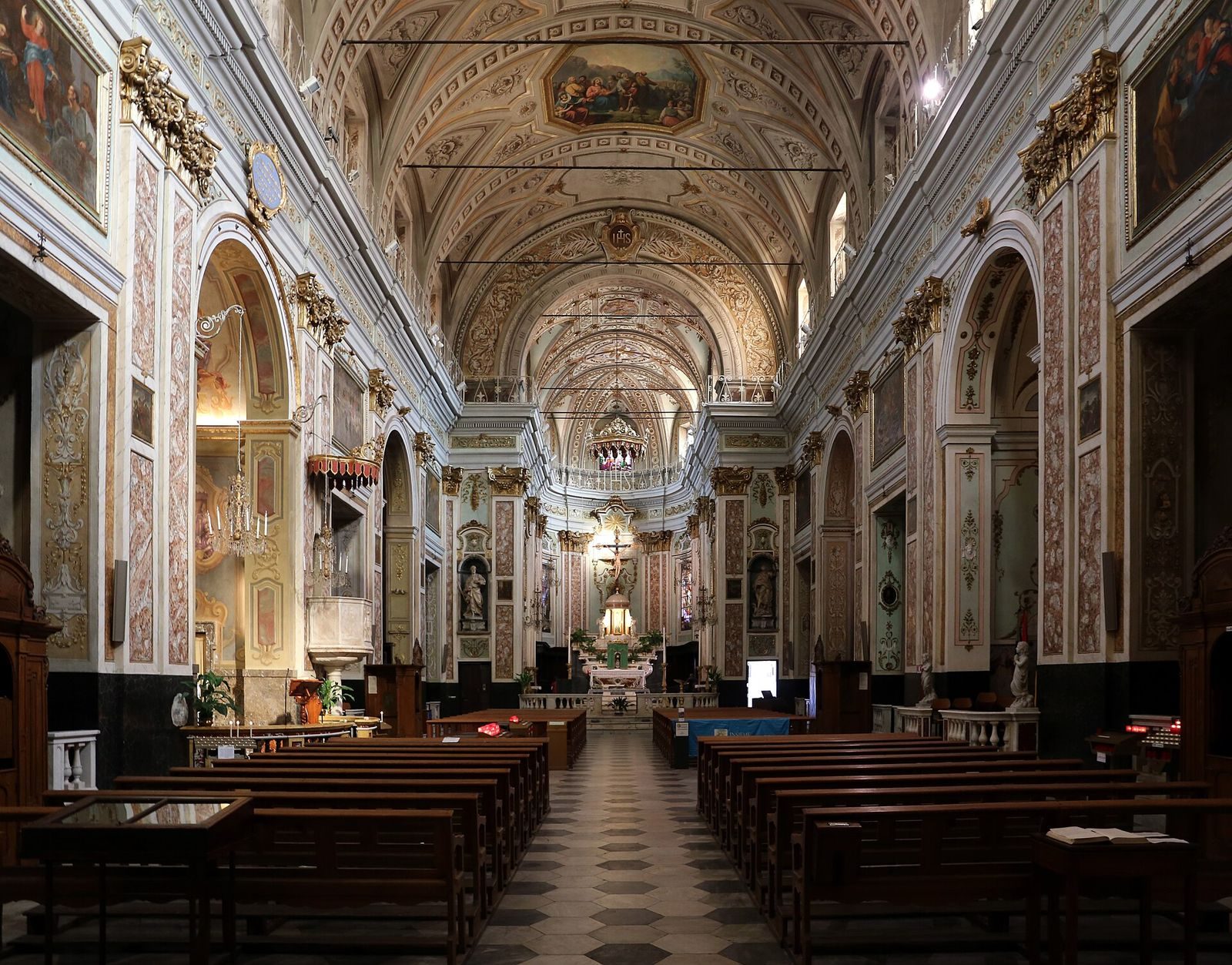
The present Baroque church occupies the site of the earlier Romanesque building. Its restrained exterior gives way to a single rectangular interior hall, with side chapels arranged along both sides and the altar area and raised choir emphasized at the far end.
The Baroque church
Facade and bell tower
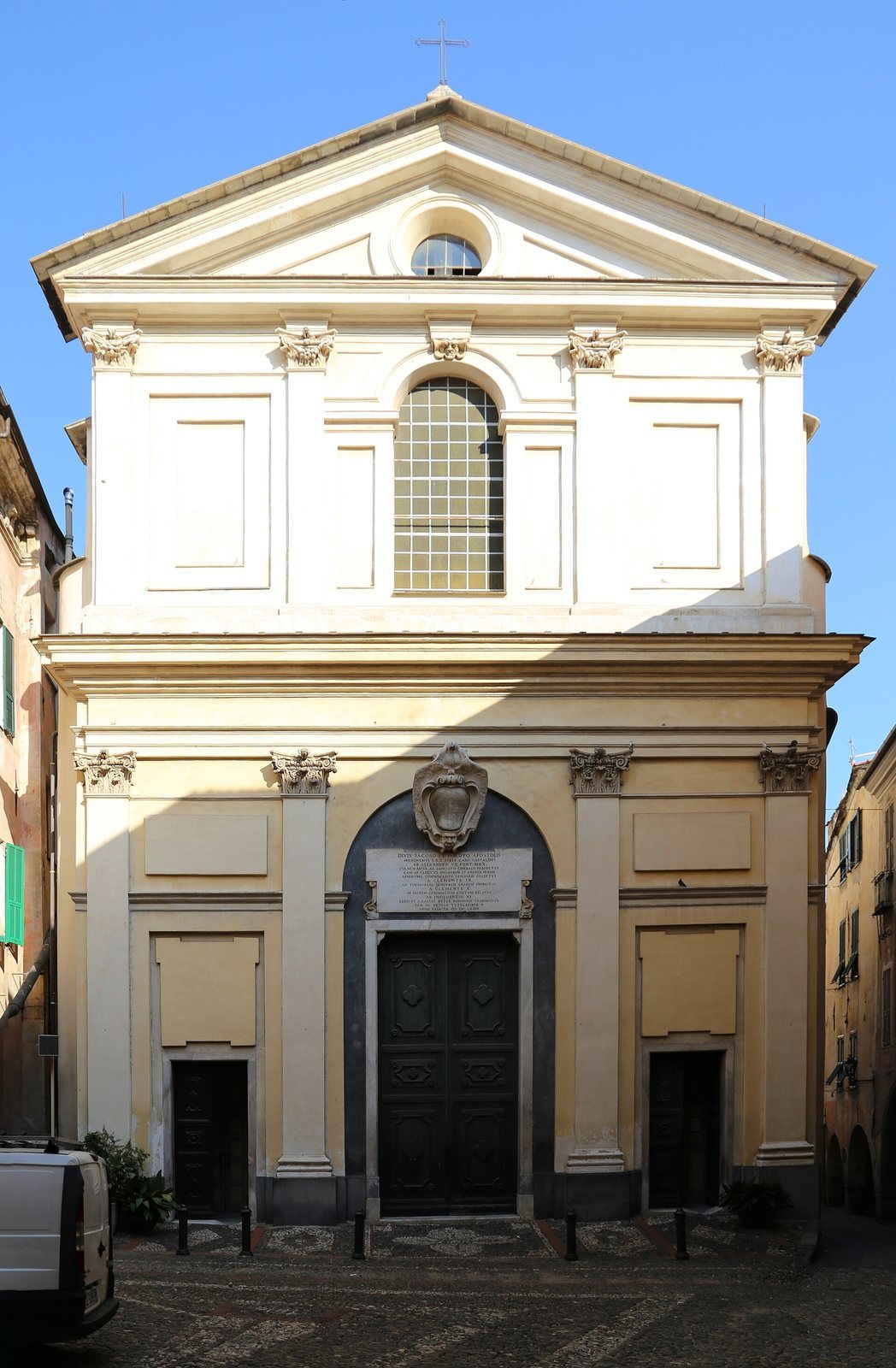
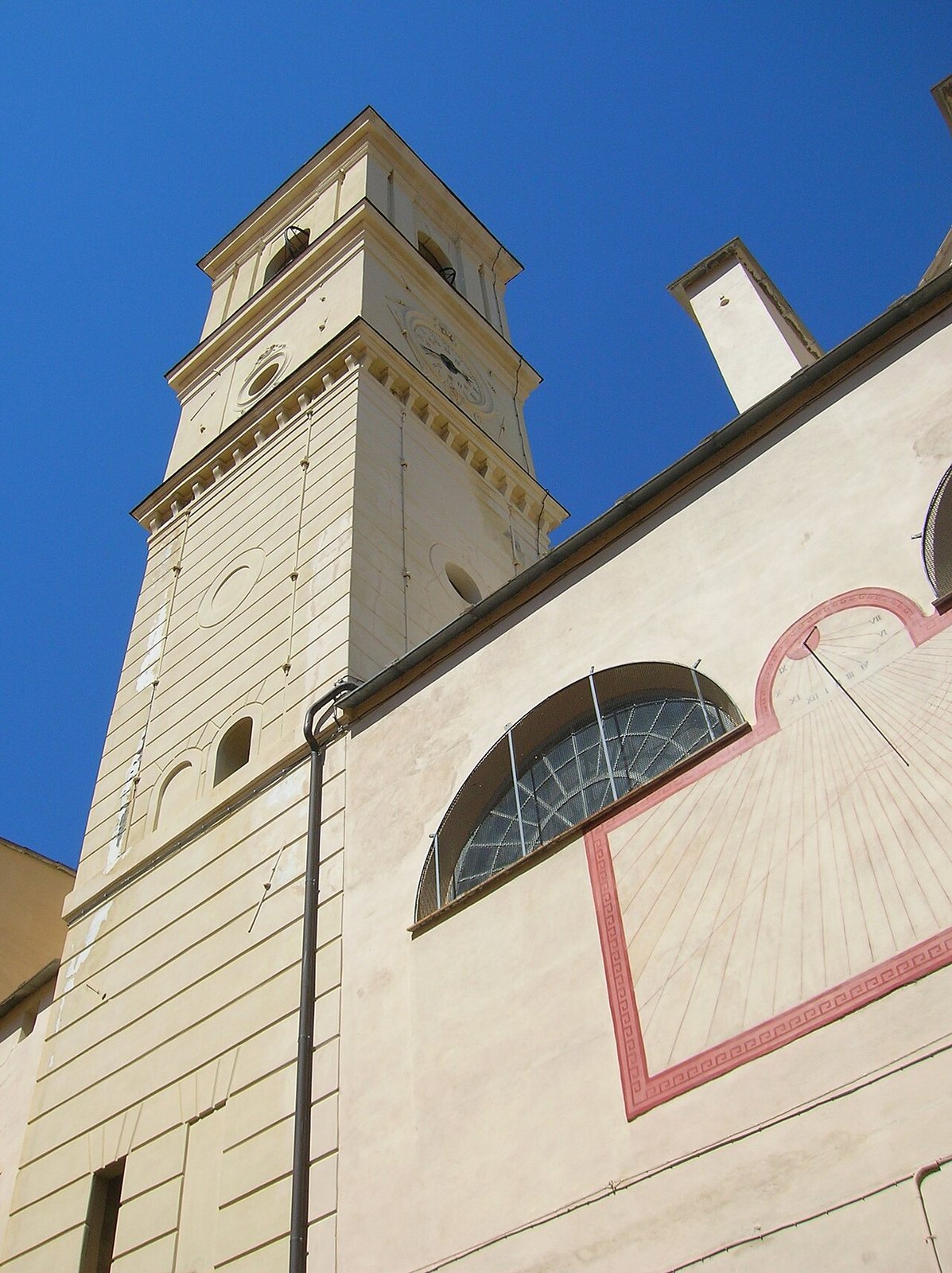
The façade is arranged in two levels marked by shallow vertical wall bands and finished with a pediment whose central panel forms its upper feature. A plaque commemorates Cardinal Gastaldi’s role as patron. Three entrances are carved from white-veined marble. The bell tower incorporates the earlier Romanesque structure, which was heightened during the Baroque rebuilding.
Interior
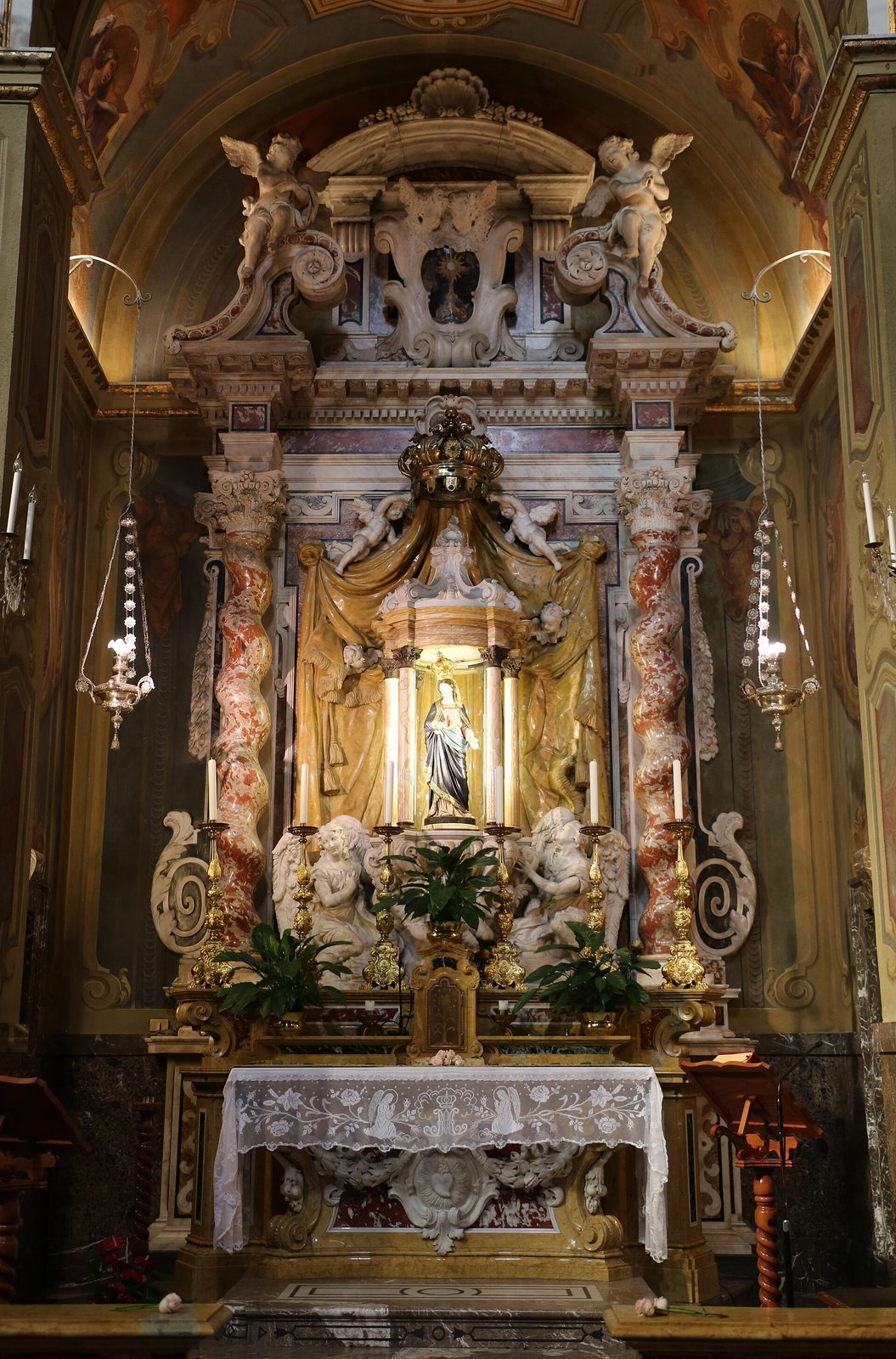
A continuous arched ceiling, or barrel vault, spans the rectangular hall. Windows occupy the curved spaces where the vault meets the walls. Seven chapels on each side are separated by matching column-like projections and railings. The presbytery, the area around the altar reserved for clergy, is strongly set apart, while the choir is raised above the main floor.
Furnishings and works of art
Items retained from the earlier church include a white-marble preaching pulpit dated 1575, a baptismal basin made of colored marble in the 16th century, and a tabernacle for the consecrated Eucharist. The church also preserves relics associated with Saint Benedict Revelli and works by Luca and Giovanni Cambiaso, Francesco Brea, Bartolomeo Pincellotti, Giuseppe Massa, and Domenico Guidobono.
The Madonna statue
Salvatore Revelli, a 19th-century Italian sculptor, made the statue called both the Madonna del Sacro Cuore and the Madonna Miracolosa. It is kept in the fourth chapel on the left side of the church.