Church of San Giovanni della Pigna: A Roman Catholic Church in Rome
Site at a Glance
- Popularity
- Low
- Country
- Italy
- Primary era
- Early Modern
- Eras represented
- Early Modern
- Civilizations
- Papal States
- Site type
- Religious
- Remains
- Church
On this page11 sections
History
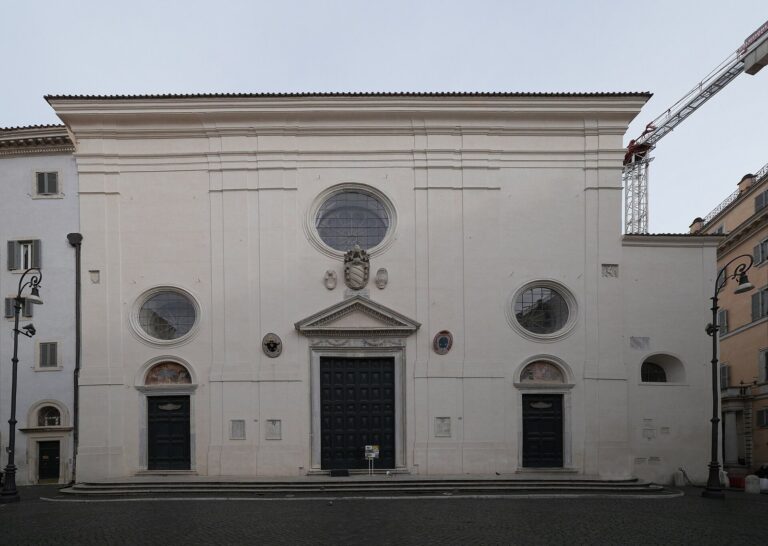
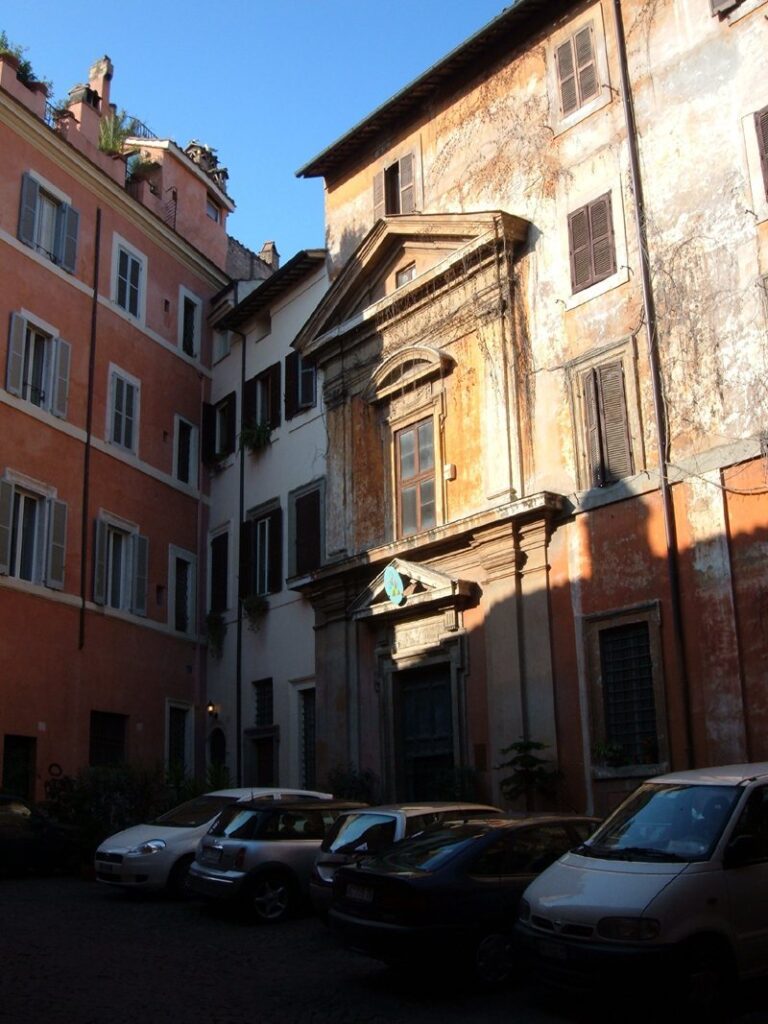
The Church of San Giovanni della Pigna is a Roman Catholic church in Piazza della Pigna in Rome, Italy. Rebuilt from the ground up in a campaign completed in 1624, it has a simple Baroque façade and a history linked to medieval worship, assistance for prisoners, and later ecclesiastical roles. The name Pigna refers to a large bronze pinecone found in the area and now kept in the Vatican’s Pinecone Courtyard.
The medieval predecessor
The church’s early history and construction date are uncertain. Papal bulls issued in 955 by Pope Agapetus II and in 962 by Pope John XII mention an earlier church dedicated to Saints Eleutherius and Genesius.
Rebuilding for the prisoners’ confraternity
The church lay in ruins by 1584. During the following decade, Pope Gregory XIII entrusted it to the Archconfraternity of the Pietà for Prisoners, a lay religious association that assisted prisoners, including people assigned to galley service. The Jesuit Giovanni Talier led the confraternity. Pope Sixtus V gave it the right to pardon one person facing execution. In 1585, he transferred the relics of Saints Eleutherius and Genesius to Santa Susanna, while some relics remained beneath the church’s main altar. The confraternity commissioned Angelo Torroni to rebuild the church completely. The work finished in 1624, and the church was rededicated to John the Baptist.
Restoration and ecclesiastical status
The church underwent restoration in the 18th century and again in 1837 under architect Virginio Vespignani. In 1870, Pope Pius IX placed it in the care of the Salesian Society of St John Bosco, a Catholic religious congregation founded by John Bosco.
In 1985, Pope John Paul II made the church a cardinal deaconry, a titular church assigned to a cardinal deacon, under the formal title Titulus Sancti Ioannis a Pinea. It is also a rectoral church in the parish of Santa Maria in Aquiro. Francis Arinze held the title from 1985 until 1996, when it was raised pro hac vice, meaning for this occasion, to a presbyteral title associated with a cardinal priest; he held that form until 2005. Raffaele Farina held the title from 2007, and in 2018 it was similarly elevated for him to a presbyteral title, which he has held since. A restoration in 2007 returned the exterior to its earlier color scheme. That year, the church was also designated to represent Italians living around the world.
Remains
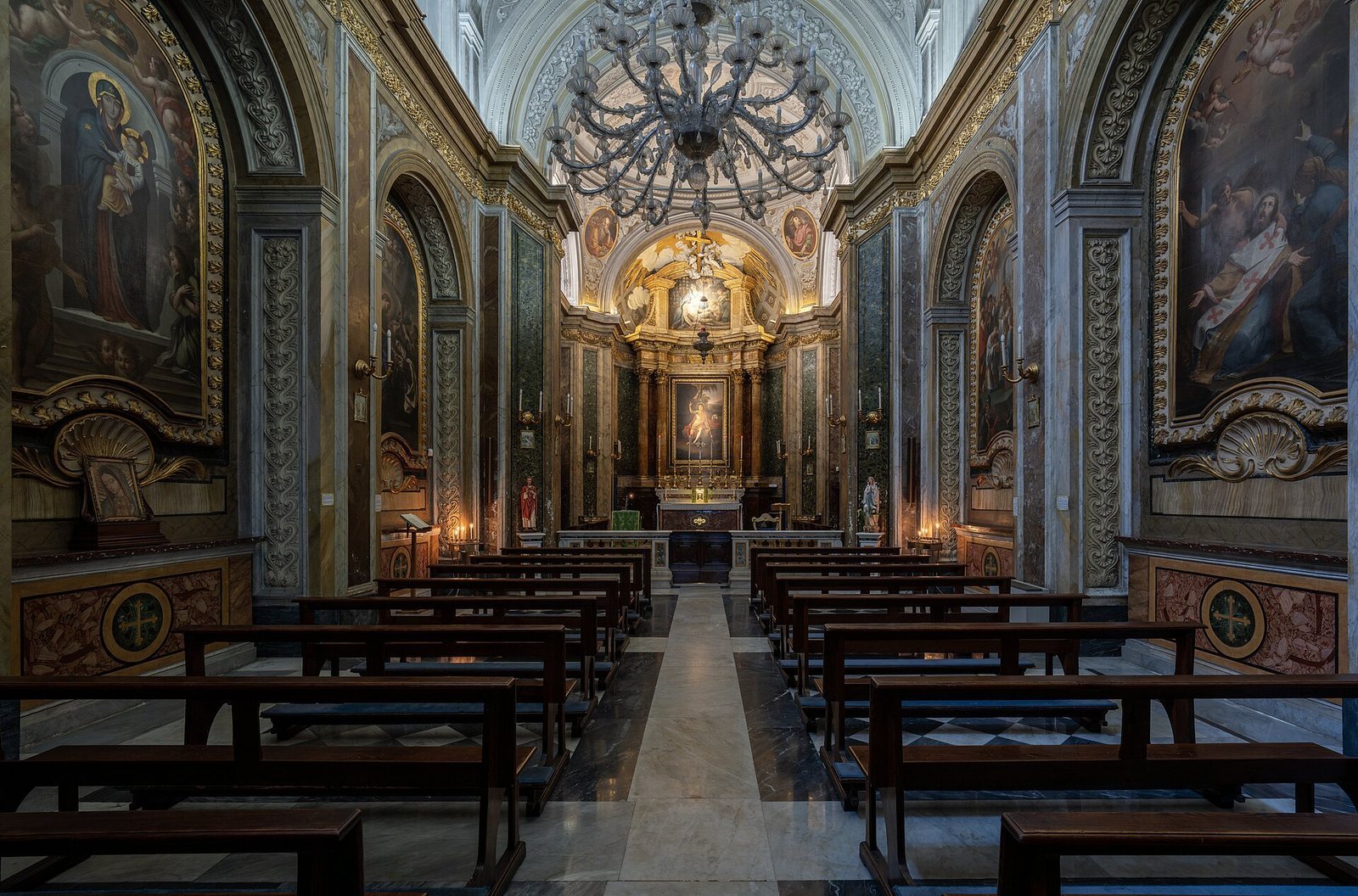
The church has a single nave, or main hall, ending in a semicircular apse, the rounded end of the building. Its façade rises lower than the nave. Inside, the vaulted nave meets a domed presbytery, the area around the main altar, and a balustrade marks the division between them.
Façade
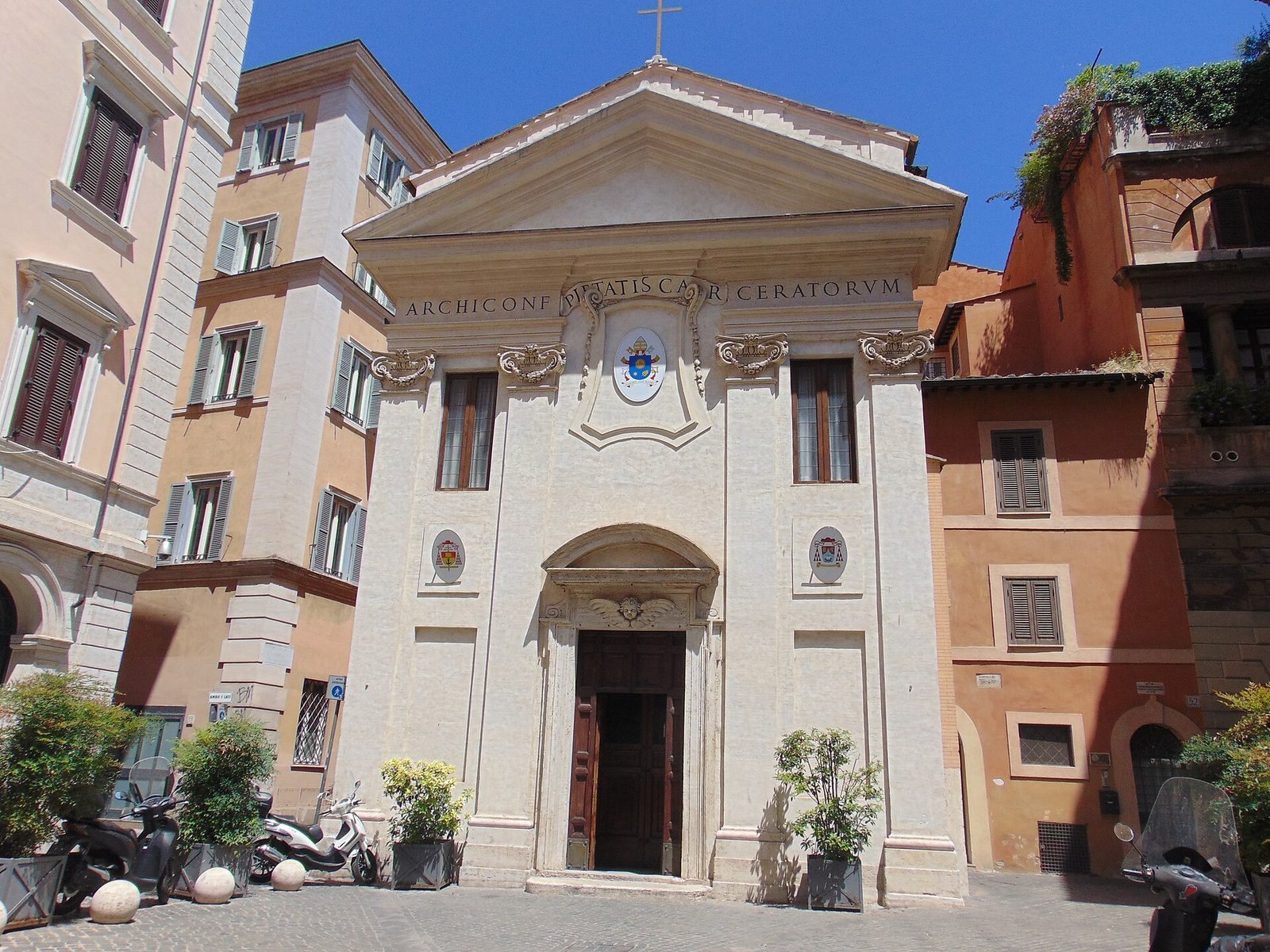
The simple Baroque façade has two levels and three vertical sections. Four large Ionic pilasters, flat wall projections in a classical style, support a horizontal upper band and divide the sections. Above, a triangular pediment, or gabled crown, has a plain central panel and an iron cross at its peak. The side sections contain rectangular windows and recessed panels beside the entrance. A relief of a winged child’s head decorates the lintel above the doorway, which is crowned by a semicircular pediment. An inscription on the upper band commemorates the confraternity that once occupied the church.
Interior
Nave and side altars
A barrel vault, a continuous curved ceiling, covers the nave. Curved openings set into it are called lunettes, and the painted decoration imitates stucco ornament. Four side altars sit in broad, shallow recesses, two on either side, divided by strips resembling pilasters and made of multicolored marble. The altar nearest the entrance on the right is dedicated to Pope Saint Eleutherius and holds Giacomo Zoboli’s 1738 painting of his martyrdom. The next altar honors Saint Genesius of Arles and has an anonymous 18th-century painting of his baptism. On the left, the first altar is dedicated to the Madonna and contains an 18th-century image of Mary and the infant Jesus with angels, copied after a 14th-century image known as the San Luca Madonna. The second is dedicated to Saint Teresa of Ávila and depicts her vision of Christ.
Presbytery and apse
The presbytery has a square bay beneath a shallow dome. Its painted scheme imitates stucco ornament and emphasizes eight broad ribs. A dove representing the Holy Spirit occupies the center, while circular panels showing the Evangelists sit on pendentives, the curved surfaces connecting the dome to the supporting space below. The semicircular apse has a coffered ceiling, divided into recessed panels.
Main altar
The main altar is made of multicolored marble. Its concave screen follows the curve of the apse wall, with four marble Corinthian columns, a classical column type, supporting the structure above. Baldassarre Croce’s early-17th-century altarpiece depicts John the Baptist in a wilderness setting. Above it hangs an 18th-century Pietà by Luigi Garzi. Stucco figures of small children adore a cross above the upper structure.
Pipe organ
The early-18th-century pipe organ, built by the Priori family, stands in the choir loft above the entrance. Barthélemy Formentelli restored it in 2007. Its keys operate through a fully mechanical system, and it has one 50-note keyboard and a 17-note pedalboard. Both have a short first octave, a layout in which some of the lowest notes are omitted or reassigned. The pedalboard is permanently coupled to the keyboard.